Friday, February 26, 2010

Salt sale, hard times and doing it for yourself

My publishers, Salt, are having an amazing sale, and anyone interested in poetry would be advised to get on over there quick, while stocks last. Salt make beautiful books and some are going for as little as £1 !

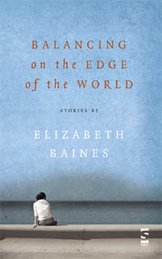
There's a serious side to this, though, of course. The reason Salt are running this sale is that they need an emergency injection of cash if they are to keep going. The Just One Book campaign started last summer continues, and as a Salt author I am asking you once more to do that: buy just one Salt book - and brighten up your life into the bargain! If you want prose, you could buy one of my own Salt books: Balancing on the Edge of the World, a story collection that lifts the lid on some of the untold stories in our everyday lives, or my novel Too Many Magpies, on the surface a spooky tale of adultery but on the deeper level a study of our present sense of the precariousness of the world, and of the ways in which we think. (If you've got them already, why not buy one for a relative or friend - Too Many Magpies, since motherhood is one of its themes, would make a great Mothers' Day present!) Or you could buy a book by one of the great short story writers I feel privileged to be published alongside: Carys Davies, Matthew Licht, Paul Magrs, Tania Hershman, Vanessa Gebbie, Nuala Ni Chonchuir, Chrissie Gittins, Padrika Tarrant, and on... Or you could buy Salt's guide to the art of the short story, Short Circuit.

Times are hard, the publishing industry has changed, and all but the most commercial sectors of publishing are suffering. Last night I attended a meeting of north-west women writers, convened by the novelist Sherry Ashworth and others with a view to setting up a press to publish fiction by women in the north west, in response to these changes. The reality of those changes was illustrated by the fact that there were several writers present, both prize-winning and mass-market, who were now facing difficulties in publishing their latest books or had moved to small presses. Basically the feeling is now that writers must do it for themselves.

A propos this, my fellow Salt author Nuala Ni Chonchuir writes an interesting post on the subject of self-promotion by authors. I have come across criticisms on the web of authors who ceaselessly promote their own books, and I have to say that, although I try to do it conscientiously, it still goes against the grain for me, but the fact is that it's now an absolute necessity - most of all for authors with small presses, but also it seems now for most authors with big publishers. I'm sure that Vanessa Gebbie won't mind me replicating here her comment on Nuala's post:
I was at a large writer's convention last weekend, with talks from some senior figures in the publishing world - (Get Writing 2010 - and a speaker in question was the MD of Hachette) - it was a wake-up call for anyone in the audience who thought that all you had to do was get a book accepted and then sit back!

Cross-posted to Fictionbitch.

Sunday, February 21, 2010

New series: Bookshops I Love: Simply Books, Bramhall, Cheshire


As I said yesterday, I thought I'd start profiling the bookshops as well as the libraries stocking my books.

I had heard about Simply Books from colleagues - what a wonderful bookshop it was: what fantastic, judiciously chosen stock, how helpful the staff, Andrew Cant and Sue (not sure if they are married), are, how exciting they make things with reader events. And then I read in a Times article that, in an era when independent bookshops are closing at a rate of knots, they had won the Independent Bookseller of the Year award for 2009.

On Saturday afternoon I drove over to check it out, and to ask if they might be interested in stocking my books. As soon as John (who was with me) and I entered, I could see Andrew at the till, and noticed him look up straight away to see who had entered - he's obviously completely on the ball and alert to his customers. As for the stock on display: the first thing that hit my eye, rather than the latest blockbusters, was a face-out copy of a Jonathan Safran Foer novel, and another of a John McGregor novel. The shop is also a colourful haven for child readers, and all over the window were posters advertising author events. As soon as he had finished at the counter, Andrew was straight over to ask if he could help me, and to my great delight he said he would order both my volume of stories, Balancing on the Edge of the World, and the novel Too Many Magpies. And he put me on the spot by asking that question I should have expected, because you're always told you'll be asked it, but which so few book buyers do, since (I guess) they don't often bother trying to sell things to customers: 'What do I say to customers when I'm trying to sell them this book?'

Saturday, February 20, 2010

New series: Libraries I Love: Liverpool Central Library


Thought I'd start a new occasional series, or two: profiling libraries and bookshops in which I come across my books being stocked and which needless, to say, I fall instantly in love with (if I'm not already). Last week of course I wrote about Walkden Library, where I had a really great time giving a reading, though I didn't provide a picture of its plush yet airy reading room, and will now:

Of course I've written previously about Manchester Central Library, where I've read twice in the stunningly wood-panelled committee room (and which is due to close for three years for redesign and refurbishment.) Yesterday I took a trip to Liverpool, specifically to the Central Library for a networking day for librarians and writers in the North West, organised by Jane Mathieson, the Regional Reader Development Co-ordinator. Jane explained to us that the Reader Development initiative is an attempt to redress the balance after the push towards IT shifted the focus of libraries, and to reassert the prime role of libraries in developing people's relationships with books. Inviting writers into libraries is part of the initiative.

I had never before set foot in Liverpool Central Library, built in 1860, and it is the most magnificent building: rather imposingly Neo-Classical on the outside as can be seen above, but beautiful on the inside with a mezzanine gallery in the circular original reading room I passed through, accessed by a spiral staircase worked in decorative ironwork.


There are later additions to the building, and here, in the fiction section near the more modern entrance I found my story collection, Balancing on the Edge of the World, on a shelf:

Tuesday, February 16, 2010

Some author visit experiences are great


On Saturday I had one of my best experiences ever doing a reading. I had been invited to Walkden library for a morning session. For those of you who don't know, Walkden is just south of Bolton, one of those little Lancashire towns that are now part of the Greater Manchester conurbation, and part of Salford local authority. It wasn't very likely that anyone who didn't live there would come to the reading, so for once there seemed no point in my spending time and energy promoting it myself. So, frankly, I wasn't expecting an awful lot in the way of an audience.

I could not have been more surprised. Walkden library turned out to be newly rehoused in a large glass building, Gateway House (which even Google doesn't know: to begin with, I went with my Google map to the little old brick building, now abandoned, a bit further out of town), and it shares this building with the NHS, which creates a real community hub. And it's an absolutely beautiful library, wonderfully equipped with extra rooms filled with light, and because the library service shares the reception staff with the NHS, the library staff are freerer than is traditional to concentrate on the more creative side of their job. Library Manager Chris Carson, it turned out, is busy establishing several reading groups, and it turned out that two of these had read both my Salt books. I arrived to discover that as a result, and also because he had designed beautiful leaflets and posters and promoted the reading, I had an audience of thirty, in a small town, in the middle of a Saturday morning! And not only that - a lovely, interested audience with deep questions to ask me about my work.

Thank you so much to that audience, and to Chris, and also to Sarah Coyne, the Reader Development Officer, who invited me in the first place. And thank you to Chris for the photo above, and the one below which shows the posters he made.

Saturday, February 13, 2010

Reading group: The Turn of the Screw by Henry James

John suggested this classic novella which he had read in the summer and found fascinating. It presents the story of an unnamed young governess employed by the uncle and guardian of two orphans - a young sister and brother whom he has established in an ancestral country house - with the specific and somewhat strange instruction that she is to take complete charge and not trouble him in his London home. Initially overwhelmed, indeed frightened by the task ahead of her, the governess is then exhilarated by finding the children 'perfect', but very soon comes to 'realize' that they are being haunted by the ghosts of two dead and reputedly evil servants, who have 'come for them'.

John said he had found the book fascinating as what seemed to him a repudiation of the certainties of Victorian realist fiction and a presentation of the ambiguities of perception. He pointed out that the governess's story itself is shrouded by layers of displacement. Most obviously it is framed: the novel begins with a narrator recounting a typical Victorian Christmastide ghost-story telling session in just such a country house in which the governess's story will take place - a comparison the narrator indirectly but explicitly draws. While the novel begins, The story had held us, round the fire, sufficiently breathless, it becomes clear - though not immediately - that the story referred to here is not the one with which the novel will be concerned. Meanwhile, there is comment on the part of the house guests on the quality of each others' ghost tales. All of this serves to set the governess's story right away in a context of comparison and evaluation, while much is made of the delight that the female house guests take in being frightened, in other words of their complicit gullibilty. The governess's story is offered by the guest Douglas, who promises that it will top all the others for 'dreadfulness'. Rather than tell the story himself he says he will read them the governess's own written first-person account. Now while this may seem on the surface to be a proof of its authenticity, the story is at this point rendered peculiarly remote by the fact that, as Douglas reports, although it was once told to him in person by the governess, it had happened many years before that telling, and was written down years after that telling, and the written version was handed on to Douglas only on the death of its author, which is now twenty years past. Not only that, it is physically remote, and indeed locked away in a drawer, and Douglas must send off for it, with a key to have the drawer unlocked, and the company must wait a full two days for its arrival. Meanwhile Douglas provides the background to the story - the facts of the governess's provenance as the daughter of a clergyman, and the circumstances of her employment - which results in a temporal narrative distancing for the reader of the novel. Douglas makes much in his account of vouching for the governess's 'niceness' and 'cleverness', but the validity of his view is somewhat held in suspense by the fact that the ladies present detect in this very speech indications that - in spite of his protestations that she had been ten years older than he - Douglas had been at least a little in love with her and thus biased.

John said that, as a child psychologist himself, he was very taken with what he believed was James's questioning of the concepts of good and evil and what he saw as James's overturning of the simplistic pretty=good and ugly=bad associations one finds in novelists like Dickens. At the start of her employment, the governess sees the pretty children as utterly pure, but right from the beginning we have to question her view as unreliable: they have been orphaned, they have been more or less abandoned by their guardian, and the boy, it turns out, has just been expelled from school, yet she expresses the judgement that they have been untouched by unhappiness. This is only thrown into an ironic light when she later comes to see them as communing with the 'ghosts' and indeed, deceitful and touched by evil themselves. Everyone agreed with John that as the story progresses the governess's perceptions become less and less reliable, culminating perhaps in the moment when she reports to Mrs Grose the housekeeper that the 'ghost' of the dead governess Miss Jessel spoke to her, completely contradicting the earlier blow-by-blow account in her narration of the encounter with the ghost. Her perceptions are extreme, unsubtle, wildly reversed and, with a close reading of the text, unsubstantiated, often because of unfinished sentences when she interrupts, or fails to challenge when others - chiefly Mrs Grose or Miles the boy - break off speaking, seemingly eager to jump to her own conclusions. Finally she tips into a kind of illogical madness: all appearances of innocence must be fraudulent and therefore indicate the presence of evil.

Many critics have pointed to the ambiguity of the figure of the governess in Victorian fiction, caught between upstairs and downstairs, and John said he thought that this was pretty central to the ambiguities of this novel, and pushed here to a particular limit. With what seemed to him something of a plot manipulation (the governess not allowed to contact her employer), James forces her into extreme isolation, a situation in which she has no employer to talk to but cannot talk freely to the servants, not even the housekeeper Mrs Grose of whom she longs to make a friend but from whom she must keep a certain professional distance, resulting in a deeply ambiguous relationship. (We hear in passing that she is also isolated from her family by the fact that they are suffering their own troubles, to which she will not add in correspondence.) John pointed out that James often names his characters symbolically (Miss Jessell, was, it seems, a Jezebel, as someone else in the group pointed out; one meaning of the name Miles is 'uncertainty') and John wondered about the apparent negative connotations of the name Mrs Grose, as well as its possible meaning of 'big'. Could it be that the housekeeper is a more significant element in this story than many interpretations have allowed for? It seemed to John that the housekeeper who appears so homely and dependable in the (unreliable) governess's eyes would in reality resent her arrival in the household, having previously been left to run it herself, and having been very close to the little girl Flora who must now remove her affections to the governess. It is interesting that at the end, when Flora turns against the governess and becomes frightened of her, Mrs Grose 'reclaims' her, even to sleep in her room, and then flees with her, albeit it with the governess's 'blessing'. Mrs Grose might well, in terms of social and psychological reality, want the governess out of the way. Could it be that the whole 'haunting' is a setup engineered by Mrs Grose to achieve that very thing?

At this point the room erupted, and everyone said that it seemed that John had been reading a different novel from the rest of us. Everyone else had read the novel aware only of two main conventional and opposing interpretations: either that the ghosts were indeed real (as early critics of the novel assumed) or that they were a figment of the neurotic imagination of the (thus dangerous) governess, the Freudian reading established by the critic Edmund Wilson. There was now some discussion in which people spoke up for either interpretation, but on the whole people were unable to decide, though Trevor said that he reckoned there were definitely two ghosts in this book.

I said that, having read the novel previously, this time I had read it very carefully, trying to see which of those two interpretations held water, but that I had found that neither did, and the places where it all came unstuck were in the conversations with Mrs Grose which were unfathomable in their ambiguity. It was often impossible, I found, to know exactly how to assess Mrs Grose: when she was being sincere in her sympathies, or when she was perhaps humouring the governess over her belief in the ghosts. The extent of the unreliability of the governess-narrator was not always clear. Others in the group nodded in agreement. I said that on the whole I came down on the side of the psychological interpretation (James was a psychological novelist, after all), but that there was one particular scene where that simply doesn't hold water at all. After the governess sees the 'ghost' of Quint looking in through the dining-room window, she describes his very distinctive appearance - red hair, strange little whiskers - in great detail to Mrs Grose, who immediately recognises the description (with apparent horror) as that of Quint, the master's previous valet. At this precise point the governess has never even heard of Quint and has yet to be told that he is dead. This would seem to indicate that in the objective terms of the novel, the ghost does indeed exist as an objective reality. It had seemed to me that the only conclusion to draw was that a novelist as conscious as James and unlikely to make a mere mistake, must thus, as some critics have concluded, be deliberately creating an ambiguity of possibilities. However, I now wondered if John could be right, and we all reconsidered the novel in the light of his suggestion.

John drew our attention to something in that dining-room window scene which had indeed struck me as very strange and the meaning of which I'd been unable to fathom. At the end of her description, the governess says of the ghost: "He gives me a sort of sense of looking like an actor." Mrs Grose responds: "An actor!" and the governess-narrator comments: It was impossible to resemble one less, at least, than Mrs Grose at that moment. Does this mean that Mrs Grose is so shocked by the governess's unwitting touching on the truth (ie that someone is indeed posing/acting as the ghost) that she momentarily has no need to go on acting herself? (EDITED IN: It now seems significant that Douglas, in commenting on the ghost story which he says has parallels with the one he will read out, refers to its 'ghost - or whatever it was.') There is a passage very soon after the governess's arrival which I couldn't make much sense of, but which in the light of John's interpretation seems to be the governess-narrator's (and the author's?) implication, or indeed statement, that in retrospect (ie from the years-later perspective when she is writing the account) she should have been suspicious of Mrs Grose. Having persuaded herself at the time that Mrs Grose is an ally, the governess then wonders:
The one appearance indeed that in this early outlook might have made me shrink again was that of her being so inordinately glad to see me. I felt within half an hour that she was glad - stout simple plain clean wholesome woman - as to be positively on her guard against showing it too much. I wondered even then a little why she should wish not to show it, and that, with reflexion, with suspicion, might of course have made me uneasy.
In other words, she noted at the time that Mrs Grose was dissembling, and comments now, while writing it all down, that it should have made her uneasy (and the housekeeper was dissembling in a different way from the one which the governess at the time assumed). What we have in this novel is not so much an unreliable narrator, as a narrator reviewing with hindsight a situation she couldn't fathom at the time and indeed misinterpreted. There are many subsequent instances in the unfolding story when the young governess sees Mrs Grose apparently reining in her own emotions and 'holding herself in', and she spends much of her time with the woman assessing her and trying to work out her reactions, but failing to question her and rashly jumping to conclusions. Some of the passages which I earlier felt portrayed Mrs Grose as possibly humouring the governess and indeed suspicious of her (though I wasn't sure), can, in the light of John's interpretation, be read without trouble as portraying Mrs Grose as genuinely shocked by the extent to which the governess has run with the idea of the haunting, but then cleverly deciding to use it. In the scene where the governess reports her first sighting of Miss Jessel's ghost, Mrs Grose is at first shocked, but then turns away to the window (in thought, and to hide the fact that she is thinking?) and then: After a little while she turned round... She slowly came back to me. 'Miss Jessel was infamous [this in fact has been the governess's suggestion].' She once more took my hand in both her own, holding it as tight as if to fortify me against the increase of alarm I might draw from this disclosure. 'They were both infamous,' she finally said - the 'slowly' and 'finally' indicating calculation rather than growing conviction as to the reality of the ghost as I had previously considered and which the governess assumes. The young governess is unreliable in her perceptions, but not just in the matter of the ghosts and the children: she is misreading Mrs Grose.

And what about the fact that, when things reach a crisis, and the decision is made to write after all to the uncle, the supposedly illiterate Mrs Grose says that she'll write to him? The governess questions her: how could she write? and Mrs Grose quickly says that she communicates with the master through the bailiff. Has this been a slipup on the part of Mrs Grose, who found it useful to go along with the governess's assumption of her illiteracy - which in fact has never been substantiated? In fact, in social reality Victorian housekeepers needed to be literate - particularly those left for extended periods in sole charge of a household, as Mrs Grose has been - which the naive governess overlooks. Was Mrs Grose indeed acting her illiteracy when she refused to look at the letter from the school announcing Miles' expulsion? Could this very strange unexplanatory (and indeed thus unlikely ) letter be part of some plot which is linked with the deaths of the former servants? Do the circumstances around those deaths need to be covered up? And if so, is that the reason little Miles must be kept from school, to stop him blabbing - saying things, as he later puts it to the governess. And the bailiff who Mrs Grose says writes for her? Where did he pop up from? He has never previously been mentioned. And what's this 'communicating', apparently in the continuous present? Have they already contacted the master behind the governess's back? Could it be that Mrs Grose and the bailiff are in league in some way - could the bailiff, indeed, be the 'actor'? - and capitalising on the very young governess's nervousness, suggestibility and overactive imagination based in sexual repression and fear (what, indeed, in her years-later narration she calls her 'obsession')? Is Quint so named by James - the name means 'fifth' - because he is the fifth player in an intrigue concerning the housekeeper, the bailiff, the hoodwinked governess and the two dead servants? It's an interpretation that seems to gather credibility in light of the fact that, with his brother William, James was involved in attempts to make scientific studies of paranormal phenomena, many of which were of course uncovered as frauds. (At this point one sees parallels with Affinity by Sarah Waters.) Is the message of the novel that an over-readiness to believe in ghosts, indulged in by the houseguests at the beginning of the book, can actually get you into serious, indeed deadly trouble (and open you up to manipulation)?

John said that he thought that this possible interpretation had been overlooked by critics out of middle-class prejudice: that as a female servant Mrs Grose and her role have been invisible to them. Everyone agreed that Mrs Grose is indeed a major character in the book - she is so often present and constantly referred back to - yet critics so often treat her as minor player, or a mere foil. Some of us said that we now wanted to read the novel again in the light of this interpretation but others groaned, Doug the loudest, and said No way, they had had real difficulties with James' convoluted prose, and when I said that it did actually suit the governess's convoluted oxymoronic mentality, they retorted that all James's prose was like that. Hans read out the very worst sentence, which others of us had noted, and in which the young governess persuades herself with Jamesian pomposity that the house is a benign place: But there was everything, for our apprehension, in the lucky fact that no discomfortable legend, no perturbation of scullions, had ever, within anyone's memory, attached to the kind old place. Jo, however, a real lover of James, jumped to the defence of the prose.

We then discussed the sexual undertones or indeed overtones of the novel. Clare said she totally went along with the interpretation of the film some years ago now, which presented the whole thing as a portrayal of child sexual abuse - ie in which the children had indeed once been sexually abused by the now dead servants. There is something about this interpretation that rings true, but the question remains: how much of it is intended as factual reality, and how much the governess's imaginings? As subscribers to Freudian interpretations have pointed out, a close reading shows that the sexual interpretations stem from the governess herself: Mrs Grose's confession about the licentious relationship of the two dead servants is, as we have seen above, prompted by the governess's own decision that Quint is 'infamous'; it is the governess who first interprets in homoerotic terms the fact that Miles spent time alone with Quint (and Mrs Grose picks up on it and 'elaborates'). We never hear the foul language which Flora is meant eventually to speak: it is only ever reported by Mrs Grose, and at a time when, in John's interpretation, Mrs Grose is far gone into manipulating the governess and taking advantage of her psychology and assumptions. It is to be remembered that, in love/lust with the absent master (a point which Douglas makes much of in his opening introduction), the governess is in a heightened state of (repressed) sexual frustration, and the fact that the sexual spin on things stems from her psychology seems proven in one of the most unsettling statements of her narrative that when she and Miles were finally left alone in the house together, she compared the two of them to some 'young couple' 'on their wedding journey' (and there is an earlier conversation between the two in the churchyard which has unsettling sexual undertones). To the governess the abuse is 'out there' (with the ghosts) but ultimately, she is the abuser, clasping the children too tightly out of her own need for affection, flirting with the child Miles, and finally, through her own sexual fears, frightening Flora to the extent that she won't come near her and frightening or suffocating Miles to death. Nevertheless, there are hints of the sexualization of the children, or at least of Miles: he appears to flirt back at the governess and there is the very strange conversation in which he confesses that the reason for his expulsion is that he has been 'saying things' to boys he liked, and that they in turn have passed them on to boys they 'liked'. Is this the author's portrayal of the cycle of corruption set in motion by corrupting adults? And if so, how many of the adults are involved? Are the two ex-servants really dead, or have they been dispatched as the result of a scandal? Mrs Grose is certainly evasive when the governess, with rare straightforwardness, questions her about the circumstances of their deaths, and when Mrs Grose eventually recounts those of Quint's they bear suspicious similarities to Rochester's fall in Jane Eyre. Could it be that this is Mrs Grose's derivative made-up tale and that Quint is in fact still around, and, rather than the 'bailiff', is performing his own 'haunting'? Does the quintet of abusers include the master (rather than the conjured-up bailiff) who, although he so strangely never comes to house now was clearly once there, attended by his valet Quint? (EDITED IN: No bailiff appears in the list which Douglas gives in his introductory account of the persons associated with the household, a list so oddly precise and inclusive that it includes 'an old donkey'). Could Mrs Grose's shock at the governess's sexual interpretation of the ghosts' motives be indeed genuine, but a reaction to the governess's once more stumbling (unwittingly) on the truth? At any rate, this seems a remarkable tale of a convoluted series of abuses: the neglect, or more, practised by the master, the shadowy but certainly dubious doings of the two past servants, the manipulation of the governess by the housekeeper, and the unwitting abuse of the children by the governess.

Towards the end of the evening I remembered that for years I had carried with me the very idea about this book that John had suggested: that the housekeeper dunnit; but in the intervening years had forgotten.

We mentioned the glances in the book towards other classic ghost/country house stories, the reference to the Mysteries of Udolpho and the echoes of Jane Eyre (another governess isolated in a lonely country house), and the fact that the novel thus operates as a comment on the convention. We discussed the fact that the frame breaks at the end of the novel: the narrative does not return to Douglas or the narrator, but finishes with the end of the governess's account and the dramatic denouement of her tale. Mark said that to return to the frame would have clearly watered things: the dramatic moment obviously makes the best end. In retrospect, it seems to me that James's intention is more subtly to indicate the power of the unconscious to break through (and break down) the kind of civilised structures that the opening frame represented.

Anyway, time for another close reading, in my opinion, whatever the rest of the group may think.

Our archived discussions can be found here, and a list of all the books we have discussed here.

Friday, February 12, 2010

Character in fiction and life

Character. Ah.

Everyone said my dad was a wonderful character. And he was. But what did those other people mean? When he was young (and even when he wasn't) they meant he was glamorous (he was tremendously good-looking; he told great jokes; he had a colourful past which he played on shamelessly; he was brilliant at making friends, at picking up languages and so making contacts all over the world). My dad cheered people up and made them feel good. What they didn't know was that he suffered from depression: only we in the family ever knew it.

So when I say that my dad was a great character, I mean something quite different: I mean he was complex, that his identity was fluid, he was a different man in the outside world from the one he was inside his home - or no, he was both, or all, of those characters, because we too were graced by his charm and his wit, and we looked at him through a kind of double or multiple exposure.

And then there's this other thing: when I was young I was apparently a pain in the neck. I argued with my father, usually when he was in his darker phases, and caused a load of tension in the household. But I'm really not like that now (I guess I eventually I learned my lesson), and I think many people would characterise me as some kind of amenable diplomatic type (though maybe Fictionbitch betrays me). But you know, whenever I go back home that old personality gets there before me, and I can sense everyone getting tense in case I start being too outspoken and causing arguments and trouble. Basically (because I have been away for so long), my family believe I am other than I am nowadays, and if you asked my sister to write a story about me I bet many people wouldn't recognize that character as me.

So as a writer I'm really very suspicious of the concept of 'character'. I know writers go on about characters taking them over and talking to them, and I do know that experience, and it is very exciting when it seems to happen. But you know, the truth is that all our fiction characters are products of our own psyches and ways of looking at people and the world. Any 'character' is just one aspect of this: an individual writer's idiosyncratic viewpoint.

Thursday, February 11, 2010

Prague


Sorry not to have blogged for so long: I've been tremendously busy and elsewhere. I was in Prague for almost a week, invited to read on the Monday at the great anglophone bookshop and cafe, The Globe, for Alchemy Prague, a series of literary and musical events run by Ken Nash for the Anglo-American literary society there. It was a good event, very full, and here's a pic John took with some of the audience reflected in the mirror:


After I read, there was an open mic session revealing some real talent which I also witnessed on the Thursday at a new poetry reading series (set up by some of the people who had read on the Monday). Quite made me want to move to Prague! We stayed in a lovely flat in Nove Mesto which we'd been lent for the duration, arriving quite romantically at midnight (our plane had been delayed by the weather) in a snowfall. One of the people at the Monday reading was Zuzana Hronkova, the Anglo-American University librarian, and she invited us to look around the very peaceful and cosy university library next day (and took copies of my books for the library).

Then we had a good few days tramping around the city. It was very cold and in the sidestreets the ice was packed hard - I slipped and fell on the way to the reading on the Monday! The most compelling thing for me, though, was a visit we made to Terezin, (Theresienstadt), Jewish ghetto, an hour's bus ride north of Prague. Really, words fail me so far to express the impact of this experience, and in the meantime I guess I can do no better than refer you to WG Sebald's wonderful, searing novel Austerlitz. And here's my photo of the railway track which brought the Jews into the town:

Tuesday, January 19, 2010

Reading group: The Elegance of the Hedgehog by Muriel Barbery

Jenny chose this book which has sold like wildfire in its native France, and, by the time my copy was printed in 2008, over 2.5 million copies worldwide. Seeing it on Waterstone's front table she was intrigued, as it didn't in fact look like a populist book, but a pretty typical serious French novel about some pretty serious themes, being the parallel and converging stories of two people in a very plush Left Bank apartment block: fifty-four-year-old concierge Renee who is hiding from the residents that she is an autodidact passionate and knowledgeable about culture, the arts and philosophy, and twelve-year-old Paloma Josse, extremely bright daughter of intellectually left-wing but bourgeois parents, determined to avoid such a hypocritical future for herself and therefore to commit suicide on her thirteenth birthday. The narrative consists of alternating sections of their journals as their lives slowly come together - indeed, as they come to recognize each other as fellow spirits - and as they contemplate their artistic and philosophical concerns, most particularly around the subject of 'Beauty' and our ability to apprehend it.

Jenny said that she had enjoyed the book, but that she hadn't been able to escape the feeling whenever she got to the philospohical bits that it was pretentious. Doug immediately said that it was the most pretentious book he had ever read, and some people nodded furiously while others looked dismayed.

A core objection of the detractors was that Renee herself was hypocritical. For one thing, it is hard to see why in this day and age (the novel, despite its dated air, is set in contemporary Paris) she needs to go to such lengths to hide her intelligence and refinement - she puts the residents off the scent by keeping her television running and the smell of boiled cabbage drifting under the door while she reads philosophy or appreciates good tea and home-made fine cakes with her immigrant cleaner friend (her only luxury) - when the residents' alleged prejudices would most likely blind them to the truth about her anyway. Indeed, the opening pages are intended to illustrate this last: here Renee is so disgusted by the intellectual pretension of one of the young adult sons of the apartment block that she lets slip a comment that shows she has a far greater understanding than he of the subject about which he is showing off (Marx), but of course he's so fixed on the notion of her as an ignorant peasant that he doesn't notice. And why does she want to hide it anyway? There is a reason given later which most of us felt didn't hold water, but could it be that Renee, and indeed the author, are as much in thrall as the residents to the old-fashioned French class consciousness which the book claims to despise, and as unwilling to upset it - indeed, pleased to relish it? Thus am I, poor concierge, says Renee, resigned to a total lack of luxury - but I am an anomaly in the system, living proof of how grotesque it is, and every day I mock it gently (note that word 'gently': not savagely or passionately then?), deep within my impenetrable self.

I said that the thing that I really didn't like about the book was its deep contempt. In both Renee's and Paloma's eyes the world is crudely divided into Us-and-Them, goodies and baddies, the beautiful and the non-beautiful souls. Beautiful things should belong to beautiful souls, says Renee, but in this novel it is not the rich, as a rule, who have beautiful souls. She says: For those who have been favoured by life's indulgence, rigorous respect in matters of beauty is a non-negotiable requirement. ...To the rich ... falls the burden of Beauty. And if they cannot assume it, then they deserve to die. But, as a rule, in this novel they cannot. To be rich in the universe of this novel is to be by definition basically stupid, or at least lacking in insight and true intelligence or culture, however 'arty' or 'literary' like Paloma's despised mother you are, or however academic like her despised sister Colombe who is writing a thesis on the philosophy of an obscure medieval monk. (There is no real evidence that any of Paloma's family are as hypocritical as she claims: as someone said, like most of the residents they remain shadowy stereotypes). Ann said at this point that the book was as much as anything an attack on the pretensions of the French education system, which seems true, but then, I said, it's a hypocritical attack: Renee makes much of the complete waste of public money on the arcane subject of Colombe's research, its uselessness to society and the fact that it's being conducted on the backs of hard-working men and women, but this makes something of a mockery of her own allegiance to the contemplation of art and truth for its own sake (so much for its own sake that she'll hide it from the world). Only the autodidact is intellectually pure, the novel seems to be saying (and some bits of culture are snobbishly more worthy of contemplation than others), and, presumably, that Renee justifies her intellectual life and pursuits by being a hard-working woman herself (not that in fact she seems to do all that much work). All of which makes the accusation that Paloma's mother has (according to Paloma) a 'holier-than-thou-intellectual-left-wing-pose' seem like the pot calling the kettle black.

Others who come in for Paloma's contempt are her rich schoolfriends, particularly for their affectation of the manners and mores of poor kids, which presumably by rights belong, in the division-compounds of this novel, to the poor kids exclusively (and presumably the rich kids should be embracing the mores which the novel despises). Someone in the group commented that the only 'real' person in her class, and the only one Paloma befriends, is truly working class, but is in a fact very much a stereotype, being also black, and that the novel portrays her patronisingly as something of another noble savage (Renee being the first). Meanwhile, there's Renee's Grammar Nazism (a strong feature, indeed, of the French education system which the novel purports to critique). While this is typically French, as I conceded, and while I can be a bit of stickler for grammar myself, it's very over the top here. A resident leaves a casual note for Renee which contains an extraneous comma, and Renee responds thus: 'I was not prepared for such an underhand attack. I collapse in shock on the nearest chair. I even begin to wonder if I am not going mad, and then spends two pages of her journal expounding the iniquity of this comma and its author, and ending in the above quote about those rich folks who can't assume the burden of Beauty deserving to die.

Both Paloma and Renee are enamoured of all things Japanese, which in the simplistic context of the novel struck most of us as mere exoticism as well as a contrived coincidence, unless you believe as they do that only the Japanese appreciate true 'Beauty'. (Paloma and Renee do not know each other at the beginning of the novel). (People had noted early in the discussion that, apart from the applied teen-speak in Paloma's, the two journals are very alike in tone, concern and voice.) The novel rather suddenly takes on the character of a fairytale when, after one of the residents dies, who should move into his flat but Kakuro Ozu, a distant relative of Renee's favourite Japanese filmmaker. Sure enough, Ozu turns out to be the one rich person who appreciates true 'Beauty', and is a fellow spirit for both Paloma and Renee whom he befriends individually (he and Paloma immediately share their suspicions that Rene is really a cultured soul). One of my objections to this novel was that, in spite of all the tracts of philosophising, it seemed to me (insofar as I could concentrate on the philosophical bits which often seriously held up the narrative) 'Beauty' is taken as an absolute. At this point, however, it is inadvertently revealed as a matter of mere taste, and material taste at that, more material indeed than the concerns of Paloma's own family. What makes Ozu so cultured is not just his music and his films, but his beautiful blue bowl and his special musical flushing toilet and his elegant sliding doors and his taste in refined Japanese food. And lo, he is after all Prince Charming, who whisks Renee off her feet and sends her, if not a glass slipper, elegant clothes to wear out to dinner with him, such that no one in the lobby recognises her! So much for her intellectual independence and purity, divorced from the taint of riches! Maybe we are meant to see that Renee, like Ozu, is one of those rare souls who can take on the burden of Beauty in spite of riches, but this rather undermines the original conceit of the novel in which her poverty has purified her, and seemed to most of us to pull against a deeper impulse in the novel irrevocably linking riches with hypocrisy.

While we had been saying these things, Clare had been throwing in rather annoyed protests, though without managing to say very much to support her viewpoint. Now she had formulated her thoughts, however, and she said rather passionately that she thought that we detractors were entirely mistaken about the novel, and that all of the inconsistencies we had been pointing out were in fact intended by the author: we were meant to laugh at Renee and Paloma for their hypocrisies. This dumbfounded us rather, and looking back at such ludicrous moments as the comma incident, we could see their potential for comedy. However, none of the rest of us had found that the tone of the novel had led us to read it in that way: while we agreed that there had definitely been comic moments, mainly in relation to other characters (and particularly in Paloma's depictions of them), we felt we had been meant to take entirely seriously the philosophical musings of both main characters, Renee's especially, and in turn the two characters themselves and their situations.

We considered the possibility that perhaps the translation was at fault and had failed to convey the comic tone of the original. However, I said that one thing that made me doubt that the novel was as clever as Clare was saying was that there were some pretty fundamental errors in the narrative voice and structure. Neither journal has a very convincing register in that each directly addresses an objective reader in the way journals simply don't, with phrases like Don't you think? More radically, one of the journals continues after the death of its author, indeed describing that death. Trevor said that that was ridiculous, I couldn't say that, (ie that these things could indicate that the author wasn't being deliberately comic). But also, I said, endings of novels are particularly telling, and don't the final words of this novel constitute a conclusion to the philosophising, which we appear to be meant to take deadly seriously? but as Clare hadn't actually finished reading the novel yet she couldn't comment on that. John said that he also thought that the ending in terms of action/plot (which I won't give away here) was a clumsy cop-out, the only way that the author could find to resolve a basically psychologically and socially unconvincing situation, but Trevor and Jenny and Clare said that they'd liked the ending. New member Andrew said he had found it very moving indeed, and I had to confess that I had found it moving too in spite of everything.

Clare stuck to her guns about the cleverness of the novel, but she did concede that there was some stereotyping of a 'goodies and baddies' nature - she remembered being shocked by Paloma's utterly vicious attack on the dying resident as a 'nasty man', which is backed by not a shred of evidence.

Andrew spoke up and said that actually he had liked this novel, and Trevor said that he had as well, in spite of agreeing with some of the criticisms, and Jenny repeated that, in spite of her own doubts, she had too. Andrew said that most of all he had enjoyed the philosophical passages, as he didn't normally get to read philosophy, and had found it really interesting. The doubters among us groaned, and I said that I'd found them both pretentious and holding up the action. But wasn't I interested in those ideas? Andrew wanted to know. I replied that yes I am, very interested in philosophical ideas, and indeed when it comes to novels I am most interested in novels of ideas, but I think that in novels ideas work best and most dynamically when they emerge through the action. Here they were of course presented wholesale, and I found I just couldn't concentrate on them. Clare said that she didn't have that problem as she was basically familiar with the ideas, having done a philosophy course as part of her degree. I said that I had too, and that I too was familiar with the ideas, but I wasn't inclined to try to follow them here as the way they were presented required a different kind of attention from that with which you read novels (apart from the fact that I was alienated by their proponents' intellectual snobbery). Clare said but this is a very French mode for novels, and Andrew said, but there are plenty of novels where there are long passages of philosophy, what about Crime and Punishment, and Jenny said, but it's an old-fashioned long-winded mode which nowadays she just can't stand any more. And anyway, I said again, there seems a discrepancy between the idea of taking Renee in a comic light and taking her philosophising so seriously, and that on the whole I felt that this reflected the fact that the novel itself was muddled.

Then someone posed the question as to why, in spite of the intellectual content and its difficulties, the novel had been such a runaway populist success. Ann said that she thought that it appealed to a certain kind of intellectual snobbery which is particularly strong in France, whereby one can feel good by check-listing all the cultural references - including, here, the reference in the title to Isiah Berlin's distinction between two different types of writers as single-minded foxes or intellectually versatile hedgehogs. This last had been lost on the rest of us in our group, however, and on reflection it seems to me that in fact not many people would truly appreciate all the references. Therefore, rather, it seems to me, the book operates (and is thus so successful) by flattering most of all the reader who doesn't, by making him/her feel clever in spite of it, as part of an exclusive little intellectual club with Renee and Paloma.

The end result was that we agreed to differ, and the group began to break up and the first of us ventured back out into the snow.

Our archived discussions can be found here, and a list of all the books we have discussed here.

Monday, January 18, 2010

JMWW Magazine reviews Too Many Magpies

In this quarter's issue of JMWW Magazine, editor Jen Michalski reviews Too Many Magpies. She has some nice things to say - 'a wonderful conceit, full of shiny, lyrical language and sophisticated structure ... really wonderful imagery and a sense of magic and science as equally mysterious forces in our lives', although she does have doubts about what she calls 'one weakness' which is the believability of the fact that the protagonist falls for her lover who Michalski says I portray as a 'walking vice.'

Of course I'm tempted to protest that that's the point - that the protagonist's attraction to such a man is a shock even to herself and against everything she stands for, and that the 'sophisticated' structure is intended precisely to explain it, by going back in time to show that she hasn't ever been as espoused to her professed world view as she has liked to think. But then of course, for all you know as the writer your writing doesn't work, and in any case it never will for everyone, and one just has to accept it when, for any particular person, it doesn't. Accept and learn. Add it to your arsenal. Next time I write anything I'll be more determined than ever to make everything as clear as possible without compromising my intentions....

And be grateful. Be very, very grateful. It's not that easy to get reviews on any prestigious literary platform nowadays, and I am seriously pleased to have this attention and serious consideration from a magazine that reviews only a dozen or so books a year.

Sunday, January 10, 2010

Voice from the past

A post on Tim Love's blog reminds me of something I was going to blog about a while back, but then never got round to:

One day, out of the blue, he sent me an email with this picture attached:


It's a passage from my second-ever published short story (in an Arts Council anthology), which Tim explains on his blog he copied out at the time and filed away as, I'm flattered to report, a source of inspiration. But receiving it like that gave me a real shock. It was a very long time since that publication, and of course I had never seen it in that form, written out in someone else's handwriting, so I didn't at first recognize it on any conscious level. Yet of course, because they were my own words, I did on another level recognize them, and I had the weirdest, most unsettling sensation: a very strong sense of guilt, of being caught out, of my own deeds coming home to roost! (Not sure what else that says about me - best to skip over it, maybe!).

In fact a similar thing had happened to me once before. Someone once rang me up, and instead of saying hello he plunged straight in and read out to me a line from another story, in fact the very first story I ever had published (in the Transatlantic Review). He did it to show me how good he thought it was, and his attitude was entirely admiring, and I'm sure he didn't sound like a heavy breather, but that was exactly how I took it. Once again I didn't immediately recognize those words of my own out of context, in his voice (and a few years after I'd published them), but I felt found out, cornered, and the words sounded somehow obscene (they weren't!), and I did miss a heartbeat or two.

They were interesting experiences of how your written words, while still a deep part of you, can become something quite separate with the power to shock you...

Saturday, January 09, 2010

Feminism and new parenthood in books

Hm. The Guardian reckons that this is going to be a year of feminism and feminist anniversaries. Fortuitous then that Salt decided to reprint my novel The Birth Machine! Or maybe, rather, it was prescient of them...

There's definitely something in the air. Today Nick Laird writes in the Guardian about new parenthood and the different ways in which male and female writers respond to it.

Tuesday, January 05, 2010

Nice comment for Magpies

Monika on Goodreads says some nice things about Too Many Magpies:
...a beautifully written book... The concept of the book was amazing and Elizabeth Baines pulled off a wonderful book!
Thank you, Monika, and glad you liked it!

Monday, January 04, 2010

Looking Back on 2009

This year has been so packed that when I got the Christmas decorations out on December 23rd (after putting the whole house back together, the front room floor having been pulled up the day before, and its characteristic sag, with which we have lived for many years, finally straightened out!) I really could not believe it was a whole year since I was last doing it: it seemed like only a month or so ago. First there was my virtual book tour, Around the Edges of the World, which took up ten weeks from January to March, and I have to say didn't leave me much in the way of writing time, or perhaps more accurately focus, but was a wonderful way to promote my story collection, Balancing on the Edge of the World. I'm so grateful to those great bloggers who hosted it: they were wise and inspired and often fun interviewers. Meanwhile I buzzed about a lot physically, too, shooting off to London to various launches and readings - including the launch of fellow Salt author Alex Keegan's story collection Ballistics - enjoying myself enormously (and spending a fortune on train fares), and doing a couple of readings of my own, at Huddersfield Literature Festival and Ride the Word.

My most exciting Christmas present last year was Salt's offer to publish my novel, Too Many Magpies, in the autumn, and so after Easter I was psychologically gearing up for production on that. Meanwhile, at the request of editor Vanessa Gebbie, I wrote a chapter for Short Circuit, the Salt guide to the art of the short story. But then of course there was a crisis, when it looked as if Salt would not be able to continue, followed by Chris's inspired 'Just One Book' campaign, which brought such an amazing response and resulted in several Salt books, including Balancing, bobbing about in the Amazon short-story bestseller lists - another thing I can't thank people enough for. As soon as it was clear that the day had been saved, work on the production of Magpies started in earnest, with relays of proof readings. This was a relatively quiet period, though, through May-July: I did a couple more readings, and was already involved in arrangements for the first of my autumn readings (for Didsbury Arts Festival), but mostly I was able to get to my desk and I managed to write some new short stories - though how good they are (and how well I managed to get inside my own head, rather than just to my desk, after so many distractions) remains to be seen.

As soon as September arrived, it seems, looking back, I hit the ground running and have only just come to a standstill (grounded, in fact, by a horrendous fortnight-long cold!). The time has been taken up entirely with promotion, with a series of seven readings, including the London launch of Magpies, an event for which I had sole responsibility for publicity, conducted from 200 miles off, but fabulously worth it (though The Calder Bookshop's Alex put it up on their website - thank you, Alex!). No writing done at all since the summer, and a bit of stress now and then, but I have had a really great time, and in this era when it's harder and harder to publish literary fiction, I just feel so lucky to have been in that situation, to have had a book to promote, and the time to promote it, and so grateful to Salt's Chris and Jen. And thank you so much to all of those who came to the readings, and to those who have bought the book and put it on Salt's top 20 list!

As for 2010 and on: well, the most exciting thing is that Salt offered, out of the blue, to reprint the revised edition of my first novel The Birth Machine. February is filling up rather, with library readings and school visits etc and, on the 1st, a reading at the Globe Cafe in Prague which I'm really looking forward to (the flights only go between Manc and Prague at the weekends at the mo, so I'm going to make a holiday of it!). And I'm already booked for the Oxfam Book Festival in July... But January is nice and free, and I should get down to some writing once this damn cold is over. And in any case, as I said on Saturday, I'm hoping to carve some more writing time, will nilly...

Saturday, January 02, 2010

Down with the internet - or at least off into part of the day!

Many bloggers are announcing their New Year resolutions, which is something I usually only do in the privacy of my journal: yes, I still have one of those old-fashioned black-and-red hardback A4 books in which I record by hand my writing thoughts, though I must say I write in it far less often nowadays since the internet has swallowed up so much of my time.

And here's the rub. I want to make a resolution to stop using the internet so much, since it has not only eaten into my writing time, but as Tania Hershman has indicated lately, and as David Ulin wrote recently, the presence of the internet in one's life can create a kind of scattering of focus that is entirely antipathetic to the writing of fiction, which for me, and I am sure for most fiction writers, requires a kind of shutting-off into a very personal dream world. It goes without saying that I thoroughly enjoy the social interaction, and the internet has been a stupendous marketing tool, for both my recent books , but let's face it, it's like having social get-togethers and sales pitch meetings in your house all day long, and who can write under those circumstances?

But how can I make such a resolution, when the marketing of my books, which come from an independent publisher, depends on my being very much online? Would making such a resolution be the same as making a resolution to stop marketing my books? I'm very much afraid of this, but I guess I'm even more afraid of ending up never writing again.

Later this year (I think - or sometime soon, anyway) Salt will be reprinting the revised edition of my first novel The Birth Machine (which I guess is a bit of a feminist classic - see here [scroll down to Kimberley Osivwemu's entry]), so I'll have to work on promoting that, as well as keeping my other books afloat. But like Tania Hershman, I'm going to try to restrict my time on the internet each day. It will be interesting to see if it's just as effective, and if by being constantly connected I was just wasting time...

Tuesday, December 29, 2009

Christmas gifts for an author

So from my mother I got a glass powder bowl. Wtf? What does she think? I will sit at my dressing table mirror powdering my face with real old-fashioned powder? Where will I get the powder? I have no idea. But yes, it is a lovely thing. Cut glass, with a beautiful faceted knob on the lid, and a lovely kind of mother-of-pearl base to the bowl.

From my sister I got a hat-pin holder. A hat-pin holder? I wear hats that need pins, you think? But again, it is a lovely thing. Victorian, bone china with daffodils hand-painted on it. And a mother-of-pearl ring which I will most definitely wear.

From one of my sons, Malcolm Gladwell's The Tipping Point, because he knows that as a contemporary author who has to market her own books, I have to know about such things.

Which of my relatives, do you think, really knows me?

Saturday, December 26, 2009

Season's greetings and a great Christmas reading

Season's greetings to all my readers and fellow bloggers. Apologies for the lateness of this, but I have been feeling really ill with a cold which started on Monday (21st) when I went off into town to a very nice Christmas evening of readings. Nicola Mostyn, Emma Unsworth, Maria Roberts and Zoe Lambert were reading in the cosy The Outlet on Dale St. We were greeted with mulled wine at the door and it was when I sipped it and found it so very soothing that I realized I was developing a sore throat. I didn't feel really ill until the next day, though, so I was able to enjoy the evening enormously. Firstly, Nicola read a vivid section from her newly completed novel in which the Greek gods exist in the present-day world. Emma read from her ingenious new novel, the story of which is told via the memories triggered by restaurant menus for a food critic. Maria Roberts read an insightful Christmas section from her Penguin book which is based on her clever, wry blog, Single Mother on the Verge. These three readers comprise the Prose Formation, and their guest reader was Zoe Lambert, who read a moving story which imagines Britain as a fascist state, and which will appear in her forthcoming collection from Comma. Maybe the fact that I forgot to take photos until late in the proceedings was a symptom of my developing cold. Here's Zoe reading:


And here's Emma at the mic:

Saturday, December 19, 2009

Nice comments for Too Many Magpies

I'm thrilled that Debi Alper has chosen Too Many Magpies as one of her Christmas gift book recommendations for Bookarazzi. This is what she says about it:
Deceptively simple, a beautifully crafted novel in which every word seems to have multiple layers of meaning.
And in the Morning Star Judith Amanthis reviews it and comments thus:
Precise language and graceful use of time... Glitters with meanings.

Monday, December 14, 2009

Top bestsellers at Salt

I'm really happy to see that Too Many Magpies makes the top 20 bestellers of the moment at Salt - in there at #6. Thank you so much to those who have bought it!

My story collection, Balancing on the Edge of the World, is in there too at #17, and Short Circuit, the Salt guide to the art of the short story makes #3!

Great to be there with all those other wonderful Salt books - mosey on over and have a look at them (and get yourself some great Christmas presents!)

Sunday, December 13, 2009

Ride the Word Christmas special including Short Circuit


If you're in London on Tuesday, then do come down to Cafe Yumchaa in Soho for a special Ride the Word event, at which contributors to Short Circuit, the acclaimed Salt guide to the art of the short story, the book's editor Vanessa Gebbie, Salt's editorial director Jen Hamilton-Emery and Prospect magazine's arts and literature editor Tom Chatfield will all be reading and talking as part of the programme. Ride the Word is a regular London reading night hosted by Salt authors poet Vincent de Souza and prose fiction writer Jay Merill, and the events are free. Details of Tuesday's event below:


CHRISTMAS SPECIAL
'Short Circuit' Celebration
at
The CAFE YUMCHAA
Tuesday 15th December 2009
6.30 for 7pm - till 9pm
45 Berwick Street, Soho, London W.1
With
Vincent de Souza,
Jay Merill,
'Short Circuit' Editor, Vanessa Gebbie
Salt Publishing Director, Jen Hamilton-Emery
Arts Editor of 'Prospect' Magazine, Tom Chatfield
and
Tania Hershman, Sarah Salway,
Marian Garvey, David Gaffney, Lane Ashfeldt
Elizabeth Baines, Chika Unigwe,
David Grubb, Alex Keegan
also
Floor Spots on first come first served basis
Hosted by
Jay Merill and Vincent de Souza
(nearest Tube: Oxford Circus, Tottenham Court Rd.,
All Oxford Street buses - to Berwick St stop)

Wednesday, December 09, 2009

Sally Zigmond reviews Too Many Magpies

Today there's a nice review of Too Many Magpies on Sally Zigmond's blog, along with a short interview she conducted with me about the book. She calls the book 'intense and unsettling' and says, 'The prose is spartan but powerful' and that 'Despite its physical brevity, Too Many Magpies poses huge questions about life today'.

And Sarah Salway, whose wonderful endorsement graces the cover of the book, talks on her blog today about the books she has endorsed this year, and says of Too Many Magpies, 'I'm thrilled [it's] been getting so many good reviews, because it deserves every one. I'm interested that the word used most often is 'haunted', there's definitely a lasting quality to this book'.

Thank you, Sally and Sarah!

Tuesday, December 08, 2009

Reading Group: The Road by Cormac McCarthy

It's so long since this meeting and I've been so preoccupied with the promotion of Too Many Magpies that I'm not sure I can remember the discussion very well.

John (who is not exactly easy to please when it comes to novels) had been so impressed and moved by this novel that he had tried at least twice to suggest it, but it had been passed over by the rest of us, some of us put off I think by the macho impression we had of McCarthy's novels in general, which in fact we hadn't read. On this occasion Hans, whose turn it was to suggest the next book, was absent, and, quite unprepared, I found the choice falling to me, and so, remembering John's persistence, I plumped for this.

I couldn't have been happier that I had done so. As I told the group, I was just stunned by this novel in which a man and his young son trail south on the road through an ash-filled post-apocalyptic world, their sole worldly goods piled in a rickety shopping trolley. I was so emotionally moved that I was reluctant to start deconstructing it with discussion: I just wanted to let it, and its emotional impact on me, be. I had noted, though, that it was quite simply written in a spare prose which was however deeply poetic. And one of the things that moved me so much was that that whole cowboy-Western ethic of the good guys and the bad guys with which we had associated McCarthy (and which others said definitely informed the film they'd now seen of McCarthy's novel No Country for Old Men) was here used in the most movingly moral of ways: the man and the boy are striving to be the Good Guys, the keepers of the flame of morality, in the remnants of a world we can guess was destroyed by the lack of it and peopled by marauding cannibalistic gangs (and the moral question of the novel is whether it is possible for the man and the boy to succeed in this). And that, searing as the novel is, I had found the ending (which I won't give away here) redemptive, hopeful about the human spirit.

Doug immediately agreed with me wholeheartedly, and others nodded. Everyone loved the book and had been deeply affected by it, but perhaps Ann was the least deeply affected, as she had some quibbles, and saw some inconsistencies in the story, such as the fact that in travelling south the boy and the man crossed a range of mountains, which was hard to picture since most of the mountains in America run from north to south. This was a matter which frankly I wasn't much interested in discussing, as for me the novel had a mythic feel which made such practicalities irrelevant. There was then some (to me inappropriately realist) discussion about a related practicality: why they were travelling south: was it because they were hoping to find warmth as the winter came on? Or were they simply moving on because they had run out of food? Trevor said no, you wouldn't wait until you'd run out of food before moving on, that would be really stupid (because I was so little interested in this argument I can't remember his reasoning), and Ann, a textile conservator, said this made her think about insects: moths always stay with their source of food until it runs out but carpet beetles don't, they move on to fresh pastures before that happens.

John said, well, nothing is really explained: we never know why the world was destroyed, whether it was terrorism or ecological or what, and I stopped eating crisps out of boredom and frustration and said, Quite, that's the point, and that's what's so great about the book: in the post-apocalyptic world, cause and reason and politics are all beside the point, lost to the world. Existence is reduced to the physical experience of the effort to survive - and of course, for some, the human hope to keep the moral 'fire'. I said I loved the language of the book which reflects this: pared down and studded with ancient- and Anglo-Saxon-sounding words which were yet, I think, newly-coined, creating a sense of the unprecedentedly primitive. Everyone agreed that they really appreciated this last.

Then Ann said that she wasn't so sure that the book was redemptive, and there was a discussion about this which focussed on the end and which I thus can't report without spoiling the ending for those who haven't yet read the book.

One thing I will say is that one of the things that stunned me was the use of viewpoint, which earlier on in reading the novel I had decided McCarthy had mishandled: the narrative relentlessly takes the viewpoint of the man, except for one brief though puzzling and indeed memorable moment when it moves to the boy's. And then at the end, when the narrative shifts once more to the boy's I understood why (and indeed why that moment had been made so memorable) and I understood too that far from being unable to handle viewpoint, McCarthy is a master of it.

And again everyone nodded, and we all agreed that this book, a searing warning, was one of our stunners, one which would stand out among all those we have read and discussed.

(And I did remember the discussion after all - I think!)

Our archived discussions can be found here, and a list of all the books we have discussed here.

Me, my leather jacket and the camera

See, I've said before I feel most myself in my leather jacket. Well, leather jackets - I've got a red one and a pale blue one now (all from charity shops, you understand). I had to replace the old black one in the end, in spite of my attachment to it: in the end I did get fed up of losing all my change and slips of paper in the lining round the back, and then the zip just lost too many teeth and the sleeve seams started to split. I kept it for a bit, though, thinking I'd cut it up for the leather, but when I eventually got round to doing that there was such a horrid fluffy mess between the leather and the lining... well, you don't want to know.

Well, yesterday I went to do a video interview for the website for the forthcoming GCSE AQA online anthology, in which 'Compass and Torch' appears, and I wore my red leather jacket because a) it was quite jolly (thinking of the kids) and b) I knew I'd feel relaxed in it. So I get to the studio out on Timber Wharf, and I'm settled down in the corner of this big black sofa, and yes, I do feel nice and relaxed, and Charlie Evans who's interviewing me for AQA begins. What's my inspiration for stories, and why do I write them, he asks me, and I'm off, no stumbling, entirely in my stride, and I've been going a good while and the sound man says, 'Stop.'

My leather jacket is squeaking against the sofa, which is also leather, and against itself every time I move my arms, which I do a lot when I talk. I have to take my leather jacket off and we have to start again. And guess what? I've lost my stride. I hesitate, I say what I don't mean and have to ask twice to start again. Can you believe I took my articulacy off with my jacket? Can you believe the power of clothes?

Saturday, December 05, 2009

New Goodreads review for Too Many Magpies

I've had a third really nice review for Too Many Magpies on Goodreads. Nicole calls it 'a clever, well-crafted novel' which 'will haunt you for days afterwards as you think about its meaning. Highly recommended'.

Podcast: Interview with Andrew Edwards on ALL FM

There's now a podcast available of my interview with Andrew Edwards on ALL FM last Sunday, in which we discuss Too Many Magpies, among other things. At one point Andrew gets me to repeat the magpie rhyme around which the novel is structured, and listening last night I discovered that I can't even count up to four!

Friday, December 04, 2009

The real life of readings and the reality of fiction

I really enjoyed the reading at Manchester Central Library on Wednesday (pics here). Of course I had my usual panic beforehand: would enough people turn up to make it worth the time and trouble of Libby Tempest, our lovely library host? As usual she had done masses of publicity (thank you, Libby!) and of course the library had designed one of their super posters - a copy of which I got to take home with me afterwards - but you know, you always worry: are you going to be the turn that doesn't attract the punters in spite of it all? And there was a very sticky moment when, at five to six, with only five minutes to go, there was still only a handful of people there and a call came through from my fellow reader Robert Graham to say he was stuck in traffic three miles off and probably not going to make it in time. Yet somehow he managed to be in the room at five past, by which time it had miraculously filled! And thank goodness, he had the box of red wine he had promised to bring, a great relief to the two guys who had found my choice of white pretty dire (for which I do apologize!). (See, you can't just sit at a desk, you have to be an events organizer and know about ruddy wine!).

Anyway, the reading seemed to go really well. I had promised to read something I hadn't read before as well as an extract from Too Many Magpies, as I knew some people were coming who had been to previous readings. A quick scan of the audience made me plump for 'Holding Hands', a story from Balancing I've never read in Manchester before, about the power balance between two sisters growing up and then at the point when their father dies. There was a great audience, with lots of interesting questions, and playwright Debbie Freeman commented that the work that Robert and I read out seemed pretty personal. She added quickly that she wasn't saying that it was autobiographical, or asking it if was, but went on to ask how we deal with making real-life experience objective enough for fiction (a subject I address of course in my contribution to Salt's guide to the art of the short story Short Circuit), and quite a good short discussion followed about the concept of autobiographical fiction.

Well, I'm not saying anything about that particular story - my usual policy - but I will say this: when I got home I had a very strange frisson when I realized something that, preoccupied with the reading, I had forgotten: that that evening was the very anniversary of the evening my father died...

Wednesday, December 02, 2009

Reading at Manchester Central Library tonight

Just a reminder that Robert Graham and I are reading at Manchester Central Library tonight. I've got my share of the wine (but I forgot the orange juice, so I'll have to go out again!). Robert will be reading from his lovely wry stories in The Only Living Boy, and I'll be reading from Too Many Magpies and something else (not sure what yet: I want to read something the audience won't have heard, so I guess that means seeing who turns up and deciding then!)

Do come: Committee Room, Manchester Central Library, 6 pm.

Tuesday, December 01, 2009

24:7 2010: Application process open!

It's that time of year again! This year's call for scripts for this vibrant theatre festival opens officially as of NOW.

This year the format has changed a little: of 20 plays chosen, 10 will receive full performances and 5 rehearsed readings, and the authors of a further 5 will receive mentoring. This is a good development, I think: for the audience it was always well-nigh impossible to get around all of the performances - though I know some people who made a point of doing so! - and I like the way the festival is developing its role of nurturing writers and networks for writers.

Also this year there is a process of registering your application online via the website, although you still have to send in a hard copy script.

So if you have a one-hour script waiting to be aired in the world, get it ready, or if it's an idea waiting to burst on to the page get it down there, and apply via the website.