Showing posts with label Virtual book tour. Show all posts

Saturday, October 09, 2010

A Clash of Innocents by Sue Guiney


Today I'm delighted to be hosting fellow blogger and writer Sue Guiney with her fascinating new novel set in Cambodia, A Clash of Innocents, which has the great distinction of being chosen as the first publication of new independent publishing house Ward Wood.

Against the backdrop of Cambodia's violent past and the beginnings of its tribunal for 'justice' unfolds the intriguing story of Deborah, the indomitable sixty-year old American (and first-person narrator) who runs a Phnom Penh orphanage, and Amanda, the young woman with a mysterious past who turns up one day to help. It's a story of hidden identities and questioned motives, during which Deborah must struggle with her own demons.

Here's the stunning beginning, with its ironic quoting from a Cambodian Tourist book:

FEBRUARY
Welcome to Cambodia! We are so glad you are here to learn about our glorious past and experience our remarkable culture. Come see the beauty of our traditional dancers. The comfortable temperature of February is a pleasant time to visit our many temples and our modern capital city. Please let our happy Khmer smiles be your guide. Cambodia From Us to You: A Touristic Handbook, p 8
You live here long enough and you stop taking things for granted. Where I grew up, in suburban Ohio, I could assume one day led to another, one season to the next: you reap in autumn what you sow in spring. People were who they said they were, generally speaking, and if they weren’t you could pretty much avoid them and surround yourself instead with people you could trust.But in Cambodia, you can’t trust anything or anyone. The rice you plant in May won’t necessarily be there in November to harvest. And if it is, it won’t necessarily be yours. A child who’s been put to bed by the caring hands of his mother might never feel that touch again. Actually, it’s not so much that you don’t know who to trust, it’s more that you don’t know what the word trust means. But after all these years in Phnom Penh, I had gotten kind of used to that. Trust. Friend. Murder. Victim. All ideas more like science fiction shape-shifters than real words. You think you have a hold of them, then suddenly they change. It makes for an interesting and challenging life, I’ll tell you that. And after so much time, I can’t really imagine myself living anywhere else.
At the wonderful launch of the book which I attended, Sue made clear that the book had been inspired by her own time in Cambodia, and also that she would be going back there to tour the book. Later I asked her about this last in more detail, and also what had drawn her to write so passionately about the aftermath of war. Here's the answer she sent me:
I’ve raised two boys and I’ve raised them in London, a city which is a little boy’s paradise.There are soldiers and parades and some of the best military museums, and toy soldier museums, anywhere. I couldn’t even count the number of hours I’ve spent at the National Army Museum over the years. So it made sense for me to try to write a book about war, and the war which meant the most to me in my life was the Vietnam War. I’ve never been to Vietnam, but I’ve been to Cambodia, and I can say that when I walked out of baggage claim and into the airport of Phnom Penh, complete with Cambodian soldiers and rifles standing guard, I did feel a moment of irrational panic. I grew up seeing too many news programs and Hollywood films about that era. So “A Clash of Innocents” was to be the novel which helped me sort out my feelings not only about war in general, but about that specific war which so coloured my adolescent years. I recognize the dramatic worth of war stories. They are, indeed, perfect for tales of humanity being stretched to its limit. But I couldn’t do it. I couldn’t write a book about the actuality of war, placing my characters in those battles themselves. I don’t believe it’s because I couldn’t imagine the scenes or the dialogue. I think I could have come up with the story and done the research. But instead I realized it wasn’t actually war itself that haunted me enough to spend years of my life writing about it. It was the aftermath of war. It was the question: what do you do when the war is over and you have survived? How do you live your life having witnessed the worst that humanity can do? How do you come to terms with it all and go on? That is really the question that has always haunted me and that‘s ultimately what “A Clash of Innocents” explores – finding a way to survive, despite. For me, that is the more profound and difficult question. My guess is that this new novel of mine will turn out to be just one of several attempts to answer it.

I think all of Cambodia is still struggling to answer that question, and that might be one of the reasons why I fell so in love with that sad yet beautiful country, and why I’m planning to go back. Many people go away, get inspired, and then return home to create. That has certainly happened to me before. But I’ve decided that this time I wanted to take the fruits of that inspiration back to place that caused it. I’m actually planning a trip in early 2011 back to both Phnom Penh and Siem Reap where I’ll do a series of charity readings for the English-speaking communities there. There are two organizations that I’m talking to about holding events from which the proceeds of books sold can go to their charitable activities. Sure, this gives me a great excuse to go back, and I very much want to. But hopefully, I’ll be able to do a little bit of good as well.
Such energy and commitment! Congratulations to Sue and her publishers. Do buy the book: it's available from Amazon, The Book Depository and good bookshops.

Sue's website is here
Her blog is here
and you can visit her publisher Ward Wood here.

Wednesday, July 14, 2010

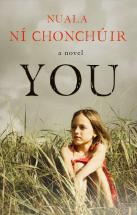
An interview with Nuala Ní Chonchúir about her novel, You


I am thrilled to be host this week to the most talented Nuala Ní Chonchúir on her tour of the blogs with her exceptional debut novel, You.


First, a bit about Nuala and her writing:
Born Dublin 1970, she is an award-winning fiction writer and poet living in County Galway. Her novel You was published by New Island in April 2010; her third short fiction collection Nude was published by Salt in 2009; The Irish Times called it ‘a memorable achievement’. Nude was shortlisted for the 2010 Edge Hill Short Story Prize. A full poetry collection The Juno Charm is due November 2010 from Templar. She is fiction editor of Horizon Review.

You is a second-person narration (the 'you' of the title) from the viewpoint of a thoughtful but feisty ten-year-old girl left basically in charge of her two younger brothers (aided and abetted by a couple of colourful neighbours), as their mother struggles with the emotional and practical trials of single parenthood, and as tragedy eventually strikes. The first thing to say about it is that I loved it, was completely engrossed by it, and from about halfway through I was in floods of tears while still having the odd wry smile. And now if you want my more professional writer's and critic's opinion I'd say that the book is most impressive in terms of language and voice as well as humanity and insight, and consequently is strong on vivid characterisation. It's a touching and generous portrait of the vulnerability yet toughness of people under stress, very moving yet humorous.

I asked Nuala about these achievements:

Nuala, the second person is notoriously difficult to extend over the length of a novel, yet you manage it with amazing ease and to my mind total success. Why did you choose this particular narrative mode?

Really the narrative mode chose me; my fiction begins often with the voice. For me, second person is a very natural, very Irish way to tell a story: close but at a remove. People say the second person is difficult to maintain, but like any voice, once you are in the groove of it – the grip of it, even – it flows and feels right. (Though in Ghost Light Joe O’Connor slipped between second, first and third person, which I found distracting.) Maybe it’s readers who fear the second person narrative? Personally, I love it. I loved Edna O’Brien’s A Pagan Place and Jay McInerney’s Bright Lights, Big City (both written in the second person).

I think the voice of the young girl in this novel is pitch-perfect, as are the voices of the characters she quotes, and I'd say from reading this novel that language is very important to you. Can you talk a bit about this?

I am in love with language, always have been. I love the way people talk, the expressions they use and invent. I’m from Dublin and the book is written in a Dublin vernacular that I am very familiar with. I’ve been a big reader all my life and I’m fan of stylistic writing. I love Banville, Proulx, Wells Tower – any writer who takes risks with language, who is playful. I also write poetry which is hugely about language and bending it. Jeanette Winterson has said, with regard to writing, ‘A tough life needs a tough language’ and I subscribe to that. I love when language and theme intertwine in a book and I hope I achieved that in the novel.

You certainly do. Telling a story from the viewpoint of a child while portraying ideas beyond the child's consciousness is also very tricky and again something I think you do with great success. It seems to me that the novel is about the vulnerability and toughness of children and adults, too, in the face of difficult circumstances. What made you want to tackle the particular themes of this novel, and choose to do it through a child's eyes?

Yes, the novel is about survival and trust and it’s also to do with the way children suffer when the people who love them let them down. Thankfully there is room for humour within all of that and telling the story from the child’s POV means you can maximise on that. I wasn’t thinking themes – I tend to write to tell myself a story and whatever happens happens. I’m not a plotter. But it’s challenging to tackle things like alcoholism, neglect and broken families. And satisfying when you work it all out.

The novel flows with a real energy - rather like the river in the story - especially in the second half, and I get the feeling you wrote it very quickly. Is that the case, and how does it compare to the process of writing for you generally?

It took a year from start to finish so not very quickly but it wasn’t a slog either. Having young kids tends to cut into writing time something fierce. But it also makes you productive because you will literally grab writing time anywhere. These days I write an awful lot slower because I simply don’t have the space in the day to write – my baby daughter is my priority. I’ve been working on one single story for over a year, for example. I’ve become a more ruminative writer, I think, and I hope that will prove to be to the good. However, in September baby’ll be in a crèche 3 mornings a week and I plan to write up a storm. I can’t wait!!

Thanks a million for having me here, Elizabeth. Next week I'm at Sarah Hilary's Crawl Space Blog

Nuala, it was such a pleasure - and a great pleasure indeed to have read your novel!

*

Quite frankly, folks, I read so many books that just float off into the great grey of Literature in my head, and so few that stay there with vivid pictures and emotions and indeed whole phrases, and You is one of the latter. I have a spare copy for one lucky reader: just put your name in the comments section to be included in the draw.

You can be bought from here.
To find out more about Nuala, go to her website here, and you can read her blog here.
Read last week's stop at Barbara's Bleeuugh!

Wednesday, June 30, 2010

Flying with Magpies book tour: Eco-Libris


The last stop of the tour for Too Many Magpies is up at Eco-Libris, with whom I'm planting a tree for every copy of the book printed, and I'm asked some fairly deep but very interesting questions about my take on the environment, which of course relates to the theme of the book.

And can I take this opportunity to remind you that via Eco-Libris you can also plant a tree for every book you read, which is a wonderful way of offsetting the environmental cost of printing books.

Tuesday, June 29, 2010

Magpies

I'm thrilled to discover that Too Many Magpies is 4th in Salt's current Top Ten Bestseller list. Thank you so much to those who have bought it, and I do hope you enjoyed it - I'm very interested in people's response to the book (one is always wanting to learn for the next book!) so if you want to let me know, I'll be glad to hear, whatever you have to say.

And if you want to take part in a discussion about it, don't forget the Salt Reading Group which kicks off on Twitter tomorrow with Too Many Magpies as the book for discussion. As I say, you can read about how to join in here. Tomorrow, too, the virtual tour for the book will come to rest finally in the tree-filled world of Eco-Libris, with whom I'm having a tree planted for every copy of the book - and I get asked some pretty tough questions about the environment, and how it relates to my writing!

Thursday, June 24, 2010

Flying with Magpies book tour: Debi Alper

Latest post for the virtual tour is up at the blog of Debi Alper, author of the feisty contemporary thrillers, Nirvana Bites and Trading Tatiana, where she generously provides a collection of resources about Too Many Mapgies, including an extract from the book and a short film in which I talk about it.

Wednesday, June 16, 2010

Flying with Magpies: Vanessa Gebbie's News

Today the virtual tour for Too Many Magpies stops at the blog of Words from a Glass Bubble author, Vanessa Gebbie. Vanessa was staying with me in the last couple of days, so, unusually for a virtual tour, we were able to conduct an interview in person. The night before Vanessa arrived I fell down a flight of stairs, and Vanessa uses this as a thematic springboard for a pretty wide-ranging discussion about not only Magpies but about my writing in general.

The fall was a pretty bad one, actually: I fell literally head over heels and knocked my head several times, but fortunately I have emerged with only soreness all down one side, several bumps on my head and a slight whiplash injury. I must say, though, that as I was falling and aware that my head was being knocked over and over, I really did think I'd had it, and those who have been following the progress of my current novel may be interested in the fact that as I lay on the floor at the bottom thinking I might be dying, the only other thing that went through my head was, 'Oh no, I never finished the novel!' followed by the next thought: 'Oh, well, in the greater scheme of things: another death, another lost novel, what does it really matter?'

Wednesday, June 09, 2010

Flying With Magpies: Barbara's Bleeuugh!

Winging back to Ireland today, and poet Barbara Smith's blog, for the tour for Too Many Magpies, where she gets me talking about the crucial issue of voice. She seems to have liked the novel, too, I'm thrilled to say: she calls it 'amazing' and says she read it in one sitting!

Wednesday, June 02, 2010

Flying with Magpies Book Tour: How to Write a Novel

Today my virtual tour for Too Many Magpies swoops down (do you think I'm stretching this metaphor too far, hee hee?) on the blog of Tom Vowler, How to Write a Novel, and in keeping with the thrust of his blog, Tom asks me chiefly about my writing methods.

Tom is now a fellow Salt author, as he is a winner of the coveted Scott Prize run by Salt, and I very much look forward to reading his winning collection when it's published in October.

Thursday, May 27, 2010

Flying with Magpies Book Tour: Tania Writes

The virtual tour for Too Many Magpies comes to roost today on the blog of Tania Hershman, fellow Salt author whose wonderful story collection The White Road and Other Stories was commended by last year's judges for the Orange New Writing Prize.


Tania is an excitingly imaginative writer whose stories often take off-the-wall ideas and run with them in an exhilarating way while yet illuminating the subtlest aspects of human nature, and in lyrical prose. It's no surprise then that she hosts my blog tour in an imaginative way, too: instead of the usual interview, she conducted a word association game with me - so be warned: my subconscious is on show!

Monday, May 24, 2010

The writing or the life

This is what I feel a cross-section of my brain must have looked like while I was beginning work on the present novel. On my current visit to Nuala ni Chonchuir's blog for my virtual book tour, I explain how hard I find it to concentrate on anything else if I'm involved in a piece of work, and vice versa: once my attention is scattered by external things the spell of the novel/story/play is broken. My novel was increasingly gripping me (which of course I needed it to do), and it was a stage requiring especial concentration because I was working out a new structure and grappling with a new voice. I needed to sit and listen to that voice and watch the new structure taking place, but there were other calls on my attention. Flying with Magpies, the virtual tour for Too Many Magpies, was beginning, and I had to turn my mind to its organisation, and to think about that novel instead. It's not as if I don't enjoy these virtual tours - I do; I really love the interaction with the blog hosts and their readers - but that's part of the trouble: it's so very distracting! And then I had to take time off to design leaflets and a poster for my Chorlton Arts Festival event, which takes place tomorrow evening, and to spend a morning delivering them. Here's the poster I designed: I have to say that with my attention at such a premium I didn't put as much care and time as I usually do into the design, but I guess it does its job.


It really felt as though the novel was being sucked out of my brain by these things. Anyway, they all got done, and the virtual tour seems to have settled into a routine now, and the novel seems to have taken good root in my head in spite of it all. In order to ensure that, I had been working really long hours on it, and my back was aching and I felt exhausted, and I must say pretty frazzled at the end of each day when I looked around at the mess in the house and turned to all the other things I had to do. I made the decision, having cracked it, that I need to pace myself and do fewer hours on it each day, and I felt secure enough in it to take the weekend off and take stock of it while clearing up some other things. Turns out it was a really good move: with the distance, I was able to think about an unformed worry that had been growing at the back of mind and see what it was: I needed to go back to the beginning and adjust the frame I had set up for the novel. Must say, though, that by the time I had spent yesterday afternoon planning the reading on Tuesday and doing an application for another arts festival, and with domestic stuff still to do, I just didn't get round to writing this blog yesterday evening as I meant to do...

Wednesday, May 19, 2010

Flying with Magpies Book Tour: Women Rule Writer


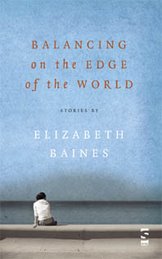
Today the virtual tour for Too Many Magpies alights on the blog of fellow Salt author Nuala Ni Chonchuir. As well as asking about the book she gets me talking about my weaknesses regarding the difficult issue of balancing the actual writing with all the other things you need to do as a writer - leave alone live a life!

Nuala' s striking Salt story collection Nude is deservedly shortlisted for this year's Edge Hill Short Story Prize, and she has just published her first novel, You, which I'm very happy to have just received in the post - it looks wonderful. I'm delighted to say that I'll be reciprocating when Nuala tours You, by hosting her here in July.

Wednesday, May 12, 2010

Flying with Magpies: Stop 2

This week's stop on the virtual book tour for Too Many Magpies is at the blog of the thoughtful and erudite John Baker, whose own tour for his impressive Winged With Death came here a year ago. John is very insightful about the themes of Magpies, and, I'm thrilled to say, gives it a lovely review, which ends thus:
Baines has a unique voice and it will, undoubtedly, be worth following up on anything she writes. This book is only 123 pages long, but bursting with ideas and surprises and humanity. It is touching and the emotional life of the narrator lingers in the memory long after the final sentences have faded. Highly recommended.
John also asked me some searching questions about my aims in writing novels and, since this is a theme of Magpies, our present-day sense of ourselves in the world - I had to think very hard about the latter! You can find his questions and my answers in the comments section of his post.

Thursday, May 06, 2010

Flying With Magpies Blog Tour: Sue Guiney's blog

Today is the day I start flying around the blogosphere with my latest novel Too Many Magpies, and the first blog I alight on is that of writer Sue Guiney. Sue is the author of the moving drama poem Dreams of May and the impressive novel Tangled Roots - she blog-toured the latter and I was delighted to host a stop here. Sue was one of a group of talented authors published by bluechrome, who were left high and dry when, without explanation, bluechrome disappeared off the face of the earth this time last year. It's hard to describe the feelings for an author when this sort of thing happens - the surface of your whole world spins away from under you, and there you are, floating in the cold dark space of Being Once More Unpublished and For All You Know Never to Be Published Again - and it's nothing whatever like Not Yet Having Been Published when you're full of hope and innocence about the difficulties writers can face, however talented (and still the potential Next New Thing). However, in Sue's case, I am really happy to say that her next novel has been taken up by another publisher and she will be Published Again, which is no less than she deserves.

In her interview, Sue asks me questions about the inspiration and impetus for Too Many Magpies, and my experience, which she shares, of writing different forms.

You can see the whole Flying With Magpies tour schedule here.


Wednesday, May 06, 2009

A conversation with John Baker: the virtual tour of Winged with Death

Today I'm delighted to be hosting John Baker's latest stop on the virtual tour of his new novel 'Winged with Death.' This is a gripping novel, for me in more ways than one.

Here's the stunning prologue:
Montevideo was a dreamland.

We stood facing each other before I offered the embrace. She with her head high and her breasts thrust forward. When we came together and moved away in the tango walk I could feel his eyes tracking us around the room.

I was young and he was old and in taking her I might as well have cut his heart out. but I didn't know that. Or if I knew I didn't care. An old man's heart; it wasn't something to grieve over.

The novel then begins with Ramon Bolio, formerly Frederick Boyle, relating how in 1972, aged 18, he jumped ship in Montevideo to start life anew and indeed take on a new identity, landing unsuspecting in a country on the brink of dictatorship. Very soon, though, this narrative is interrupted: Ramon tells us that here in present-day York he has had to stop writing it because as he was doing so his brother Stephen came to tell him that Stephen's daughter, Ramon's niece, has gone missing. From this point on two stories run parallel. On the one hand there is the story of how, while people began to be 'disappeared' all around, in Uruguay young Ramon became a Milonguero, a master of the dance, immersing himself in the tango, which, if I understand the novel rightly, is both a denial of and a rebellion against repression - finally waking up to the political situation and joining the resistance movement and ending up in knuckle-biting danger. On the other, there is the present-day story of his niece's disappearance and the police hunt for her abductor or, as time goes on, her possible murderer. And all the time we are made aware of Ramon writing down both stories, and of the way that present-day events hold the process up.

While both stories in themselves are gripping, I found this structure and its implications, gripping: the idea that stories vie with each other for significance and as the repositories of reality or truth.

I was therefore eager to talk to John about his aims in this novel, and the conversation we had follows below. But first, a biography:
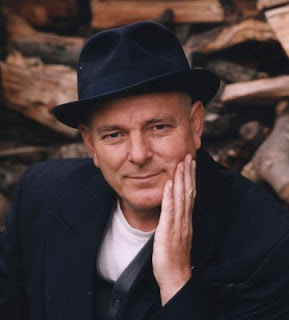
John Baker was born and brought up in Hull. He has worked as a social worker, shipbroker, truck driver, milkman, and most recently in the computer industry. He has twice received a Yorkshire Arts Association Writers’ Bursary. Married with five children, he lives in York now but has also lived in Oslo and a barn in France on the way there – long way for a short cut. In addition to Winged with Death he has published eight why-dunnits based in Hull and York - the Sam Turner series and the Stone Lewis series.

Here is our discussion:

EB: You've already talked on the tour about your themes of time, tango and denial and identity, but I'm really interested in how these are negotiated via the structure of the book. You've said that the two narratives operate like a tango, and I must say that I was excited the first time that the present-day narrative intruded, interrupting the writing of the older story (and this happens later again of course) - the way that, as you say in the book, tango partners move in relation to each other, invading each other's spaces. You say in the book too though I think that the tango is above all a communication - implying unity. Could you elaborate on the way the stories do this too?

JB: This is an interesting question. Winged with Death is the single story of a man's life. And it is a paradox, of course, that a life, any life is at one and the same time a single event while being made up of a host of different events and stories. Likewise with the dance, although the leader may indeed invade the other's space from time to time and the two dancers involved may dance conflict or disdain, loneliness or antagonism, these aspects of the dance can only really occur because of an inner unity or an understanding on each of the dancers' parts that they are dancing together. If that understanding, that unity is lost, even for a moment, there is a real danger that the dance will end up in a heap on the floor.
When I was writing Winged with Death I was aware of several stories going on at the same time (this is often the case in a novel); divided, in time, by two main narratives.
The earlier narrative, in Montevideo, concerns the experiences of a young man. The later experiences, in York, concern an older man. They dance together over time. They can never meet in actuality, only in memory. They are a unity, together they form a life. The young Ramon and the older Ramon are separated by time; but at the same time they are absolutely inseparable.
The two stories are dependent on each other. One cannot exist without the other. And in the dance there is no existence, no presence, without both partners.
That stability, that maintenance of form, represented best perhaps by the atom, is only possible because of the constant movement of its constituent parts. We can never step again into the same river.
Winged with Death aims to achieve its own unity by the interplay of its parts, the dislocations in time, the geographical, cultural and political differences between Montevideo in the seventies and York in the first years of the 21st century, and by the myths, musings, preoccupations and personal conduct of its main characters.

EB: This is fascinating, John, and very exciting. And yes, while your novel operates via those 'nudges' and interruptions, it does have a feeling of real synthesis: it's difficult, I find, (and reductive), to talk about one aspect of it without talking about all the others! Another moment which really struck a chord for me was the one near the beginning where Ramon talks about the possibility (or impossibility) of his present and past selves meeting up and comparing notes. While this obviously conveys your themes of dance and time, it’s also central to the notion of identity, isn’t it?

JB: Identity is another one of those endless quests. Like grasping or trying to grasp a fairy or a spirit. At last you get there and know you have it in your hand, but when you unclasp your fingers it has already flown. We always need to classify and measure and assess, to define and say this is it, now I have it, this is my identity. It's a kind of illness we have, a flaw in our makeup.
Because it doesn't take much reflection to see that we are in constant flux as long as we are alive. Our identity is whatever we are engaged in. Our characters are formed by the elements with which we are raised. We are the cumulative product of our past and the past of the fragments of culture we have absorbed and interpreted and the songs our mothers sang and the sounds in the night and a bright shiny day by the sea or in the back yard.
So identity is important, impossible but important. We would love to know the extent of our freedom and we can only begin to guess at that when we begin to discern if our knowledge is spontaneous or inherited.
This is complicated by questions of nature or nurture, by the old certainties disappearing, like nationality (the difference between the races); the death of god and our complete failure to find a replacement for Him. Our growing certainty over the last few hundred years that we are increasingly alone (or our capitulation into the fantasy of commercial religion).
Winged with Death begins with Ramon's reinvention of himself, his change of name and domicile, his willing absorption into a strange culture and tradition. He gives himself a new start.
In a way this happens quite frequently. People tell me, you get what you see with me. Or: I'm a simple man, or: I tell it like it is. They cannot accept the complexity of life, they want to lose themselves in the old religion or in over-simplifications like self-sufficiency. They dream of the countryside, seeing romanticized pictures of Hardyesque proportions.
All this is, of course, a kind of denial. It is stating that the overwhelming complexity of our lives is not necessary, that we don't need or shouldn't need to deal with it, that we can decide to say no to everything and achieve freedom through escapism.
But I feel more and more that the truth is complicated. That it is not possible to pinpoint who we are. That I am only the me that I am in this moment, and that in the next moment I may well be someone completely other.
I also believe that all of these questions of identity are touched on in one way or another in Winged with Death.
Like in any novel, some readers will pick up on this aspect of the novel, while others will not. A novel is a layered thing and a reader should be able to discover the layers they need at one particular reading. I suppose that is what is meant when people talk about a book having as many interpretations as it has readers.

EB: Well, for me they were a big thing in the novel. This idea that the truth and 'reality' are too complicated, paradoxical to pin down is a very important one to me (and I'm blown away by your moving explanation of it ), and it's one of the best things for me about Winged with Death. I'm wondering if this is something to do with your abandonment (for the moment) of the crime novel? I don't read crime novels as a rule, so in fact I'm pretty naive about them, but I have the idea that they are reliant on concepts of a single identifiable reality (solutions to mysteries and puzzles) and of course the search for identities in the most concrete sense of the word. Am I wrong here?

JB: I can't tell you if I have abandoned the crime novel. I don't want to write another one at the moment, and my current project, apart from promoting Winged with Death, is more of an historical novel than a crime novel, though I don't think of it in genre terms.
This time next year I may have changed my mind. I have still to conquer the future.
I think your idea of the crime novel and its limitations might be slightly skewed.
It is quite a broad genre. At one end these novels are exactly as you describe, and here I'm thinking of writers like Agatha Christie; the village mystery or the 'cozy', where something violent and completely unexpected happens within a small geographical and social area and the revelation of the perpetrator is (to me, at least) usually unconvincing and quite surprising. I don't regard this type of book as a novel at all. It is something else, more related to the crossword puzzle than to mainstream literature.
At the other end of the spectrum are novels by writers like Dashiel Hammett, Chandler, KC Constantine and George V. Higgins. These people write character based novels and are invariably interested in relationships and language and the interrelationship between individuals and society. They use the crime genre self-consciously, using perhaps a murder or other crime as a skeleton on which to hang a thinly disguised novel of manners or an excuse to introduce other concepts of a wider concern.
Between these two extremes there are, within the genre of crime or mystery novels, a seemingly endless array of side streets and alleyways which include sub-genres like historical crime or fantasy-crime, etc. etc.
Like any other genre, there is a lot of dross. But if you choose critically there are some real gems out there.

EB: Yes, I guess I was overstating my position a bit, as I do like Chandler for the very reasons you outline. And of course, Winged with Death plays with the genre because there's the hunt for the missing girl and a potential murderer in the present day. And now that I think about it, it's almost as if you're saying (in the novel) that the crime novel is one kind of truth out of many... ! (?)

JB: I didn't think I was saying anything about the crime novel in Winged with Death. However, as you well know, the writer is often the last person to know what is really going on.

EB: You've touched on the theme of denial in the novel, something I'm particularly interested in. Could you to talk a bit more about it?

JB: My neighbours’ daughter went down to four and a half stone (30kg) before they took her into hospital. Even then she had to be force-fed, insisting that she only needed to lose another few pounds and she would begin eating normally again.
I often recall Solzhenitsyn's remarks about his neighbours in Stalin's Russia. They would leave for work in the morning, he said, and there would be a car at the end of the street with two men sitting in the front seats. When they returned in the evening the same car would be in the same place, but with other men in the front seats. They would be told by neighbours and friends that these men from the car had been making inquiries about them. This might go on for several days, until one day the two men would arrive at the house with a uniformed officer and the subjects would be arrested and taken away, often never to be seen again.
Everyone knew the routine, Solzhenitsyn said. When the process first began it was a warning. The subjects could have got on a train and disappeared, sought help from relatives in another town; they could have done something to save their lives. But hardly anyone ever did. They preferred to believe it wasn't happening. Even though it would soon claim their lives, they preferred to ignore all the evidence.
According to Susan Sontag's son, David Rieff, she refused to accept she was dying of cancer until a few days before the end. A woman who revered reason, science and logic, and in the face of overwhelming evidence from the medics willingly entered a state of deep denial.
Denial is one of the most common defense mechanisms and one that we all use from time to time. We often refuse to acknowledge the existence or severity of unpleasant external realities or internal thoughts and feelings. Men who live in cultures with extreme notions of masculinity are known to view fear as a sign of weakness and deny their own feelings of fear.
Denial can also take on a mass form. There was a kind of national denial taking place during the 1950s when school children were taught to hide under desks in preparation for atomic attacks.
Today we all know about Holocaust denial, and even the denial of global warming.
But people generally accept that denial only takes place among others. They never do it themselves, they may understand the mechanism and understand why it happens, but it is invariably something that happens to others, never to me.
As a writer I find myself fascinated both by the personal and the social manifestations of denial. I see us going to the polls and electing chauvinistic politicians who are prepared to tell us anything but the truth. It is as though we have an internal picture of our world and we are prepared to spend an enormous amount of energy and time on maintaining that vision, almost at any cost.
This was one of the things I wanted to explore in Winged with Death, and why denial became one of the themes of the novel.


Thanks so much to John for such interesting insights into his artistic concerns.

You can buy the novel here.
John's blog is here.
Details of the rest of the virtual tour can be found here.

Monday, May 04, 2009

A guest is coming

I've been having a really interesting - no, inspiring - conversation this weekend with John Baker, who is visiting this blog on Wednesday (6th) on the virtual tour of his gripping new novel, Winged with Death.

Do drop in on Wednesday and read what we've been saying, and find out all about his novel!

Thursday, April 23, 2009

Some letters concerning Michael Kimball and Dear Everybody

Dear Everybody Reading this Blog,

I was so moved and inspired by Michael Kimball's novel Dear Everybody that I don't want to write the regular, judicious review I planned when I was first asked to take part in the book tour for its paperback edition, but would rather use the novel's more urgent approach and write you a letter.

I must say how surprised I am in retrospect that I didn’t already know about this striking, witty, and above all moving book. In case you don’t know about it either, I should tell you that it’s composed chiefly of suicide letters by Jonathon Bender: apologies, thanks, questions and explanations addressed to more or less everyone he had ever known and other things besides like The Easter Bunny and the state of Michigan, collected and arranged after his death by his younger brother Robert who never really knew him. The letters are interspersed with other documents found among Jonathon’s papers – newspaper cuttings, a yearbook extract, a psychologist's report etc – along with extracts from their mother’s diaries and Jonathon’s ex-wife’s funeral eulogy, and records of conversations between Robert and others as Robert began to piece together his dead brother’s life. Revealed in the process, mainly between the lines and thus with great delicacy and wit, yet very movingly, is a complex and misunderstood personality, a childhood of abuse and a subsequent life of mental disturbance. Least explicit yet most heart-rending are the letters referring to incidents in Robert’s very early life, and which take the (remembered) speech patterns and unknowing psychology of the child he was then:
Dear Mom and Dad,
Here’s the reason that I pulled the stitching out of my feather pillow and then pulled all of the feathers out of it too: I thought that I was going to find a bird.
What’s heart-rending is the implicit reason for the writing of this letter, the narrative between the lines: the fact that Jonathon would have got into trouble for this action, or even, as we come to realize, would have been beaten.

And the archival form of this novel is not just the vehicle for a story but is dynamic, for it is through arranging the letters and documents that Robert comes to reverse his formerly negative view of his brother, while at the same time the contrast between Jonathon’s version of things and the doubts that Robert still has about some of it challenges the notion of the reliability of either character and indeed all narrators. And here’s the most impressive thing to me – perhaps because it’s one of my own obsessions as a writer, but then I think it should impress everyone: what Michael Kimball has done is to portray formally the fragmentation of a life (yet in a holistic and wholly satisfying way) – something which the form of a traditional novel would belie.

But what I really want to say is just: Wow.

And to tell you that I cried. And smiled. And groaned, especially at the father’s speeches in the extracts from his conversations with Robert, when I also went physically cold all over.


Dear Michael Kimball,
There are things I am wondering about you that I know you can’t answer. Like, where did you get such a brilliant idea? (And have you guessed, I am jealous?) I know you have explained at other stops on the tour how you started with just one letter, that the whole thing just grew organically around it, that you didn’t know yourself where you were going, that you never plot your novels beforehand. But how come something so brilliant emerged? Let me put it another way: what makes you so f***ing innately, intuitively talented? And would it embarrass you if I said that the fact that your photo shows you have nice kind eyes is absolutely no surprise whatever when your novel displays such powers of insight and empathy?

Dear Alma Books,
Thank you so much for publishing Dear Everybody and making our literary culture that much richer.

Dear Publishing Industry in General,
Why don’t you publish more books like this – innovative, clever, attentive to language and to subtle and serious matters of the human condition, yet utterly accessible and engrossing? I read on an earlier stop of this blog tour that Michael Kimball’s first novel was rejected something like 119 times before it was accepted, and you probably know, don’t you, that when this happens to a writer of such important books as Dear Everybody, this represents a cultural disgrace?

Dear Everybody Reading this Blog,
Do visit the other stops on this great book tour, where Michael Kimball talks about his book and his writing in general (links at the bottom of this post).
Do also visit his website, and find out about his exciting life-on-a-postcard collaborative art project.
Below you will find a video trailer for the book, which Michael Kimball, I understand, had a hand in making.
Above all, I urge you to read this book. Order it now!


The other blog tour stops (all in April) completed so far:

Mon 13th Me & My Big Mouth
Weds 15th Dogmatika
Fri 17th The View From Here
Sat 18th 3AM
Sun 19th Lizzy’s Literary Life
Mon 20th Digital Fiction
Tue 21st Planting Words

and to come:

Sat 25th Writing Neuroses
26th Sun Just William's Luck

Wednesday, April 22, 2009

An advance notice

Tomorrow I'll be hosting the book tour for the paperback publication of Michael Kimball's innovative and moving novel, Dear Everybody, about which The Believer says: Kimball creates a sort of curatorial masterpiece. Do come!

Tuesday, April 07, 2009

Tangled Roots by Sue Guiney: the book tour

It is my great pleasure today to host Sue Guiney on her tour with her impressive novel, Tangled Roots.

Tangled Roots is a book which makes exciting metaphorical and formal use of the space-time ideas of physics to portray the lives of a mother and son whose relationship has been fraught and who indeed are finally more or less estranged. From different points in space and time, John, a physics professor, and his mother Grace present their first-person accounts – Grace from her old age, and John from a time after her death when he is forty years old, academically successful and good-looking, yet nevertheless alone in the world and suffering from the vague despair which has blighted his whole life so far, and for which indeed he still blames his mother. These accounts contrast deeply, yet by offering them in alternating sections, the novel slyly links them like the ‘entangled particles’ to which John refers, those quantum particles which, so the theory goes, retain a relationship to each other even when they are widely separated. It’s a story of Grace’s flight from tragedy across the globe, from America to London and back again, a tragedy which however re-emerges in the emotional consequences for her son. Telling this story to strangers is Grace’s old-age balm. And it is by telling himself his own story that John too can find his salvation, face his own past and move on to make not only a stunning scientific breakthrough but a reconnection with his family’s more distant Jewish past.

This is a novel about memory and the power of story-telling, about the nature of reality and the relationship of the past to the present, about the influences we have on each others’ lives – all my favourite preoccupations. I put it down burning with questions as to how Sue had achieved it, and here’s the interview we conducted:

EB: Sue, the usual advice to budding writers is 'Write what you know'. I'm so impressed by your panache in using theoretical physics both as subject-matter and metaphorically that what I want to know (!) is how much of it you knew beforehand and how much did you need to research? And what is your attitude to this idea, writing what you know and what you don't?

SG: About physics, I knew nothing. But I read and read and read, and then I reread everything I had already read and tried desperately to keep it in my head. It wasn’t easy, but I loved it. It forced me to think in different ways, to see the world through a different set of metaphors, and that helped me create the character of John. The question about writing what you know is a bit sticky. I don’t think you have to write only what you have experienced yourself, but I do think the best writing comes from a personal resonance with the writer’s own emotional life. For example, I have never (thankfully) been clinically depressed and hospitalized, but we have all experienced moments of extreme sadness and I tried to extrapolate from that experience, to bring it further into an imaginary realm. We all learn as we live, and so there is little that we can’t know if we are open to the world around us and the effect that world has on us. The writing, I would like to think, comes from that openness to experience. So, I guess the answer is yes and no :-)

EB: That's so true, I think - it really depends what you mean by 'knowing'. What about your theme of mothers and sons, though, which seems to me such a very specific relationship/experience - and which you underpin so cleverly with these space-time motifs? I know you've touched on it before on this tour, the fact that you have sons yourself, but what I'm wondering is, do you think you needed that experience to portray the relationship between John and Grace in such psychological depth?

SG: Certainly, my experience as a mother of sons urged me towards writing about that relationship, but I was also interested in exploring how that relationship can change when experienced by a different personality than my own. There is definitely a “what if” factor that goes into the writing, which is the imaginative leap. Writing allows me to place myself, in a different persona, into a situation and see how “I” might then react. In other words, “what if” I was a mother with the sorts of struggles that Grace faced? How would I react? How would that affect the relationships around me, not only with my son, but also with a daughter, my husband, my friends. I often joke that by writing about emotional crises I then don’t actually have to experience them in my own life. If I write about a nervous breakdown then I don’t have to have one myself. Handy, that.

EB: That's so interesting! In other words, it's quite the opposite of what people often suspect about the relationship of writers to their material! Now to turn from material to form. You write poetry and plays as well as fiction - including a play in verse which I find pretty awesome! Did you find that the skills and techniques you have developed in these other areas influenced the way you wrote the novel, or do you think that they are quite separate disciplines?

SG: I really believe that all writing must be poetry if it is to have emotional impact and truth. I have had several conversations with prose writers who claim they can’t write poetry. But when I read their beautifully crafted, metaphorical prose (like your is) I have to say that for me, there is no difference. That “prose” is also “poetry.” Okay, there are different line breaks, different uses of white space. But when the writing is really clicking and there is magic in the language and a moment is distilled to its most powerful, then that, to me, is poetry no matter what form it finds itself in. And that’s always what I strive for. If anything, I find that if I neglect writing poetry while I’m caught up in writing a novel, then the novel writing suffers. It has as much to do with my ears and the way I hear language as anything else.

EB: Ah! Personally, I recognize this: the 'hearing' of the language of a novel - but knowing that you're an accomplished violinist, I'm wondering how much of this for you is to do with the fact that you're a musician?

SG: You know, I have wondered about this. And although I certainly don’t think you need to be a musician in order to be a writer, I definitely think that my own musical abilities affect my writing. I hear cadence and rhythm in each sentence, and I know when I do revisions it is often a missed rhythm or a sort of dissonance which will signal that something must be fixed. Yes, the sound of the sentence even before the meaning of it. To be honest, it can make the editing difficult, because I get caught up in the sound of the language sometimes and lose sight of whether I’m actually saying what I mean to say! I’m very lucky to have these two strands to my bow (excuse the pun) and I certainly don’t take it for granted. If anything it makes me realize that I always need to practice more than I do...both the violin and the pen.

EB: Sue, thanks so much for such a great insight into your processes!


Do buy Tangled Roots. You can do it now by clicking here.

Sue's next and final tour stop will be at Nik Jones' place at the end of the month.

The previous stops were as follows:
Chez Aspie where the tour was launched
Jamieson Wolf who spent a week asking all sorts of questions and then talked about The Book Movie.
Tea Stains where Sue discussed the connection between art and science, and the importance of place in her writing
Trixie on the Hunt where she was forced to divulge what makes her tick
The Dotterel where she did some serious untangling
Tania Writes where sue and Tania Hershman got into the mind of the scientist.
BT-The Crafty Gardener where she talked a lot about Russia

Wednesday, March 18, 2009

The dribble interview! Final leg of my book tour

Well, my book tour finally comes to an end today on the blog of Tania Hershman, whose own amazing collection stories, The White Road is also published by Salt, a book of stories inspired by scientific ideas and taking off into the most inventive realms of the imagination. Tania conducted her own riveting book tour at the end of last year - hers was a pilot tour for the Cyclone book tour scheme which Salt recently introduced. She knew therefore how much hard work book tours can be - I have spent most weekends for the last ten weeks thinking so hard about my own writing and writing in general that I think my brain's about to implode - and how distracting from writing. Tania therefore decided to give me a break with a 'dribble' interview, that is, an interview in which each of the answers must be no longer than 50 words! It was a great relief, and great fun - and yet the interview is incisive, I think: no surprise, as Tania is a whizz flash fiction writer. Some of the flash stories in her collection are the best and the most resonant I have ever read; John says that too, and as a poet he has very high standards for flash fiction.

Today's interview is here, and don't forget that all of the Cyclone tours remain on the Salt website, and you can click back and read all the interviews where I bare my writing soul!

Wednesday, March 11, 2009

New leg of my book tour: prose v drama and adaptation.


The penultimate leg of my virtual book tour, Around the Edges of the World, is now up on the amazing blog of novelist Debi Alper - after endless technical glitches, apparently, so I'm even more grateful than I already was due to the fact that in order to host me she is stopping out from her amazing account of the Grenada revolution and invasion. (I wrote about this last yesterday, and about Debi's very striking and unusual crime thrillers).

Debi asks me about the differences between writing prose fiction and drama, and about the special problems of adapting one's own work from the first of these forms to the second.