Showing posts with label Literary prizes. Show all posts

Friday, May 14, 2021

New story shortlisted

I'm very happy that a new story of mine has been shortlisted for the Short Fiction Journall/University of Essex Wild Writing Prize. I'm not allowed at this stage to say which one of the shortlisted stories it is, as they have to be presented anonymously to the two judges who consider them at this stage. It's a nice boost, as I have felt at something of a distance from writing recently, other, more practical matters having kept me away from my desk and displacing from my head a new novel idea I've had brewing. 

Astral Travel keeps me busy: all four of the videos I made about novels with which Astral Travel has certain connections can now be seen together on my YouTube playlist.

And in June there will be a blog tour for Astral Travel, organised by the wonderful Anne Cater.

And now I think I have a few days at least to sink back into that day-dreamy parallel dimension that a new idea always is...

Sunday, November 18, 2018

Shortlistees for the Sunday Times/Peters Fraser and Dunlop Young Writer of the Year Award


I had a very good time yesterday at an event for bloggers, meeting the four authors shortlisted for the Sunday Times/Peters Fraser and Dunlop Young Writer of the Year Award.

All the shortlisted books this year are debuts, and two this year are non-fiction. Laura Freeman's The Reading Cure: How Books Restored My Appetite, part memoir and part literary appreciation, charts how the enticing descriptions of food and meals in literature cured her of her anorexia, and Adam Weymouth, a journalist with an interest in the environment, recounts in Kings of the Yukon a journey he made with his partner down that river in a small boat, and explores the impact of modernity on the progress of its King Salmon. The two novels, both written by historians, come already garnered with prizes. Fiona Mozley's Elmet won the Somerset Maugham Award and the Polari Prize, and has picked up several prestigious short- and long-listings including a short-listing for the Man Booker and a long-listing for the Women's Prize. Told in a lyrical yet tough language often recalling older dialect, the novel is the narration of Daniel, who has lived in the woods on the edge of society with his father and sister, but now something terrible has happened... Imogen Hermes Gowar's The Mermaid and Mrs Hancock, a historical novel featuring the real-life eighteenth-century 'mermaid' in the British Museum where Imogen was working, won the Mslexia First Novel Competition and was shortlisted for the Women's Fiction Prize among others.

Interestingly, this year only one of the shortlisted authors, Imogen, had done an MA in novel writing, and even Imogen agreed with the others that she likes best to work alone, to finish the entire first draft of a novel before showing it to anyone (I would agree!), and that she wrote The Mermaid and Mrs Hancock 'as an escape' from the novel she was writing for her MA.

I have to say that the authors were all lovely - entirely open and unaffected in spite of their success. This year I hadn't read any of the books beforehand, and I'm looking forward to them all. On the train back I started with Fiona's Elmet and was so engrossed I had no idea that the two hours between London and Stockport had passed, and I almost missed getting my things together and getting off in time.

l-r in the pic above: Adaam Weymouth, Fiona Mozley, Sunday Times Literary Editor Andrew Holgate, Imogen Hermes Gowar and Laura Freeman.

Thursday, October 25, 2018

Longlisted for V S Pritchett Prize

One reason I haven't blogged since I supposedly started again is that I came down with a horrendous fluey-type cold. (There have been other reasons: my mother has been seriously ill, for one thing - though I'm glad to say she's much better now.) While I was sitting in front of the fire shivering and sneezing and mopping up the drips from my nose, and generally wishing I could just lose consciousness and wake up and find it all over (I couldn't sleep I was in such discomfort), I happened to click on my phone and discovered an email from the Royal Society of Literature - I had been longlisted for the V S Pritchett Short story Prize! (V S Pritchett pictured left.)

To be frank, I simply didn't believe it, I thought I must be hallucinating with the fever. It was a story I had written very quickly during the summer while we were in Wales, prompted, out of the blue, by a real-life incident someone related to me, one of those things that just take hold of you, so move you that you have to write it down forthwithand since I wrote it right up to the deadline for the competition and had to bung it in in a great hurry, I considered it more or less a first draft, and really expected to get nowhere. (And I had even forgotten about it when I talked about my summer's writing in my Sept 3rd blog post.)

The next day - with my fever abated - there was the email still on my phone, but I still didn't believe I could have been longlisted, especially as the mail was addressed, 'Dear Prize Entrant': I thought someone must surely have pressed a wrong button, and the email should really have gone to someone else. And there was an embargo on the news, the whole thing was still shrouded in secrecy, which added to the sense of its lack of substance. A few days later, another email followed, inviting me to the award event, but once again my name was not in the mail - it was presumably a form mail sent to all short- and longlisted entrants - and I continued with the horrible sense that it was all a mistake. Finally, though, came a reply to my mail confirming that I'd attend, and at last I was addressed by name, 'Dear Elizabeth', and I had to believe it after all.

Anyway, I am of course very pleased. It's so funny how different stories work out, though: the story I mentioned previously, inspired by the transgender/intersex issues, and conceived well before the V S Pritchett story, is still undergoing rewrites, still struggling out from under the research I did (and my struggling obsession with it is another reason there has been no space in my head for blogging). It's not always the case, but sometimes the things you do most swiftly and intuitively turn out to be the most successful...

Thursday, July 03, 2014

An interview, a new Unthology 5 review and Short Fiction shortlisting

There's an interview with me about the inspiration behind my Unthology 5 story, 'Clarrie and You' - and about short stories generally - on the Unthank website. My interviewer was Mark Mayes, whose unsettling surreal story 'The Regular' also appears in the book. We interviewed each other, so my interview with him will appear soon.

There's also another extremely positive review of the book, this time by The Mole on Our Books Reviews: 'Another brilliant collection compiled by Ashley Stokes and Robin Jones that will add a seriously new dimension to commuting or coffee time.' Of 'Clarrie and You' he notes the 'secrets kept instead of honesty shared, but it's something you will have seen and maybe have been complicit in'. 

Oh, and I am thrilled that my story 'Looking for the Castle' has made the short list of the Short Fiction Journal prize, along with those of Catherine McNamara, Geoffrey Miller and Graham Mort.


Saturday, June 02, 2012

'Used to Be' review

I've recently been moaning about the lottery of competitions, but of course I'm thrilled whenever I get anywhere in one. Mind you, when I do I tend to find it's with stories I feel less satisfied with: stories in which the 'message' is too obvious, or simple, or the form too conventional, for my own purposes. It's no surprise, I suppose: there's always going to be a danger that when you're trawling through hundreds or thousands of stories, the more obvious things are going to rise to the surface. So I was staggered and delighted when 'Used to Be', which I consider one of my more ambitious stories, won third prize in the 2008 Raymond Carver competition, and I'm now pretty chuffed to have found this review of it by Rio Liang in the Carve blog's Spotlight series.

Thursday, May 20, 2010

Thrills and stresses

I had a lovely surprise yesterday afternoon: a story I had entered for the Bristol Short Story Prize had made it to the longlist. I was amazed, as I had rather forgotten about it, having a lot else on my mind, with the novel I'm working on. Strangely enough, I had only just been reading Adam Marek's piece on the Short Story Page, Five Mistakes I Made While Trying to Get Published, in which he says:
Don’t dwell on your submissions. Send them off and forget about them. You should push them from your mind so strongly that when you get accepted, you can barely remember submitting them in the first place.
Good advice, because, as he says, success is best of all when it comes out of the blue.

And then I had a really lovely little Amazon review for Too Many Magpies, which is short enough to replicate here in full:
Too Many Magpies is a fantastic short novel, full of mystery, humanity and depth. It is extraordinarily well written - in beautiful prose - and the question at the heart of it kept me hooked till the end. Very enjoyable and highly recommended by this lover of quality literary fiction. Baines deserves a wide readership & critical acclaim.
Not only that, but yesterday I reached a point in my current novel which allowed me finally to feel I was truly on the right track. As well as re-jigging the whole structure, I've been working on a new voice, and wasn't sure until yesterday that it was going to work, so up until now the process hasn't been without stress. And I'm finding once more how all-consuming working on a novel is for me: although I've already got a version on my computer and a printout sitting on my desk, I am still ending up writing the whole thing out, because the new voice is giving me new rhythms and tone, and too much reference to the old version destroys the sound of it in my head. And I still need, I find, to write by hand, which I'm not sure I'll ever get away from now: there's just something about that hand-brain connection and the flow of ink from my fountain pen. It's as though I'm painting the words and the scenes, and as with painting a lot of the emotion of the novel seems tied up in the curving movements of my wrist and hand. Which means that, having written all morning I'm having to type up in the afternoons. And since yesterday I was rather stopped in my tracks by the mid-afternoon news of the longlist, once I started again I was working until six, and then still had to go to the shops for something to eat and see to the washing...

But it damn well beats the times when you're blocked and not writing at all..

Sunday, August 10, 2008

Clouds in the hills and a story on the radio, maybe

Oh dear, this is turning into a blog about the ruddy internet. So OK, I got a better mobile broadband, and yes, it does work from the house here, but not when the weather is bad! And has the weather been bad up here in the hills! Here from the upstairs window where I sit at my laptop I should see a blue ridge of hills but all I can see most days is the cloud we’re sitting in the middle of, and the very nearby ash trees flinging themselves around with the kind of anguish I feel every time I try to connect up.

However, sometimes it happens and I find myself thinking what a miracle the internet is, instead of taking it for granted as we’ve all learnt to do in the past few years. Still, it can take several minutes – now and then 10! - to navigate between web pages, so I may not be very good on links, I’m afraid.

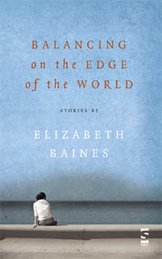
So anyway, I got an email through to my publisher Jen at Salt to tell her about my Raymond Carver win, and the next time I managed to hook up there was a reply from her telling me that my story ‘The Way to Behave’ is to be broadcast on Radio 4’s afternoon slot sometime in the autumn, probably in September – that is, if she received my answer giving the go-ahead: too many of my emails have been bouncing back! ‘The Way to Behave’ is one of the stories collected in Balancing, and it was originally commissioned for the Bitch Lit anthology (Crocus) with which we had great fun doing a series of readings dressed in character, since most of the stories, TWTB included, were dramatic monologues. TWTB is the story of a wronged wife, the narrator, who finds an unusual way of taking revenge, and is one of my naughty swipes at the abuses of feminism by so-called feminists. (My Aunty Phyllis read Balancing recently and pronounced TWTB her favourite in the whole book, so maybe I should be worried: but no, Phyllis was a WAAF in the war, and she’s pretty switched on about female power.) To read my character for the Bitch Lit tour, I dressed up, as she does in the story, as a vamp: red high heels, red nails, bright lipstick and dark wig, and when my mother and sister came to the reading we did at Sheffield, they sat there as the reading started wondering where I had got to, and didn’t realize I was me until I began reading! TWTB is one of the more conventional stories in Balancing, and so I suppose well suited to radio.

I haven’t been feeling very literary, though. Writing’s on hold as I’ve been too busy helping out with the work on this old family house, which was started two years ago, but is only ever done in people’s spare time, mostly in the summer. And do I really want to start writing a blog about lime plastering and woodworm?

Although, actually, a damned enticing story came to me the other night in the pub down by the straits…

Thursday, August 07, 2008

Raymond Carver short story competition

So there I was with my rickety mobile broadband, having driven all the way down the mountain and into Caernarfon before I got a connection, sitting in the car in the middle of the wind- and rain-swept Castle Square, and I finally got my emails - including one telling me that my recent story 'Used to Be' has come third in the Carve Mag Raymond Carver short story competition.

So let me eat humble pie. Honestly, always going on about how conventional and conservative short story competitions are, and how (nose in the air) I'm into innovation myself, and then I go and get a prize in one of the blighters! But actually, I must say that (though I may be wrong) I consider this particular story one of my most innovative - it's specifically and explicitly about the contingency of story and the fluidity of all those old short story tropes - metaphor, character, etc - in the face of our particular contemporary uncertainty. So I'll admit it, I'm really thrilled that it's been acknowledged in this way, and feel really privileged!

And I bought a different mobile broadband (what a waste of dosh!) and so though I'm still on the mountain I'm back in blogging business sooner than I expected...

Tuesday, May 13, 2008

Edge Hill Prize shortlist

So here's a prize I didn't get on the shortlist for:

Tania Hershman sends me this:

The second Edge Hill Prize shortlist was announced on Saturday 10 May, at the climax of the Oceans of Stories Conference, hosted by Liverpool John Moores University and Edge Hill University. Author Helen Simpson presented the shortlist, which was selected by three judges: author Hilary Mantel, BBC Producer Duncan Minshull, and Prof. Rhiannon Evans.

The shortlist in full is:

Tiny Deaths by Robert Shearman (Comma Press)
The Separate Heart by Simon Robson (Jonathan Cape)
Walk the Blue Fields by Claire Keegan (Faber and Faber)
The People on Privilege Hill by Jane Gardam (Chatto and Windus)
Old Devil Moon by Christopher Fowler (Serpent’s Tail)


It's hard to comment if you're involved (though I don't even know if I was involved, since each publisher was allowed to enter only two books and my publishers Salt would have had to choose between several of the short story collections they have published this year). So apart from noting that, unlike the Frank O'Connor long list, this one leans towards established publishers (Comma being the one truly small press), I'll confine myself to saying many congratulations to these authors.

More about the prize here.

Thursday, March 13, 2008

Some New Ambush by Carys Davies long-listed for Wales Book of the Year 2008

Last time I decided to go to Welsh Academy's Wrexham Library launch of the long list for the Wales Book of the Year Award, it was called off at the last minute due to snow, and yesterday I thought I might not make again it because of the gales, but luckily the winds died down during the afternoon. I especially wanted to go this time because I had an exciting hunch that my fellow Salt author, Carys Davies, was on the long list (I'm psychic, right? No, actually, I just picked up some clues and put them together) and sure enough she had, and had made it there too (in a roundabout way, due to the closure of the Thelwall viaduct)!

The three judges for the English Language prize were represented at Wrexham by writer and broadcaster Mavis Nicholson. Introducing their long list, she said that they'd had 200 books to consider (which is more than the Booker judges have to contend with). Like former Booker judges who have commented recently, she said that with such a large number the job was very onerous, and constantly going from one book to a very different other made it difficult to be sure to give each book the right kind of attention. She suggested, therefore, that in future, particularly in view of the fact that so many of the books had been 'fluffy', the organizers operated some kind of filtering system before handing over to the judges. She said also that the judges had been very struck by the poor editing of books nowadays and that it was very clear that many books are now hardly edited at all.

Then she announced the ten long-listed books, five of which come from small presses:

Winterton Blue - Trezza Azzopardi (Picador)
Hector's Talent - Kitti Harri (Honno)
Don't Cry for Me Aberystwyth - (Bloomsbury)
The Claude Glass - Tom Bullough (Sort Of Books)
Blue Sky July - Nia Wyn (Seren)
Trouble in Heaven (Gomer)
Some New Ambush - Carys Davies (Salt)
The Presence - Dannie Abse (Hutchinson)
The Master Bedroom - Tessa Hadley (Cape)

Congratulations to all of them and especially (since I know her) to Carys!

Mavis Nicholson happened to be leaving for the car park at the same time as John and me. She said her husband would be turning in his grave if he thought she'd judged a competition, since he didn't believe in them. I said, Well, I don't really, and I told her that I'm always going on about it on my other blog, but then when someone you know wins one, well you can't help but be very pleased indeed!

Monday, October 23, 2006

Rhyme or Reason

Yesterday I wrote on my other, critical blog about an article in the Observer by Jason Cowley on our current era of winners-past-the post cultural prizes. Afterwards I fell to thinking about the time I didn't actually win a glitzy prize but may as well have done, and got to experience how it felt.

The occasion was the Sony Radio awards. I had just had my first radio play, Rhyme or Reason, produced. One morning Robert Cooper, my producer, rang up and said that something wonderful had happened: my play had been nominated for the Best Production category, and Harriet Walter, who had played my protagonist, for Best Actress. I was invited to the dinner and ceremony at the Grosvenor Hotel, and since Harriet was in LA and wouldn't make it, would I collect her award if she won?

Crikey. Help. But yes!!! Yes!!

So off I went on the train, worrying about what I was wearing, worrying about getting up on that stage, rehearsing the speech I might have to make, almost shaking with nerves the whole way in fact, in through the doors of the hotel, down the stairs (behind Ned Sherrin, in fact) and into that vast ballroom filled with glittering tables. I'm not sure why I didn't actually faint.

And I couldn't sit with Robert, the only person there I knew; as a nominee (nominated for Best Production for two plays) he'd been placed at a table near the front, and I was stuck right at the back with a table of unnominated BBC employees. They had no idea of course who I was, and I was so small and black in my dress and my nervousness, so removed and silent in my agony (what if Harriet won?) that they clearly decided to leave me alone. I listened a little, understood that some of them were producers whose names I knew, but most of the time I blanked out. Needless to say, I hardly ate a thing.

Then the ceremony. I followed the programme, my heart going like a goose in a bag. 'Best Production.' Robert Cooper! 'Best Actress.' My heart flapped up my throat. 'Harriet Walter. Unfortunately, Harriet can't be here this afternoon, but the writer of the play, Elizabeth Baines, is here to collect her award for her.'

Funny things happen at moments like this. Not for nothing are they done in slow motion in films. That's exactly how they seem to happen. I stood, and in the space of what must have been only seconds - I had to get across that vast floor, between all those staggered tables - I saw in minute and leisurely detail the way the people at my table turned and looked at me in astonishment, the changing of their expressions to realisation and then delight.

In his article, Jason Cowley writes of how winning a prize can change someone's life as a writer, and it's true: even though I hadn't actually won a prize - it was Robert and Harriet who had won - in that moment I went like Alice through a hole into another dimension, out of literary anonymity into recognition, out from 'struggling' into 'established' and 'successful.'

That whole vast room clapping and cheering as somehow, remembering my performance skills, I got quickly across it. Jane Asher kissing me (she was presenting the prizes), then down off the stage to a barrage of flash bulbs. And back to the table and everyone there waiting to hug and kiss me. 'Congratulations!' they kept saying. 'But it's not me who's won!' I said. 'Rubbish!' said the woman with the long hair who had turned out to be the producer Enyd Williams. 'No one gets nominated for a play that isn't great!' 'It's your win too,' they kept telling me. 'Make sure you put it on your CV!'

And then they called me to go with them in their taxi for a celebration at the BBC.

And afterwards? Well, as a radio writer I was made. One unfortunate result was that Robert - Sony-award-winning radio producer - quickly moved off to TV and Dublin, but the prize made it easy for me to get another radio producer. 'Anything you write, I'll produce it!' said Sue Hogg, who did indeed produce my next play. (Though there came a time of course when BBC Radio embraced Marketing, and no producer could say such a thing.)

But you can't help thinking how much luck is involved. What if that play hadn't fallen into Robert's hands? I had entered it in a Radio Times competition, and it hadn't won that - wasn't even a runner-up - and it could have fallen into oblivion if someone running the competition hadn't made the decision to pass it to Robert. I could have taken it as a message that I couldn't do radio plays and abandoned the whole idea... What if Robert had been less ambitious, and hadn't bothered getting a well-known and respected actress to play the part (bound to get more serious attention then)? What if he'd been less good at marketing and hadn't created a series of linked plays of which my play was one (an innovation at the time, that got a lot of attention)? What if, what if... As various people have commented, not least Grumpy Old Bookman, people take prizes as serious measures, but there's much about them that's random and not a lot of rhyme or reason.