Showing posts with label theatre. Show all posts

Sunday, November 01, 2009

Literary Manchester

There's been so much literary happening recently, but I've been so busy with my own stuff I haven't had time to blog about much of it. First there was the Manchester Literature Festival, of which I only managed to blog the Fay Weldon event (briefly, and without reference to what she actually said). I put up some pics of Northern Salt which I took part in myself, but haven't even managed to blog it before now. Fortunately you can read detailed accounts of most of the events on the Manchester Festival blog.

Northern Salt was great fun. Not only was I reading with three other Salt authors - John Siddique, Mark Illis, and Robert Graham - but several other Salt authors came to the event: Steve Waling, Andrew Philip, Paul Magrs and Tony Williams, though Tony's train didn't get him there for the reading and he arrived as we were leaving the Whitworth, just in time not to miss us altogether, so he was able to come for coffee with us afterwards. Looking at that list I see I was the only girl amongst the boys (I didn't notice at the time: see, I just think of myself as one of the boys!), but then our lovely publisher Jen had come all the way up from Cambridge for the event, with a bag full of books for us all to sign, and Tony's brand-new copies. Also some of my female friends came to listen: among them my actor friend Mary-Ann Coburn, my erstwhile co-editor and short-story writer Ailsa Cox, and Ann French from the reading group - a real sacrifice from Ann, I'd say, since she surely spends enough time at the Whitworth as its textile conservator! Not that I even realized they were there until the end, as the audience was amazingly big for a Sunday afternoon. As we readers sat on the front row waiting for the start, Robert wanted to know which of us it was who had so many friends! MLF's Cathy Bolton gave us glowing introductions (as Robert said, it made you think: Is she talking about me?) and I loved the readings the others gave. The questions took us a little by surprise: I guess it's hard not to ask general questions of a largish group of writers, and we ended up talking about teaching creative writing and being published by a small independent, and even the somewhat academic question of the difference between poetry and prose! Here we are on the left wondering about the audience behind us:


What else besides MLF? Well, I went to a packed final evening of JB Shorts - the evening of short plays by TV writers at the Joshua Brooks pub - or rather, correction, I went to the second part of the final evening, having attended Michael Schmidt's memorable darkened launch at the Epinay champagne bar first. (Below is my pic of Michael reading by mobile phone flashlight), missing Trevor Suthers' play which I'd been particularly keen to see, not only because I'd promised him I'd go but because I'd been told it was brilliant. I was especially disappointed when, arriving, I found that actor Arthur Bostrom had been in it. The second half, which included a black comedy by Dave Simpson and a startling take on Brief Encounter by Peter Kerry, was excellent, and I'm not surprised that the whole enterprise has been nominated for a Manchester Evening News award. (There are also 12 24:7 nominations for this award, including several from three of the plays I put forward after initial reading because I loved them, and so I'm really chuffed).


Then on Thursday there was the first in this year's MMU series of readings, the launch of books from Carcanet by the innovative Matt Welton and Jeremy Over who was new to me. Adrian Slatcher offers his take on the evening over at The Art of Fiction. And last night John and I managed - just in time - to see Punk Rock by Simon Stephens at The Royal Exchange, which I expected much of but was rather disappointed in. About a group of students in a Stockport private-school library, it seemed to me a play which couldn't decide on its own focus and theme, and the Columbine-school-style ending struck me as lazy and gratuitous, inadequate as a pay-off for the various issues the play had raised. Plus, the loud music between scenes not only added nothing but was almost enough to make us throw ourselves off the top gallery where we were sitting.

Maybe I'll stay in a bit now...

Tuesday, September 29, 2009

Girls Allowed by Trevor Suthers

If you go to Taurus Bar on Canal Street tonight or tomorrow you can catch a very entertaining and also moving 45 minutes of theatre, as I did last night - Trevor Suthers' short play Girls Allowed, presented by Bootleg Theatre Company. There's not a lot of plot, but it really is a beautifully observed and very well-written study of the fears and desires of two teenage girls and their relationship. And it's just brilliantly performed by the two seventeen-year-old actors, Clare McCall (who, I'm not surprised to learn, has a part in the next Harry Potter film) and Emily Arnold.

And Trevor has a play in the next JB Shorts, the fortnight of short plays by TV writers at the Joshua Brooks pub which was such a sell-out success on its first outing in April. (6th to 17th October.)

There's just so much going on in Manc at the moment...

Thursday, June 26, 2008

The Revenger's Tragedy at The Royal Exchange

Last night I went to the Royal Exchange production of The Revenger's Tragedy. I won't name names but, bloody hell, actors just can't seem to speak early modern English dialogue any more.
I must quickly make an exception for Stephen Tompkinson who played Vindice: none of his TV appearances I've seen have indicated to me the stature of his acting, but after last night I'd say he's a genius. Eileen O'Brien, who plays his mother, was also as brilliant as I've come to expect of her.

I went with my son Matthew and we sat on the banquettes, and I have to say we got sore bums and just before the interval our backs started aching but it was worth it, and John, who didn't come because of the bad reviews the production had had, really missed out. I knew the play from university but I'd never seen it, and it really was an experience. As the RX programme notes explain, the Jacobean playwrights thought of themselves as writing modern versions of Roman tragedy, but had overlooked the fact that the violence of those Roman tragedies was merely reported and not enacted on stage. It was a pretty strange experience to watch the Duke having his eyelids slit and his tongue cut out (you just couldn't help thinking about how they were doing it), and, as the interval started, to watch a stage hand pick up the 'tongue' and put it into a plastic pot ready for the next performance. The production self-consciously acknowledged this difficulty in suspending disbelief for a modern audience (for instance, during the use of the Duke's dead body in an intrigue there's a dance sequence performed to 'The Sun Has Got His Hat On'), but whether it worked - along with the modern dress: guys in suits using daggers and killing dukes without redress? - we're still heatedly discussing. There's no doubt however that it's made an impression and that the images will stay with us for good.

Friday, January 18, 2008

Distractions

Last year I spent the whole of the spring and summer involved in drama productions, and when the New Year came in I made the decision that this year I'd spend more time at my writing desk - I've got a raft of stories I want to write and a novel brewing, and you just don't get them written, do you, when you're swanking about in front of the camera or tearing your hair out getting to grips with Photoshop and designing posters and spending all your creativity on press releases and blurbs?

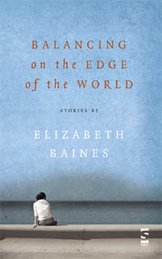
Well, last night was the launch of the Chorlton Arts Festival - now in its seventh year and growing rapidly - an evening for people to express their interest in taking part. Now there's a big emphasis on drama and music in this festival, but there's also poetry and there are talks and workshops, so I thought I should go along and offer something around my story collection, Balancing. (I would NOT take my acting CV, I would not start talking drama projects!!!!)

Well, I'm just about to leave my computer and get ready to go and an email pops through from Julie, a fellow actor from the short film I took part in last summer: was I going? She'd see me there. And who should I bump into the minute I step foot inside the buzzing Lloyd's Hotel but actor Nicola Gardner, with whom I read last year at the Jewish Museum, and already that rush of dramatic excitement is threatening to envelop me (the camaraderie! the transport of instant make-believe!), and then in comes playwright Caroline who says she's making films now, she's just made her first, and she nearly asked me to be in it, but then there was a funding crisis and she couldn't (oh damn! - no, I mean phew!), and Julie arrives and tells me she's seen the producers of the short film we were in and it's attracted huge grants and is causing a buzz and the screening will be soon, and then she introduces me to Emma who trained with her as an actor but is now producing and doing something for the festival and is collecting actors' emails, and Julie says to me, Have you put yours on the list, go on, put yours on, you've got to!

But I WILL get those stories written, and I WILL make a start on the novel. I WILL.

And actually, just being there gave me more short story ideas...

Monday, September 03, 2007

Never give up

About three years ago I sent a play to a theatre and received a discouraging response: my play wasn't really a play, it was far too schematic, the characters weren't fully rounded, and worst of all, I really needed to learn how to write dialogue and not have them spouting great explanatory speeches.

Well, you know how it is: you think, Couldn't they see that the style of the play was consciously chosen (rather than a mistake!), that the 'schematic' nature of the piece was deliberately devised as a comment on the schematic psychology of the characters, and that in any case it's subverted at the end? That it's not intended as naturalist, for heaven's sake - that televisual standard of 'rounded' characters' and real-life replicating dialogue? And that anyway, the things the characters say in their speeches aren't meant to be taken at face value, they are in fact subverted and overturned by the action? Are there no script readers in theatres educated in the history of theatre and who don't view life through the lens of Coronation Street!!!??? Didn't they read my ****ing letter and see that I have done tons of radio and can write realist dialogue whenever I like, thank you very much?!!! (And probably better than them!!!!) (You're getting vicious now and spitting.) Haven't they ****ing heard of me in any case?!!!!! Are there no script readers who know how to read a script? (You are practically foaming at the mouth by this time.)

And then of course comes the moment of doubt, when, even though you have thought all of these things, you think: But what if they're right? What if I am a crap writer after all? Because there's just no proof that I'm any good if I can't get past these script readers and get my plays on... And you start to think that writing theatre plays is a waste of time and you simply stop doing it...

Well, don't do that. In July I attended a panel discussion, 'Joining the Dots', at the Royal Exchange, held as part of the Manchester International Festival, and was greatly encouraged. One panellist was the inspirational Suzanne Bell, Literary Manager of the Liverpool Everyman - with its admirable record of showing new writing - who proved passionate about new writing. Another was West Yorkshire Playhouse Literary Manager Alex Chisholme who said (with what Chair Tony Clarke, AD of Hampstead Theatre, called admirable honesty) that working recently with a PhD student of Drama had caused her to think that British Theatre may well have been missing plays and playwrights by being too hung up on narrative and character because those are the things it's easiest to teach - at which Tony put in with the statement that he didn't in fact think it was up to other theatre professionals to teach writers how to write.

And guess what? Earlier this year I sent the play I mention above to the very same theatre all over again because the artistic director had changed. And when I got back from Wales there was a wonderful letter understanding everything I was trying to do and lavishing it with praise! They're not putting the play on, but the praise was really inspiring - and what's great is that they want to see anything else I may write.

So never give up, I say. And the best news is, I think things are looking up.

Monday, January 15, 2007

The Royal Court

In the wake of the recent debate about the failure of British theatres to value and nurture the individual visions of playwrights (in a culture of non-text-based theatre and the 'development' of writers by other theatre professionals), Michael Billington writes in today's Guardian supporting the argument - generally considered, he says, 'faintly derriere garde' - that 'while collaboration is a vital rehearsal tool, it rarely produces dynamic words on the page' and 'theatre achieves its greatest resonance when it expresses a solo writer's vision.'

As the directorship of the Royal Court passes from Ian Rickson to Dominic Cooke, Billington muses that Rickson's tenure has been characterised by a rare and 'obstinate belief in the solo writer'. Rickson nurtured writers in another way too, he says: encouraging their second and third plays in a 'culture where people are always frantically seeking the next new thing rather than admiring maturing talent.' He hopes that Cooke will continue in the same vein.

He hopes too that Cooke will fulfil his promise to restore the RC's reputation for experiment and move away from social realism - as indeed do I, a lover (and also writer) of theatre which offers different realities from those which to we are accustomed through television and film. And as we might expect from Billington, his final and biggest hope is that Cooke will produce a more socially-political theatre than did Rickson.