I'm really happy to see that Too Many Magpies makes the top 20 bestellers of the moment at Salt - in there at #6. Thank you so much to those who have bought it!
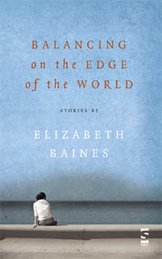
My story collection, Balancing on the Edge of the World, is in there too at #17, and Short Circuit, the Salt guide to the art of the short story makes #3!
Great to be there with all those other wonderful Salt books - mosey on over and have a look at them (and get yourself some great Christmas presents!)
Showing posts with label Short Circuit. Show all posts
Showing posts with label Short Circuit. Show all posts
Monday, December 14, 2009


Sunday, December 13, 2009
Ride the Word Christmas special including Short Circuit


If you're in London on Tuesday, then do come down to Cafe Yumchaa in Soho for a special Ride the Word event, at which contributors to Short Circuit, the acclaimed Salt guide to the art of the short story, the book's editor Vanessa Gebbie, Salt's editorial director Jen Hamilton-Emery and Prospect magazine's arts and literature editor Tom Chatfield will all be reading and talking as part of the programme. Ride the Word is a regular London reading night hosted by Salt authors poet Vincent de Souza and prose fiction writer Jay Merill, and the events are free. Details of Tuesday's event below:

CHRISTMAS SPECIAL
'Short Circuit' Celebration
at
The CAFE YUMCHAA
Tuesday 15th December 2009
6.30 for 7pm - till 9pm
45 Berwick Street, Soho, London W.1
With
Vincent de Souza,
Jay Merill,
'Short Circuit' Editor, Vanessa Gebbie
Salt Publishing Director, Jen Hamilton-Emery
Arts Editor of 'Prospect' Magazine, Tom Chatfield
and
Tania Hershman, Sarah Salway,
Marian Garvey, David Gaffney, Lane Ashfeldt
Elizabeth Baines, Chika Unigwe,
David Grubb, Alex Keegan
also
Floor Spots on first come first served basis
Hosted by
Jay Merill and Vincent de Souza
(nearest Tube: Oxford Circus, Tottenham Court Rd.,
All Oxford Street buses - to Berwick St stop)
Friday, December 04, 2009
The real life of readings and the reality of fiction
I really enjoyed the reading at Manchester Central Library on Wednesday (pics here). Of course I had my usual panic beforehand: would enough people turn up to make it worth the time and trouble of Libby Tempest, our lovely library host? As usual she had done masses of publicity (thank you, Libby!) and of course the library had designed one of their super posters - a copy of which I got to take home with me afterwards - but you know, you always worry: are you going to be the turn that doesn't attract the punters in spite of it all? And there was a very sticky moment when, at five to six, with only five minutes to go, there was still only a handful of people there and a call came through from my fellow reader Robert Graham to say he was stuck in traffic three miles off and probably not going to make it in time. Yet somehow he managed to be in the room at five past, by which time it had miraculously filled! And thank goodness, he had the box of red wine he had promised to bring, a great relief to the two guys who had found my choice of white pretty dire (for which I do apologize!). (See, you can't just sit at a desk, you have to be an events organizer and know about ruddy wine!).
Anyway, the reading seemed to go really well. I had promised to read something I hadn't read before as well as an extract from Too Many Magpies, as I knew some people were coming who had been to previous readings. A quick scan of the audience made me plump for 'Holding Hands', a story from Balancing I've never read in Manchester before, about the power balance between two sisters growing up and then at the point when their father dies. There was a great audience, with lots of interesting questions, and playwright Debbie Freeman commented that the work that Robert and I read out seemed pretty personal. She added quickly that she wasn't saying that it was autobiographical, or asking it if was, but went on to ask how we deal with making real-life experience objective enough for fiction (a subject I address of course in my contribution to Salt's guide to the art of the short story Short Circuit), and quite a good short discussion followed about the concept of autobiographical fiction.
Well, I'm not saying anything about that particular story - my usual policy - but I will say this: when I got home I had a very strange frisson when I realized something that, preoccupied with the reading, I had forgotten: that that evening was the very anniversary of the evening my father died...
Anyway, the reading seemed to go really well. I had promised to read something I hadn't read before as well as an extract from Too Many Magpies, as I knew some people were coming who had been to previous readings. A quick scan of the audience made me plump for 'Holding Hands', a story from Balancing I've never read in Manchester before, about the power balance between two sisters growing up and then at the point when their father dies. There was a great audience, with lots of interesting questions, and playwright Debbie Freeman commented that the work that Robert and I read out seemed pretty personal. She added quickly that she wasn't saying that it was autobiographical, or asking it if was, but went on to ask how we deal with making real-life experience objective enough for fiction (a subject I address of course in my contribution to Salt's guide to the art of the short story Short Circuit), and quite a good short discussion followed about the concept of autobiographical fiction.
Well, I'm not saying anything about that particular story - my usual policy - but I will say this: when I got home I had a very strange frisson when I realized something that, preoccupied with the reading, I had forgotten: that that evening was the very anniversary of the evening my father died...
Friday, November 13, 2009
Last day to win a copy of Short Circuit

Today is the last day to enter a competition to win a copy of the fabulous Short Circuit, the guide to the art of short story writing just out from Salt. Head on over to Salt's blog and get your entry in - it's a nice easy quiz for literary types! Here's Salt's information about the book:
Short Circuit is the first textbook written by prize-winning writers for students and more experienced practitioners of the short story. The 288 page guide brings together twenty-four specially-commissioned essays from well-published short story writers who are also prize winners of the toughest short story competitions in the English language, including five essays from winners of The Bridport Prize. There are interviews with Clare Wigfall, winner of The National Short Story Award — and with Tobias Hill whose short story collection won the PEN/Macmillan Silver Pen Award.I've contributed a chapter on the issue of turning real life into fiction, focusing on the story from Balancing on the Edge of the World, 'Condensed Metaphysics'. Editor Vanessa Gebbie had read the post on this blog about this story, and asked me to elaborate for Short Circuit, deconstructing the precise process whereby I turned a real-life incident into a fiction story. I'm very pleased to be in the book alongside such short story luminaries as Alison McLeod, Tania Hershman, Nuala Ni Chonchuir, Carys Davies and many others, and very much looking forward to reading their insights into the process of story writing.
And if you don't win, there's 20% off at the moment if you order via the Salt site.
Wednesday, October 07, 2009
Salt guide to the art of the short story

Next month sees publication by Salt of this book, edited by Vanessa Gebbie. I've contributed a chapter about the thorny subject of turning 'real life' into fiction, via a deconstruction of the creative processes in writing 'Condensed Metaphysics' (one of the stories in Balancing). Vanessa specifically asked me to write about this, and I did think twice about it - as you all probably know by now, I'm very wary of pointing out the real-life triggers of my writing, as I don't want to invite biographical readings of my stories as a whole: it's reductive and beside the point. But, in order to point out the dangers of doing so, I had written on this blog about the fact that I once made this mistake with this particular story, which led to its being published as reportage rather than the fiction it is. Vanessa had seen this post, and wanted me to elaborate. I just hope that the chapter underlines the fact that fiction is an indivisible meld of 'real life' and imagination, and doesn't solidify the story further as merely (and wrongly) autobiographical!
I'm very much looking forward to reading the other contributions: the contents list (below) looks exciting. I understand that Salt are looking into facilitating advance orders on their website.
Graham Mort: Finding Form in Short Fiction
Clare Wigfall interview: “I Hear Voices”: Voice, building character and much more
Alison MacLeod: Writing and Risk-Taking
Nuala Ni Chonchuir: Language and Style
Chika Unigwe: Settings. A Sense of Place.
Alex Keegan: ‘24’: The Importance of Theme.
Lane Ashfeldt: Building a World
Adam Marek: What my gland wants. Originality in short fiction.
Catherine Smith: Myth and Imagination.
Tobias Hill interview: Character, dialogue, and much more.
Sarah Salway: Stealing Stories.
Elizabeth Baines: True Story, Real Story – Good Fiction?
Marian Garvey: On Intuition. Writing into the Void.
Tania Hershman: Art Breathes from Containment. The power of the short short story.
David Gaffney: Get Shorty. The micro-fiction of Etgar Keret.
Elaine Chiew: Endings
Paul Magrs: Thoughts on Writing Fiction, at the End of Term
Vanessa Gebbie: i) Leaving the Door Ajar: On Opening the Short Story
Epilogue: Carys Davies, Zoe King, David Grubb, Linda Cracknell, Jay Merill, Matthew Licht.
Subscribe to:
Posts (Atom)