Friday, October 08, 2010

Results of draw!


Here are the results of the draw made by independent adjudicator John from each of three of our hats:

Kate Brown and Mary of the Shorter Stories blog each win a copy of the brand-new reissue of The Birth Machine.

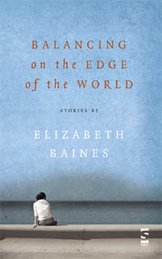
Michelle Teasdale and Alice Brockway (who came via Twitter) each win a copy of Balancing on the Edge of the World.

Angela Topping and Diane Becker (who came via Twitter) each win a copy of Too Many Magpies.

Congrats all, and please email me via my profile with your addresses so I can send your copies winging towards you!

Mary Sharratt posts about The Birth Machine

A nice piece about the reissue of The Birth Machine appears today on the blog of novelist Mary Sharratt, who with Maya Chowdhry edited the fabulous Bitch-Lit anthology I was thrilled to be included in. The piece touches on some of the history of the book's publication, so do head on over, and leave a comment if you wish: I'd be very interested in your thoughts. Thanks, Mary!

Wednesday, October 06, 2010

Given up!

OK, I've given in. Given up trying to write my novel for the moment. Just can't do it at the same time as launching another book. I'm not concentrating as well as I should on the novel, yet by the time I've been trying to do so for a whole morning I just don't have the whoomph I need for getting my head around press releases and pitches and mailing lists. And I'm starting to panic that if I don't concentrate on the publicity and organization I just won't get it all done in time...

So, speaking with my organizational hat firmly on now: don't forget that the draw for free copies of my novels takes place on Friday afternoon...

The Birth Machine has arrived!

And it's beautiful!

Tuesday, October 05, 2010

Progress report...

Well, to be frank, I'm struggling at the moment in my bid to keep on with my WIP now that the publication of The Birth Machine is hotting up.

These are the things I'm now engaged on:

Alerting people to the launches, one in Manchester and one in London (details in sidebar). This involves designing invites and leaflets and printing them out, inviting people by post and email, making Facebook events etc. Designing posters for the Manchester launch and spending time taking them around.

Spending time visiting bookshops with advance details of the publication.

Alerting interested academics to the imminent publication.

Writing and sending out press releases about the launches, and contacting listings with the info.

Designing postcards for more general publicity about the book and deciding whether to have them professionally printed.

Oh, and meanwhile I'm running my giveaway.

Maybe it doesn't sound as much as it actually is, but for one thing the emailing is taking ages, and for another my creative focus is now badly affected. Yesterday morning, after logging on to Facebook and Twitter to remind people about my giveaway - only a few minute's work, but needless to say I ended up getting involved in other people's tweets and status updates - I sat down to work, ostensibly for three hours, on the new novel. But they weren't productive. All that other stuff was crowding my head and the greatest part of my psychic energy went into suppressing it. And the words just wouldn't flow the way they have been doing and I kept getting stuck: basically, I was just no longer in the psychic space of the novel.

On Sunday night I attended the Jonathan Franzen conversation and reading at the Whitworth Gallery, and meant to post about it yesterday on my Fictionbitch blog. It was out of the question. After lunch I spent a couple of hours on emails before taking invites to the post, calling off at the library with information about the publication, visiting the printer to cost out postcards, and then came back and carried on emailing before supper and after supper started again. I ended up emailing until gone midnight, by which time I was so hyped up I didn't sleep well.

I'm about to log off now and try and write. Wish me luck!

Friday, October 01, 2010

Things happening...


I was on my way to London yesterday afternoon when this pic popped up in my mail box: The Birth Machine had arrived at Salt's offices from the printer! My very smiley publisher Chris at Salt says that if you order now from Amazon it will be sent as soon as the distributor releases copies...

I was in London for the launch of Sue Guiney's intriguing-looking novel about Cambodia, A Clash of Innocents, and had a great time. Here's a pic of her reading:


Look out for her visiting this blog with the book on 10th October.

And now I'm back in Manc and here we are at October 1st, the occasion for the giveaway I announced yesterday. Here are the details if you'd like to be in one or all of the draws for free copies of the three novels I've had published on that date: Balancing on the Edge of the World, Too Many Magpies and the first of the three editions of The Birth Machine.

Thursday, September 30, 2010

What's so special about 1st October? A giveaway.

Tomorrow's the 1st October and it's a very special day for me. It's the day that my novel Too Many Magpies will be exactly one year old, and the day that my story collection Balancing on the Edge of the World will be three! It's also the day that the first ever edition of The Birth Machine (which is being reissued by Salt on 1st November this year) was published. (See sidebar for pics and details of them all.)

So: to celebrate this extraordinarily special day in my life I'm giving away two copies of each of those books (The Birth Machine will be sent once it becomes available, which shouldn't be long now.) I'm announcing this today as I'm off to London in a short while and won't be back until later tomorrow.

If you'd like to be entered in the draw(s) for a copy of any or all of these books, just leave a comment specifying which ones(s) you'd like to be put in for. Remember - not long to Christmas, and they make not bad presents, though I say it myself!

And the reason for my trip? Another book launch: Sue Guiney's intriguing-sounding book A Clash of Innocents with which she will be visiting this blog on October 1oth.

Tuesday, September 28, 2010

A cost of publicity

Flow charts, schmo charts. Today was meant to be a really good writing day according my chart - Didsbury Arts Festival reading over, no publicity work to do. Huh. When I woke up this morning the adrenalin was still flowing, and I found it impossible to settle back into the novel, and then at lunchtime I crashed and have since felt exhausted. Just one of those subtle ways in which publicity efforts disrupt the actual writing....

Reading for Didsbury Arts Festival


What's enough to scare the pants off a writer about to do a reading? For one thing, being billed on a Monday night when no one goes out, for another being scheduled for the start of a festival before the whole thing has built up (and with a shorter festival period for publicity opportunities), and finally having a group of real-life scientsts turn up to hear you talk about the theme of science (and magic) in your work.

Well, all three conditions were in place last night, so you can guess how nervous I was altogether. But goddamit, something magical did actually happen: people showed up, and every seat in the room was taken, as you can see from the pic above (I couldn't get everyone in as the circle went behind me)! And the scientists were more than positive: they said that they felt I'd hit on some really important issues about science in my writing, in particular in The Birth Machine, which is now reissued by Salt. It's a long time since the book was first published but the scientists said that the issues are extremely current. After my reading there was a very lively discussion, as the pic shows, and I think nearly every person in the room contributed.

So it turned out to be a really good evening, and this was in no small part due to the ambiance of the venue, the beautiful Georgian house in which Judith and Bill Godfrey live and run the Manchester Language School, and to their wonderful attentiveness as hosts. They were so intent on setting out things exactly as I wanted it, and even troubled to light candles in the room where we served drinks. People kept turning up and saying, 'What a lovely house!', and so indeed it is, and I felt very lucky to have it as my festival venue. Thanks so much to Judith and Bill, and also to festival organiser Maria Stripling and all the other festival workers, and many thanks to everyone who came and contributed to such a lively night.

I'll be having two official launches for The Birth Machine re-issue, one in Manchester on Wednesday 27th October, 7 pm at Waterstone's Deansgate, and another in London on Wednesday November 10th 6.30 pm at Blackwell Charing Cross Road.

Moor Cottage

Monday, September 27, 2010

Pics from Didsbury Arts Festival

Some more photos from Didsbury Arts Festival. Nick Royle reading yesterday afternoon from his bird stories and some of his audience outside Fletcher Moss cafe (where the RSPB was founded), and the Tibetan dancers and musicians who followed him.


Sunday, September 26, 2010

Novel progress and Didsbury Arts Festival

Well, I must say the safety-net of my flow chart has been working brilliantly. I've been spending no more hours than usual on my novel but they have been very productive, even in the run up to a big publicity push, because I've had peace of mind for those few hours each day, knowing I'll still get everything done. I am though now in the full flow of the centre of the novel, with the characters long set up and the structure long established and lots of things falling into place, so I'm not sure it would all be working quite so well if I were at that early stage when you have to juggle so many possibilities in your head...

It's all been a bit stalled since Friday evening, however, as the Didsbury Arts Festival is now upon us. In fact, the art previews started on Thursday evening, but I missed the first one - Phil Portus's lovely photos of France at the Cafe Delice: I got the time wrong, and turned up at 6 just as it was finishing (but then I was just emerging from great immersion in the novel, and not quite yet connected back with the real world). Here's a sample:

I managed to make the next preview, on Friday evening, at the Feel Creative Gallery, where more of Phil Portus's photos were on display along with those by Martin Malies, Ray Grover, Ged Camera, Jo Kaberry and Sharon Hibbert. A really good exhibition, one of which - Phil's photo of the Cherry B swing singers below - had been in the Royal Photographic Society Exhibition.


There are exhibitions of artwork all over Didsbury, in many shops and businesses (list via this link), and the festival is extremely lively. Yesterday morning, outside the library, I caught the very funny outdoor theatre Fairly Funny Family and their Cheesy Trailer


and a team of Eastern European dancers (I don't think they were actually Eastern European):


In the afternoon, I popped up to the open-air events at Parsonage Gardens to hear Linda Chase read some of her great poems between various musical acts, and in the evening I went down to the Albert Club for a short while to catch a bit of Mish Mash, the cabaret that my old writing friend Julia Brosnan is in, but unfortunately I had to leave before she came on.

And in between all this, I kept slipping home for brief periods to work on my own reading and talk for Monday night at Moor Cottage (7 pm), where I'll be concentrating on the themes of magic and science in my work (oh, and I popped into Oddbins for the wine I'll be providing!) - although I have to admit I did bump into my colleague and fellow Salt author Adrian Slatcher, who will be reading at Pizza Express on Thursday, and ended up gassing over wine in Saints and Scholars, so I'm sure you can guess I haven't got my plan quite sorted yet, leave alone touched the novel...

Today I'm off up to Fletcher Moss Gardens to hear Nick Royle read one or more of his bird stories, as he did last year, at 2 o'clock outside Fletcher Moss Cottage where the RSPB was born, and kick off a whole afternoon of outdoor events there. The weather's cold but it's lovely and sunny, as it was yesterday, so it should be good...

And this evening I hope to get up to the Didsbury pub to hear Conrad Williams, who has just won the British Fantasy Awards, read from his novel Blonde on a Stick (7.30 pm).

Other literary highlights are:

Salt poet Steve Waling and Edmund Prestwich at the library (unfortunately they clash with me at Monday 7 pm!)

Poets John McAuliffe, Rachel Mann and Annie Clarkson at the Northern Lawn Tennis Club on Tuesday, 7 pm

An evening of readings from Nick Royle's short-story chapbook press, Nightjar, again at the Northern Lawn Tennis Club, Wednesday, 7 pm

Cath Staincliffe talking about her latest novel The Kindest Thing at the Didsbury Pub, Thursday 7 pm.

Cath clashes with Adrian Slatcher and James Davies, but I won't have the agony of choice as I can't go to either, unfortunately. I am doing something exciting, though: that's the day I'm off to London to the launch of A Clash of Innocents by Sue Guiney, who will visit this blog with it on October 10th.

Tuesday, September 21, 2010

The Birth Machine at printers!

The reissue of the The Birth Machine approaches, and I'm told that it's now at the printers'!

Too Many Magpies is also on another printing, and also due back from the printers any day now, with the three tiny typos I found corrected and a nice new quote on the front, I'm told.

Now I think I may be too excited to go off and clean the toilet ready for the new writing group which my reading group has decided to form...

Monday, September 20, 2010

Sean O'Faolain commendation

I'm thrilled that my story 'Falling' has been Highly Commended in the Sean O'Faolain Competition.

It's one of the series I'm writing on uncertainty, and since it deliberately breaks one of the hallowed rules of fiction-writing by playing with the 'is it all a dream?' notion, I'm really pleased that the judge saw what I was doing and saw fit to endorse it in this way!

Sunday, September 19, 2010

Reading group: Dirty Weekend by Helen Zahavi

Jenny suggested this 1991 book in which a stalked woman, Bella, turns stalker and takes revenge by killing a series of woman-abusing men.

It led to a pretty rowdy meeting in which there was a lot of interrupting (and objections about interrupting) and I don't remember a particularly coherent thread of discussion, more a series of statements of opinion and remarks.

Jenny said it's her favourite book ever and that she often re reads it. She loves it for its political message about masculinity, and she particularly loves the language which is both poetic (in its stark repetitiveness) and funny (there's a lot of narratorial punning) and it always makes her laugh, although she doesn't like the end quite so much, as she finds that disturbing. She feels that it's a book that was really written out of its time, and that it may have had more impact if it had been published in the seventies or eighties.

Some people were looking a bit dubious as she was saying all of this and then there were one or two doubting questions, none of which I can remember, before Jo said strongly that she didn't like the book at all; she had found it utterly horrifying - that moment when she smashes the first man's head with a hammer, all those horrible details, ugh (and Jo put her head in her hands), and how on earth could Jenny find it funny?

People pointed out that it was full of puns, though most people, especially Hans, thought they were groan-worthily awful, and Hans quoted perhaps the worst, the narrator's comment: Ask not for whom the Bella tolls. Clare said she had found Bella's own repartee (in the various conversations with men she has throughout the book) witty, although I said I hadn't been that comfortable with it, finding it rather forced. Trevor said that he had thought the humour was great - the book had been a great read - and one thing he really liked about the book was the way it shifts from viewpoint to viewpoint, sometimes even halfway through a sentence or paragraph. This point wasn't taken up, but in retrospect I think it was a significant observation since the book is enacting and playing with a shifting of viewpoints and identities by moving Bella, the femme fatale, into the avenging central position usually held by a male character.

John commented that Jenny's response to the book was a rather sociological one, and Jenny agreed and said it was bound to be, as she is a sociologist. I then said that the problem is that you need to bring to the book those sociological understandings and read it as an iconic parable about masculinity, a tongue-in-cheek subversion of film noir. Interpreted in that way the book is brilliant. The trouble is that if you don't look at it in that way - and clearly some people hadn't, and indeed I hadn't, either, when I first started reading it - then you have a reaction like Jo's. I said that my problem with the book was in fact the jokes, though Trevor objected to my saying that there were jokes, so I probably should have more accurately referred to the jokey, punning tone. I found that it distanced me from Bella's plight as a victim at the start of the novel and at most of the points where she was threatened by the men. In fact, I usually have a problem in any writing where violence is treated with any kind of comedy. In direct contrast to Jenny, I found the end of the novel far more persuasive, when the jokey tone is dropped, which allows you to identify with Bella under threat. It seemed to me that while the satirical aspect of the book is consciously political, it's less politically dynamic than the later moment which has the power to move the reader on a deeply emotional level - indeed, it is the power to move emotionally that is the political power of fiction, in my opinion.

Jenny then told me to let someone else speak and went on to say more herself, but I was too shocked at being accused of hogging the debate to grasp what she then said, although I think this was when she objected that she could identify totally with Bella's sense of threat at the start of the novel.

People asked Hans what he thought, as so far he hadn't said much, and he said that he'd had a problem with the novel because it seemed to imply the feminist statement that he'd heard only recently, that all men were rapists. Jo joined in and agreed and reiterated how horrible she had found it and also questioned the morality of it, since the protagonist only took on the characteristics of men that the book was meant to be critiqueing. I said I was interested to hear Hans's view, as my problem with the kind of feminist strategy this novel employs is that, by seeming to imply that (ie that all men are rapists), it alienates men. Jenny explained that that notion had come from Susan Brownmiller who hadn't meant it literally (although it was true that other feminists had interpreted literally): Brownmiller was saying rather that all men were in a position to rape. I agreed and said yes, all men have the choice to use their masculinity against women, a choice women don't generally have, and what this book is doing is pointing that out by turning it all on its head. Jenny said, rightly I thought, that the book is not about men but about masculinity. You are not meant to identify or sympathise with Bella in her scourges; you are simply meant to see that she takes on masculinity (and I can see that this is the point of the distancing humour).

At this point people seemed to me to begin to become more positive towards the book. Clare said that she had found it very engrossing and that it read like a poem and an allegory or fable, and also that it was rather like a Greek tragedy, and people agreed. Someone pointed out that not all the men in the book are masculine and rapists or killers, and someone else, I think John, pointed out that it is the two who are not who give Bella both permission to take on masculinity and the phallic means of revenge, the flick-knife and the gun. Ann pointed out the strange stilted and artificial flavour of the meeting with the first of these, the maimed Iranian counsellor Nimrod, and it was agreed that this was a deliberate setpiece in which he operated like a kind of fairy godmother, granting Bella her wish.

Jenny and I pointed out that throughout the book Bella addresses a darkening series of male abuses of women, beginning with the voyeur and ending with the serial killer. John commented that Bella progresses through various states of revenge, moving from the status of victim to avenger of her own wrongs, through superhero saviour of another woman, to finally saviour of all women by despatching a serial killer. Someone picked up on the title of the book, Dirty Weekend, which refers to the fact that Bella's revenges take place over the course of a single weekend, but which as Jenny said usually implies a sexual coupling (thus graphically illustrating the conflation of sex and violence in masculinity). I said yes, that connection is borne out by the fact that in the final scene Bella's attack on the serial killer is narrated in terms of sexual congress.

Someone demurred that it was hardly realistic that Bella was able to do some of these things: there she was suddenly able to drive a car (the phallic symbol she steals for herself from her abuser and drives into him) like some kind of pro. But others of us said, It's not meant to be realistic (and, in a pointed reference to its fim-noir subversion, the narrative consciously states that this scene happened like something out of a film).

At which point Hans said he was starting to think better of the novel...

Ann said that her main thought was that Jenny was right in saying that the novel was of an earlier time (even than its publication), and that our attitudes to the problem of masculinity/femininity, and our ways of addressing it, are now more subtle.

Finally, Trevor said he thought it was wrong to put all these feminist and so forth interpretations on the book: as far as he was concerned it's just about people, and a really good read.

Our archive discussions can be found here and a list of the books we have discussed, with links to the discussions, here.

Monday, September 13, 2010

Going with the flow

Think the flow chart may be working after all.

I had a very productive morning's work yesterday, and then, because, according to the flow chart, I had only one small thing to do for publicity the same day (the publicity blurb for Deansgate Waterstone's who are hosting the official Manchester launch for the reissue of The Birth Machine - see sidebar), I was able to take the afternoon off with a completely free conscience, and I properly relaxed for once. Previously, I think, I'd have felt compelled to get on with some of the many other publicity tasks ahead of me, as I'd have thought of them as piling up not yet done, rather than knowing that each one has its thought-out appointed time for completion. Either that, or I'd have forced myself to take time off but would have spent it worrying about the jobs not being done and failed to relax properly.

The really great thing about a flow chart is that it makes plain that there really is free time, and that you can take it in the knowledge that there will still be time to get everything done, and as a result you can relax properly when you do.

And I slept right through last night...

It's mad, really, that I haven't done this before, especially when one of my jobs once as a teacher was helping children to plan their study schedules...

Had a slightly curtailed writing morning today, though, as I went to distribute some posters for my Didsbury Arts Festival reading. Seems daft, I know, to take up writing time doing something I could wander around doing any other time, but I'm told the Library do their notice board once a week, on a Monday morning, so I had to get in there early today if I wanted my poster to be up the full fortnight. And Monday morning's really the best time of the week to go round the shops with posters, when the shopkeepers are just sitting there waiting for the week's custom to start, and happy to have any diversion.

So yesterday I'd say it was 5 to writing, 1 to publicity, and today 2 to writing and 5 to publicity (since I'm about to go out and do some more distribution).
Working out fine so far, on average.

Sunday, September 12, 2010

Killing or saving your darlings

Here's one reason why writing takes time:

There is a scenario, a single scene, with which I have been obsessed for years. I've had several gos at writing it: it's been a short story which I've tried at least twice to write and then abandoned. Somehow it kept coming out in a style that just wasn't me, really: too realist, somehow, with too much of a self-conscious moral which I didn't believe anyway, not really, it seemed somehow forced and fake. And the whole thing seemed thin, didn't have any real substance.

But it kept bugging me. Something about it must be important, after all... And I started to think that what was wrong was that the incident was not so much too flimsy as the tip of an iceberg of issues that the short story form hadn't been able to accommodate. It was, after all, I began to think, a scene from a novel.

So there it was in the first draft of my WIP. But there was still something wrong. It kind of floated, separate from the rest of the story, as a flashback, and again something wasn't gelling. And writing the second draft didn't change that. When I came to this third draft, I considered leaving it out altogether. It was just a darling that needed killing, after all, wasn't it? It didn't really move the plot along; it was just a nice little set piece with some good images which, let's face it, held up the action.

Yesterday morning I reached the section of the novel where it was included, and was prepared to cut it. But no, I couldn't: it just resonated too strongly for me. But then I had a problem deciding on the new order of events for the whole section, and I knew that this particular scene was at the heart of the problem. I made my decision but by the end of the day I didn't have that satisfied gut feeling you have when a piece of writing works. Today I came to type up the section, and I saw that indeed the order was wrong: that particular scene needed to come much nearer the beginning of the section.

And guess what? Moving it there, and the rewriting that that required, suddenly revealed to me the true meaning of the scene, a meaning that had previously been hidden from me, and which makes the scene after all utterly central to the novel...

It's because of this sort of thing that I always say: even when you cut things, always be prepared for the possibility that you'll need to put them back in...

Saturday, September 11, 2010

Trying to keep the balls in the air (and the knots out of the stomach)

Well, that's not worked out perfectly so far: last night I woke up with the realization that I'd left something off the flowchart that was meant to save me sleepless nights thinking about all I had to do for publicity and trying to remember it. And I couldn't get back to sleep...!

Sue Guiney, who has a new novel coming out this month with new independent Ward Wood, has said on my Fictionbitch blog that she is planning to take a whole year off writing in order to promote the book, A Clash of Innocents, and maybe that's the only sensible way to go. But having done no really solid and sustained writing between the publication of my story collection Balancing on the Edge of the World in October 2007 and April this year when I got down to work in earnest on my novel in progress (with the publication of Too Many Magpies in between last autumn), I've decided that I really can't afford to stop altogether for the reissue of The Birth Machine next month. For one thing, if I did, I'm sure I'd lose the thread of the current novel. If at all possible I'm going to try and keep going while simultaneously working hard on the publicity.

So how's it going, you may wonder? Well, yesterday and today I managed two solid mornings of work on the novel from nine in the morning till one-thirty, and later yesterday I fulfilled the requirements of my flowchart by designing posters for my Didsbury Arts Festival reading and talk on 27th September and creating a Facebook event for it. (Today I'll have spent a good chunk of the afternoon getting back to blogging.) Can't say, though, that yesterday was easy. Although it's true that I'm at a tricky point in the novel, where I'm juggling several threads (and trying to make it look seamless and simple), I can't help feeling that the peace of my Wales retreat, where the connections and sequences seemed just to present themselves to me, would have been more conducive, and that there I'd have had to wrestle with it all less hard. And it's a point in the novel where I'm alternating between two different time levels and different psychic states for a character (while again trying to make it seamless) so it's taking a lot of mental and emotional energy.

And then, quite honestly, after a morning of doing that, I could hardly face sitting at the computer and designing the posters, a job that in other circumstances I can really enjoy, and I really had to force myself to do it. And I'm not sure I had the proper concentration. I thought I'd finished, and, in a hurry to get the job over with, I printed them out before realizing I'd left out some vital information, and will have to print them again...

By then, 4.30, I'd really had enough of the computer and just couldn't get my head around any more publicity collation and blurb, and anyway we needed food for the evening meal, and I'd promised myself a proper break and some exercise (because in the last couple of years glued to the computer I've got so unfit), so out I went shopping and walking. When I got back, I felt refreshed and was keen to get creating my Facebook event, but by the time I'd done that (and had a stupid problem loading up the image) it was 8.00, and we still had the evening meal to prepare and eat, and I still hadn't been on Twitter properly, as I'd intended. Just as I thought I'd finished, a nice email came through from Waterstone's Deansgate about my official Manchester launch for the reissue on 27th October, asking for some publicity blurb, which I really appreciate.

Meanwhile all the time at the moment there's the great mound of washing, including bedding, which we brought back after several weeks in Wales without a washing machine, into which I have to keep trying to make inroads. As for reading, that's confined to half an hour in bed at night: in Wales I finally began reading properly Jenn Ashworth's A Kind of Intimacy, and was really enjoying it, but have had to abandon it for the moment for the book we'll discuss in the reading group next Thursday. This once-voracious reader is now getting about 10 pages read a night...

We don't go out much nowadays, and I guess it's no surprise. And I'll probably forever regret confessing this, but quite frankly when there's so little time in the day, showering and washing your hair begins to seem like an expenditure of time you simply can't afford...!

The glamorous life of a writer, eh?

Well, maybe I'll get on top of it all. After all, I know I'm luckier than a lot of other writers, who have 9-5 jobs and young children or other caring responsibilities...

Thursday, September 09, 2010

Is a flowchart the answer after all?

Well, my retreat is over and I'm back in Manchester and ready for the onslaught of publicity with launches and readings for the reissue of The Birth Machine (details of the three public readings can be seen in the sidebar here). Must say that as soon as I got back my head started filling with all the attendant stuff that in Wales I was able to suppress, and last night I woke up with the sudden thought of things I had to do, and then couldn't get back to sleep for worrying that I'd forget them - and thinking of more, of course.

So today I decided to make myself a flowchart, something I haven't done since I was running the short-story magazine metropolitan, in the hope that I would lose no more sleep and that this time publicity wouldn't interfere with the headspace I need for the novel in progress. And I do seem now to be solidly psychologically grounded in the novel after spending several weeks with it exclusively - in spite of last night's tossing and turning, I managed to write for the whole morning today without being distracted once by thoughts of other things.

Well, we'll see how it goes...

Monday, September 06, 2010

Bookersatz review of TMM, and getting studied.

Horrible weather today - huge winds sweeping the trees outside the house - but it's still a lovely day: in fact my day has been made by Helen Hunt on Bookersatz, who has reviewed Too Many Magpies and really likes it, concluding:
Too Many Magpies is an incredibly thoughtful novel and as such will appeal as much to the mind of the reader as to the heart. I definitely recommend it as a book to lose yourself in.
If you haven't already read it and this whets your appetite to do so (which of course I'm hoping it will!), I am very pleased to say that the book is at this very moment being reprinted again, and copies will be available direct from Salt sometime this week. Meanwhile Amazon and The Book Depository have copies.

Helen says that she'll also be publishing a review of Balancing on the Edge of the World by another of her reviewers. Speaking of which (ie stories), we were driving along in the car the other day, all packed up like sardines, and someone said, 'Oh by the way, my mum is teaching one of your stories this year.' The story is 'Compass and Torch', which is included in Balancing, and is on the new AQA GCSE syllabus beginning this year. It's such a funny feeling: once upon a time there I was teaching schoolchildren with the stories of famous writers, and now here I am with one of my stories being taught by others. And so strange that something quite so personal as a product of one's own imagination can become part of something quite so public and institutional as an exam syllabus, with people sitting poring over it and devising questions about it for others to answer, as if it's no longer anything to do with you... And especially when it's set on what the family call 'the Compass and Torch walk', the mountain walk here in Wales that triggered the whole idea of the story for me...

Saturday, September 04, 2010

Coming to an end and starting again

More great blogs in Wikio's September top 20 UK Literature blog rankings, as previewed by the wonderful Cornflower, who comes in at #2. This blog is amazingly still hanging in there, in spite of the fact that it's been so sadly neglected recently due to novel immersion and poor internet connection - thanks so much to those who are still tuning in! I hope to have normal service resumed in a few days, when my retreat will come to an end. I do feel sad that this quality time with my novel will soon be over - and which I know I'm really fortunate to have had - but at the same time I'm itching to get back to society and being once more in proper communication with everyone.

Ordinary life is already creeping in: this week I had an urgent e-mail order from Bertram's for the second edition of The Birth Machine, the revised edition I published myself. And what do you do about that, when you are your own publisher but you're away, and although you always keep a few copies of your books in the back of the car, you have only two of that edition of that particular book with you because anyway you more or less consider it off the market and out of print, since a lovely new edition is due from Salt this autumn? Suggest they wait until copies of the new edition are available at the end of September, you might say (and I did). But no, the order's too urgent, and you have to find an old jiffy bag somewhere and sellotape it up with the two copies and a promise to complete the order when more copies are available (ie when your partner finishes painting the outside of the family house on the mountain and you can both go back to Manc).

And speaking of family, I even had a break from the novel this week, as other family members joined us, and we went for very long walks. Here's a sunset we saw one night on the beach (horizon's not very straight!)...

Thursday, September 02, 2010

Sean O'Faolain Short Story Competition.

I am thrilled to learn that one of my new stories, 'Falling', has been shortlisted for the Sean O'Faolain short story competition. Congrats to my fellow short-listees.

The shortlist here.

Tuesday, August 31, 2010

Twitter, Too Many Magpies, and a nice review

Very pleased to say that William Rycroft has given Too Many Magpies a really nice review. Interestingly, he begins the review by posing the question, Does Twitter sells books? His answer is yes, as he found out about TMM through the #dearpublisher discussion on Twitter, via which he got into a dialogue with my publisher Chris at Salt. Chris, bless his heart, recommended it when William explained the kind of book he liked. Thank you to both of them, and very glad it came up to William's expectations!

Wednesday, August 25, 2010

Alison Wells reviews Too Many Magpies

After not being to able to make a connection this morning (even though the weather was lovely - maybe it's not the weather!), I've now got 3 strokes on the 5-stroke connection gauge, and as soon as I connected up found this - a really lovely review of Too Many Magpies by writer Alison Wells. It's made my day, especially as what she says at the end is quite the best compliment one writer can pay to another:
As a reader it was the kind of book I have longed to read, as a writer, it is the kind of book I would dream of writing.
I can't tell you how very happy that makes me feel. Thank you, Alison.

Sunday, August 22, 2010

Cut off

For days this has been my view in the mornings from my writing desk here in Wales, and as a result I haven't had much internet access. In the past I've thought it was the clouds that interfered with the signals (I think they're bounced back off the ridge in front of the house, as at the back we're shielded from Caernarfon and the masts by a hump of the hill and slate tips, and the ridge attracts cloud), and at other times I've thought it must be the wind. Well, we've had both this week, and as you can see we've been right inside the former. I've lost text messages and emails I've tried to send as a result of signals cutting out half-way through sending them, and for most of the time the web has been impossible. Today though, touch wood, the weather's better and last time I tried the connection was pretty good.

I managed to put yesterday's post up only after a lot of hassle. When I sat down to write it, I couldn't access Blogger at all, so I composed it in Word and when I got a connection pasted it in, and what a palaver that turned out to be: blogger simply wouldn't accept Word HTML, and I had to go through the whole thing deleting and replacing it all. They call it 'mobile broadband', but really, it's worse than dial-up used to be on my old groany desktop computer. And then, I discovered today, my latest version of the post hadn't published at all, although I'd thought it had...

Not surprisingly, I have ended up a lot of the time not even bothering, especially when I've got my novel pressing and that's the main reason I'm here. And I must say, I'm getting plenty of that done. And I've got another 10 days or so before other family members arrive here to join us...

Saturday, August 21, 2010

Reading group: The Bell Jar by Sylvia Plath

This book was my suggestion, a book I had loved when I read it some years ago. It’s poet Sylvia Plath’s only novel, published originally under a pseudonym and confessedly and verifiably autobiographical.

It opens during the fifties summer that the Rosenbergs are executed for spying and first-person narrator Esther Greenwood, an A-grade literature student, is working out an expenses-paid job on a New York fashion magazine, the prize she has won, along with several other aspirant young women, with her writing. Acutely aware of the hollowness of the fashion world around her, disillusioned with her long-term medical student boyfriend Buddy, and sensing that her lifelong academic goals are equally hollow, Esther begins to be cut off in depression, the ‘bell jar’ of the title, eventually undergoing ECT and attempting suicide and becoming hospitalised. The book is striking for its wonderfully imagistic, witty and energetic prose, and moves at a great pace – the kind of book you really can’t put down.

I told the group how much I had loved the book previously, but said that this time I had a problem with it: I didn’t really know how to take it. The first time I read it I had entirely identified with Esther – apart from her suicidal impulses – but on this occasion I was shocked to find that I couldn’t always sympathise with her and indeed now and then I found I didn’t even like her. For instance, after the opening line, which is so striking that I had remembered it almost verbatim when I suggested the book: It was a queer, sultry summer, the summer they electrocuted the Rosenbergs… the prose moves instantly away from political engagement to a self-obsessed focus on Esther’s own emotional state: The idea of being electrocuted makes me sick. It’s not the Rosenbergs who have her attention in this paragraph so much as the idea of suffering electrocution herself, which, as Hans would point out later, is fulfilled when her own first ECT treatment goes wrong and she suffers great trauma. Indeed, she goes further in distancing herself from the Rosenberg issue and painting it rather as an unworthy and hassling trauma to herself: That’s all there was to read about in the papers – goggle-eyed headlines staring up at me on every street corner and the fusty, peanut-smelling mouth of every subway. It had nothing to do with me , but I couldn’t help wondering what it would be like, being burned all along your nerves (my bolds).

It would be possible to read this as self-ironic, were it not for the fact that we are clearly meant to take Esther’s depression and later trauma seriously, and of course should. On the other hand, there are clearly self-ironic moments: I decided I would spend the summer writing a novel./ That would fix a lot of people. There are occasions when we are clearly meant to laugh at, or at least with, Esther: at the way, for instance, she eats with unladylike greed at the Ladies’ Day banquet, and - embedded as a flashback within this scene - the way she cons her way out of taking a science course at college. But then we are not intended to laugh at the consequences and underlying currents: a traumatic food poisoning which symbolises the rot at the heart of this New York world and prefigures the deeper sickness which Esther will suffer, and the fact that, in spite of saying ‘I had to laugh when I thought about [the chemistry course]’, she admits ‘how scared and depressed’ she was about it. The drop in tone made me see the episodes retrospectively in a more serious light, which in turn, perhaps because of the (retrospectively inappropriate) levity of the earlier scenes, made me see Esther as potentially simply greedy and self-centred.

It seemed to me that my problem with knowing how to read the book had something to do with the tone, but I wasn’t sure exactly what. John put in here and said that yes, on this reading he had found the first half too flippant for the grimness of the second half. I wasn’t sure I agreed with this. I wouldn’t say that the tone was ever flippant, and there are dark ironies I really appreciated. For instance, when Esther begins contemplating suicide she thinks that if you are going to jump off a building then the higher the storey the safer
, since you are more likely to kill yourself, and that a gun is dangerous only because you are most likely to bungle the attempt and end up living.

I said that I was also surprised to realize on this reading something that I hadn’t noticed the first time, and which I have never heard or read anyone noting: that this is a story of suppressed grief. Esther’s father has died when she was a child, and Esther says quite clearly, though somewhat briefly, that she began to realize she had never been happy since she was running along the beach the summer before her father died. Suicidal and living with her mother, she visits the town she grew up in and her father’s grave:
…my legs folded under me, and I sat down in the sopping grass. I couldn’t understand why I was crying so hard.
Then I remembered that I had never cried for my father’s death.
It is immediately after this that Esther makes the almost-successful suicide bid that lands her in a psychiatric hospital.

Having become aware of this theme, it seemed the real one to me, but I felt it was somewhat subsumed in (and possibly, indeed, cuts across) the more overt feminist theme. There is the depiction of the brutality of male obstetrics: I thought it was just like the sort of drug a man would invent. Here was a woman in terrible pain, obviously feeling every bit of it or she wouldn’t groan like that, and she would go straight home and start another baby because the drug would make her forget how bad the pain had been. Buddy’s mother is described as turning herself into a floor rug for others to walk on, and there is a strong implication that Esther’s depression is a reaction to the fact that in a world in which she is expected to type dictated letters she wants to ‘dictate [her] own thrilling letters’.

I wondered therefore how aware the author was of this theme of suppressed grief, and if this is the source of an uncertainty I found in the novel. At this point I had become curious to see what others had written about the themes of the novel, and had done a brief bit of Googling. I didn’t find any mention of Esther’s grief about her father but was interested to find a fair amount of disagreement in particular about the end of the novel. While Marjorie Perloff sees the book as being about Esther’s need to find herself in a world that divides women from themselves (she quotes the extensive dismemberment imagery in the novel), and the ending as Esther’s rebirth, Diane Bonds argues that in fact at the end Esther dismembers herself in order to fit into society (quoting the wedding imagery that appears there). Personally, I feel that the ending is extremely ambiguous, and also that it’s hard not to read into it the fact that Plath did commit suicide not long after the book was written, which adds to my sense of the uncertainty of the whole. Therefore, I said, I would be interested in what the others in the group thought.

I was much briefer than this in my introduction and didn’t quote chapter and verse as I have here, so I probably wasn’t very convincing. Jenny said firmly that she had really liked the book, and Trevor agreed. Trevor said, You want to take no notice of that internet stuff, and said what he thought the novel was about, but I’m really sorry to say that I can’t remember what that was. I think he disagreed that the ending was ambiguous (one or two people had agreed that it was), but I don’t remember how he interpreted it.

Some saw the book as being simply about mental illness, I think, including Hans who said, But there isn’t a feminist theme in it, is there? I said, Well, what about the fact that Esther immediately identifies Marco whom she meets at a party as one of those men who hates women, and Hans said, Well there are men who hate women – implying, I think, that Plath wasn’t making any particular feminist point about this. Someone (maybe Trevor) pointed out to me that Sylvia Plath would never even have heard of feminism, and I said that that didn’t make her message any less feminist, but I didn’t get the feeling that I convinced. Jenny said that this book was taken up as feminist during the seventies and eighties because it hit a chord, and I think she was implying that its feminist slant was over-emphasised then. There was a fair bit of discussion about mental illness and its changing treatment, and changing definitions of depression and schizophrenia, which Jenny as a one-time sociology lecturer knew a lot about.

Jenny said that when she read it in the seventies she hadn’t liked it as much as everyone else, but that this time she had liked it a lot because now she can see how it fitted in with something which I think she called Symbolic Interpretation, which she said was a theory very current at the time of the writing of the book. She said that that thing about the Rosenbergs, for instance, was a comment on the world around Esther (ie as opposed to the way I’d analysed it). No one else knew what Symbolic Interpretation was, and I asked her to explain. She said it was a way of looking at the world in terms of symbols, and although I momentarily thought I understood, I don’t in retrospect: it seems to me quite simply that all writing is symbolic interpretation, although Plath’s imagery is certainly heavily symbolic.

All these different interpretations were serving to emphasise my sense of an uncertainty at the heart of the book. I asked people what they thought of Esther’s mother, as Diane Bonds interprets her as monstrous, which I hadn’t myself. Everyone agreed with me: they thought the mother was simply inadequate and over-conventional, and some even said that at moments they could feel sorry for her. Trevor said again that I shouldn’t bother with internet stuff, but I think it’s instructive that Bonds could interpret such statements of Esther’s as ‘My mother wasn’t much help’ as indicative of monstrosity, ie that this may be symptomatic of a difficulty in getting to grips with the tone of the narration.

Ann said that she had enjoyed the book very much, but that she too had had a difficulty in knowing how to read it. Mainly she felt that it was just about impossible to read it without knowledge of Plath’s suicide very soon after writing it, and impossible to know how one would read it without that knowledge.

Jenny and Trevor said that they thought it was entirely possible to read the book without injecting that knowledge into it, and I felt that they thought it was wrong to do so.

Ann said, though, that she suspected that Plath's depression at the time of writing had actually affected the tone of the book: that the book was an attempt to rise above the situation with wit and a resolution, but it was undercut by her continuing depression, which also gives rise to the ambiguous ending. This, I think, hits the nail on the head.

Trevor, though, reiterated that you could read it without knowing about Plath’s suicide, and someone, I think Jenny, said, But it’s brilliantly written! – which, having taken it for granted, I had failed to say, and I quickly agreed, as did everyone. People then spent some time talking about the bits they’d particularly liked, especially the funny bits. Trevor loved the bit about Esther thinking her finger-bowl was soup and drinking it all up, the little flowers and all. Hans said he found it really funny when Esther was walking around with a yellow scarf tied to her neck, her first attempt at suicide, but was unable to find anything to hang it on to, and others agreed. I said, But that wasn’t meant to be funny, was it? And Hans readily agreed, as did the others, and I said, Well, this illustrates that there is a difficulty with the tone of the book.

Then Doug spoke up. He said that when he first read the book years ago he thought it was absolutely marvellous, maybe the perfect book, but that his reaction this time was far stronger than mine: he didn’t like any of the people in it. I said, But aren’t they all seen through Esther’s eyes? And he said, yes, but that’s what he didn’t like, the sneery, snobby tone of the whole thing - a quiet bombshell that more or less ended the discussion.

Our archive discussions can be found here and a list of the books we have discussed, with links to the discussions, here.

Monday, August 16, 2010

Champion of Ben Judge's World Lit Cup!

Can you believe it, I am the champion of Benjamin Judges' World Literary Cup!!
I won the final and the quarter-final purely on random words (!) but along the way I beat Katherine Mansfield, James Joyce, Nicola Barker and Jorge Luis Borges, and not entirely according to spurious criteria but to some extent Ben's own literary judgement, and he said some very nice things about Too Many Magpies.

Thank you, Ben! And all respect to my opponents including my fellow north-west writer Jenn Ashworth who only fell on penalty shoot-outs!

Sunday, August 15, 2010

Reading group: The Girl with the Dragon Tattoo

Hans suggested this book because when his wife, who doesn’t normally like crime novels, had tried it, she’d found she liked it. He was interested therefore to know what the group members thought of it, and since it has been such a phenomenal best-seller, along with its two sequels, we were interested to know why, and chose it over the alternative suggestion.

It concerns Swedish investigative journalist Mikail Blomkvist, editor of the political journal Millennium, who is brought down by a capitalist he tried to expose and as a result becomes involved with Henrik Vanger, head of a business family with a shadowy past including Nazism and the disappearance in the sixties of Vanger’s sixteen-year-old niece Harriet who has never been seen again, presumed dead. Vanger engages Blomkvist, who has had to leave his editorship, ostensibly to write a history of the Vanger family but in reality to investigate Harriet’s disappearance. He is helped in this quest by an unconventional private investigator, the tough punk Lisbeth Salander, a computer hacker and previous problem child who in her twenties is still, according to the Swedish system, under state care.

It’s a long book – 538 pages - and one of the strange aspects of its success is that it seems to be generally agreed (on Twitter etc) that for the first 100 pages or so it’s pretty boring, with lots of expositionary backstory concerning the court case and the investigation which led to Blomkvist’s conviction and downfall.

Well, the gist of the meeting was that everyone thought it was pretty rubbishy but everyone liked it apart from John who found he couldn’t read it, and me, although I have to admit that for the sake of argument I was more negative in the meeting than I actually felt, as outlined on my Fictionbitch blog.

The first person to comment was Jenny, who has read all three of the books, and who said she absolutely loved the character Lisbeth Salander, and there were murmurs of agreement. In fact, I didn't find Salander entirely convincing as a character, though I didn't say this: there seemed inconsistency rather than complexity in the way she was portrayed as streetwise yet now and then naive. Everyone pretty much agreed that the book was poorly written, and that indeed for the first 100 pages or so Larsson seemed to be learning, in a very fundamental way, to write. There is far too much exposition, much telling the reader instead of showing, and Larsson will suddenly launch into a non-novelistic essay informing the reader about such things as the Swedish state care system. Not to mention the author’s relish in the tedious details of computers which may have been state-of-the art at the time of writing, but which are now outdated. Although people had said they liked Salander, they all agreed that there was no real psychological insight in the book. And everyone, even accountant Doug, agreed that the end of the book, which deals with Blomkvist’s comeback and the details of the financial scandal he finally does expose, is even more boring than the beginning.

I said that it reminded me of nothing so much as reading Enid Blyton when I was a child, especially the way the food is described in such painstaking and often inappropriate detail. I read out this passage which occurs just after Blomkvist and Salander have escaped from a torture chamber, Blomkvist himself having been tortured:

She helped him off with his clothes and propelled him to the bathroom. Then she put on water for coffee and made half a dozen thick sandwiches on rye bread with cheese and liver sausage and dill pickles (my italics)

and everyone fell about laughing.

As I said on my Fictionbitch blog, this is probably the first book we’ve read for the group that I didn’t find in any way disruptive to my own creative writing process, and everyone agreed that that was the point, it was meant merely as a diversion. Clare said it was like chocolate, just something easy to swallow, and Ann said she’d had some long train journeys recently and it had been great for that, to pass the time. I said that that was my objection, really: ultimately, I really didn’t want to read a book just to pass the time, but for something much more fruitful; to me it was a waste of time. John said I was precious, and from the reaction of the others he was speaking for them too, but it was really rich coming from him since he hadn’t even read past page 50 or so. And Ann added that she’d liked reading about the food and finding out about the things Swedes ate, and the fact that they drank so much coffee, and others agreed.

Then Ann addressed the question of why this book, above other crime thrillers, has been so very popular. She thought that certain crime series are popular because they happen to hit particular chords in the societies and times in which they are written, and there was a fair bit of discussion about other crime writers members had read. Jenny said that this book was about violence to women: indeed, the parts that the book is divided into are subtitled with quotes from Swedish statistics on violence to women, and the original Swedish title of the book was Men Who Hate Women. I said that in fact it ticked several of our current concerns to which the theme of violence towards women is somewhat subsumed: corruption in big business, the Nazi past with which we continue to be obsessed, and big-brother surveillance and computer hacking.

But I didn’t think it actually really addressed these issues, not on the psychological level I want from novels (in spite of what some critics have said about Larsson’s anatomization of the mind of a serial killer). What for instance, was Larsson saying about Nazism? (I can’t explain any further without giving the plot away.) There was a pause as people thought, and then someone said, ‘Nazis are bad.’ And I said ‘Exactly. Nothing deeper or more psychological than that.’

Our archived discussions can be found here, and a list of all the books we have discussed here.
Tuesday, August 10, 2010

Things you sometimes see from your writing desk VI

I took a photo of the view I had most days from my window in Wales, but I must have accidentally deleted it. It showed the cloud right outside the window and the nearby trees ghostly, which was very nice in a way: I felt cosily shut in with the world of my novel, and I made good progress, although the overall progress is pretty slow, I'm finding. Like Nuala Ni Chonchuir, who visited this blog recently, I seem to be a more contemplative writer these days, and I think it's bearing fruit...

Anyway, before I went away, the view from my Manchester window was filled with shrieking swifts teaching their young to fly. They kept swooping past in gangs inches from the glass, but they were impossible to catch with the camera, I found: by the time I'd clicked, the window was empty again. This was my best shot: the very last swift about to fly out of view.


And now I'm back and the swifts have gone. They come for such a short time: they don't arrive until the first week in May and they've already gone by the end of the first week of August, and in that time they've nested and their young are fit to fly south. And their departure is so striking: right up until they go the neighbourhood rings with their screaming, and then you wake up one morning and there's silence, they've gone, and you can't help thinking of the end of summer, even though the school holidays have not long begun and the corn's not yet ripe, as we could see at close quarters when the footpath we were following one afternoon in Wales suddenly went right through a cornfield:


On the other hand, the blackbirds are still busy with their belated nest outside my Manchester window, I'm glad to say.

And here's the latest ambitious window display in Palas Print, the Caernarfon bookshop: a display of camping and travel books:

Too Many Magpies wins semi-finals of Benjamin Judge's Literary World Cup

What a hoot. Unbelievably, I have beaten Jorge Luis Borges in the semi-finals of Benjamin Judges' World Literary Cup! I really think Ben must have been a bit biased there ! (which is very nice!). Here's what he says:
reading Borges is a whole lot of fun, and yes there are interesting questions of reality and the like in our modern world but…
…but when you read Too Many Magpies (and I use the future tense purposely, you are going to read it) you read it thinking yes! That’s right! That is what life is like. That is how people speak and think and act. It is real and as such it reflects reality far better than a cracked mirror or an invisible tiger ever can.
Blimey. I don't know what to say, apart from thank you Ben!
I'm up against Tove Jansson, author of the Moomin books in the final. Can't imagine how that will go...
(I wrote this post in five minutes - links and all: I'm back in Manchester and back to my broadband which is such a relief: in Wales it would have taken me half and hour with the links and maybe in the end it wouldn't have loaded up at all! Now I just have to be more disciplined with myself about writing, though, what with broadband and shops and mates to see..)

Saturday, August 07, 2010

Reading group: Cloud Street by Tim Winton

As well as failing to keep up with blogging on account of being so involved in my novel, I've also been struggling to do my scheduled reading. When the group met to discuss this book in June I hadn't managed to find time read it - and John, who had already read it, dissuaded me from bothering , as he felt it would put me off my stride: there are enough similarities with the book I'm writing, he felt, to make me feel I ought to change mine (which he didn't think I should). In fact, of course, this made me curious enough to have a sneaky peek, and I immediately felt I would love it. And now I've read it - though it took me ages! - and it's true there are things which chime with my own, but not enough I feel to matter.

Like my WIP, it's a kind of family saga. In this case it's the story of two Australian families, the Pickles and the Lambs, who live one each side of a rambling, ramshackle house in Perth, bought with a win on the horses and inherited by Sam Pickles whose own life is directed and misdirected by a compulsion for gambling and a quasi-religious belief in luck. The Lambs arrive in the wake of a tragedy - one of their sons, the previously bright Fish, has been brain-damaged through near-drowning - and in the half of the house they rent they set up a grocer's shop. For many years relations between the two families are fairly strained, particularly between the two wives, beautiful drunkard Dolly Pickles and plain, hard-working Oriel Lamb with her Protestant ethic, but inevitably the lives of them all become entangled. There's a rich, rumbustious realism to this novel: as one critic has said, it's as vivid and concrete as a soap, and the character depiction is to my mind sublime; yet there are ghosts and hauntings. There's a windowless room with a piano that rings out middle C when no one's in the room, and the shades of the pianist and original owner, a cruel woman who once ran a missionary for black girls in the house, and the sobbing black girl who died there, probably from a beating; there's a singing, talking pig, there's an unearthly aboriginal man who haunts the family, especially Fish's brother Quick, and the whole story is watched from another dimension by Fish after his death, the true drowning he has in the end (and at the beginning of the novel).

As far as I remember everyone present for the discussion liked this book, though none were quite as bowled over as I'd expected them to be after dipping into the beginning. What was clear to me then was the impressive language: the use of a vivid and energetic Australian demotic, and the most striking and apt images: 'diesels throbbing like blood', 'the water was a flat bed of sunlight', 'the sky kiting over', and when I came to read the book, for much of its length I was hooked on this language and the way it successfully combines the earthy, realist elements and the surreal.

However, some people in the group didn't find the mix so seamless: it seemed to be agreed that the aboriginal man, for instance, was 'plonked in', someone suggested as a political sop, and some hadn't found the fact that the story is narrated by an after-life Fish particularly significant or memorable. In fact, there wasn't really much discussion at all: Doug said he also very much admired the language and Clare said that the book was notable for its generosity, the lack of judgement of the characters that you so often find in English novels, with which I heartily agree. But the conversation petered out, and John noted that the book hadn't given rise to the discussion of any issues, and it was generally agreed that there weren't really any issues to discuss; it was just the story of a pair of families.

Having now read the book I'd say that this is a book in which as in a soap much happens on the level of event - as you would expect in the story of two generations of two families - but as in a soap nothing much happens in terms of development of theme. The structure of the book is circular, beginning and ending with Fish's death, and you do very much get the feeling of not having moved on in insight, rather having simply watched a vivid tableau and got to know and love a set of characters. There are themes, those of luck and autonomy, guilt and responsibility, betrayal and loyalty, and the novel proper begins with a situation in which Sam Pickles and his family are in thrall to his sense of luck (the 'shifty shadow'). But the novel shifts focus (if entertainingly and excitingly) to other characters and other story strands, and any resolution of this theme is forced and indeed sentimental: the birth of a child which banishes the malignant ghosts of the house. In fact, I found the last part of the novel disappointingly sentimental, with a telling loss of rhythm in the prose and a certain coyness or perhaps formality creeping into the previously gritty diction. And I found I agreed about the narrative device: ultimately, I couldn't see any thematic point in the use of an after-life narrator.

At the time of the discussion it seemed to me that this book was likely to be great in the most serious sense of the word, and I asked the others if they thought it was. They didn't think so, but they thought it a great read. For much of its length while I was reading it I couldn't imagine how they could be so lukewarm, but having ended up disappointed I'm afraid I have to agree.

Our archived discussions can be found here, and a list of all the books we have discussed here.

Thursday, August 05, 2010

Wikio Top UK Culture Blogs for August

Here's a sneak preview of the new Wikio Top UK Culture blog rankings (to be published on 10th August).

I see this blog has slipped some, and no wonder: so sorry, folks, I'm totally immersed in my novel and it's taking up most of the day and I'm just not getting time for blogging! Also I'm still up the mountain and the weather hasn't been good and as a result the internet connection is dire. Anyway, here are all the great blogs I'm thrilled to be there with (if the mobile broadband sees fit to upload it):