No, I didn't get the part. But for the best reason, in this ageist world: I didn't look old enough! (If they're telling the truth, that is, and if they didn't just decide to up the age of the character to suit other actors they'd chosen, which does sometimes happen...)
It's this kind of morning when I'm glad I'm a writer really....
Showing posts with label acting. Show all posts
Showing posts with label acting. Show all posts
Friday, May 30, 2008


Thursday, May 29, 2008
Auditioning
I went for an audition today. I must be mad. I am: I don't even have to do this for a living, my career doesn't depend on it. So there I am getting dressed. What shall I wear? Well, I want to look interesting in my own right, of course (one has to get attention!), and switched-on and competent, but I also have to give some idea of my ability to inhabit the (somewhat sad) character I'm reading for.
OK, so I've made my decisions, I'm dressed, I'm off on the bus to the theatre. As I emerge from the cubicle in the theatre loo another woman is washing her hands, and I see immediately the tell-tale signs sticking out of her bag: the actor's failsafe bottle of water, the bundle of papers which is clearly the script. We eye each other swiftly and smile: camaraderie and rivalry hopelessly entwined: Is she better than me? She's bound to be, she'll be trained... Does she look more the part? I think perhaps she does...
Well, they liked my reading, the writer and the director. But then there were those looks passing between them, and I can guess what they were thinking, that thing I've thought myself as a playwright auditioning actors: Pity, she just didn't look the part...
OK, so I've made my decisions, I'm dressed, I'm off on the bus to the theatre. As I emerge from the cubicle in the theatre loo another woman is washing her hands, and I see immediately the tell-tale signs sticking out of her bag: the actor's failsafe bottle of water, the bundle of papers which is clearly the script. We eye each other swiftly and smile: camaraderie and rivalry hopelessly entwined: Is she better than me? She's bound to be, she'll be trained... Does she look more the part? I think perhaps she does...
Well, they liked my reading, the writer and the director. But then there were those looks passing between them, and I can guess what they were thinking, that thing I've thought myself as a playwright auditioning actors: Pity, she just didn't look the part...
Monday, May 26, 2008
Why prose fiction is sometimes the best option for writers
Who'd be a writer of films in this world of images?
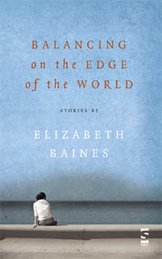
I've twice had a go, experiences I satirized in one of the short stories in my collection Balancing, 'The Shooting Script', which I read on Thursday at Manchester Central Library to an audience which always includes some writers, and which responded on this occasion with wry heartfelt laughter. I don't want to boast, but Adele Geras said in a review that this story should be 'required reading for anyone who fancies themselves writing for television.'
But it's not just the structures of the industry which divest writers of power (as this story indicates), it's the requirements of the form.
On Saturday I went to a screening of a short student film which I took part in as an actor last summer. Well, I loved being in this film: I love acting, I love the camaraderie (such an antidote to the isolation of the desk!) and I loved being part of the team working on the vision of the two writer-directors. But that's just it: you are part of a team, and there's never a guarantee that everyone on that team will share the vision of the writer or indeed respect it. And let's face it, when there's a camera and an editing suite at the heart of things it's the person behind the camera and/or with their finger on the computer button who wields the power to impose their own vision. On this occasion it didn't matter, because the writers were also the directors, and bitter past experience had taught them that they needed to do their own editing.
But just how much script writers can be marginalized by the form itself was illustrated for me when I finally saw the film at a screening in a bar on Saturday afternoon. I ordered up the film (it was on the 'menu' from a bar as part of a mini film-festival) and a fortifying glass of Chardonnay (seeing yourself on film playing an overalled cleaner and later naked in a bath is NOT an ego-stroking experience!) (and nearly choked at the exorbitant price of the wine) and settled down in the dark alcove set aside for viewing.
The film opened with beautiful shots, as I knew it would, of empty offices at night time, with the lone cleaner (me) silhouetted as she busied away in the vast spaces, strangely competent yet vulnerable - scenes which we never even rehearsed: I just turned up on the appointed night and we did it. Later the film cuts, as intended, to a kitchen in a house and here the dialogue begins. But they had cut half the dialogue! Half the ruddy dialogue, which we had laboured to learn (it was difficult dialogue to learn, because it was deliberately confused, illogical and inconsequential, as the characters were stressed) and which we had rehearsed over and over...
What had happened here was that image had squashed out the words: rightly, as it happened, because the way the film begins sets up a certain grammar which needed to be fulfilled, but also because sometimes - or indeed more often, in films - image is enough to tell the story: one closeup of me saying nothing but closing my eyes was more expressive and convincing than the speech which had followed the gesture but was now cut.
Writing for film is thus not so much the writing of a script - based in dialogue - but the provision of a kind of choreography of image. It's an interesting challenge, but you could ask: Why bother, when it's the director and the cameraman who really have the power to create and choose the images? And it's not surprising, I guess, that so many directors, like the two on this film, 'write' their own.
I've twice had a go, experiences I satirized in one of the short stories in my collection Balancing, 'The Shooting Script', which I read on Thursday at Manchester Central Library to an audience which always includes some writers, and which responded on this occasion with wry heartfelt laughter. I don't want to boast, but Adele Geras said in a review that this story should be 'required reading for anyone who fancies themselves writing for television.'
But it's not just the structures of the industry which divest writers of power (as this story indicates), it's the requirements of the form.
On Saturday I went to a screening of a short student film which I took part in as an actor last summer. Well, I loved being in this film: I love acting, I love the camaraderie (such an antidote to the isolation of the desk!) and I loved being part of the team working on the vision of the two writer-directors. But that's just it: you are part of a team, and there's never a guarantee that everyone on that team will share the vision of the writer or indeed respect it. And let's face it, when there's a camera and an editing suite at the heart of things it's the person behind the camera and/or with their finger on the computer button who wields the power to impose their own vision. On this occasion it didn't matter, because the writers were also the directors, and bitter past experience had taught them that they needed to do their own editing.
But just how much script writers can be marginalized by the form itself was illustrated for me when I finally saw the film at a screening in a bar on Saturday afternoon. I ordered up the film (it was on the 'menu' from a bar as part of a mini film-festival) and a fortifying glass of Chardonnay (seeing yourself on film playing an overalled cleaner and later naked in a bath is NOT an ego-stroking experience!) (and nearly choked at the exorbitant price of the wine) and settled down in the dark alcove set aside for viewing.
The film opened with beautiful shots, as I knew it would, of empty offices at night time, with the lone cleaner (me) silhouetted as she busied away in the vast spaces, strangely competent yet vulnerable - scenes which we never even rehearsed: I just turned up on the appointed night and we did it. Later the film cuts, as intended, to a kitchen in a house and here the dialogue begins. But they had cut half the dialogue! Half the ruddy dialogue, which we had laboured to learn (it was difficult dialogue to learn, because it was deliberately confused, illogical and inconsequential, as the characters were stressed) and which we had rehearsed over and over...
What had happened here was that image had squashed out the words: rightly, as it happened, because the way the film begins sets up a certain grammar which needed to be fulfilled, but also because sometimes - or indeed more often, in films - image is enough to tell the story: one closeup of me saying nothing but closing my eyes was more expressive and convincing than the speech which had followed the gesture but was now cut.
Writing for film is thus not so much the writing of a script - based in dialogue - but the provision of a kind of choreography of image. It's an interesting challenge, but you could ask: Why bother, when it's the director and the cameraman who really have the power to create and choose the images? And it's not surprising, I guess, that so many directors, like the two on this film, 'write' their own.
Thursday, March 01, 2007
Being the Queen
Yesterday in the Guardian Kira Cochrane rued the fact that, since playing The Queen in the film of that name, Helen Mirren has spoilt her previous anti-monarchist credentials by paying schmaltzy obeisance to her Majesty in her award acceptance speeches.
Well, it is a bit much, I agree, but the clue to this odd behaviour is in the final quote Cochrane (sardonically) offers from Mirren: 'Having played an essence of the Queen I've lost that chip on my shoulder.' The point is that as an actor you simply can't play any character - however suspect - without identifying with them. To play even the coldest and most evil character you have to find the humanity within them, the thing which makes them 'tick', even if you have to make it up and apply it artificially. It is something of this that is allowed for when directors tell writers that actors mustn't be told about their characters, but must 'find it for themselves'.
In this respect comedy is easier, because you retain a certain ironic distance from the character (and part of the comedy for the audience, whether or not they are conscious of it, is quite often this very gap between character and actor). However, you still have to find a very personal 'connection' with the character, and this necessity for a double-act is what in other ways makes comedy harder. In a recent comedy I played a very stupid woman, the kind of woman I would die rather than identify with in real life, but I could never have done it, never have got the body language, the tone of voice, the rapport with my opposite, if I hadn't crossed that barrier.
There was one time, though, when it took a lot of crossing for an actor in one of my radio plays. The play was not exactly a comedy, but was, like many of my radio plays, pretty ironic, and the main character, played by this actor, was a spectacularly self-deluding woman and a bad mother. In any radio production the writer, director and crew sit in a sound-proofed booth and the director speaks to the actors in the studio through a mic which can be switched on for the purpose. One afternoon the actor, clearly not knowing the mic was switched on, gave a great sigh which filled our booth, followed by her heavy moan to her fellow actor: 'God, I hate this woman!'
Which made me realise why she 'd been so cool: she'd already let it slip that she thought the character was me.
Tricky, all these elisions between fact and fiction, actor and character, reality and fantasy. If you're sensible you cross back again at the edge of the stage or at the studio door. I guess a particular problem for Helen Mirren, though, is that she wasn't just playing a character, but a real, living woman.
Well, it is a bit much, I agree, but the clue to this odd behaviour is in the final quote Cochrane (sardonically) offers from Mirren: 'Having played an essence of the Queen I've lost that chip on my shoulder.' The point is that as an actor you simply can't play any character - however suspect - without identifying with them. To play even the coldest and most evil character you have to find the humanity within them, the thing which makes them 'tick', even if you have to make it up and apply it artificially. It is something of this that is allowed for when directors tell writers that actors mustn't be told about their characters, but must 'find it for themselves'.
In this respect comedy is easier, because you retain a certain ironic distance from the character (and part of the comedy for the audience, whether or not they are conscious of it, is quite often this very gap between character and actor). However, you still have to find a very personal 'connection' with the character, and this necessity for a double-act is what in other ways makes comedy harder. In a recent comedy I played a very stupid woman, the kind of woman I would die rather than identify with in real life, but I could never have done it, never have got the body language, the tone of voice, the rapport with my opposite, if I hadn't crossed that barrier.
There was one time, though, when it took a lot of crossing for an actor in one of my radio plays. The play was not exactly a comedy, but was, like many of my radio plays, pretty ironic, and the main character, played by this actor, was a spectacularly self-deluding woman and a bad mother. In any radio production the writer, director and crew sit in a sound-proofed booth and the director speaks to the actors in the studio through a mic which can be switched on for the purpose. One afternoon the actor, clearly not knowing the mic was switched on, gave a great sigh which filled our booth, followed by her heavy moan to her fellow actor: 'God, I hate this woman!'
Which made me realise why she 'd been so cool: she'd already let it slip that she thought the character was me.
Tricky, all these elisions between fact and fiction, actor and character, reality and fantasy. If you're sensible you cross back again at the edge of the stage or at the studio door. I guess a particular problem for Helen Mirren, though, is that she wasn't just playing a character, but a real, living woman.
Subscribe to:
Posts (Atom)