Showing posts with label Nuala Ni Chonchuir. Show all posts

Thursday, August 27, 2015

Miss Emily by Nuala O'Connor. Blog tour Stop #2


Today I am delighted to be hosting the second stop on the virtual tour for Miss Emily, the latest riveting and beautifully written novel by Nuala O'Connor (who also writes as Nuala Ní Chonchúir).

Published this month by Penguin USA, Penguin Canada and UK Sandstone Press, it is a story of the friendship between the nineteenth-century American poet Emily Dickinson and a fictional Irish maid. It begins as the Dickinson family of Amherst, Massachusetts bemoan the loss of their previous maid, which has meant that Emily and her sister Vinnie have had to take on the household chores, occasioning burnt potatoes at the table and the loss of Emily's jealously guarded writing time. Meanwhile the feisty seventeen-year-old Ada Concannon, having been demoted as a maid in an Irish baronet's house for turning up at work bedraggled after swimming in the Liffey, decides there's more to life than this and sets sail to join her aunt and uncle and their family in Amherst, soon to fill the gap at the Homestead, the Dickinson household, and thus become the poet's saviour. Told in the voices of the two women, in alternating chapters throughout the book, the novel charts the growing friendship between the down-to-earth but sharp-minded Ada and the reclusive older Emily, sparked in the beginning through their shared love of baking, and culminating in a drama in which Ada's reputation is violated, and Emily must stand up for her against her beloved family.

As always with a book by Nuala, the mesmeric prose draws you straight into the psyches and emotions of the characters with a vivid and sensuous conjuring of atmosphere and scene. As always, there is both a lushness and a toughness, polarised here in the different linguistic registers of the two women, which are acutely handled.

Here's Emily looking around in the garden:
...everything is floral and abundant, while the apple maggots and cabbageworm do their best to undo it all. I sit under a pine, listening to the sounds of the earth, the turn of the beetle and the bone-song of the crickets;
and here's Ada cheerfully taking her to task:
'Now, Miss Emily,' Ada says, 'are you going to sit there like a clump of muck, or are you going to do something useful?'
The descriptions of baking are mouthwatering, there are acute insights into poet Emily's psychology and creative process, Ada's eventual trial is searing, and the drama that finally overtakes the two women is nail-biting.

It's a novel about female friendship across the generations and classes, about two women fighting the different class restrictions of their gender (Emily can write while Ada must toil; Ada can go to the circus while Emily can do nothing so unseemly), forging in the process an unlikely friendship. It's quite simply a wonderful and immersive read.

You don't at all need to know Emily Dickinson's poetry or anything of her life to fully enjoy this novel. Satisfyingly for those who do, though, Nuala has clearly researched her in depth, and the novel dispels a few myths. In an interesting article on the Huffington Post, Who is Emily Dickinson? Nuala talks about those myths and the real Emily, shown in this novel to be more characterful and active than she is often portrayed.

For anyone in Dublin tomorrow night, the book will be launched at the Gutter bookshop, Cow's Lane, Tel. (00353) 1 6799206, info@gutterbookshop.com .

Read the previous tour stop, at Shauna Gilligan's blog, where Nuala is interviewed about the book, here. You can follow the rest of the tour, and discover lots more details about the book and Nuala's work from her blog, Women Rule Writer.


Nuala O'Connor was born in Dublin, Ireland, she lives in East Galway. Already well-known under the name Nuala Ní Chonchúir, she has published four short story collections, the most recent Mother America appeared from New Island in 2012. Her third poetry collection The Juno Charm was published by Salmon Poetry in 2011 and Nuala’s critically acclaimed second novel The Closet of Savage Mementos appeared April 2014, also from New Island; it was shortlisted for the Kerry Irish Novel of the Year Award 2015. In summer 2015, Penguin USA, Penguin Canada and Sandstone (UK) publish Nuala’s third novel, Miss Emily, about the poet Emily Dickinson and her Irish maid. www.nualanoconnor.com

Thursday, November 21, 2013

New book from a great writer: Of Dublin and Other Fictions by Nuala Ni Chonchuir


I'm delighted that today this blog is the latest stop in Nuala Ní Chonchúir's tour of her wonderful new chapbook of flash fictions, Of Dublin and Other Fictions (Tower Press). As long-time readers of this blog will know, I'm a great admirer of Nuala's work: her control of language is wonderful, and her fiction is earthy and witty yet lyrical and always moving. This new and delightfully designed book may be little in size, but it packs a huge punch. The themes it covers are wide-ranging and huge, from a historical look at women's experience of the battlefield to a searingly vivid depiction of the grief of a widower to a wry insight into the experience of an immigrant hotel worker. There's also an impressive range in style. I'm always keen to know the processes of writers I admire, and I jumped at the chance to ask Nuala:


EB: Nuala, I'm amazed at the breadth of subject matter and worlds this little book covers, from the viewpoint of a statue of Jesus in 'Jesus of Dublin' and the historical piece about a battle, '12th July 1691',  to the very contemporary 'The Road that Mills and Boon Built'. Could you say something about that, and what you find attractive or useful about flash fiction as a vehicle?

NUALA: I’ve been working on novels for the last few years and they are so time-consuming, as you know. So I think flash occur to me instead of poems. (My poetry well is dry just now.) It might be because I am in fiction mode, but when something outside of the novel strikes me, and I want to write about it, it emerges as a flash.
I’ve spent the last year on a historical novel and at least one bit of the research for that inspired a story in Of Dublin, ‘Treedaughter’. My novel is domestic (oh, crime of crimes!) so I was reading up a lot about 19th century baking techniques etc. and I came across some egglore that sparked ‘Treedaughter’.
'12th July 1691' was written in response to the Jacobite war. One of the battles took place five miles from where I live and we took that battle – Aughrim – as a theme for my Artist Collective’s annual exhibition.
I love flash as both reader and writer; I love that they support the surreal so well and that language is key. I also like that, unlike many poems, flash have a narrative thrust. They just suit me, I think. Here’s an example of the type of flash I enjoy, ‘Body of Sister Jean Marie’ by Emily Davis-Fletcher from Southword http://www.munsterlit.ie/Southword/Issues/23A/davisfletcher_emily.html

EB: ‘Treedaughter' and 'Jesus of Dublin' are surreal, yet others are grounded in a rich realism - such as the wry and touching  'Room 313' (about a hotel chambermaid) and the earthy 'Penny and Leo and Married Bliss' (a rewriting of Joyce's Ulysses). Can you talk about the fact that you use these two different approaches in your writing?

NUALA: I’m attached to the surreal in visual art as much as in fiction – I love a dripping Dali or mad Max Ernst piece more than, say, an ancient religious picture. In writing, I don’t make any decisions about what or how to write – things occur to me in certain ways and I follow them to see if they lead anywhere.
 ‘Room 313’ was a commission from a Serbian magazine who wanted stories set in hotels (I think I can’t write to order but sometimes it works out).  'Jesus of Dublin' is about a real statue in Dublin’s O’Connell Street and I love it and I wondered what he would say if he could speak.
I think because language is sacred to me that even in realistic stories I like to add a bit of something that is off-kilter or odd, even if it is just an unusual place-name or character name. The mundane doesn’t interest me and my brain often alights on the surreal, or likes to twiddle with things, to make them enjoyable to write.

EB: Many – though not all – of these stories are written in the first person. Do you think flash fiction particularly lends itself to this mode, and if so why?

NUALA: I hadn’t realised that, but it doesn’t surprise me. I’m obsessed with the first person and the second person as narrative voices. Third person doesn’t attract me that much. I like to ‘be’ the character I am writing about and that is so easy in first person POV.
Whether it suits flash in general better or not, I don’t know. It certainly suits me because the voice of a story is important to me – it has to sound right, like a real person, and if I haven’t got that, I don’t have a story.


Thanks so much to Nuala. Do buy the book, you won't regret it. It's available here.

Nuala Ní Chonchúir lives in Galway. Her fourth short story collection Mother America was published by New Island in 2012. Of Dublin and Other Fictions is just out in the US and Nuala’s second novel The Closet of Savage Mementos will be published in spring 2014 by New Island.

Monday, August 06, 2012

An interview with Nuala Ní Chonchúir about her new collection of short stories


Today this blog is honoured by a visit from the wonderful writer Nuala Ní Chonchúir, who's on a tour to promote her latest book, Mother America (New Island). This stunning collection of short stories deals chiefly though not exclusively with aspects of motherhood - the experience of it, its effects and consequences - taking in not only the viewpoints and voices of mothers but of men and children too. There's also an achingly moving reworking of the Mary Magdelene story, and a recurring scenario of betrayal in which an affair occurs between a woman's husband and her sister, this last vividly conveyed in a second-person portrayal of the pain of the artist Frieda Kahlo - a theme of painting and drawing works its way through the collection, too. There's a cosmopolitan feel, with stories set in America, Paris and Rome, yet the spirit of Ireland hovers over it all, as in the story in which an Irish mother, brought to Brooklyn by her son and then abandoned by her there, sits in a cafe with the letter he's sent her but which she is unable to read. In another story, the very same cafe plays host to a different character, and similar connections trace their way across several of the stories. Short-story writer, novelist and poet, Nuala seems a complete mistress of all three forms. I find her work breathtaking in its insight and command of language - her touch is light, yet her sentences, both poetic yet muscular, burn themselves on your brain, and her vision is both warmly human yet searing. This book had me enthralled, at times in tears, now and then laughing out loud with delight at the connections, and I was eager to talk to Nuala about it.

 
EB: Nuala, there's a strong theme of exile running through the book, centred on the mother figure. So many of the mothers are Irish, and I wonder if you are making a link between a mother's relationship with her children, and the people of Ireland with their homeland?

NNC: Ireland is personified as a woman – Róisín Dubh, meaning Dark Rosaleen – in song and myth. We also have the mother goddess Danu, and Ériu who gave her name to the country, so the symbol and importance of woman/mother is a strong one in Ireland.
There is also the old cliché about the Irish mother and her sons – she loves her sons and they can do no wrong, but she lambasts her daughters. There’s the ring of truth in that of course. I’m a mother (of two boys and one girl) and I’m a daughter, and that influences what I write about. Ireland is also a country of emigrants and, lately, immigrants. Historically, there is a good deal of sentimentality about Irish emigration (that continues to this day) and I am interested in that.
When it comes to writing stories, I have no agenda – I just write about whatever is interesting to me at that time. For the last three years that has been mothers, especially ones who are separated from their children, by force or by will.


EB: The connections between some of the stories are stunning and very moving, and it's a wonderful way of carrying your themes of exile and also redemption. Would you talk about that?

NNC: When I write stories, one after the other, inevitably there are linking themes, because my synapses are sparking off a few riffs (if that is not too mixed a metaphor!) over a period of time. I only realised, after a few stories, that I was writing about mothers. The fear and separation/exile motifs emerged later. Two of the stories are very deliberately linked: ‘Scullion’ sees a young maid become pregnant by her master. ‘My Name is William Clongallen’ sees the son of that union return to Ireland from America to seek out his mother.
I like links in short fiction collections but I also like diversity. Nam Le, Caitlin Horrocks, Sarah Hall and Anthony Doerr all do a great line in diversity in their collections, though there may be a linking tone or theme, of melancholy or loss or whatever, in their books.
As long as a book hangs together cohesively in some way, I see no absolute need for linked collections. I would be disturbed if it became the norm – it would smack of publishers attempting to make novels of short fiction collections, which I object to.


EB: You are brilliant at voice and point of view, and the contrasts in both once again promote your themes brilliantly. How do you do it? Was it a deliberate choice or instinctive here?

NNC: I am most comfortable writing in the first or second person, so that’s where I will usually begin. Third person is more difficult for me but some stories, like ‘Queen of Tattoo’ beg for that bit of distance.
It’s instinctive in the sense that I don’t plan anything when I write – I go from the gut and the thing either works or it doesn’t. Having a distinctive voice to work from always makes a story flow much easier for me, so I like when a voice whispers in my ear early on.


EB: In some ways this book reminded me of one of my favourite short story writers, the American Grace Paley, although you have your own distinct tone. It's not just in the melting-pot Brooklyn settings, the cleverness with voice and the concern with motherhood: there's always a sense of homeland underpinning everything, perhaps best summed up in the title story. How do you manage to conjure up these places (the stories set in Paris conjure up its atmosphere, beautifully, too)?

NNB: As an Irish person, I am pretty much obsessed with place. It may be to do with Colonialism and occupation, but we Irish are very regional, very place-addicted. Most of us want to own our bit of home.
But, as someone born in 1970, I am also very Europe orientated and I value Ireland’s connection to the European Union. So my fiction happily looks to Europe and America, while also keeping one foot firmly in the homeplace.
Travel has been the big boon of being a writer for me. I’ve always enjoyed travel and now I get to do it a lot. That fires me up as a writer; I love it. I am an ardent notebook keeper and, when I travel, even more so. I keep a journal, I take photos, and all that helps if I feel like setting a story in Paris, for example, where I have set many stories.
Thanks for having me by, Elizabeth. Next Monday my virtual tour takes me to writer Ethel Rohan’s blog in San Francisco. http://ethelrohan.com/blog/. I hope some of your readers will join me there.

Thanks so much, Nuala. I urge you all to buy the book - it's wonderful!

See my earlier interview with Nuala about her witty and moving novel, You. 

Tuesday, July 20, 2010

Result of draw!


Well, it's done, the draw for Nuala Ni Chonchuir's great novel, You, and the winner is - Clare Wallace!

There's John above, shaking up the names in his nice new trilby before dipping his hand in and pulling her name out (note how I used a cut-up old typescript).

Congratulations, Clare - you will love this book, I promise. Email me via my profile with your address and I'll send it winging your way.

And don't forget, everyone else, you can immediately assuage your disappointment by pressing a button and getting Nuala's novel here. You won't regret it!

Wednesday, July 14, 2010

An interview with Nuala Ní Chonchúir about her novel, You


I am thrilled to be host this week to the most talented Nuala Ní Chonchúir on her tour of the blogs with her exceptional debut novel, You.


First, a bit about Nuala and her writing:
Born Dublin 1970, she is an award-winning fiction writer and poet living in County Galway. Her novel You was published by New Island in April 2010; her third short fiction collection Nude was published by Salt in 2009; The Irish Times called it ‘a memorable achievement’. Nude was shortlisted for the 2010 Edge Hill Short Story Prize. A full poetry collection The Juno Charm is due November 2010 from Templar. She is fiction editor of Horizon Review.

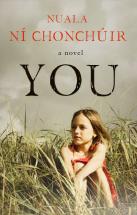
You is a second-person narration (the 'you' of the title) from the viewpoint of a thoughtful but feisty ten-year-old girl left basically in charge of her two younger brothers (aided and abetted by a couple of colourful neighbours), as their mother struggles with the emotional and practical trials of single parenthood, and as tragedy eventually strikes. The first thing to say about it is that I loved it, was completely engrossed by it, and from about halfway through I was in floods of tears while still having the odd wry smile. And now if you want my more professional writer's and critic's opinion I'd say that the book is most impressive in terms of language and voice as well as humanity and insight, and consequently is strong on vivid characterisation. It's a touching and generous portrait of the vulnerability yet toughness of people under stress, very moving yet humorous.

I asked Nuala about these achievements:

Nuala, the second person is notoriously difficult to extend over the length of a novel, yet you manage it with amazing ease and to my mind total success. Why did you choose this particular narrative mode?

Really the narrative mode chose me; my fiction begins often with the voice. For me, second person is a very natural, very Irish way to tell a story: close but at a remove. People say the second person is difficult to maintain, but like any voice, once you are in the groove of it – the grip of it, even – it flows and feels right. (Though in Ghost Light Joe O’Connor slipped between second, first and third person, which I found distracting.) Maybe it’s readers who fear the second person narrative? Personally, I love it. I loved Edna O’Brien’s A Pagan Place and Jay McInerney’s Bright Lights, Big City (both written in the second person).

I think the voice of the young girl in this novel is pitch-perfect, as are the voices of the characters she quotes, and I'd say from reading this novel that language is very important to you. Can you talk a bit about this?

I am in love with language, always have been. I love the way people talk, the expressions they use and invent. I’m from Dublin and the book is written in a Dublin vernacular that I am very familiar with. I’ve been a big reader all my life and I’m fan of stylistic writing. I love Banville, Proulx, Wells Tower – any writer who takes risks with language, who is playful. I also write poetry which is hugely about language and bending it. Jeanette Winterson has said, with regard to writing, ‘A tough life needs a tough language’ and I subscribe to that. I love when language and theme intertwine in a book and I hope I achieved that in the novel.

You certainly do. Telling a story from the viewpoint of a child while portraying ideas beyond the child's consciousness is also very tricky and again something I think you do with great success. It seems to me that the novel is about the vulnerability and toughness of children and adults, too, in the face of difficult circumstances. What made you want to tackle the particular themes of this novel, and choose to do it through a child's eyes?

Yes, the novel is about survival and trust and it’s also to do with the way children suffer when the people who love them let them down. Thankfully there is room for humour within all of that and telling the story from the child’s POV means you can maximise on that. I wasn’t thinking themes – I tend to write to tell myself a story and whatever happens happens. I’m not a plotter. But it’s challenging to tackle things like alcoholism, neglect and broken families. And satisfying when you work it all out.

The novel flows with a real energy - rather like the river in the story - especially in the second half, and I get the feeling you wrote it very quickly. Is that the case, and how does it compare to the process of writing for you generally?

It took a year from start to finish so not very quickly but it wasn’t a slog either. Having young kids tends to cut into writing time something fierce. But it also makes you productive because you will literally grab writing time anywhere. These days I write an awful lot slower because I simply don’t have the space in the day to write – my baby daughter is my priority. I’ve been working on one single story for over a year, for example. I’ve become a more ruminative writer, I think, and I hope that will prove to be to the good. However, in September baby’ll be in a crèche 3 mornings a week and I plan to write up a storm. I can’t wait!!

Thanks a million for having me here, Elizabeth. Next week I'm at Sarah Hilary's Crawl Space Blog

Nuala, it was such a pleasure - and a great pleasure indeed to have read your novel!

*

Quite frankly, folks, I read so many books that just float off into the great grey of Literature in my head, and so few that stay there with vivid pictures and emotions and indeed whole phrases, and You is one of the latter. I have a spare copy for one lucky reader: just put your name in the comments section to be included in the draw.

You can be bought from here.
To find out more about Nuala, go to her website here, and you can read her blog here.
Read last week's stop at Barbara's Bleeuugh!

Wednesday, May 19, 2010

Flying with Magpies Book Tour: Women Rule Writer


Today the virtual tour for Too Many Magpies alights on the blog of fellow Salt author Nuala Ni Chonchuir. As well as asking about the book she gets me talking about my weaknesses regarding the difficult issue of balancing the actual writing with all the other things you need to do as a writer - leave alone live a life!

Nuala' s striking Salt story collection Nude is deservedly shortlisted for this year's Edge Hill Short Story Prize, and she has just published her first novel, You, which I'm very happy to have just received in the post - it looks wonderful. I'm delighted to say that I'll be reciprocating when Nuala tours You, by hosting her here in July.