Wednesday, June 02, 2010

Flying with Magpies Book Tour: How to Write a Novel

Today my virtual tour for Too Many Magpies swoops down (do you think I'm stretching this metaphor too far, hee hee?) on the blog of Tom Vowler, How to Write a Novel, and in keeping with the thrust of his blog, Tom asks me chiefly about my writing methods.

Tom is now a fellow Salt author, as he is a winner of the coveted Scott Prize run by Salt, and I very much look forward to reading his winning collection when it's published in October.

Sunday, May 30, 2010

Brooding the novel

Here's another image which I'll always associate with the time I was starting out on the present draft of my current novel. It was a Sunday afternoon and John and I went walking along the canal near Bollington, and needless to say I was brooding away on the novel, and we came across a duck with a brood of ducklings - 15 of them! It was impossible to capture more than a few at a time with my camera - they were everywhere: running along the top of the water in that funny way they do, shooting in every direction and only very vaguely staying in a proper gang near the mother. Really, quite frankly, she could hardly control them, and in retrospect the whole scenario was a replica of what was going on in my brain, with all the possibilities for my novel skittering every which way, and me only vaguely in charge of them, but doing my damndest to marshal them somehow!

Saturday, May 29, 2010

Images in and around a novel

I imagine it's the same for other writers - though strangely, I've never heard anyone else say this - but when I'm involved in a project, a novel especially, and really knowing where I'm going with it, everything else in the outside world seems to cohere. I will keep coming across things that support my theme - comments on the radio, incidents in the newspaper, threads on the web, and even things I hear people saying in queues. I guess what's actually happening is that I'm suddenly seeing and hearing the whole world through the focus of the novel, filtering out those things that don't fit and subconsciously homing in on those that do, but the experience of it is a really magical one, a feeling that your novel is being 'gifted' to you by the world.

But then there are those other things, mainly images, which strike you deeply while you're writing a novel, but don't actually feed into the novel itself: they become instead indelibly associated with the process and/or the period in which you write the novel. For instance, Too Many Magpies will always be associated in my mind with a particularly horrible M&S jumper someone bought me - maroon fair-isle and shapeless: it made me look barrel-chested - because I was wearing it one day when someone interrupted my writing at a very crucial moment, to bring me some manuscripts to read. When I was embarking on the rejig of my current novel a few weeks ago, and having to think really hard about how to do it - and spending very long hours at the desk each day - I decided I'd go out for a short run/walk first thing each morning to get at least some exercise and clear my head for the day. I didn't keep it up - I'm now so into the novel I want to get to it straight away in the mornings - but the first excitable but scary creative searchings involved in writing this draft are now associated in my mind with the park I walked in then, and a carpet of fallen red camellia flowers, and, as I stopped to look at it, the odd scratching, shuffling sound I heard to my side, which turned out to be the squirrel above eating a nut.

Thursday, May 27, 2010

Flying with Magpies Book Tour: Tania Writes

The virtual tour for Too Many Magpies comes to roost today on the blog of Tania Hershman, fellow Salt author whose wonderful story collection The White Road and Other Stories was commended by last year's judges for the Orange New Writing Prize.


Tania is an excitingly imaginative writer whose stories often take off-the-wall ideas and run with them in an exhilarating way while yet illuminating the subtlest aspects of human nature, and in lyrical prose. It's no surprise then that she hosts my blog tour in an imaginative way, too: instead of the usual interview, she conducted a word association game with me - so be warned: my subconscious is on show!

Wednesday, May 26, 2010

Reading and talking at Chorlton Arts Festival

Nice evening yesterday in Chorlton Library, reading for Chorlton Arts Festival. It wasn't a huge audience - which indeed I didn't expect it to be, since I was in competition with 5 other festival events and Carol Ann Duffy and Robin Robertson in town! - but it was suitable for the space, a cosy corner of the library with a bright green-and-blue carpet - in fact it was the children's space and thus extremely suitable for the story I kicked off reading, which is in the voice of a 9-year-old girl ('Educational Psychology', which has just been longlisted for the Bristol Short Story Prize.) David Green from the library and Hazel from the festival created a nice, relaxed atmosphere too, laying on cups of tea as people arrived.

As always with a smaller number, it was possible to get a thoughtful discussion going. Actually, I must say the audience was a bit shy at first, which took me by surprise, and even threw me off balance, as I've had some really forthcoming audiences recently, I realise. Things got going however when someone asked about my use of the second person in the story. This led onto a discussion of the second person in general, ably fuelled by writer and fellow blogger Adrian Slatcher who had come along. I then read from Too Many Magpies, and was asked, as I was asked recently on the virtual blog tour, about how the novel came about. This led onto discussion of an issue that's recently been aired on author blogs, that of writing 'what you know' versus 'writing other', to which Doug from the reading group contributed. Finally, the question of writers' block was addressed, both in fiction and non-fiction, and blogger and journalist Clare Conlon had useful advice to give.

Clare reviews the evening here (she seems to have enjoyed it!) and is covering the publicity for the festival, which lasts until Sunday. You can find the programme here.

Monday, May 24, 2010

The writing or the life

This is what I feel a cross-section of my brain must have looked like while I was beginning work on the present novel. On my current visit to Nuala ni Chonchuir's blog for my virtual book tour, I explain how hard I find it to concentrate on anything else if I'm involved in a piece of work, and vice versa: once my attention is scattered by external things the spell of the novel/story/play is broken. My novel was increasingly gripping me (which of course I needed it to do), and it was a stage requiring especial concentration because I was working out a new structure and grappling with a new voice. I needed to sit and listen to that voice and watch the new structure taking place, but there were other calls on my attention. Flying with Magpies, the virtual tour for Too Many Magpies, was beginning, and I had to turn my mind to its organisation, and to think about that novel instead. It's not as if I don't enjoy these virtual tours - I do; I really love the interaction with the blog hosts and their readers - but that's part of the trouble: it's so very distracting! And then I had to take time off to design leaflets and a poster for my Chorlton Arts Festival event, which takes place tomorrow evening, and to spend a morning delivering them. Here's the poster I designed: I have to say that with my attention at such a premium I didn't put as much care and time as I usually do into the design, but I guess it does its job.


It really felt as though the novel was being sucked out of my brain by these things. Anyway, they all got done, and the virtual tour seems to have settled into a routine now, and the novel seems to have taken good root in my head in spite of it all. In order to ensure that, I had been working really long hours on it, and my back was aching and I felt exhausted, and I must say pretty frazzled at the end of each day when I looked around at the mess in the house and turned to all the other things I had to do. I made the decision, having cracked it, that I need to pace myself and do fewer hours on it each day, and I felt secure enough in it to take the weekend off and take stock of it while clearing up some other things. Turns out it was a really good move: with the distance, I was able to think about an unformed worry that had been growing at the back of mind and see what it was: I needed to go back to the beginning and adjust the frame I had set up for the novel. Must say, though, that by the time I had spent yesterday afternoon planning the reading on Tuesday and doing an application for another arts festival, and with domestic stuff still to do, I just didn't get round to writing this blog yesterday evening as I meant to do...

Thursday, May 20, 2010

Thrills and stresses

I had a lovely surprise yesterday afternoon: a story I had entered for the Bristol Short Story Prize had made it to the longlist. I was amazed, as I had rather forgotten about it, having a lot else on my mind, with the novel I'm working on. Strangely enough, I had only just been reading Adam Marek's piece on the Short Story Page, Five Mistakes I Made While Trying to Get Published, in which he says:
Don’t dwell on your submissions. Send them off and forget about them. You should push them from your mind so strongly that when you get accepted, you can barely remember submitting them in the first place.
Good advice, because, as he says, success is best of all when it comes out of the blue.

And then I had a really lovely little Amazon review for Too Many Magpies, which is short enough to replicate here in full:
Too Many Magpies is a fantastic short novel, full of mystery, humanity and depth. It is extraordinarily well written - in beautiful prose - and the question at the heart of it kept me hooked till the end. Very enjoyable and highly recommended by this lover of quality literary fiction. Baines deserves a wide readership & critical acclaim.
Not only that, but yesterday I reached a point in my current novel which allowed me finally to feel I was truly on the right track. As well as re-jigging the whole structure, I've been working on a new voice, and wasn't sure until yesterday that it was going to work, so up until now the process hasn't been without stress. And I'm finding once more how all-consuming working on a novel is for me: although I've already got a version on my computer and a printout sitting on my desk, I am still ending up writing the whole thing out, because the new voice is giving me new rhythms and tone, and too much reference to the old version destroys the sound of it in my head. And I still need, I find, to write by hand, which I'm not sure I'll ever get away from now: there's just something about that hand-brain connection and the flow of ink from my fountain pen. It's as though I'm painting the words and the scenes, and as with painting a lot of the emotion of the novel seems tied up in the curving movements of my wrist and hand. Which means that, having written all morning I'm having to type up in the afternoons. And since yesterday I was rather stopped in my tracks by the mid-afternoon news of the longlist, once I started again I was working until six, and then still had to go to the shops for something to eat and see to the washing...

But it damn well beats the times when you're blocked and not writing at all..

Wednesday, May 19, 2010

Flying with Magpies Book Tour: Women Rule Writer


Today the virtual tour for Too Many Magpies alights on the blog of fellow Salt author Nuala Ni Chonchuir. As well as asking about the book she gets me talking about my weaknesses regarding the difficult issue of balancing the actual writing with all the other things you need to do as a writer - leave alone live a life!

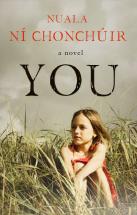
Nuala' s striking Salt story collection Nude is deservedly shortlisted for this year's Edge Hill Short Story Prize, and she has just published her first novel, You, which I'm very happy to have just received in the post - it looks wonderful. I'm delighted to say that I'll be reciprocating when Nuala tours You, by hosting her here in July.

Sunday, May 16, 2010

Reading group: Brooklyn by Colm Toibin

Warning: plot-spoilers. I have found it impossible to report our discussion without disclosing the outcome of the plot of this novel.

Clare suggested this book because a friend of hers who is an Irish professor of poetry had told her that Colm Toibin, none of whose books she had ever read, is the greatest writer, indeed prose stylist, in English alive today. Others of us were interested to read this particular novel, as it has had much praise heaped upon it: it won last year's Costa Award, and was the novel which has seemed to be most quoted in all the recommended and favourite-read lists that pop up all over the place.

This meeting was a particularly disorderly one, for some reason, with people constantly setting up separate simultaneous conversations, so it's not easy to pick out a coherent thread, but I'll do my best.

Brooklyn is a historical novel, set in the 1950s, and tells the story of Eilis, a young woman living in the Co Wexford town of Enniscorthy (which I understand is Toibin's own home town) where there is little or no work to be had, but who is offered work in America. The book follows, via a simple linear structure and exhaustive and almost clinical detail, her prior scant experience of work before the offer (one day a week in a local grocer's), her journey by ship to New York, her work in a department store there and the life of the Irish boarding house in which she lives with several other young Irishwomen, and eventually a dilemma. After some time in Brooklyn she becomes involved with Tony, a young Italian-American plumber, but the death of her elder sister Rose at home means that she must make a return visit. Afraid that she will not come back, he persuades her to marry him before she leaves. However, once she is back at home Eilis finds she does not want to return to America, nor to disclose to anyone her relationship with Tony and the fact that she has married him. Inevitably, she experiences social pressures to stay and take her sister Rose's place as her mother's companion, and meanwhile she becomes involved with Jim Farrell, a young man in the town. Thus her dilemma ensues...

Clare said that she didn't know after reading it whether it was true that Colm Toibin was the greatest living writer in English because she isn't that well read, but she certainly very much enjoyed and admired the book. The main thing she admired about it was the thing for which Toibin is generally praised: his plain, unadorned prose in which the motives and feelings of his characters are not explicitly stated. There was one moment, though, when the painful nature of Eilis's first experience of sex was described very explicitly and in a way that was very truthful - and Jenny and Jo chorused, yes, it is, and the fact that it can be painful is so rarely even acknowledged in literature! Clare had wondered how on earth a man could know such a thing, so she had read up about Toibin and had found an interview in which he said that he had asked a female friend who had described it to him. Mostly, however, the reader is left to infer the feelings of the characters, and it's all very understated.

At this point Doug said dryly that it was certainly understated, and it quickly became clear that, contrary to general critical opinion, several people in the room did not find this a strength in the book. John, who is never one to mince his words, said it was 'F******* boring.' Jo said she couldn't stand Eilis, she was just such a wimp: it wasn't just that Toibin didn't portray her feelings, she never expressed them herself when to do so would have allowed her to take charge of her fate. Indeed, she didn't even seem to have any feelings much: she just drifted off to America when other people told her to, she drifted into her relationship with Tony and married him when he pushed her to, and she drifted into her relationship with Jim Farrell. I said I had to agree that there were many moments when I wanted to wring her neck.

There was now however a chorus of objection from Clare, Trevor and Jenny, who appealed to social reality: that's how young women were in the fifties, they said: they very much felt that they had to conform. I said that it was true that there were great pressures on young women in that era to conform, but that didn't mean that they didn't have an internal life of passions - indeed, it seems to me that one's internal passions become the greater the more you are outwardly repressed, and Jo vehemently agreed. Where, in this book, I said, is the inner life? (For instance, when Eilis hears that her sister back home in England has died, the line we read after the news is 'Eilis said nothing', and that's all in this scene that we know of her reaction. It's true that later we are told - dispassionately - that she can't stop crying, but this leaves us very outside of her experience, and I certainly wasn't moved by her grief. There are other incidents when her emotional reactions aren't even touched on.) Clare said, the emotions may not be stated on the page, but you are meant to infer them. I said but that's not good enough, though didn't get the chance to say why: ie, that it's one thing for an author to imply an inner life without actually stating it, through diction, images etc and thus leave a reader in no doubt about it (indeed, it’s the best way), but if you leave out so much that readers need consciously to make inferences, they can be left in doubt, and the way our conversation(s) then went seemed to prove this point.

Jenny indicated that Eilis didn't have any real passions to infer, by saying that she thought this book was precisely about the fact that people do just drift through life without any real inner passions, marrying the first boring person who comes along etc and then suddenly finding themselves in old age having wasted their lives. Jo and I exploded with amazement. I said, of course people lead boring lives, but you can't tell me that most people don't have yearnings, and a sense of anguish if they feel those yearnings aren't going to be fulfilled. Jenny said, no they only feel anguish at the ends of their lives when they're disappointed. I said, Well, people do marry boring people, but they don't think they're boring, for goodness' sake: they fall in love and love is blind! They feel passion! and Jo and Doug cried agreement.

Jo said, but what was awful about Eilis was that she wasn't in love with Tony or Jim, she just drifted into her relationships with them. Then it turned out that people in the group had made opposite inferences about this, some thinking the same as Jo, but others thinking that Eilis was in love with both men and truly torn between them. (My inference was that she is both physically attracted to and fond of each of them, but not passionately enough in love with either to give up everything else for them. But it is simply how she behaves which told me this: I was taken by surprise when it becomes clear that her relationship with Jim Farrell is physically sexual, and I felt cheated of the emotional journey towards this point, and because I hadn't been on that journey with her, had to wonder consciously as I read it what it meant: has she fallen in love with him? Or is she simply giving in to lust and having a fling? Do I now need to reinterpret some of the scenes leading up to this?) I said that I did very much like the idea, which is actually spelt out in the book at this point, that once you leave home, the home you have left becomes an unreality, a dream, but that if you then go back home, the new life you have made for yourself can become the unreality instead; I have indeed experienced this myself. Others nodded, indicating that they had too. But, I said, I didn't find that it was satisfactorily conveyed in this novel in terms of Eilis's inner consciousness. I said also that although this book has been so praised for its portrayal of a woman, I really couldn't imagine a woman writing something so devoid (shy?) of the emotional dimension (John added: 'She's just a blank!'), and I had noticed that all the reviews I had read praising this book so profusely had been written by men. (Great credit, though, to the exceptionally sensitive men in our group who also missed the passion!) Clare said that she had in fact come across one appreciative review by a woman.

John said that, actually, Eilis struck him as not very Irish, and I agreed: she seemed, in her repression, much more like a young Englishwoman of the time. There was now loud communal objection: of course she was Irish! Very Irish! Irish women at that time were more repressed than English ones! My own appeal to social reality – that Eilis reminded me far more of my Welsh aunts when they were young than my feisty Irish aunt who’d actually been a nun – fell on utterly deaf ears (and I smiled sweetly and bit my tongue when Trevor – who, I hasten to add, has Celtic roots of his own - said that Celts were all the same). John said that the repression of emotion was a very English trait, and he wondered if this is why Toibin’s writing was so popular in England.

Doug said that actually, you know, Eilis wasn’t a wimp: there were times when she stood up to people, including the Brooklyn landlady. I said yes, and she did in fact make choices, (and Doug strongly agreed): there were several occasions when she thought hard about alternative courses of action and made the conscious decision to do nothing. (In fact, these were some of the moments when Eilis came over to me as dislikeable, rather mean-spirited in fact – another function, I think, of the novel having failed to make me identify with her). Now that this had been pointed out, Jo and others had to agree that it was so and there began to be general puzzlement, rather than disagreement, about how we were meant to take Eilis.

Ann now spoke up for the first time and said that she had found the book a really tedious read. All the detailed descriptions of the grocer's shop in Ireland, the lists of things on the shop shelves and the ways they had to be packed, of the voyage across and the berth in the ship, and of the department store in Brooklyn and the way all its processes worked, of the domestic arrangements in the Irish boarding house - all of this, as far as Ann could see, was just research which had been included for the sake of it. Clare, Jenny and Trevor and even Jo now said, But they had loved all that! They loved finding out, for instance, that one bathroom was shared between two berths on a ship, with a separate lockable door on each side, and that when your berth was deep down in the bowels of the ship you especially felt the force of the waves. They then spent some time recalling many such things in the book that they had relished. I said, But your interest in all these things is anthropological, and that's not relevant to whether or not they operate towards creating a powerful novel, and people did then generally agree. Ann said that the episode on the ship, with the relationship that's built up between Eilis and her berth-mate, seemed especially inserted for its own sake, leading nowhere in the overall plot of the novel, although it had been given enough attention and space and had been recounted in such a way (with detail and dramatisation) as to make you think it was going to. Ann said, Compare this novel with Toni Morrison's Beloved, which we discussed last time, where every single thing that was mentioned or portrayed was deeply significant to both the plot and the theme of the novel. I agreed, and said that for much of the time that I was reading Brooklyn I couldn't help thinking that this was a real-life story that Toibin had been told by an aunt about her own life, and had failed to shape satisfactorily into fiction, and Ann nodded vigorously. In any case, I said, unlike others I found much of the description too flat to be interesting in itself (and Ann, Doug and John nodded agreement). For instance, I said, one of the things I remember very vividly from my early childhood is the metal canisters containing bills and change that zoomed on wires across a department store in Barry in South Wales, from the counter to the high-up cashier's desk and back. But Toibin's description of this in the Brooklyn department store was so flat that I felt cheated. The others had said that they loved the description of the Sunday-night dance in Enniscorthy, but I said that I had experienced those small-town dances, and what I missed in this description was their overriding atmosphere of aching(a quality you wouldn’t miss, for instance, in a writer like Edna O’Brien).

Trevor now said that one thing that he found very frustrating about this novel was that in a book of 250 pages nothing actually happened until page 170 when Eilis gets word in Brooklyn that her elder sister Rose back home has died, and most people agreed. I said that this point was really interesting: whether or not nothing significant does happen up to that point. In fact, when you get to the end you do realize that some of what has seemed inconsequential is after all significant. This particularly applies to Mrs Kelly who owns the Enniscorthy grocer's shop where Eilis works before she goes to America: right at the end a connection will be revealed between Mrs Kelly and Brooklyn which will be Eilis's undoing. I did say that this was the one thing I found moving about the novel: the revelation at the end that in spite of the sense of dislocation and isolation in emigration, the world is after all a very small place and those controlling forces of home can't be escaped. However, it seems to me that the surprising revelation of this connection does not arrive for the reader with as much of the satisfaction (and shock) of underlying inevitability as it might, because of the lack of resonance in the way Eilis's time in Mrs Kelly's shop is portrayed, with an imbalance of clinical, list-checking attention to the details and processes of the shop. Jenny said, but what that description illustrates is the control of the older women over the younger ones in these small societies (and there was then some very interested discussion of this social fact, and the fact that in some apparently patriarchal societies it's actually the women who hold the real power).

This led on to a discussion of Eilis's mother at the end of the novel, and the way that she behaves when Eilis finally reveals that she got married in America. As with the question of whether or not Eilis is in love with Tony and Jim, people had different ideas about Eilis's mother's feelings and motives, and indeed were more uncertain about them. Some saw her as shocked by the news and consequently punishing Eilis, others saw her as merely upset and unable to cope with the fact that it meant Eilis would have to leave her. It turned out that several people had missed the fact that it wasn't actually news to her; that she had known, or at least guessed, all along, and had chosen to ignore the matter while Eilis said nothing about it. Her apparently resolute avoidance of asking Eilis anything whatever about her life in America is thus explained: it's a way of sweeping under the carpet an unpalatable fact which, if acknowledged, would in all morality have to take Eilis back to America and away from her.

How had she known, when Eilis had never even mentioned Tony to her in her letters? Well, there are clues, but the trouble is that the very flatness of the prose and the authorial refusal of evocation of emotion with which they are presented in the course of the novel, mean that they are submerged in the profusion of other detail which is of no particular narrative significance - which is why, I think, some in our group missed this major revelation. The book, it turns out, does have a subtext, but because it reads for most of its length as if it doesn't, it loses much potential resonance. Ann said that if she hadn't had to finish the book for the group she would have given up on it very early on as clearly leading nowhere, and several of us agreed.

Clare, however, stuck up for the book and repeated that she had enjoyed reading it very much.


Our archived discussions can be found here, and a list of all the books we have discussed here.

Wednesday, May 12, 2010

Horizon Review Issue 4

Issue 4 is now online, and includes a new story of mine, one of a series I've been writing on the theme of uncertainty. Nuala Ni Chonchuir is the new fiction editor for the journal, and the other stories she has chosen, by both familiar names and newcomers, are very varied, and excellent:
There's plenty of poetry, too, and so far I've read the evocative contribution by my friend Katy Evans-Bush. And loads more, including a challenging article by William Oxley on the state of the contemporary poetry culture.

Flying with Magpies: Stop 2

This week's stop on the virtual book tour for Too Many Magpies is at the blog of the thoughtful and erudite John Baker, whose own tour for his impressive Winged With Death came here a year ago. John is very insightful about the themes of Magpies, and, I'm thrilled to say, gives it a lovely review, which ends thus:
Baines has a unique voice and it will, undoubtedly, be worth following up on anything she writes. This book is only 123 pages long, but bursting with ideas and surprises and humanity. It is touching and the emotional life of the narrator lingers in the memory long after the final sentences have faded. Highly recommended.
John also asked me some searching questions about my aims in writing novels and, since this is a theme of Magpies, our present-day sense of ourselves in the world - I had to think very hard about the latter! You can find his questions and my answers in the comments section of his post.

Tuesday, May 11, 2010

How long does it take to write a novel?

Here are the coloured fibre-tipped pens with which I have been working out a new plan/structure for my novel in progress (I love em! I could EAT em!)

Last week on the virtual book tour for Too Many Magpies Sue Guiney asked if novels come to me all of a piece and get written quickly or if I have to work hard at them. It's very different for each novel: as she had previously heard me say, Magpies did come to me more or less fully-formed, and I did write it quickly, in just two months - although, as I also said to her, I had been mulling the ideas for some time beforehand. The Birth Machine came fairly quickly - it took about six months - but the process involved a lot more thought and juggling/tinkering (and writing out coloured plans) than Magpies. And then again, after The Birth Machine was published a friend reminded me that about three years before I had said I wanted to write a novel on that very subject. Until that moment I'd entirely forgotten that, but it shows I'd probably been working on the book subconsciously all that time.

As I said to Sue, it all depends, I think, on your prior relationship to the material - how well you've got to know it and understand it before you sit down to the actual writing. Anyway, if you'll pardon the expression, my novel in progress has been a b****r! I have been working on it for some years now, and twice I have thought, mistakenly, that it was finished. The first time was when two separate agents I'd met as an editor and who had asked to see it, found themselves utterly confounded by its complexity! I snatched it back quickly, I can tell you, and, after the necessary period of nausea - you know what it's like: you suddenly can't stand the sight of the thing, it even makes you feel physically ill - there was the period of Novel Estrangement: you just can't get back in to it; you can't remember what it was that so entranced and obsessed you about its world. And you go off and have exciting affairs with plays and short stories and even other, short novels...

Well, eventually it starts knocking at your consciousness again, and you realise that after all it's the Novel Love of Your Life, and that's why your relationship with it is so complex, and you get drawn back in... So I wrote another draft, and once again I thought it was finished. And indeed a different agent took it up with alacrity, but lo, the six publishers she sent it to, while making lots of nice noises (oh, those nice noises that don't have to be backed up with action!) still found it too complex to be commercially viable! And I really didn't know after that whether it was a Good Novel but not commercial enough in the present climate, or just a Dead Loss. In any case, once again we were estranged, my novel and I, and I shoved it deep in a drawer, and, really, honestly, I was pretty sure it was the Novel Divorce.

Then one day last autumn I was incredibly lucky to have the wonderful, wise and inspired Fay Weldon offer to look at it. Not only do I regard Fay Weldon as one of my literary influences, she has actively helped me before, by choosing one of my very early stories for an anthology she edited, and indeed playing my real-life Marriage Counsellor, or rather Cupid: she chose a story of John's for the same anthology, and it was at the launch of the book that he and I met! Well, Fay saw that to make the novel saleable I needed to streamline it. As a writer, she knew of course not to tell me precisely how to change it - you can only do a thing if it comes from you - and it took me some time to digest her comments. But then I began to see what I had to do: the chunks I had to cut, the re-jigging of the rest that was needed, and the frame that was required. Then a couple of weeks ago I discussed it with my sister Anne. Anne isn't a writer (yet) so she didn't understand in the same way the need not to tell me how to do it, but it didn't matter, because, amazingly, the way she said I should do it was exactly the way I was starting to see for myself, and she clarified it for me!

How could they see so clearly, when I couldn't? They say the wife is always the last to know...

I am so unbelievably grateful to them both.

And now I have to actually do it, and make it work...

Monday, May 10, 2010

Covering The Birth Machine

A fascinating article in yesterday's Observer discussed the different covers given to the same book in different countries. I'm always fascinated too by the different covers given to different editions of the same book in the same country. In our reading group we often compare the covers on the different editions we bring to the meetings - it's so interesting to see not only the changing art-style fashions, but the way that different aspects of a novel are foregrounded at different times.

Inevitably, I've been thinking a lot about this matter as result of the reissue of The Birth Machine. Here's the original cover created by Hannah Firmin at a time when it was fashionable to commission paintings for book covers:


I didn't actually have any choice about it - I was just shown a black-and-white photocopy, nominally for my approval, but I didn't get the impression that I was expected to begin making alternative suggestions! However, I liked it, as I thought that the dominance of the black bird emphasised the surreal aspects of the novel, and I particularly liked the way it picked up the novel's motif of the detached head and the general division of the woman's body. Also the fact that she is inoculating herself (as she does in the novel on a psychological level). I was a bit upset, however, as were the Women's Press, when a Sunday supplement, running an article on their striking covers, pronounced this one 'aggressive', or some such phrase. The Women's Press held an exhibition of their original cover artwork, and I actually bought the original piece, and it hangs in my living room. It incorporates collage: the blue veins are made of tissue paper, and over the years they have faded, I'm afraid, and are no longer even visible in the original piece.

Here's the cover of the The Author's Cut edition, which I published later myself:


This was at a time when black-and-white photos had become newly fashionable for book covers, as was the simple split-page design - both lucky for me, as I was both paying for it all and designing the cover myself, and although it really wasn't that long ago, desktop publishing, as it was called, was basically in its infancy - and digital photography hadn't taken off and few people had desktop scanners - I had to travel in to Manchester to get the photo scanned from a hard copy onto a floppy disk! Because this edition was intended to restore the theme of the control and ownership of knowledge which I felt had been pushed out by the previous editing, I eschewed the explicit birth image of the first cover, and opted for an image incorporating the bird and the medical chart, which I hoped illustrated the power of nature to snatch scientific control away from us.

And now here's the image which Salt have come up with for the forthcoming edition:


I must say I was shocked by it at first, but quickly decided that that was good. As Jen at Salt said: 'The title's shocking anyway.' Frankly, to begin with I didn't even know what the scary-looking chair was, and neither did some other people I showed it to: even when you have a baby you don't see the obstetric chair you're having it on, as it's discreetly covered with sheets! What I like about this cover is that it's rather Brave-New-Worldy, both in its slightly retro style and the satirical air carried by the colour scheme and the clouds above. The image thus foregrounds the satirical aspects of the novel which I feel were somewhat suppressed in the first edition. And that gives me a really great feeling...

Thursday, May 06, 2010

Flying With Magpies Blog Tour: Sue Guiney's blog

Today is the day I start flying around the blogosphere with my latest novel Too Many Magpies, and the first blog I alight on is that of writer Sue Guiney. Sue is the author of the moving drama poem Dreams of May and the impressive novel Tangled Roots - she blog-toured the latter and I was delighted to host a stop here. Sue was one of a group of talented authors published by bluechrome, who were left high and dry when, without explanation, bluechrome disappeared off the face of the earth this time last year. It's hard to describe the feelings for an author when this sort of thing happens - the surface of your whole world spins away from under you, and there you are, floating in the cold dark space of Being Once More Unpublished and For All You Know Never to Be Published Again - and it's nothing whatever like Not Yet Having Been Published when you're full of hope and innocence about the difficulties writers can face, however talented (and still the potential Next New Thing). However, in Sue's case, I am really happy to say that her next novel has been taken up by another publisher and she will be Published Again, which is no less than she deserves.

In her interview, Sue asks me questions about the inspiration and impetus for Too Many Magpies, and my experience, which she shares, of writing different forms.

You can see the whole Flying With Magpies tour schedule here.


Wednesday, May 05, 2010

Correction to May Wikio UK culture blog rankings

Whoops, seems there was a glitch and I got the wrong Wikio Top UK culture blog rankings for May - and turns out this blog is SECOND! Crikey, I don't know what to say except thanks so much, guys, for getting it there! I've deleted yesterday's list and here's the new preview (list will now go live tomorrow) :

1A Don's Life - Times Online WBLG (+6)
2Elizabeth Baines (+3)
3Pepys' Diary (=)
4Dovegreyreader scribbles (-3)
5Booktwo.org (-3)
6Cornflower (+38)
7Musicrooms.net (-1)
8Other Stories (Ent.)
9Mark Kermode's film blog (+6)
10My Favourite Books (+18)
11HeyUGuys (+1)
12The BookDepository.uk news feed (+59)
13BubbleCow (+1)
14BBC - Introducing blog (-6)
15Books, Mud and Compost (+48)
16Clothes on Film (-7)
17Peter Stothard - Times Online WBLG (-13)
18Philip Bloom (+4)
19Live for Films (Ent.)
20Ben's Bookcase (-7)
21NextRead (+18)
22Tales from the Reading Room (+10)
23Bookshelf (-5)
24Sugar the Pill (Ent.)
25Bart's Bookshelf (-15)
26Eve's Alexandria (-3)
27A Piece of Monologue: Literature, Philosophy & Critical Theory (+226)
28Verso UK's Blog (+56)
2920jazzfunkgreats (-10)
30The Book Smugglers (Ent.)

Ranking by Wikio

Tuesday, May 04, 2010

Wikio Top UK Culture Blogs for May

Here's a preview of Wikio's 30 top UK culture blogs * for May (live tomorrow), and I'm delighted and bemused again to find that readers have once again made this blog number 5 - thank you for reading and linking!

* Deleted, sorry: the list was incorrect. Correct list published in next post.

Friday, April 30, 2010

Launches at Waterstone's

Well, amidst all the debate about Waterstone's and the extent to which it supports smaller presses and their writers, I am able to report that the truly nice Nick at Waterstone's Deansgate Manchester has agreed to host a launch for the reissue of The Birth Machine when it comes out in October!

And on Wednesday night I was at a very well-attended launch there for my friend Cath Staincliffe's new novel, The Kindest Thing, published by Constable and Robinson. Held in the events room with its elegant windows overlooking Deansgate and the thirties windows of Kendal's (which always make me expect Superman to come flying in front of them at any moment), it was a lovely evening. The book is a departure for Cath from her detective novels, although it's a crime novel in that it's constructed around a criminal trial, and the very topical case of a woman convicted for helping her husband, who was suffering from motor neuron disease, to die. It's a page-turning read, and yesterday, suffering from a migraine and unable to write yet still able to read, I took the book to bed and gobbled it all up in one day!

Friday, April 23, 2010

Earth Day: 40 ways to green your reading

Yesterday was Earth Day, and Eco-Libris (with whom I'm collaborating to plant trees for the copies printed of my books) posted a list of 40 ways to green your reading, which is definitely worth a look.

Thursday, April 22, 2010

Are books ever finished?

Well, I've been working on the proofs for The Birth Machine, my first novel which is to be reissued by Salt in October. This will be the third edition of the book, and I've written before about why I published my own second, revised edition after the rights reverted to me.

Well, there I was recently reading the proofs for typos (the whole thing had had to be rejigged from old files), and guess what? I wanted to change it again! Not in the way I changed it for the second edition (that was a change of structure, a reversion to the one I began with before the book was ever published). But you know, inevitably over the years my writing has changed (developed, I hope). Apart from anything else, in the period since I first wrote this book I've had a career as a radio playwright and under a different name I wrote a series of TV novelisations for children. The disciplines involved in those forms/genres must have contributed, although probably it would have happened anyway: in any case I think that nowadays my writing is sparer. It was very difficult therefore for me to read through the text of The Birth Machine without wanting to work on it, and I couldn't resist making a few tiny changes, and as a result this will be the 'Third, further revised edition' !

It makes you realize that in reality a book is never, ever finished...

And of course I am utterly grateful to Salt for allowing this one to go on living and breathing in this way...

Wednesday, April 21, 2010

Reading group: Beloved by Toni Morrison

Ann suggested this book because she had attended a lecture given by an American academic, in which he had advanced the notion that fiction is better at conveying the reality of historical moments and situations than 'factual' history. The two novels he cited as being excellent examples were Coetzee's Disgrace, which we have also discussed, and this 1987 novel set in mid-1800s Kentucky, when slavery was under attack from the abolitionists. The Beloved of the title is the baby daughter of escaped slave Sethe, whom Sethe killed with her own hands rather than have her taken back into slavery when the slave owners caught up with her - named 'Beloved' because that was all that was written on her gravestone - and who returns to haunt and disrupt her mother's house and claim retribution. The Author's Forward in my edition makes clear that the story is based on a real-life case, that of Mary Garner (whose slave-owner name, Garner, Sethe shares). Amazingly enough, in spite of the fame of this book, and the fact that Morrison has won both the Nobel and the Pullitzer, none in our group - or at least none present for the discussion - had previously read it.

Ann said that she hadn't found the book an easy read at all (at which everyone else nodded), mainly because of the structure of the novel which constantly shifts back and forth between both the viewpoints of the characters and the past and the present, but also because of the language Morrison employs: an intimate third-person which takes on the vocabulary and syntax of the characters' own language, and indeed at one point morphs into (a shifting) first person. However, Ann thought it was a very powerful book, and most of us strongly agreed.

Jo said she wondered why Morrison had written it in such a complicated way. I said that it was the only way she could have written it and achieved emotional veracity, since the story is about a suppressed history, in particular the subjective experience of slaves; the structure constantly resurrects the buried past into the present of the novel. Ann added the even more salient point that the characters themselves don't want to remember their past experience (since it is so painful). As a result the past is only revealed in layers: one scene from the past will be presented in a way which seems vivid enough, but then we will return to it again and a further detail will suddenly illuminate the scene in a new, and often horrifying, way. Thus we are forced constantly to reassess our own insights, and this, it seems to me, is the political force of the novel, and others agreed. There is one particularly horrifying detail, for instance, about the physical appearance of the character Paul D (who was enslaved with Sethe and now comes into her life again) which is revealed only at the end of the novel. The surprise is breath-stopping, and one is forced to come consciously to terms with the fact that for the length of the whole novel one's view of him has been partial, and that therefore one has underestimated his experience, as well as that of those around him.

I asked Ann what the American academic had said about why he thought fiction worked better than factual writing in conveying such histories, and Ann said it was precisely this, that it operates on the feelings of the reader by inhabiting the feelings of characters - a point with which I heartily agree. The structure of this novel in particular forces a kind of retrospective reading which most of us thought emotionally and politically powerful. Ann commented that another thing which makes the novel especially powerful emotionally is, paradoxically, the matter-of-fact way in which the horrors are conveyed. The contrast between the tone and the events being described, and the implication that for slaves this was day-to-day experience, is particularly shocking. Ann said that she had listened to a World Service podcast of an interview with Morrison who had said that she had made the conscious decision that she must avoid anger in the novel, and that the only character she could allow to be angry was the ghost (because she had been murdered).

John now said that it was interesting that we hadn't really mentioned Beloved up to now, although she was in many ways the focus of the novel. This wasn't really picked up for further discussion, though I think in retrospect she's a kind of medium, in the terms of the novel, for the conveyance of the past into the present of the novel. There was some discussion as to whether she was a real ghost or not - she finally materialises as the eighteen-year-old woman she would have been had she lived; and twice there is reference to the rumour of a young woman, kept as a sex slave, having escaped from a shed nearby - but our conclusion was that we were not meant to read the novel in these either/or realist terms, but to inhabit the mentality of the characters and their attitudes to an ambiguous spirit world. Some people, Ann in particular, wondered how differently Americans, to whom this history of slavery belonged, might read the novel. Ann said that in the podcast Morrison states that she made the decision to address her novel to black people (unlike the white abolitionist Harriet Beecher-Stowe, for instance, whose Uncle Tom's Cabin had been addressed to white readers) - although it seems to me that her technique of retrospective revelation is employed on ignorant white readers most usefully of all.

However, Trevor now said that he had had a lot of trouble with the language and complicated structure of this novel, and Clare said so had she, and Trevor said that he'd even gone off and read something else in the middle as relief and then gone back to it.

We then recalled some of the horrors that the novel exposes, such as the fact that after the slaves are caught trying to escape, those considered of little use are beheaded and dismembered and their headless limbless torsos hung from trees, and the fact that the slave owner thinks of them as farm animals and talks of the 'breeding one' and her 'foal'. Ann told us the horrifying fact she had learnt from the podcast that the abolitionists had tried to get the real-life Mary Garner tried for murder, because if she were capable of murder then she would have to be acknowledged to be human.

Ann, or perhaps Jo, said that one impressive thing about the novel was the way that early on we are led to see the Garners as unusually philanthropic slave owners, but later realize that this is just a matter of relativity, and that they have their own cruelties. I said that one of the most horrifying moments for me, though, was not the out-and-out cruelty from which it's easy to distance oneself, but the incident towards the end when Sethe's living daughter Denver goes to the abolitionists' house to ask for work. Here she comes across something which horrifies her: a small statue of a black child with its head pulled back and its lower lip extended to receive coins casually thrown down, ready for paying tradesmen - a figure so like the Little-Black-Sambo collection figures that stood unremarked outside shops and in arcades in my own childhood, that I was pushed up suddenly against my own unconscious collusion in racism.

Then we talked about the fact that the TV Black-and-White Minstrel Show went on into the seventies, and that Robinson's golliwogs weren't discontinued until the eighties, and ended up, I think quite subdued...

*Edited in: When it was suggested that our history is more distant from slavery than that of the Americans, John pointed out that it was ironic that as Mancunians we should feel a distance from slavery, since as a cotton port Manchester was intimately involved in the three-way cotton-sugar-slave trade. (A novel that explores that three-way trade is Barry Unsworth's Sacred Hunger.)

Our archived discussions can be found here, and a list of all the books we have discussed here.

Tuesday, April 20, 2010

The trickiness of marketing: Benjamin Judge reviews Too Many Magpies

Tell you what, marketing is the trickiest of things. I've had a lovely review from Benjamin Judge for Too Many Magpies, but he begins by saying that something - the marketing blurb, maybe ME? (!) or at least what I said about the book - had put him right off it and made him actually TUNE OUT when I read last October for Manchester Literature Festival. However (thank goodness), he put aside his impressions and read it recently.

I'm very grateful to him for doing so, and extremely pleased with his final judgement:
It is superbly written. Spare, while being full of perfectly observed detail, the text has a knack of repeatedly picking up moments of life that only while reading you realise you haven’t seen in a novel before but that are true and needed telling. The book freezes our times for future generations in a way that the mammoth, multi-layered uber-novels of Franzens, Safran Foers and Mitchells can only dream of. If I say it is light I don’t mean lightweight but that it is graceful, illuminating and capable of flight. Like the magpies of its title it can soar beautifully and cackle maliciously. It is a great book.

Friday, April 16, 2010

Eco-Libris: A tree for every copy of The Birth Machine

I've had some great reviews for Too Many Magpies, but one (pretty sexist) blogger, whom I won't link to for obvious reasons, pointed to the fact I was working with Eco-Libris to have a tree planted for every copy printed, and said he'd rather we'd all cut out the middleman and left the tree standing in the first place! (Sexist, but witty.)

Anyway, I'm pleased to say that I shall be risking his spleenful keyboard further by doing the same with the reissued The Birth Machine: I've signed up with them again, and a tree will be planted for every copy - well, 1.3 trees, actually, to allow for saplings dying. I just love the fact that for the wood pulp used for each copy (and the ire expended by sexists everywhere), a new tree will grow somewhere.

You can also plant trees with Eco-Libris for the books you read, for as little as a dollar a book: here.

Wednesday, April 07, 2010

New Issue of Mslexia out

Many magazines will tell you that they don't look more favourably on your submissions if you subscribe. I do know that when Ailsa Cox, John Ashbrook and I published the short story mag Metropolitan we used to join in the magazine-publishers' collective sigh that if only everyone who submitted subscribed we'd be well away, but we made a point of never converting that into a prejudice against submissions from non-subscribers. You do wonder, though, if people are sometimes tempted, but then maybe I'm just an old cynic. Anyway, before it was more generally known that Elizabeth Baines is a writing name, at least I could be sure that that wasn't happening when my stories were accepted by mags, since it's a different name which appears on my cheques and thus usually on mag subscriber lists.

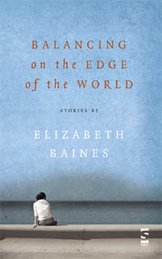
One magazine which reassures us that they are never thus swayed (which reassurance only serves to suggest that they do indeed suspect that some mags are!) is Mslexia, the magazine for women who write. One excellent service they do provide for their subscribers, however, is that they list their latest publications. I've subscribed to Mslexia since its beginning, but since I did so under my non-writing name, and it seemed too fussy to explain, I wasn't able to take advantage of that when Balancing on the the Edge of the World came out. This time, though, I decided to write and explain, and the latest issue has just popped through the door, with Too Many Magpies listed - and they've even included a picture of the cover! Thank you, MsLexia! This issue carries an interview with novelist Kamila Shamsie and the winning stories of the latest Mslexia short story competition.

The problems of having more than one name, though...!

Sunday, April 04, 2010

Nightjar Press Chapbooks


I wasn't feeling so good last week, wiped out and pretty much ground to a halt. Nothing I had planned to do in the way of writing got done. I was flopping my way down the stairs one afternoon, fit for nothing but a sit by the fire, and a white envelope dropped through the letterbox in the hall below me, which turned out to contain two of these lovely single-story chapbooks from Nick Royle. They are the latest in his Nightjar Press series, 'Black Country' by Joel Lane and 'When the Door Closed, It Was Dark' by Alison Moore who was shortlisted for the inaugural Manchester Fiction Prize. (I already had Tom Fletcher's 'The Safe Children'.) So just the ticket!

I'm all for the idea of chapbooks containing single stories: it's a mode of production that respects the fact that a good short story exists in its in own right and pays most dividends if given the kind of singular, focussed attention which many people don't give to the stories in collections and anthologies, reading the books too much as they read novels.

I don't know whether all of the books in the series are intended to be thus*, but all of these three are different takes on the horror genre, and while the three writers have distinctive voices they nevertheless share a certain objective spareness of narration, and which indeed characterises Royle's own horror/alternative-reality stories. (Perhaps this last is a typical characteristic of horror writing - I guess I don't read enough to know.) Alison Moore's story is the most psychological of the three - it's a story of sexual and social power - Tom Fletcher's is a Brave-New-World-type story (and pretty shocking), while Joel Lane's is another of his spooky takes on the nature of reality.

So if you like horror/spooky/alternative these are just great for a sit by the fire. And they're cheap - only £3.00 (Chapbook: originally a small pamphlet sold by a chapman, a pedlar of inexpensive, ie cheap goods.)

* I guess the name may imply as much.

Saturday, April 03, 2010

Clare Dudman reviews Too Many Magpies

Clare Dudman has written a very nice review of Too Many Magpies on her ever-interesting blog, Keeper of the Snails. She says:
Just as I admired Elizabeth's anthology of short stories 'Balancing on the Edge [of the World]' I am delighted to say that I admire this novella just as much. She really does have a wistful, compelling style that keeps me turning the pages. I think in all good writing, no matter what sort, there is a recognition of truth, and it is certainly here again in this story... The terseness of the short stories is still there, but so too is a sustained menace which reminded me a little of some of Alice Hoffman's writing.

A great Easter present for me - especially as I can't eat chocolate at the moment!

Friday, April 02, 2010

New Wikio Top UK Culture Blog rankings

Well, after my negative comment yesterday on Fictonbitch about prizes and rankings, I blush today to bring you a preview of Wikio's new Top UK Culture Blog ranking which will go live on Monday, and in which, it turns out, this blog features. Really, I'm very flattered and humbled - position in the ranking depends on the number and weight of incoming links from other blogs, so thank you to all of my readers who have thus linked to me. I'm thrilled to be there with the great blogs around me on the list, and of course the mighty and wonderful Dovegreyreader, who tops it.

1Dovegreyreader scribbles (Ent.)
2Booktwo.org (Ent.)
3Pepys' Diary (Ent.)
4Peter Stothard - Times Online WBLG (Ent.)
5Elizabeth Baines (Ent.)
6Musicrooms.net (Ent.)
7A Don's Life - Times Online WBLG (Ent.)
8BBC - Introducing blog (Ent.)
9Clothes on Film (Ent.)
10Bart's Bookshelf (Ent.)
11Books, Inq. (Ent.)
12HeyUGuys (Ent.)
13Ben's Bookcase (Ent.)
14BubbleCow (Ent.)
15Mark Kermode's film blog (Ent.)
16ReadySteadyBlog (Ent.)
17The Ibooknet Blog (Ent.)
18Bookshelf (Ent.)
1920jazzfunkgreats (Ent.)
20The Beat (Ent.)
21Alternative-Read.com (Ent.)
22Philip Bloom (Ent.)
23Eve's Alexandria (Ent.)
24Bibliobibuli (Ent.)
25ResoluteReader (Ent.)
26Mostlybooks (Ent.)
27Filmstalker (Ent.)
28My Favourite Books (Ent.)
29Filmshaft.com (Ent.)
30BOOKSURFER (Ent.)

Ranking by Wikio

Rankings will be updated on a monthly basis, and here's what else Wikio say: 'Only links found in the RSS feed are included and blogrolls are not taken into account. The weight of any given link increases according to how recently it was published'.

If you would like to submit your own blog you can do so here.