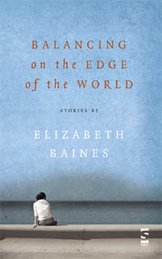
Monday, February 25, 2008

My favourite bookshops of the week: Deansgate Waterstone's and Borders Cambridge

I have fallen back in love with Deansgate Waterstone's - partly for selfish reasons. Here's the photo I took yesterday of my book on display there along with books by two other Salt authors, David Gaffney and Neil Campbell:


I had read in Joel Rickett's Guardian bookseller column that Waterstone's was having a change of heart re authors and was about to begin a nationwide local authors promotion. Deansgate are certainly doing that: our books are part of a floor-to-ceiling local interest display right next to the main door. And as for books generally, I noticed that there's now a box for customer suggestions. Things are looking up again, hooray.

And while I'm at it, here's a photo of my book on a shelf in Borders Cambridge, sent to me by Jen of Salt.


Let's see, how can I put this? If any other bookshops want to send me photos of my book on their shelves, I'll be more than happy to give them some publicity in return!

Sunday, February 24, 2008

The importance of buses

Funny that I should come across this the day after writing a post about getting inspired on the bus (it's a quote from Paul Bowles in the introduction to the Penguin edition of his novel The Sheltering Sky, which we are reading for our next reading group discussion):
I got the idea for The Sheltering Sky riding on a Fifth Avenue bus one day going uptown to Tenth Street. I decided just which point of view I would take. It would be a work in which the narrator was omniscient.

Which is also, more or less, the decision I made about viewpoint for my story (or rather the inspiration I had). Must be something about the perspective you get on a bus...

Friday, February 22, 2008

Writing away from the desk

I'm pretty rubbish, really, at following my own advice. If you read my chapter in the Macmillan Palgrave Creative Writing Handbook you'll see that I suggest that if you're stuck when you're writing it's sometimes best just to give up and go and do something else.

Yes, well. I'm working on a new series of short stories - rather different from any I've written before - and today I intended to start on a new one. But I just couldn't find the way into it: I had the situation, I knew the theme (or as much of it as I need to at this stage), the story was already peopled in my mind, but I didn't have the essential thing: the mode of telling, and the voice.

The way I think of this is that I couldn't hear it. I sat at my desk all morning listening for it, the voice of the story, while in the distance, above the roofs opposite, planes came in one after the other towards the airport, right on each other's tails, and I never stopped seeing them because I never heard it and never started writing. Well, I wrote a few first sentences, but every one was wrong, fake, 'made up', not setting me off in the right direction or encapsulating the feel and essence of the story I want to write. (And screwed the pages up and binned them because as always I have to obliterate those wrong starts, get the wrong noise out of my head - one of my biggest ecological sins in life!)

And then it got to 11.45 and it was time to get dressed if I was going to make it to a lunchtime poetry reading at Central Library - Ian Pople and Chris Woods - as I had planned. But how could I leave my desk when I hadn't even started? I really ought to stay and crack that story.

I nearly didn't go. But in the end I did and, late because of my prevarication, I dashed into the shower and rushed to the bus stop, and the story went right out of my mind. Until I was sitting down on the bus and suddenly the voice of the story and the first sentence dropped as if from nowhere into my head!

The reading was extremely successful: Central Library Reading Room was crammed - standing room only - to hear the vivid poems which have emerged from Ian Pople's travels and the insights which Chris Woods' profession as a doctor have lent to his. In fact, I've been having a poetic couple of days: last night, due to illness Gwyneth Lewis failed to make it to Manchester to give MMU's first reading of the semester, and Michael Simmons Roberts and John McAuliff stood in at the last moment to give great readings, Michael treating us to a series of great new poems yet unpublished. I knew a lot of John's poems, but the great thing about good poems is that they get better each time you hear or read them.

On the way back from Central Library I called in at Blackwell's to see if they'd consider stocking my book, Balancing on the Edge of the World, but it turned out the person I had to see isn't there on Fridays, so that was a failure. Still, at least I got going on my story today, and reminded myself that the best writing is not always done at the desk.

Wednesday, February 20, 2008

Reading group: Laughter in the Dark by Vladimir Nabokov

It seems to be generally agreed in our reading group that Lolita is the best novel we have discussed, so when John suggested another Nabokov, Laughter in the Dark, everyone jumped on it.

This book, written some twenty-three years earlier, follows the same Nabokovian scenario, with differences: that of a middle-aged man caught in a doomed passion for a childlike young woman. Originally written in Russian with the title Kamera Obskura and soon after translated into English as Camera Obscura, it was eventually retranslated by Nabokov himself - and, I understand, to some extent revised - and republished as Laughter in the Dark.

The bones of the story are set out at the beginning of Laughter in the Dark:
Once upon a time there lived in Berlin, Germany, a man called Albinus. He was rich, respectable, happy; one day he abandoned his wife for the sake of a youthful mistress; he loved; was not loved; and his life ended in disaster.

This is the whole of the story and we might have left it at that had there not been profit and pleasure in the telling; and though there is plenty of space on a gravestone to contain, bound in moss, the abridged version of a man's life, detail is always welcome.

Thus it is established that what will be of interest is not the what of this story but the how, and what follows is an omniscient-author view (not unlike the encapsulated panoramic view through a camera obscura) of the circumstances, coincidences and manipulations - all masterfully handled - through which Albert Albinus is ruined at the hands of the gold-digging prostitute Margot and her diabolical lover, Axel Rex.

The theme of the novel is clearly that of insight, conveyed through images of darkness and brilliant light. Albinus is sadly lacking in moral insight and, symbolically, falls in love with the unsuitable Margot in the dark of a cinema and eventually is blinded.

Most people had enjoyed the book immensely, but Doug surprised us all by disagreeing. He said he found it impossible to care about the fate of any of the characters, and found it quite unconvincing that Albinus should leave his wife for Margot. There followed a long discussion about this last: people said, Well it was passion, irrational passion! But Doug said that was precisely what he didn't get any sense of with the stuffy Albinus.

It is true that most people had been surprised, after the psychological complexity of Lolita, that the characters in this book are indeed stereotypes. The book has a cartoon quality, as colourfully vivid indeed as a camera obscura image, and to a great extent relies on farce. It is therefore is only by accepting these terms, and indeed entering into Nabokov's contract and taking pleasure in the process of narrative (rather than expecting psychological complexity or expecting to identify with the characters) that one can fully enjoy this book.

Our archived discussions can be found here, and a list of all the books we have discussed here.

Monday, February 18, 2008

A Glossary of Bread in Buran

'A Glossary of Bread,' one of the stories in my collection Balancing on the Edge of the World, appears in the current issue of the online Italian literary mag, Buran, which has gone online today. It's a very international issue based on the theme of Food. Another author in the issue is Tamar Yellin, with a translated extract of her prize-winning novel The Genizah at the House of Shepher. So if you can read Italian.... I can't very well, but this mag looks so good I'm guessing it will be a pretty good translation.

Friday, February 15, 2008

Reading: Clare Wigfall and Jonathan Trigell

After the Christmas break and I presume the exam season, readings at Manchester's two universities are finally getting going again, in a stumbling sort of way. The reading programmes at both schools of writing are notably sparser than previously, I presume as a result of funding cuts, or funding used in other ways.

On Monday the Victoria University hosted two of its own creative writing alumni - my Myspace friend Clare Wigfall, who took the creative writing option for her BA at Manchester, and Jonathan Trigell, who did the Novel-Writing MA. It was a smashing reading: Jonathan, whose first novel, Boy A, which was written for the course and has since done so well it's been a TV film, was a fizzy and engaging reader, and as well as reading from his two novels he treated us to a short story (previously broadcast on Radio 3) which was so very accomplished that it was hard believe what he told us: that it was the only one he had ever written. Sometimes writers are just born, you can't get away from that...

And as for Clare: well, I somehow knew I was going to like her stories - I had already seen one somewhere - but in fact I was bowled over by their haunting, glancing nature, and their verbal precision (as well as by her amazingly gifted reading). One thing I found really interesting: there's been a long period in which there's been a fashion for publishing linked short stories (short stories trying to ape novels, and indeed pretend that they're not really short stories at all, in a climate where they're supposed to be unpopular). But the short stories in Clare's collection The Loudest Sound and Nothing are vastly varied in subject matter, tone and voice, which Faber are rightly pushing as a virtue, and a sign of her acrobatic gifts as a short-story writer. For the best short stories, like the best poems, exist alone and resonate so far that they have no need of being shored up by others on all sides...

Friday, February 08, 2008

Sarfraz Manzoor at Central Library

To Manchester Central Library last night to hear Guardian journalist and documentary maker Sarfraz Manzoor talking about and reading from his memoir of growing up in seventies and eighties Luton, Greetings from Bury Park: Race, Religion and Rock and Roll.

Manzoor is an engagingly honest speaker. He told us that he had written the book as a celebration of ordinariness, something he hadn't found in the biographies he's read as a schoolboy, which had made him feel excluded. He told us how he'd got published: a big literary agency, noting his writing in the Guardian, had written and asked him if he'd like to write a book.

Looking round the audience, many of whom had read his book beforehand, I saw row upon row of fondly smiling faces, but then some joker - whom I think knew Manzoor personally - pricked the bubble somewhat satirically and tipped the evening into laughter. But how could Manzoor call himself ordinary? he asked: Wasn't that why his book was published, for the very reason that he isn't ordinary now? And how, therefore, the speaker seemed to be implying, could his book be read as being about the ordinary, after all?

One of those conundrums which autobiographical writers know only too well.

Wednesday, February 06, 2008

Not just out but away


So off John and I went to London on Monday and, as we'd
promised ourselves, we went out to the Troubadour in the
evening to the Salt poetry reading. Well, I'd never been to
the Troubadour before, and what an amazingly atmospheric
place it is: that lovely old exterior, and beyond the door a
candlelit bar (at least that's how I remember it) and then
down the stairs to the darkened basement where it seems
Dylan and Hendrix performed in the sixties - already
crammed, and we were lucky to get a seat. And then there
were the Salt poets, standing in turn under a spotlight like a
golden sun (see the slideshow below) and transporting us
with rhythm, with wisdom, with longing, with laughter,
and above all with magical fizzing words.

Monday, February 04, 2008

Dovegreyreader's review of Balancing on the Edge of the World

Dovegreyreader, that miracle of a woman who manages to read more than just about anybody while quilting, knitting and driving across the countryside as a community nurse (I don't think all at the same time!), and yet gives her reading the most thoughtful attention, has written a lovely review of Balancing on the Edge of the World. Needless to say, I am over the moon as the footballers say!

Sunday, February 03, 2008

Going out once more

I had to laugh last week when I read an article by Linda Grant about the shoddiness of some so-called designer clothes - laugh at myself, that is.

She begins the article by saying that she'd had to bin two Zara little black dresses which hadn't lasted two years, too shabby now even for a charity shop. I thought: Two LBDs from Zara?!!! When would a writer like me buy even one LBD from Zara, let alone two? When would a writer like me ever wear an LBD? Once in a blue moon maybe for a prizegiving - and other people's rather than my own, because at my own I'd rather be taken seriously as a writer, not a fashion victim (but there I am, see, obsessed with image anyway) - so when it comes to LBDs (along with most kinds of clothes, I have to admit) it's charity-shop jobs for me. (Which is why, perhaps, when I went as a guest of winner Carl Tighe to the Authors' Club first book award, an amazingly beautiful ice queen in an absolutely up-to-the-minute LBD didn't half give me the snooty once-over in the loo.)

But maybe my reaction to Grant's article was coloured by the fact that I've spent January more or less in my pyjamas, lost in the new series of short stories I've just embarked on and hardly going out - though I seem to be making up for this last at the moment.

You've got to work on your publicity, right? And on Friday I went into town through the wind and snow - my god, it's cold out there in the big wide world! - to Manchester Digital Development Agency, where Art of Fiction blogger Adrian Slatcher was putting into practice an idea he found in that bottle of red wine we had at our post-Christmas drink, and which included filming a 'Meet the Author' type clip of me. I'll put it up on this blog if I turn out not to be too absolutely dreadful - see, there I am again, on about image; or maybe I'm just being sensible: a dreadful image is not going sell any books, or so they say. (How do you know, for instance, that there aren't fangs and carbuncles Photoshopped out of my profile photo?)

And then yesterday I spent the whole day in town at the initial sifting of scripts for the 24:7 Theatre Festival (snow on the ground!). I couldn't imagine how Amanda (Hennessey) and David (Slack) were going to organize it, but it worked like a dream and involved us reading aloud a substantial portion of each play, which, since most of the readers were actors as well as writers and/or directors, ensured that the readings justified the plays as far as possible (you know actors, they have an inbuilt instinct to try and realize characters as well as possible). What a marathon, though! We were so hoarse by the end of it! But it was so enjoyable, and I have to say I was stunned by the general high standard and inventiveness of some of the plays I saw - which means it's going to be a cracking festival come July.

And tomorrow I'm off to London for the day, and in the evening I'll be going to the Salt poetry reading at the Troubadour Cafe, 265 Old Brompton Road, 8.00pm - 10pm. Ten Salt poets reading: I'm really looking forward to it - those Salt poets are fantastic, and the Salt readings are great.

Tuesday, January 29, 2008

Reading plays

I've produced my own plays for three of the first four years of the 24:7 Theatre Festival (and performed one one year), but this year, the fifth, I'm staying in the background (I'm not even writing a play this year, as I'm too busy with prose). Instead, I've agreed to be a reader. I'm very much looking forward to reading and discussing the entries, which must be in by Thursday (31st).

Reading scripts, as I've said before, is a highly skilled job. It's a great mistake to read them in the way you'd read a novel, simply following the verbal logic and the narrative; you have to be able to pick up the other concrete and visual elements and be able to make the leap to imagine the piece working in the physical space of a stage. I hope I'm up to it.

If you have a one-act play (45-60 mins) and you live in the North West, there's still time to get it in the post. Details on the website.

(And no, I don't take kickbacks!)

Sunday, January 27, 2008

Dovegreyreader writes about 'Power' in Balancing on the Edge of the World

Well, I sat down to write (on my other blog) about James Wood's piece in yesterday's Guardian Review on character in fiction, had a quick browse around the blogs before starting, and what should I come across but Dovegreyreader writing about 'Power', one of the stories in my collection, Balancing on the Edge of the World, and in the very context of James Wood's piece! Would it fulfil James Wood's requirement, she wondered before she read it, and provide the subtle 'small point of entry' into the characters to make them live for the reader? Yes, she says:

Elizabeth provided it very quickly... And within a few sentences I have been allowed entry into this story, this world, the characters and already I know exactly where I am and where I think the story might be going.


Dovegreyreader's full post here.

Thursday, January 24, 2008

Brit Lit Blogs

You may notice I've just put a Brit Lit Blogs widgety thing on my side bar, as I'm tickled to say that this blog has just gone up in the world on that site. It's a great site - many brilliant book bloggers available at one click, and if you're not in the habit of doing so already, I urge you to click on over there.

Tuesday, January 22, 2008

Reading group: Travels With My Aunt by Graham Greene

Jenny chose this book because she wanted a laugh. One of Graham Greene's 'entertainments' (as opposed to his more serious novels), it's the first-person narration of middle-aged bachelor Henry Pulling, newly retired from his position as a bank manager and committed to his safe suburban life of tending his dahlias - until, that is, the day of his mother's funeral when he meets an aunt he hardly knows. From this point on, his life is overturned: he is hurtled into an itinerant world of hippies, smugglers and war criminals which he has hardly guessed exists.

Jenny said she had been richly rewarded: the character of Aunt Augusta is a wonderfully eccentric one, although she said with a giggle that she thought she would be a real pain to be related to in real life.

Nearly everyone else agreed that the book had been fabulously entertaining and also brilliantly written. Well, I couldn't disagree with the latter: as usual with Greene there's a clarity to the prose - a sense of everything clearly visualized - which involves you from the first sentence. But then I said that actually I had a problem with the book because it was so rightwing. People seemed surprised at my making such a serious and political objection to such a piece of light entertainment, but I said that it was precisely because the book was so light, and treated with such urbanity subjects which are actually very serious, that I found it rightwing. It's not that I think you can't treat such subjects with humour, and I certainly wouldn't have minded a savage satire - indeed, I'd have loved one - but I found the urbanity hard to take (the apparent cosy stance that this murky underworld was just a good laugh), especially when you take into account the ending, which I won't reveal here, and the treatment of the fate of one of the characters, Wordsworth.

Hans said that actually, he agreed with me, he'd had similar thoughts himself: to what end was this brilliant writing being employed? but that hadn't stopped him enjoying the book as it had me.

And then people couldn't think of anything much more to say about it, and we hadn't even been discussing it for half an hour. There was a bit of a silence and then John said, well perhaps we should consider if Greene did in fact have a more serious purpose. Maybe the book, published in 1969, was a comment on the changes in society at the end of the sixties - and indeed Henry says at one point near the end that he had been brought up unprepared for the modern world. But then someone else pointed out that the world he encounters after leaving his old-fashioned suburb is in fact even older, with its roots in the war and thirties Bohemia and back further. Or, said John, maybe it's about the way people exist unthinkingly, and that Henry who has unthinkingly obeyed the tame suburban rules can also, ironically, succumb unthinkingly to a quite opposite mode of existence.

But Clare said that maybe we were seeing too much serious purpose in the book, and I said well, in any case I still didn't find the humour savage enough, and somehow began to feel grumpy, quite the po-faced lefty, and not very sociable either, and sat and demolished a bowl of carrots instead, and Clare accused me of eating all the hummus.

Our archived discussions can be found here, and a list of all the books we have discussed here.

Monday, January 21, 2008

Housework update (I can't believe I just wrote that!)

So my lovely blogger friends gave me advice about my writing-housework dilemma. Jen at Salt recommended a robot vacuum cleaner, Adele Geras advised me that doing the housework would make me feel better, Clare Grant suggested a house stripped of all but essentials (that would take me several years - just to strip it of all but essentials!) and she and Rachel Fox seemed to think the best thing would be just to bite the bullet and play loud music while I'm at it.

Get on with it then, Baines.

Well, I didn't for a bit - in fact, I felt more inclined not to bother (I'm so stubborn). And I moaned about it to my mother on the phone, and she said to me, 'Well, you CAN'T do housework and write!' (Though there was that little note of self-satisfaction; she'd just told me she'd spring-cleaned two bedrooms that day, which included - apparently - brushing down the ceilings and curtains [?!]). 'And anyway,' she said, 'it's dark now: too late to start cleaning. Remember what Nanny [my grandmother] used to say: "If you can't do it in the morning, don't bother: there are more important things to do in a day." ' (My mum's pretty houseproud, but she understands human nature, and she knows I'm my grandmother's granddaughter.)

But then. Well, guess what, I got up yesterday and I could stand it no longer. I cleaned the kitchen!!! Well, yes, only the kitchen, but it was the worst bit, and a monumental job - all those cat hairs, for one thing (I don't have a cat, we had a cat visiting for Christmas - don't ask!). And DO I feel better!

Funny: clean and tidy kitchen, and now I have a clean and tidy head. This morning did a whole load of admin which has been clogging up my head and overwhelming me, and now the decks are cleared and my head is free for writing....

You were right, my blog friends!

Only thing, there's the rest of the house still....

Saturday, January 19, 2008

Salt shortlisted for Innovation of the Year Award

Having been sprinkled with the Salt magic, I am thrilled to bits to hear today that Salt have been shortlisted (for the second year running) for the NIELSEN INNOVATION OF THE YEAR award, a category of the UK's annual Independent Publishing Awards, 2008. Here's why they made it, according to the Independent Publishers Guild website:
Salt Publishing made the shortlist for finding new ways to increase sales of its poetry and short stories despite tough market conditions, through online marketing, partnerships and brand development. "Salt is bucking the trend in poetry by growing its sales. Its innovation in lots of small ways adds up to a major achievement."

Today the Guardian's Bookseller column notes Salt's success, calling them both canny and 'feisty', and reporting that having invested in their website and direct sales, they are 'now on the road to profitability'.

Friday, January 18, 2008

Distractions

Last year I spent the whole of the spring and summer involved in drama productions, and when the New Year came in I made the decision that this year I'd spend more time at my writing desk - I've got a raft of stories I want to write and a novel brewing, and you just don't get them written, do you, when you're swanking about in front of the camera or tearing your hair out getting to grips with Photoshop and designing posters and spending all your creativity on press releases and blurbs?

Well, last night was the launch of the Chorlton Arts Festival - now in its seventh year and growing rapidly - an evening for people to express their interest in taking part. Now there's a big emphasis on drama and music in this festival, but there's also poetry and there are talks and workshops, so I thought I should go along and offer something around my story collection, Balancing. (I would NOT take my acting CV, I would not start talking drama projects!!!!)

Well, I'm just about to leave my computer and get ready to go and an email pops through from Julie, a fellow actor from the short film I took part in last summer: was I going? She'd see me there. And who should I bump into the minute I step foot inside the buzzing Lloyd's Hotel but actor Nicola Gardner, with whom I read last year at the Jewish Museum, and already that rush of dramatic excitement is threatening to envelop me (the camaraderie! the transport of instant make-believe!), and then in comes playwright Caroline who says she's making films now, she's just made her first, and she nearly asked me to be in it, but then there was a funding crisis and she couldn't (oh damn! - no, I mean phew!), and Julie arrives and tells me she's seen the producers of the short film we were in and it's attracted huge grants and is causing a buzz and the screening will be soon, and then she introduces me to Emma who trained with her as an actor but is now producing and doing something for the festival and is collecting actors' emails, and Julie says to me, Have you put yours on the list, go on, put yours on, you've got to!

But I WILL get those stories written, and I WILL make a start on the novel. I WILL.

And actually, just being there gave me more short story ideas...

Wednesday, January 16, 2008

English bread in Italian

One of those nice little emails today: from the Italian lit mag Buran who want to translate my story A Glossary of Bread (one of the stories in Balancing) and publish it in their next edition, the theme of which will be Food.

Be interesting to see how they deal with it, since the story is built around dictionary definitions of various English words for bread...

Sunday, January 13, 2008

Housework and the writer

See, here's the dilemma (among all the other dilemmas of the writer's life):

You hate housework. You think it's a waste of time. Well, you know it's a waste of time: you clean the floors, you scrub the sinks, and before anyone ever sees them - because you're a writer, for god's sake, you're far too busy writing to entertain, and you need peace and quiet and no distractions - they're just as dirty again.

Unlike a good day spent writing, a day spent cleaning can add nothing in the end to your sum total of achievements.

But then your home is your workplace, and there's this aspect of your personality, you need your workplace to be in order, and quite frankly, seeing all those crumbs on the kitchen floor, still there from Christmas dinner halfway through January, and all that stuff not yet put away or seen to, the decorations, the laundry, well it's annoying, and in the end distracting. Distracting from writing.

And you can't afford a cleaner, and even if you could, you couldn't stand one in the house because, like I said, you need peace and quiet.

So what to do? Spend a day or two cleaning and lose good writing time, or leave it and risk being so out of sorts you can't write?

Thursday, January 10, 2008

The dangers of adaptation

Usually you don't tell the world what your mum says about your writing (everyone can guess!), but this is worth repeating, I think.

Last week, after finishing reading Balancing, my mum rang me and cried: 'What on earth have you done to "Power"? (She had read it before because it had previously appeared in an anthology from Honno which I'd given her as a present.)

'Eh, Mum? What do you mean?'

'You've changed the ending!'

What? Is this my mum finally beginning to show signs of old-age forgetfulness?

Me (patronizing): 'No, no I haven't changed it, Mum. It's exactly how it appeared in the Honno anthology.'

'Yes, you have: what on earth has happened to the little girl in the pond?'

Now I'm actually worried. What on earth can she be muddling my story with? Is she going senile?

'No, no, Mum, nothing like that happens in that story. Remember, it's all about a divorce, and how the little girl weaves a magic spell to bring her father back...'

'Yes, yes, that's right... and he does come back, in the nick of time, because she's fallen in the pond and he saves her from drowning.'

I swallow. It comes to me. That was the ending I was forced to invent when I adapted the story as a radio drama, because drama needs action whereas stories can be subtle and internal, and because the BBC commissioning requirements included happier and less ambiguous endings.

But I had completely forgotten the ending of the play. Is it me who's going senile?

Actually, I think it's explained by something Art of Fiction blogger Adrian Slatcher said to me in the wine bar last week: that when stories and novels are adapted for broadcast media, there is always the danger, or indeed the likelihood that the drama replaces the original as the primary text within the culture.

To me my story had remained the primary text behind which the differences in the play were insignificant and so had faded. But to my mother, who heard the broadcast, it was the drama which had become the primary - the real - text, and when she read the story it fell short of it...

Sunday, January 06, 2008

I shouldn't mince my words

Over on my other blog I'm always going on about the way people read fiction for fact (and how annoying that is for a fiction writer!), but it occurs to me that I once came right up against this issue with one of the stories in Balancing.

It's the first story in the collection, 'Condensed Metaphysics', in which a group of young people out on the town get chatting to some pizza-bar philosophers and discover more things in heaven and earth than are dreamt of in their philosophy (to quote the Great One). I have to say that it was indeed inspired by a real-life event: some mates and I had been to a poetry reading and got a bit drunk, and we did end up having some similar conversations with some strangers in a pizza bar, but needless to say - as all writers reading this will know - I elaborated and invented outrageously (both conversations and characters), pulling it all into my own little ready-set-up world of ideas and obsessions (as we fiendish writers will.) Well, I had the idea right away - woke up the morning after fired up with it, sat down and wrote it in a day or so and slammed it off to the London Magazine.

A couple of weeks later a letter came back from the editor Alan Ross. It was very funny, he said, and he'd like to publish it. But what he needed to know: was it fiction or fact (and actually if it was fact he'd be able to publish it a lot quicker, in the reportage section at the back of the mag)? Well, this made me laugh, and I wrote back what I thought was a pretty smart reply: OK, so he'd guessed that something like it had actually happened, but there was no way that it was true to life!

I sat back and waited, expecting the 2-year wait or so that was normal for short stories in the LM. But then the next issue arrived, and there was my story, printed as travel reportage and under the title 'Chinatown' (which was where the story was partly set)!

That'll teach me to be cryptic, eh?

Tuesday, January 01, 2008

The independent lives of stories

It never fails to thrill, I think, stumbling upon strangers reading your work. Here's the Writers' Community of Ball State University, a jolly bunch who seem not only to write but get together to read other people's writing to each other, and here's an item recorded for one of their recent meetings:
JoyAnn Hirschy read a story by Elizabeth Baines, called "Compass and Torch."

I don't know about others, but on occasions like this, finding something I wrote operating like this in a situation I hadn't guessed about, and in lives that are unknown to me, I'm struck by how far it now has a life of its own.

Wonder if she read it from the collection, or if it was downloaded from the internet?

Wednesday, December 26, 2007

Reading group: Fugitive Pieces by Anne Michaels

Well now, here's an illustration of the contingency of reading.

Ten years ago when Fugitive Pieces was published I read it greedily at a sitting and when I got to the end put it down and thought to myself, 'That is one of the most brilliant novels I have ever read.' Ever since, I have told people how brilliant, and important, it is: a novel which unfolds innovatively into two linked 'pieces'. The first is the story of Jewish Pole Jakob who as a child during the war escapes a Nazi raid in which his parents are killed and his sister lost, presumably seized and taken to the death camps. Having hidden by burying himself in the woods, he is finally rescued by Greek scientist and archaeologist Athos who happens to be working nearby on the lakeside site of a once-drowned city, and who smuggles him back to his island home of Zakynthos. Athos nurtures Jakob through his loss until his own death in Toronto to which he and the growing Jakob have moved - a city conversely built in the bowl of a dried-up prehistoric lake. The second part of the novel is the years-later story of a young academic, Toronto-born Ben, who has lived with a different kind of loss: the loss of innocence and security in having parents who experienced and survived the death camps, an insecurity which once caused them to refuse to leave their house with young Ben when it was flooded by the river, and all of them thus nearly to lose their lives. Now, at a party, Ben and his young wife meet Jakob, now a poet and translator, and both he and his wife develop a fascination with Jakob which deeply affects their lives.

The rich themes of loss, erasure and exhumation are vividly carried in the images of the child burying himself in the wood, the drowned city and the flooding river - and in the academic and not-so-academic obsessions of the characters: the snow-burial of Scott's doomed Antarctic expedition, Athos's interest in fossils and geology, Ben's study of weather and the practice of biography. This and the lyrical prose (Anne Michaels' previous reputation was as a poet) were what entranced me the first time round.

So how to explain the fact that when I read it again last week and ten years later I was dismayed to find I thought that, in spite of its merits - including the most beautifully honed and profoundest sentences - it seriously fails as a novel? For what strikes me now is that those ideas and images which once so bowled me over are not anchored on any novelistic scaffolding. The book does not take the structure of a novel but, as someone in the group said, rather that of an extended poem. There is no narrative tension, since in passing we are told the outcomes (first the death of Athos, and then that of Jakob) while the 'story' is still in progress, and also because the 'action' is constantly arrested by brief philosophical disquisitions or lengthy historical or scientific essays, the events seeming indeed merely triggers for the latter, in the manner which operates in poetry. Indeed, the only way to read this book, we all agreed, was to read it as a poem - ie, to stop at these points and ruminate consciously about such statements as 'Every moment is two moments', or the tale of Scott in the Antarctic, or a description of a weather pattern or geological process, and work out how they related to the recent action between the characters. The trouble is, I found that this time I was not prepared to do this, I wanted the events and relationships to transmit the ideas more dynamically, and at a deeper gut level, and sometimes found these gnomic pronouncements pretentious or even at times clumsy.

And little of the 'action' is dynamic: most of it is reported rather than dramatized, and therefore, in spite of the seemingly rich imagery, it lacks vividness. Nor is it convincing when it is dramatized, as the author makes the basic error of feeding information to the reader through unrealistic dialogue, and the characters all talk like each other and like self-conscious poets. And here's the crux: although the two separate parts are intended as separate first-person narrations (the first Jakob's, the second Ben's), it's very hard to tell them apart (and people said they kept getting mixed up between Jakob and Ben and forgetting that they were separate characters): ie there's no apparent distinction between narratorial and authorial voice.

I could hardly believe that I had had two such different reactions to the same book. All I could imagine was that my earlier reading was affected by the fact that I had at the time already conceived a novel of my own on similar themes of loss and suppression, and was simply gobbling up ideas and images which chimed with my own: ie, at the time all I was interested in were the ideas, so I didn't notice that the book didn't work as a novel.

However, although Hans and John agreed with my new assessment (Hans had failed to finish the book), the others felt I was being far too harsh. Doug said that although he could see there were faults with the book, he had been really impressed by its other aspects, and Ann agreed. Trevor and Jenny said they'd really liked it, and all four said that they hadn't at all minded having to read the book slowly and thoughtfully, putting it down to think about the meanings and the connections, and Jenny had been so impressed and touched by one sentence about the nature of grief that she had marked it and read it out. *

Then Hans and John had a seemingly inconsequential discussion about an incident in the book in which Nazi soldiers on Zakynthos amuse themselves by throwing down their olive stones for starving children to rescue and nibble clean. Hans said he was left wondering whether this was a historical truth. John said, Of course it was, people were really starving during the war. And then I realized that this illustrated an essential point about the book. Laden as it is with scientific and historical facts, this novel had left Hans uneasy about some of its 'facts'. But it's not factual but emotional truth which novels can best provide, and if a novel works properly on a fictive level, creates a universe which seduces and convinces, we just don't start questioning its 'facts'.

At which Ann said she wondered if this novel were based on something close to the author but which she had been told, which would perhaps explain its flavour of an account rather than a properly dramatized (and thus objectified) story, and the general consensus was that this was probably the case. Not that any of its four supporters really minded this effect.

See how dependent a book is on the reader?

* Edited in: I remembered wrongly: the quote Jenny read out was about the soul:
If one needs proof of the soul it's easily found. The spirit is most evident at the point of extreme humiliation.

And I have to say that this is one of those lines which seemed so profound to me the first time round, but when I really examine it now (and try to tie it in with the story) I'm not at all sure what it means.

Our archived discussions can be found here, and a list of all the books we have discussed here.

Head over heels out of love with shoes

Here's why I didn't get around to wishing you all Merry Christmas, and here's why I may be giving up my stupid, unreconstructed love of high heels:

Saturday evening, I am at novelist Nicholas Royle's Christmas party in my best and highest, the ones I wore to the blog awards and which have always made me go all woozy when I think of them: burgundy Mary-Janes in the softest leather, DKNY, and the best thing about them - my biggest fetish of all - they only cost a fiver from Oxfam, hardly worn and sporting the teeniest little stain.


Anyway, there I am swanking out of the kitchen in them, glass of red wine in hand, with no notion that there's a tiny step down from the kitchen to the hall, and my heel cocks over, and before I know it I'm hurtling forward, and trying to stop myself falling, stampeding like a rhinoceros towards some startled faces at the end of the hall, but I can't save myself and I fall slam on the wooden floor and all I am aware of as I hit it is the sound of the glass smashing in my hand.

So there I was on Christmas Day: slivers of glass still stuck in my hand (so I couldn't wield the saucepans), bruised knee (so I can't easily go up and down stairs), a huge shiner on my shoulder and a bump on my head where it glanced against the doorpost.

Any closer to the doorpost and I think I could have killed myself.

And I wasn't drunk, honestly...

I keep looking at those shoes now and I get a different kind of wooziness.

But, hey, you know what my eighty-year-old mother said: 'Oh don't get rid of all your high heels! I went Christmas dancing in mine!'

Oh, and one of my Christmas guests is really ill with a fluey cold....

Happy New Year, though!

Monday, December 17, 2007

Tim Love's Review of Balancing on the Edge of the World

The tireless Tim Love has written a detailed review of my story collection Balancing on the Edge of the World.

He says he likes it - which tickles me pink!!

Honestly, though, such an eye-opener, the way others see you! He says that 'middle-class people dominate ' in my stories!! Moi? Middle class! Well, of course I am, but I never thought of my stories that way, since I always think of them as most informed by my pre-middle-class sensibility - the way of seeing the world which my 'working-class' parents gave me. It's true, of course that the stories are concerned with class, along with the other forms of division and prejudice I'm concerned with in my writing (and life), and indeed with the power of middle-class people, and, let's face it, the real problem with those with the greater power is that they do dominate. The funniest aspect of this is that one of the stories, 'Star Things', which is about a sensitive and fairly 'posh' small girl going to the woods with some 'rough' kids (and learning a shocking lesson), was once reviewed as being about a 'rollicking deprived childhood' - ie, all of the children, including the protagonist, were seen as 'rough': an interesting illustration of how the perspective of the reader affects the reading.

And here's another thing which took me aback: although the story never specifies, Tim assumes that the group of people on a night out in the first story, 'Condensed Metaphysics', are all women, but in my head they were mixed - mainly because in the real-life incident which gave me the idea for this story, they were mixed! So here I am now wondering if such an assumption affects the whole tenor of the story, the relationships and conversations, creating whole new implications!

Tim likes best three of the more experimental stories in the collection, 'Leaf Memory', 'A Glossary of Bread,' and 'Going Back', though he says he also likes the much more conventional 'The Shooting Script' which he says has 'strong comic characterization'.

And he comments that I use the pathetic fallacy in 'Power'! I who hold up the sign of the cross whenever a pathetic fallacy hovers!!! I don't think I do use it here, actually, though I guess there's a subtle difference in what I do do: while I would always avoid outright personification of the weather etc, one thing that interests me deeply is the way we (and therefore characters) do indeed impose our emotions on our surroundings and see them as reflected back at us, and that's what I'm intending the protagonist to be doing here.

Answering your critics, eh? Think I'll start a new trend...

But many thanks, Tim, and I'm really glad you liked the book!

Friday, December 14, 2007

Playwrights at Christmas

The playwrights' get-together last night. First of all, we went for a drink in the Abercromby where we used to go after Theatre Writers Union meetings, though most of the guys are Emmerdale writers now, or have been at some time. Manchester was buzzing - and drunken! As I approached the Abercromby there were three guys in pinstripes standing outside and shouting and gesticulating in the strangest manner. They followed me in, and it wasn't long before one of them was swooning into another's arms. And the music! They never had music like that there in the old days - geared of course to get you to neck more booze because you can't talk. (They turned it off, though, in the end, we complained so many times.)

And the lights in the streets! Everything sparkling and twinkling and gleaming as if there's no tomorrow, or should I say ensuring there's no tomorrow - why do the council do it? Oh, that's right, commerce of course...

Afterwards the greediest of us went off for a meal at Cafe Rouge in the Printworks, the only place in central town I could book, and they sat us in an annexe around a corner overlooking that lit-up palace of commerce, Arndale and Next.


OK, I'm sounding scroogish. I did enjoy myself really: actually, enormously; while I sneered at the wastage of the gold and silver Christmas crackers on our table I couldn't help liking their glitter, and I met new people, including Peter Kerry, an Emmerdale writer who has interestingly published his first novel, The Scribe, through AuthorsOnline, a comic fantasy set in Arthurian times. And OK, so they forgot about us around that corner and our meal didn't come for ages, but we didn't care, it was just so good to be meeting up, and anyway they made up for it by offering us coffees and liqueurs on the house.

And driving back through Manc I couldn't get over the intensity of the blue street lights - I really couldn't take my eyes off them - and John said it's because they're kind of digital now, and I didn't know whether to believe him and let the council off the hook or decide he really needed a drink, what with having to lay off because he was driving.


Thursday, December 13, 2007

Christmas dinners

Christmas, oh Christmas, and the writer's getting fat...

Last night we had our book group Christmas dinner. And did we, during the three hours we sat eating mezzes and other Greek goodies, once talk about books? Did we heck!!

Tonight it's the playwrights' do. Talk about productions (and money) guaranteed.

Wednesday, December 12, 2007

Time for dreaming

See this publicity and promotion stuff? It really gets in the way of writing...

As I have been moaning, I haven't written much for ages. I do actually enjoy the book publicity and the drama production work - it's so much easier in many ways, and you get to meet people and, as I've said before, use some of your other skills besides that one of being able to sit still at a desk for four hours at a stretch. Oh, and wear some of your clothes beside your jamas! And I do love acting, which I've done some of this summer. But oh, that not-writing state: there's that big hole inside you, and a kind of flatness inside your head, which you don't notice while you're busy, but as soon as you stop...

I stopped a week or so ago and found NOTHING INSIDE MY HEAD. Not a single idea, not even that sense of relish in the world around you, which soon gives rise to images and connections which turn into stories...

Would I ever write again, I wondered. (And I won't tell you quite how depressed and bad-tempered I was!)

But then of course, my empty head started working, and guess what? I remembered this: in June I went away for a weekend and something happened which made me desperately want to write a story. I got off the plane, I rushed home in the taxi, able to think of nothing else - which is how it needs to be for me to write - and all ready to begin work on it next day. But waiting on my computer were several emails about my play production, and consequently publicity jobs to get on with, and the next day there was a rehearsal, and hey presto, I was overwhelmed and there was no time to write.

And the story went right out of my head, until now...

See? Of course you need stimulation to write. But you also need the time and space to keep dreaming...

Monday, December 10, 2007

Does she know me better than I know myself?

My good friend Adele Geras has kindly written about my story collection on her website newsletter. I like that she says the stories are 'marked by wit' but 'tenderness' too? Tender? Moi? I'll be losing my street cred any minute! She also says this: 'Baines is very shrewd about the condition of being a writer and there’s one story about a script in production which ought to be required reading on every single creative writing course in the country.' Hah!

Thursday, December 06, 2007

Publicity - blessing or curse?

Those who know me well know that Elizabeth Baines is a pen-name - though it isn't really, either, it's more like my other name, as I answer to it now, don't even notice when people use it, and forget to tell new acquaintances that it isn't my real name (it kind of is now). It's lost that function it once had, which was to separate off my writing head from my 'real-life' head, allowing me to write free of any expectations people might have had of me, and allowing the writing to exist for itself, and people to read it free of the preconceptions that my person might give them.

I really did have some romantic notion of being separate from my work, launching it off into the world to exist in its own right, while I went about gleefully thinking to myself, 'Little do they guess, those people who know me.' A notion of the power of words in themselves which of course I still hold to and go on championing on my other blog. Little chance, of course, of effecting such a situation in this age of publicity, and the fact that I'm writing this blog shows how far I've capitulated.

It's obligatory now for an author to work on publicity, and recently a press release for my short story collection prompted the local newspaper syndicate to pose me a quiz, my answers to which then appeared alongside my publicity photo. Yesterday I was in the charity shop (one of my habitual haunts, as you will know if you read this blog often,) and the manager, who usually greets me with a jolly hello, seemed shyer than usual, and then asked, after hesitating a moment: 'Do you mind if I ask you? Are you a writer? Didn't I see you in the local paper recently?'

See? It changes everything. And I have complicated feelings about it. I'm pleased that word about my book is getting out there. But is it word about the book? The woman couldn't actually remember what it was I had written, it was me she remembered, my picture which she'd immediately recognized as that woman who comes in from time to time... And I'm not in this context anonymous any longer, which any writer with their ear to the ground for a story most desires to be.

Tuesday, December 04, 2007

Reading group: The Maze by Panos Karnezis

Something is happening to our reading group, or maybe it's just this nasty cold thing, but there were only five of us to discuss Ann's choice, The Maze by Panos Karnezis. Perhaps it's just that life is more important than books. Or maybe, I am sorry to say, it was the way people reacted to this book.

Having spent much of her childhood in Armenia, Ann was understandably attracted to this novel which centres on the retreat of a Greek army brigade at the end of the brief occupation of Armenia after World War 1. However, even Ann - or maybe especially Ann with her inside knowledge - was left somewhat puzzled by this novel, which we thus felt was, ironically, aptly titled. Ann's main problem with the book was that it did not square with her conception of the history: the mass upheavals which the real-life events created - Greeks having to return en masse from Turkey, the evidence of which can be seen in the Turkish street-names of so many suburbs of Athens - did not seem in any way represented by this story, which centres on the effectively claustrophobic situation of a single brigade lost in the desert until it happens upon a small isolated town where the soldiers come to be haunted by an act of vengeance they committed. She then wondered if she should be reading the book differently, perhaps as symbolic or mythic (especially as there is much reference to Greek mythology in the book) but once again she found it unrepresentative, as the desert, such a huge force in the novel, is not representative of Armenia's landscape.

Or were we meant to read it as a psychological novel about particular individuals rather than a period in history? But it was hard to do so, people agreed: most thought the characters were cyphers, representatives of certain states or positions, and they failed to come to life on a psychological level. Was this intended? The author had a particular technique of introducing his characters. Initially we would observe a character objectively in a setting, performing certain actions, and sometimes he/she wouldn't even be identified to us straight away - a technique which hints at a kind of Everyman universality. Then the author would provide us with a potted history of the character (another somewhat distancing technique) but which, however, would include accounts of the character's feelings and psychological processes. Was there some kind of special point to this? (After all, this book had been shortlisted for the Whitbread First Novel Award, so we had to take it seriously.) Or was this simply a case of Telling Not Showing? At any rate, we never felt engaged by the characters on any deep level.

Ann said that she was also distanced and puzzled by the language, which seemed stilted and archaic. She had considered that this was deliberate - as had Doug who, once he had taken it as so, got on better with the novel - but a Greek friend had told her that actually the prose reads like someone translating from Greek into English as they write. (Karnezis is Greek, but wrote the book in English.)

People just didn't know what to think. Was this book flawed or were we just not getting it? Was it naive or very clever?

I said, Well, look at how viewpoint is handled. At one point the priest is sitting alone thinking through his dilemmas - an unequivocally psychological moment - and suddenly we read this: 'Science,' he said unexpectedly. Unexpectedly to whom? Not to any other character, since the priest is alone; not to the author, since he's writing the damn thing; and not to the priest since it's he who's having the train of thought. In other words, the author has lost control of viewpoint here, a pretty good pointer to overall naivity.

It would seem that the treatment of the pivotal issue of the novel is intended as psychological, that what the author is interested in here is psychological repression: it is only once they are installed in the town that their terrible previous act forces itself back into the conscious thoughts of the soldiers. Yet the overall lack of psychological narrative treatment meant that the force of this repression was not conveyed, and the fact that the incident was left unmentioned for so long seemed to group members simply like a narrative mistake.

John said, 'Anyway, look at this sentence: The moon rose silently' and someone else pointed out that it was a bit weird that soldiers kept going in circles when they had a compass (even if the brigadier in charge of it was off his head on morphine), and when you could go by the sun anyway and everyone knows that if you go west in Armenia you inevitably get to the sea. Also, I said, Would they have operated on wounded soldiers on the move? and everyone shook their heads which put paid to the narrative sense of the medic planning to operate first thing in the morning when the brigade was due to up camp again. Plus, several people said, the brigade was described as an endless line as it entered the tiny town, but thereafter there was hardly any sense of any soldiers around.

But then Trevor, true to form, decided to stick up for the book because, he said, he had liked it anyway, and Doug agreed.

Our archived discussions can be found here, and a list of all the books we have discussed here.

Monday, December 03, 2007

Sucks to the cult of youth

It's enough to make me want to start the Togs Blog again - but two blogs already are more than enough - too much - for a writer with writing time to be eaten into, so I'll say it here.

Seems Sarah Mower has decreed in the Telegraph that women over a certain age shouldn't wear leather jackets!!!!! Linda Grant has disputed this on her new blog (devoted to literature and style), and has had plenty of furious comments in support. Well, as a dedicated leather-jacket wearer for more years than Sarah Mower would allow me, I want to join in. It's not for nothing that I am wearing my leather jacket in my publicity photo, or that I was wearing it on Saturday (see below) when I went to the Tate Modern to meet the eternally-stylish author and counsellor Julia Segal (dressed fabulously in a white skirt-suit and leather boots) and ponder the stunning work of a (shock-horror, pretty old) woman artist (Louise Bourgeois). I LOVE MY LEATHER JACKET. It's VERY OLD, and I don't care - it wasn't even new when I bought it in a charity shop, there are teeth missing on the zip now, the lining has gone in the pockets and I keep losing my money and my phone round the back, and the stuffing keeps popping out. But I LOVE IT, I LOVE IT, and when I'm wearing it I am the REAL ME. As if the way you dress is only about how you look to other people (and people with the most superficial values!) , and not about how you feel, or what you WANT!

Really, honestly, as Vanessa Gebbie and I were only saying on Thursday in relation to the world of literature, when will people get a grip and stop being hung up on this infantile cult of youth???
Everyone seems to be - even those who purport not to be: not so long ago, as I recall, Zadie Smith castigated those who went on about her beauty by pointing out that she would soon be old and 'therefore no longer beautiful' - inadvertently buying in to the cult by accepting that AGE CANNOT EQUATE WITH BEAUTY!!!

Even Linda Grant's article today is undercut by this notion: while she praises the flair and bravery of a seventy-or eighty-year-old woman she saw wearing combat pants and huge earrings, she quotes without criticism Vogue editor Alexandra Shulman's style tips for older women which are all aimed at HIDING YOUR AGE, and appear as a sidebar guide (though there is the question mark at the end of the title). Too much flesh is wrong apparently: 'It's not as firm or luscious as it once was and showing it can make you look a bit desperate.' WHAT???? So f****ing what if it's not as firm as it once was? My mother is in her eighties and I LOVE it when she has bare arms. Granted the muscles are really well toned - she's a golfer and a tireless gardener and decorator and house cleaner - but their skin is, naturally, parchmenty now - but I LOVE THAT! It's all there in the skin for everyone to see - all those years she's had of adventure and living, I look at at those arms now and see them in all their incarnations as I've known them down the years, right from those of my first memories of her - I don't see her just as OLD. Well, hell, I don't see her as old at all...

No, Alex, you've got it wrong: showing flesh can make you seem as if you couldn't give a flying f*** about such stupid, wrong-headed notions as yours. *

* Linda Grant points out that this was actually said by Louise Chunn, the other editor she consulted. Apologies to all three!

Sunday, December 02, 2007

Salt Autumn Party at Foyle's

What a great event this was - and lucky I made it.

Thursday afternoon John and I slammed the door, jumped into the
car and raced to the station (we discovered at the last minute
that we'd got the time of the train quite wrong!) and within two
hours we were in London. (We caught the train by the skin of our teeth, thank god.) Our gifted publishers Jen and Chris (and their
three children) were there to host a great do with
lots of wonderful readings -
as you can see in the slide show below. And fabulous to meet for
the first time so many of my fellow Salt authors - some of whom,
like Vanessa Gebbie and Tania Hershman (both due to be published
in 2008) I felt I already knew from our blog correspondence.
Afterwards, some of us repaired to the packed pub and Vanessa
and I gabbed ten to the dozen in a very squashed corner, and just
as I had expected (from her wonderful writing and her great
tough-talking blog) I really did feel as if I've always known her.


The whole event was a wonderful display of both publishing
and writing talent, and I can only say how thrilled I am to
be associated with this very exciting publishing house.

Wednesday, November 28, 2007

Reading: Michele Roberts at Manchester University

A great evening on Monday - a reading at the University by Michele Roberts, which was of course guaranteed to bring people from as far away as Liverpool and Chester, and so I met some old friends I hadn't seen in a while. The reading itself and the Q & A afterwards were engrossing, and as people said afterwards, inspiring: Michele Roberts is wonderfully open and unassuming and engaging. Although known as a novelist, she was reading from her recent memoir in which she looks back on her time in seventies London as a struggling new writer.

Interesting to me, with my obsession with the subject, was the audience discussion with Michele about the differences between memoirs and novels. Asked why she had chosen this time to write a memoir, she laughed and said with typical openness that her publisher (presumably responding to the current appetite for memoirs) had suggested it. Then someone in the audience identified herself as a teacher of memoir and 'life writing' and said that she always told her students that (as I'm always saying) a memoir is as much of a construct as a novel, and asked Michele whether she had found that to be true. Michele said that she had, but that the linear shape of the memoir had made for easier construction. However, a further question prompted her to say that she had originally conceived of the book as structurally more complex, but that the commissioning publisher had wanted something more linear (and presumably more marketable). Asked if this had compromised her truth, she said that, actually, yes it had: she had wanted very much for the book to be about the difference between her two personae: that of the young woman she was in the seventies and the woman she is now, but that the linear form hadn't been as capable of carrying that idea as her original conception. But then she laughed again and said without regret that this was the situation in today's publishing market, which you just have to accept.

What was really interesting, however, is that, at least with Michele Roberts accompanying the book in person, you very much did get a sense of the differences between those two personae, and of the relationship she now has to her former self - which was actually pretty moving, to me and I know to others in the audience. Someone noted that while many writers like to distance themselves from their fiction writing (something which I tend to do as a protest against the cult of personality), Michele is very open about the relationship between her writing and her life and personality. Michele responded by saying that this stems from her sense (with Julia Kristeva) that writing comes from the body, is felt before it is articulated in language - something I can't argue with in the least.

Food for thought - and a really stimulating evening. (And some OK wine.)

Monday, November 26, 2007

Salt Autumn Party

An announcement today (on both my blogs): on Thursday evening Salt Publishing will be holding a party at Foyles Bookshop in Charing Cross Road to celebrate their poetry and short story lists and launch their autumn titles. Yours truly will be reading, along with a glittering array of brilliant, prize-winning, other Salt authors - or Salties, as some of us like to call ourselves.

Everyone is welcome. Come along and celebrate with this truly wonderful, and superhuman, publisher (I know I'm biased, but...!): The Gallery, Foyles Bookshop, 113-119 Charing Cross Road, 6.30-8.30, Thursday November 29th 2007. Readings kick off on the dot at 6.30 (and I'm reading at the start).

The pic shows the cover of Salt's autumn short story catalogue, and is taken from that of their brilliant collection by Charles Yu, the title story of which, Third Class Superhero, won the 2004 Sherwood Anderson Fiction Award. Charles has also been named one of the US National Book Foundation's '5 Under 35' writers of exciting fiction.

Wednesday, November 21, 2007

Whose right to write?

Oh, I am all churned up again.

Reading group last night (report when I finish decorating that ruddy room!), and it was my turn to make suggestions for next time. One of the two books I suggested, and the one plumped for by the others was Anne Michaels' Fugitive Pieces. Talking about the book to the others, and waving my signed copy, I remembered the Waterstone's Deansgate reading at which I got it signed, and the fact that someone in the audience asked Anne Michaels if she was Jewish. (The book deals with a Jewish theme.) Now I don't know if this guy was meaning to be aggressive, but he certainly came over as challenging, and Anne Michaels clearly felt wrong-footed if not threatened as she declined to reveal her cultural identity, saying that she didn't feel her own racial or cultural identity was relevant, that the book should stand up for itself. The guy persisted, saying he wanted to know because he was Jewish, and it was a pretty sticky moment before he finally gave up.

Me, I was hot and cold all over, just as I was again last night remembering it, because of course this issue - the idea which I'm sure the guy was pushing, that only certain people have the right to write about certain experiences - was the issue over which my own writing career stumbled.

As if fiction is merely testimony! (Yet there have been literary movements where this notion has been seriously held.) Fiction operates via imagination and empathy, and this is what makes it more potentially socially dynamic than is nowadays acknowledged. You can't change society without empathy, after all.

Wednesday, November 14, 2007

Wordless

I never thought I'd say this, but sometimes, I've discovered, you just need some time away from words. I've been in Amsterdam without my laptop, I looked at a newspaper only twice, and although I took a book I read the first few pages and then never picked it up again. I've just been looking and dreaming. And here, look, I made my own Dutch interior, and it was a damn sight easier than knocking together those slippery words...


Thursday, November 08, 2007

Short break

I'm taking a break for the next few days - back next Tuesday or Wednesday.

Wednesday, November 07, 2007

Reading group: Disgrace by J Coetzee

A big crowd of us to discuss this Booker-winning novel about David Lurie, a Cape Town teacher of Romantic poetry whose affair with a student leads to his dismissal and who retreats to his daughter's smallholding where he and his daughter are subsequently raided and his daughter raped.

Hans, who had chosen the book, said he found the depiction of Lurie fascinating: it was hard to know whether to condemn him for his chauvinism or to admire him for his honesty and determination to stand up for his own insights against those who were intent, like the South African Truth and Reconciliation Commission, on making him apologize.

A long discussion followed - one of the longest we've ever had - in which we tackled this and tried to tease out the meanings of the novel. I said Lurie was a colonizer - as an academic (colonizing poetry, perpetuating the culture of an imperialist nation in South Africa), as a womanizer and as the seducer of his student (whom he feels he is raping when she passively submits to him). John agreed and said that everything in the novel was very highly patterned around this theme: as he 'rapes' his student, so his daughter is raped in turn (just as, as whites have 'raped' South Africa, they must be raped in turn). As at the very beginning there is an ambiguous contract between the apparent colonizer Lurie and the prostitute Soraya (each using the other), so by the end of the book there is an ambiguous contract between Lurie's daughter Lucy and the new landowner Petrus.

Jenny disagreed that this was the point about Lurie (but I've been so busy I can't remember now what she said the point was), and she said with a giggle that actually, having taught in universities in the seventies she didn't think Lurie was all that bad as a womanizer, which set us all off laughing pretty helplessly, and from that moment on the whole meeting kept swinging between hilarity and the seriousness to which the novel kept drawing us back.

John said he was interested in the passivity which kept being enacted in the novel - the sexual passivity of the student and Lucy's passivity as she gives in to the consequences of her rape and to the new landowning order. It's this passivity in Lucy which Lurie can't stand, but which makes her the realist, and, as someone suggested, his (colonizer's) inability to accept it makes him redundant and leaves him only the option of retreat from this society.

In fact, he returns to the smallholding, but the ending, turning on the dog theme running through the book, and thus the whole book, Doug and I found utterly bleak.

I said I thought the book was too patterned: I didn't find at all psychologically convincing the episode in which Lurie visits the parents of the girl he seduced (which Hans suggested was a development of the covert Truth and Reconciliation theme), and especially their response, and most people agreed.

Finally Clare said it was odd that Lucy's rape, which was the really vivid (and horrifying) part of the book, and the episode which finally pulled her into it, was the one thing we hadn't discussed. I said that I thought that was because it was the only incident in the book which was entirely unambiguous, everything thing else being morally complex and shaded.

Doug, Clare, Jenny and Trevor said they thought the book fantastic, but Ann said that while she had appreciated the themes and patterns she had never become fully engaged.

Goodness knows how, but from the book we then got onto the subject of boils, and the fact that people don't seem to have boils as they used to, which we thought was due to better diet, and then people compared boil experiences and remembered how painful boils could be and said how horrible it must have been to have a boil on the bum, and Jenny said she did.

So by the time Ann offered her choice of two books for next time we were far gone in hilarity and when she held up two whoppers, we shrieked, How on earth could we choose (since we tend to go for the shortest)?, and people compared the authors' photos and made rude comments and considered turning down the one who looked snooty and in the end we chose the book which went with Jenny's jumper, a kind of brick orange.

Our archived discussions can be found here, and a list of all the books we have discussed here.

Reading group: Le Grand Meaulnes by Alain-Fournier

I've been so busy I've got behind with our book group write-ups, and I'm a bit hazy now about our September discussion. The things I remember most vividly are that there were very few of us and that when John and I arrived Clare and Doug were discussing their respective forthcoming surgical operations.

Clare had chosen the book, a French classic and one of her favourites which had had a great impact on her when she first read it as a teenager. It was published only a year before its author, Alain-Fournier, was killed in World War I at the age of 28. The Grand Meaulnes of the title is the young lad who enters the life of the (initially) schoolboy narrator when he becomes a boarding pupil in the village school of which the narrator's father is the headmaster. Meaulnes is his surname, and because of his impact on the other boys - he's older, bigger and with a somehow enigmatic presence - he becomes known as Le Grand Meaulnes. The defining moment in the book comes when he 'disappears' or runs away and stumbles upon a seemingly entranced world- a grand but crumbling estate in which a party is being held - and encounters a beautiful woman with whom he falls in love. After his return, he and the narrator are constantly longing for and planning to re-find this lost world.

Clare said that what she loved this book for was its atmosphere, its descriptions of the seasons and the French countryside and its depiction of a mood of longing which conjures beautifully the adolescent condition which the book is about.

We all agreed about the atmosphere, but didn't find that it overcame our other doubts, mainly the fact that the book wasn't simply a depiction of adolescence, but was adolescent in itself. As Adam Gopnik says in the introduction to the current Penguin Classics edition, there's a lot of 'mooning about', and John had taken to calling this book (which has apparently had many different titles in translation) The Big Moan. Clare pointed out that after all the romantic yearnings, the ending of the book leads to a kind of disenchantment, but she then agreed with the rest of us that this disenchantment, rather than a growing-up, amounts to a failure to accept the realities of maturity. As such, I found it rather depressing. As Gopnik says, it's not so much a rites of passage novel as a Peter-Pan type tale of rejection of maturity. Clare also said that she was surprised when she re-read the book to remember that the 'adventure' occurs fairly near the start of the book, and that the rest of the book deals with repercussions continuing for years - which underlines the notion that the force of the book, and the true colour of the author's attitude, lie in those romantic adolescent longings.

Trevor said he thought that maybe the book's classic status owed more to the 'romantic' early death of its author than anything. Someone else suggested something subtler: that the book's theme of a lost world chimed with the sense of irrevocable change which the first world war brought. Everyone agreed that the rural French world in which the story takes place, and which is contemporary with Fournier's own life, is singularly archaic, thus adding to the impression of an old world only recently lost.

Before we met, Clare had met John in the street, and had said she wondered if she shouldn't have suggested a book she was so fond of, and she did indeed seem a little disappointed by the fact that we weren't swayed by the lyrical prose. And then she noticed that she was the only one with the earlier Penguin translation. She borrowed a copy with the new one and took it away and reported back that, as we had discovered with Camus' The Outsider, the newer Penguin translation was far less lyrical and thus less persuasive.

Our archived discussions can be found here, and a list of all the books we have discussed here.

Didsbury Oxfam bookshop readings: Cath Staincliffe

Last night it was Cath Staincliffe's turn to sit in the chair in Didsbury Oxfam bookshop and give us a reading - she read from her latest crime novel, Missing. She had arrived with a huge bag of all her books but when we said goodbye in the swirling evening her bag was empty: she sold the lot, in spite of the fact that the spellbound audience could never be huge in such a small space!

For details of the rest of the week's events see post below.

Tuesday, November 06, 2007

Readings in Didsbury Oxfam Shop: Adele Geras

Last week I had my launch in my favourite restaurant, and last night I went to a reading in the place where I buy my clothes - Didsbury Oxfam shop.

All this week the newly refurbished Oxfam shop is holding a series of readings by local authors in its books section, and last night, the first night, was Adele Geras. Outside there were leaves swirling - Manchester is so fluffy with leaves this autumn (not so much rain)! - and inside there was a lovely homey atmosphere, with wine and nibbles, and Adele sat in an armchair beside a big vase of flowers to read to us. I think that - at six on Bonfire Night - only adults were expected, but children turned up to have her sign all the books of hers they owned and their autograph books too.

Adele obliged by reading from her one of her spellbinding Historical House teenage novels before moving on to her luscious adult novel Made in Heaven and finally she entertained us all with her writing, publishing and reading tales and gave us a good laugh.

A really lovely evening.

Tonight, crime writer Cath Staincliffe reads, tomorrow it's novelist and story writer Conrad Williams, Thursday is a double bill with novelist Nick Royle and poet Linda Chase, and on Friday the shop presents poet Carol Ann Duffy - all at 6 pm. On Saturday poets Jane Weir and Mike Garry read at 2pm and 3pm respectively.