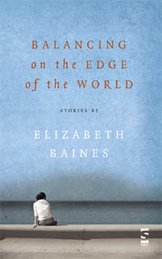
This book, one of my favourites ever, was my suggestion for the group. Narrated by a character who seems very close to the author - a favourite technique of Sebald's, apparently (I have yet to read his other books) - it features the first-person story of Jacques Austerlitz as told to the narrator during a series of initially chance but later arranged meetings from the sixties to the nineties in various European cities and London.
A lonesome and somewhat eccentric figure, Austerlitz is a university teacher of architecture, and begins by sharing with the narrator his fascination with railway architecture - it is in a railway station that they first meet - and, perhaps more importantly, with fortresses and the paradoxes within their design which always lead to their failure as buildings of defence (and ultimate use as prisons). All of this apparently inconsequential and potentially dry material seems yet strangely resonant (although Clare in our group did not find it so). Then on a subsequent meeting (at which point even Clare became engaged) Austerlitz begins to talk more personally and relates his affectless post-war childhood in Wales as the adopted child of a Methodist minister and his wife. Here again there are resonances which seem to float without meaning: Austerlitz's obsession with the drowned village beneath a local reservoir and its tower, a local man's tales of seeing ghosts, and Austerlitz's own childhood sense of a dimension of life which remains invisible. It is only when he is at boarding school and his step-parents are no longer available for questioning (one dead and the other committed to a psychiatric hospital) that he discovers his real name, Austerlitz, and thus any inkling of his European origins, after which he fortresses himself in academic studies and the obsessions with which, during their discussions, the narrator - and this reader - become infected.
During years when Austerlitz and the narrator do not see each other, Austerlitz suffers a serious breakdown which leads him finally to set out to uncover his own origins which inevitably involve the history of Nazi Germany and the Jews.
I told the group that I loved the book, and that I was stunned by the original way it was written. Lacking chapters, it consists of only three sections entirely devoid of paragraphs and which are hardly noticeable as sections as they are divided only by asterisks. Furthermore, long sentences sweep you from one subject to another in a kind of stream of consciousness - one sentence, significantly describing life in the Theresienstadt ghetto, is 11 pages long. The book thus reads like a kind of dream with a dream's weird yet urgent and incontrovertible logic and unanswerable emotional resonance, carrying on the level of form the message that everything in the novel is after all connected: Austerlitz's seemingly dry obsessions turn out to be rooted, stunningly and vividly, in the past which was first hidden from him and which later he failed for a long time even to enquire into.
I said I thought the book was about memory and the repression of memory, and that I thought that Sebald had found a new form to convey them. There were murmurs of agreement and appreciation and Clare and new member Jo said they had loved the book too. I said that there was only one wrong note for me: I know very well that one retrieved memory can open up other lost memories in turn, but it didn't seem to me psychologically convincing that the moment Austerlitz arrives back in his birthplace he so suddenly remembers his post-British early childhood (up to the age of four-and-a-half) in such complete and wholesale detail. I asked Clare, who is a psychotherapist, what she thought about that, and she agreed.
Then Jenny, who had been very quiet up to that point, spoke up and said that she hadn't liked the book. Others were stunned and demanded to know why not. She said, Well, it's such a common story! Presumably she meant the story of the kindertransport of which Austerlitz was of course a part, and I countered that the book wasn't just about that but, as I had said, about memory and repression and the way we deal with loss and pain. Others came in and backed me up, pointing out Austerlitz's signs of repression: his obsessiveness, his depression, his inability to make relationships. Jenny said, But those are the results of his sterile upbringing in Wales. Why didn't Sebald just write about that, why create a whole elaborate device to tack on the story of the Nazis and the Jews? Jo said, No, surely his problems were caused by the replacement of his earlier happy childhood with that sterile upbringing. Jenny said, But he had no memory of that earlier time. I said, But that's the point: it was repressed; his step-parents suppressed the truth, leading him to repress his own memories. Jenny said, But why did it have to be to do with Nazi Gemany and the Jews? And anyway, he didn't repress it, he went looking for his past. I said, But he did repress it: it should have been pretty obvious which way things pointed once he found out his name at the age of 16 or so, yet it took him until middle age and a breakdown to face up to that. As for her objection to its being a kindertransport adoption rather than an ordinary one, I feel we didn't answer Jenny adequately at the time: it would not be simply the memory of an earlier happier childhood which Austerlitz would be repressing, but the climate of fear surrounding his upheaval, which a child of four-and-a-half would pick up. Surely one of the main points of this book is how we try to wipe history, and the way this is played out on the personal level in this novel is extremely moving.
Everyone else in the group thought the book was amazingly moving, and staggered that this could have been the case when the prose style was so spare, even flat, and the story distanced by the double-narrator device. In fact, I think there is something moving about this double-narrator effect: there's a kind of double-exposure which underlines the novel's theme of cloaked meanings and alternative possible lives. At times it's hard to remember which narrator is speaking: the ostensibly objective narrator becomes identified with Austerlitz, and along with him the reader. In this way the concept of narratorial 'objectivity' is challenged and at the same time Austerlitz's psychological state is given a stunning 'objective' authenticity.
John said that he thought it was perhaps the most honest book he had ever read, by which he meant emotionally honest, but Jenny retorted that it wasn't honest at all, it was all device. And then it was Doug's turn to stun us all by saying he wouldn't be reading another Austerlitz* novel. Why? we wanted know. He said that he had thought it was beautifully written, but he could hardly say like the rest of us that he loved it, he couldn't even say he liked it, because he had found it so painful.
At which Jenny said again that she didn't like it at all.
* Whoops, sorry, I meant 'Sebald novel'. (Thanks to Stephen Mitchelmore for pointing out my mistake.) Told you that narrator, author and Austerlitz all seemed close!
Our archived discussions can be found here, and a list of all the books we have discussed here.
Tuesday, April 14, 2009


Child narrators and adult fiction
Tim Love quotes from the Salt Cyclone virtual book tours which Charles Lambert and I conducted in an article about child narrators in adult fiction.
Meanwhile, I have no idea whether the 2-day removal of my ranking from Amazon for Balancing on the Edge of the World was due to a glitch or to its one erotic story and Amazon's apparent bid to strip all 'adult' content of the ranking facility - see here for details of this last and its disturbing implications, and here to sign the petition in protest.
Meanwhile, I have no idea whether the 2-day removal of my ranking from Amazon for Balancing on the Edge of the World was due to a glitch or to its one erotic story and Amazon's apparent bid to strip all 'adult' content of the ranking facility - see here for details of this last and its disturbing implications, and here to sign the petition in protest.
Saturday, April 11, 2009
Reading group: The Secret Scripture by Sebastian Barry
 Jenny suggested this novel about Roseanne McNulty who is nearing her hundredth birthday in the Roscommon mental hospital to which she was committed as a young woman, and her psychiatrist Dr Grene who becomes intrigued by her as the hospital is made ready for closure and his own retirement approaches. Jenny had been interested in the book because her own aunt had been similarly committed for purely moral reasons and in the same way had become so institutionalized that she never left.
The story is told in two alternating first-person narrations: the secret memoir that Roseanne begins writing, in which she looks back over her life and the tragic circumstances, rooted in political and religious conflict, which led her to the asylum, and the journal which Dr Grene begins at the same time to record his professional progress - in particular his unsuccessful attempts to draw Roseanne out - but which also lapses into a private memoir.
I think Jenny wasn't disappointed, and on the whole the group was enthusiastic about this book. People found it a moving, indeed heart-wrenching story, and most especially people loved the writing: Hans arrived with his copy bristling with post-it notes marking sentences and passages he especially liked. It's 'poetic' in that there is a lyrical rhythm and it is profound and startling in its observations. Here's Roseanne summing up a truth behind her own tragedy: '...history as far as I can see it is not the arrangement of what happens, in sequence and in truth, but a fabulous arrangement of surmises and guesses held up as a banner against the assault of withering truth.' Yet the prose is marked by the tics of the characters' psychology as each tries to recall and make sense of their experience, stopping and starting and questioning both their memories and expression. Writing that Roseanne has clearly suffered great pain, and that this 'actually gives her her strange grace', Grene then comments: 'Now, that is not a thought I had before I wrote it down.' In this way the memoir form of the book is unusually dynamic: the journals are not merely vehicles for a story; the actual writing of them moves the characters' development forward. And in this way the book is about not simply Roseanne's particular story - shocking and moving and tied up with the political history of Ireland as it is - but the ways in which we process our own stories and negotiate the aspects of them that are unknown to us.
I said that one thing I loved most about this book was its humanity - the fact that Roseanne never shows bitterness towards those who have wronged her, looking for humanity in even the near-inhuman Father Gaunt, main perpetrator of her wrongs, and the way that both she and Grene constantly reach for understanding. Everyone agreed. Then I said that I did have one caveat about the book, which in fact I was reluctant to mention because I loved the book so much, and it was the same one that the judges had (unusually) admitted to when awarding the book the Costa Prize: I didn't like the way the revelation at the end (which I won't give away here) was achieved. It wasn't convincing, I said, and Ann, Doug and John strongly agreed.
Jenny and Clare didn't quite agree, though, I think: they pointed out all the aspects of the plot which explained the ending and meant that it did all fit together. I said yes, it did all fit together on the level of plot, but I didn't think it worked on the psychological level: there were not enough pointers on that level to make me feel 'Ah yes, of course!' when the truth was revealed. Hans and Doug strongly said that they felt that I'd got to the nub of it. In fact, some people in the group hadn't actually grasped the plot connections, and I think that this was why, because it wasn't backed up by a psychological resolution.
Then Doug revealed that he hadn't liked the book nearly as much as the rest of us, and this seemed to be because he found other aspects of it unbelievable: the fact that Roseanne could have been incarcerated merely on moral grounds and for the rest of her life, and the appalling coldness and cruelty of the priest and her mother-in-law who had put her there. There was now a chorus of objection: Jenny referred back to her aunt, and Clare, who is a psychotherapist, said that she had worked with women in such circumstances as late as the seventies and eighties, and not even in rural Ireland as in the book, but in England. I said that there were exactly parallel stories in the Irish side of my own family, in which people were excommunicated by priests and shunned by the family for similar moral, political and religious reasons. In fact, I said, when I had previously read Barry's earlier novel, The Whereabouts of Eneas McNulty, in which a minor (though not insignificant) character in The Secret Scripture takes centre stage, I felt as though Barry had somehow heard about a particular member of my own family. Thus I found myself in a very weird situation, for me: it's usually Trevor in the group who appeals to life to justify novels, and I who wag my literary finger and insist that appeals to life are irrelevant because a book has to convince on its own.
Indeed, I said, one of the things which moved me tremendously about The Secret Scripture is that it picks up and makes central an encounter in The Whereabouts of Eneas McNulty which there seemed strangely incidental yet remained one of my strongest and most resonant memories of that book. Perhaps what is so moving about the cross-novel connections which Barry creates is the way that they formally demonstrate the marginalization of people and their searing experience in a situation of political and religious prejudice. And I must say that everyone in the group, none of whom knew of the other book, was very intrigued by this connection.
And then, for the rest of the evening, we discussed the real-life issues which the book and Doug's objection had raised.
Our archived discussions can be found here, and a list of all the books we have discussed here.
Friday, April 10, 2009
John Siddique and Mark Illis at Central Library

 Had a very nice evening yesterday: I went to the Manchester launch of John Siddique's poetry collection, Recital: An Almanac, and Mark Illis's story collection, Tender, both of them new books from Salt. Central Library committee room was packed out for two riveting readings. The two authors had provided bubbly wine, so groan, but also yum, I succumbed (I've been staying off alcohol lately.) I had been to John's London launch last week, but it's even better the second time you hear poems, I think. John's book is unified by the theme of the lunar year, and Mark's by the fact that the stories trace the history of a family over a number of years, taking different viewpoints along the way. The one he read out, from the teenage daughter's point of view, was very moving, and his prose style is light but incisive. A member of the audience asked him what was the difference between a collection like this and a novel, and Mark (who is also a novelist) said that he didn't feel there was a lot difference: on the whole he'd say it's a kind of transition/hybrid form, though he plumped to have this book published as stories as that was how he'd approached it in the writing: piecemeal and out of sequence. I had met Mark previously when he was a Centre Director for Arvon at Lumb Bank and invited me to tutor there, and it was great to meet him again. He's also an Emmerdale writer, and two other Emmerdale writers had come to hear him read: Peter Kerry whom I know, and whose surreal short play about a call centre I had seen last weekend at an enterprising evening of short plays by television writers at the Joshua Brooks pub, and Stephen May, whose exciting-sounding novel Tag, about a gifted but troublesome teenage girl, is published by Cinnamon Press.
After the reading I was meeting my John, and when I rang him he turned out to be in Thom's Chophouse with a former work colleague and her two friends whom he'd met in Waterstone's, so there I repaired. They fell on Mark's book with interest (I didn't have John's with me as I'd bought it in London), especially when they saw that it had an endorsement from Anne Enright. And then we talked about The Gathering, which turned out to be one of Irish Theresa's favourite books as well as mine, and other books, and oh guess what, I thought, in for a penny, and I ordered more wine...
Here are some photos of the launch:
Mark reads:

John reads:


John signs books:

Mark signs my book:

Thursday, April 09, 2009
A nice review and I'm high!
I dunno, however long you go on in this business you never stop being thrilled when someone likes your books. Today Jamieson Wolf wrote a lovely post about Balancing, and I am walking around two inches taller and smelling spring in the air!!:
I needed a really amazing book to shake away the sweetness of so much brain candy... That book was, and is, Balancing on the Edge of the World by Elizabeth Baines... And, oddly enough, it seems like Elizabeth has seen into my childhood. I will write a longer review later, but suffice it to say: Balancing on the Edge of the World is lovely.
Tuesday, April 07, 2009
Tangled Roots by Sue Guiney: the book tour
 It is my great pleasure today to host Sue Guiney on her tour with her impressive novel, Tangled Roots.
Tangled Roots is a book which makes exciting metaphorical and formal use of the space-time ideas of physics to portray the lives of a mother and son whose relationship has been fraught and who indeed are finally more or less estranged. From different points in space and time, John, a physics professor, and his mother Grace present their first-person accounts – Grace from her old age, and John from a time after her death when he is forty years old, academically successful and good-looking, yet nevertheless alone in the world and suffering from the vague despair which has blighted his whole life so far, and for which indeed he still blames his mother. These accounts contrast deeply, yet by offering them in alternating sections, the novel slyly links them like the ‘entangled particles’ to which John refers, those quantum particles which, so the theory goes, retain a relationship to each other even when they are widely separated. It’s a story of Grace’s flight from tragedy across the globe, from
 America to London and back again, a tragedy which however re-emerges in the emotional consequences for her son. Telling this story to strangers is Grace’s old-age balm. And it is by telling himself his own story that John too can find his salvation, face his own past and move on to make not only a stunning scientific breakthrough but a reconnection with his family’s more distant Jewish past.
This is a novel about memory and the power of story-telling, about the nature of reality and the relationship of the past to the present, about the influences we have on each others’ lives – all my favourite preoccupations. I put it down burning with questions as to how Sue had achieved it, and here’s the interview we conducted:
EB: Sue, the usual advice to budding writers is 'Write what you know'. I'm so impressed by your panache in using theoretical physics both as subject-matter and metaphorically that what I want to know (!) is how much of it you knew beforehand and how much did you need to research? And what is your attitude to this idea, writing what you know and what you don't?
SG: About physics, I knew nothing. But I read and read and read, and then I reread everything I had already read and tried desperately to keep it in my head. It wasn’t easy, but I loved it. It forced me to think in different ways, to see the world through a different set of metaphors, and that helped me create the character of John. The question about writing what you know is a bit sticky. I don’t think you have to write only what you have experienced yourself, but I do think the best writing comes from a personal resonance with the writer’s own emotional life. For example, I have never (thankfully) been clinically depressed and hospitalized, but we have all experienced moments of extreme sadness and I tried to extrapolate from that experience, to bring it further into an imaginary realm. We all learn as we live, and so there is little that we can’t know if we are open to the world around us and the effect that world has on us. The writing, I would like to think, comes from that openness to experience. So, I guess the answer is yes and no :-)
EB: That's so true, I think - it really depends what you mean by 'knowing'. What about your theme of mothers and sons, though, which seems to me such a very specific relationship/experience - and which you underpin so cleverly with these space-time motifs? I know you've touched on it before on this tour, the fact that you have sons yourself, but what I'm wondering is, do you think you needed that experience to portray the relationship between John and Grace in such psychological depth?
SG: Certainly, my experience as a mother of sons urged me towards writing about that relationship, but I was also interested in exploring how that relationship can change when experienced by a different personality than my own. There is definitely a “what if” factor that goes into the writing, which is the imaginative leap. Writing allows me to place myself, in a different persona, into a situation and see how “I” might then react. In other words, “what if” I was a mother with the sorts of struggles that Grace faced? How would I react? How would that affect the relationships around me, not only with my son, but also with a daughter, my husband, my friends. I often joke that by writing about emotional crises I then don’t actually have to experience them in my own life. If I write about a nervous breakdown then I don’t have to have one myself. Handy, that.
EB: That's so interesting! In other words, it's quite the opposite of what people often suspect about the relationship of writers to their material! Now to turn from material to form. You write poetry and plays as well as fiction - including a play in verse which I find pretty awesome! Did you find that the skills and techniques you have developed in these other areas influenced the way you wrote the novel, or do you think that they are quite separate disciplines?
SG: I really believe that all writing must be poetry if it is to have emotional impact and truth. I have had several conversations with prose writers who claim they can’t write poetry. But when I read their beautifully crafted, metaphorical prose (like your is) I have to say that for me, there is no difference. That “prose” is also “poetry.” Okay, there are different line breaks, different uses of white space. But when the writing is really clicking and there is magic in the language and a moment is distilled to its most powerful, then that, to me, is poetry no matter what form it finds itself in. And that’s always what I strive for. If anything, I find that if I neglect writing poetry while I’m caught up in writing a novel, then the novel writing suffers. It has as much to do with my ears and the way I hear language as anything else.
EB: Ah! Personally, I recognize this: the 'hearing' of the language of a novel - but knowing that you're an accomplished violinist, I'm wondering how much of this for you is to do with the fact that you're a musician?
SG: You know, I have wondered about this. And although I certainly don’t think you need to be a musician in order to be a writer, I definitely think that my own musical abilities affect my writing. I hear cadence and rhythm in each sentence, and I know when I do revisions it is often a missed rhythm or a sort of dissonance which will signal that something must be fixed. Yes, the sound of the sentence even before the meaning of it. To be honest, it can make the editing difficult, because I get caught up in the sound of the language sometimes and lose sight of whether I’m actually saying what I mean to say! I’m very lucky to have these two strands to my bow (excuse the pun) and I certainly don’t take it for granted. If anything it makes me realize that I always need to practice more than I do...both the violin and the pen.
EB: Sue, thanks so much for such a great insight into your processes!
Do buy Tangled Roots. You can do it now by clicking here.
Sue's next and final tour stop will be at Nik Jones' place at the end of the month.
The previous stops were as follows:
Chez Aspie where the tour was launched
Jamieson Wolf who spent a week asking all sorts of questions and then talked about The Book Movie.Tea Stains where Sue discussed the connection between art and science, and the importance of place in her writing
Trixie on the Hunt where she was forced to divulge what makes her tick
The Dotterel where she did some serious untangling
Tania Writes where sue and Tania Hershman got into the mind of the scientist.
BT-The Crafty Gardener where she talked a lot about Russia
Sunday, March 29, 2009
Eco-Libris collaboration for my new novel

I'm very excited. Following in the steps of fellow Salt writer Tania Hershman, I'm joining forces with Eco-Libris who will plant a tree for every copy printed of my novel Too Many Magpies which comes from Salt in October. (Tania has done the same with her great collection of stories The White Road.)
It seemed especially apt to do this with Too Many Magpies. The book indeed has an environmental theme, being about a woman whose faith in science is undermined as the natural world around her becomes ever more uncertain and she meets a man who seems to offer a different, more magical kind of power. It's a novel about our rational and irrational fears in a newly precarious world, and the scientific and magical modes of thinking which have got us to where we are now.
It's no surprise, I guess, that I should write about such things: I've been passionate about the natural world since I was a child, and this arrangement with Eco-Libris makes me not only excited but actually proud!
Eco-Libris are a green company aiming to point out the environmental impact of the book industry - more than 30 million trees are cut down annually for virgin paper to be used for the production of books sold in the U.S. alone - and to balance this out by working with the creators and readers of books by planting trees. You can join forces with them as an individual reader and have a tree planted for every book you read.
Thursday, March 26, 2009
Real life v fiction
I've been talking a lot recently - on my virtual book tour, at the Huddersfield Festival and in the forthcoming Salt book on how to write short stories (edited by Vanessa Gebbie) - about the relationship between real life and fiction, but I haven't tackled this problem: what about when you take a real-life trigger and twist it into something quite different, but then real life takes such a turn that you lose grip on your fiction?
This is precisely what has happened to me over the past few days. For some time now I have been mulling an idea based on an incident in the past of a relative of mine. It's an incident which has always stayed with me, and which seems ripe with narrative possibilities - or at least thematic possibilitites, and for me once you've got the theme the narrative usually follows. In fact those possibilities hadn't become clear to me, and so the story hadn't so far happened, but then late last week it began to. I wrote the opening scene, although I was still very much feeling my way. Then lying awake in the night, I had it, the real 'inspiration': I saw what the incident truly 'meant' - ie what it meant to me, for a story, rather than what it had meant in real life. This is what you're always waiting for as a writer, think, the moment when the logic of narrative makes its own demands and releases you from real life into the more organic world of make up.
Well, I had a really good morning writing the next two pages. And then, guess what? That very same day a family crisis occurred involving the relative who had been the real-life trigger. And guess what? I am so taken up by her new crisis that I am finding it really hard to inhabit the story. It's not that I no longer believe in the story, I do, but my psychological alignment with it has been disturbed: my relative's real-life dilemma and her real-life personality are too close to me at the moment not to come between me and very different fictional reality I was creating.
The answer, I know, is to set the story aside and wait for that distance from my real-life relative to return. Or maybe start writing science fiction...
This is precisely what has happened to me over the past few days. For some time now I have been mulling an idea based on an incident in the past of a relative of mine. It's an incident which has always stayed with me, and which seems ripe with narrative possibilities - or at least thematic possibilitites, and for me once you've got the theme the narrative usually follows. In fact those possibilities hadn't become clear to me, and so the story hadn't so far happened, but then late last week it began to. I wrote the opening scene, although I was still very much feeling my way. Then lying awake in the night, I had it, the real 'inspiration': I saw what the incident truly 'meant' - ie what it meant to me, for a story, rather than what it had meant in real life. This is what you're always waiting for as a writer, think, the moment when the logic of narrative makes its own demands and releases you from real life into the more organic world of make up.
Well, I had a really good morning writing the next two pages. And then, guess what? That very same day a family crisis occurred involving the relative who had been the real-life trigger. And guess what? I am so taken up by her new crisis that I am finding it really hard to inhabit the story. It's not that I no longer believe in the story, I do, but my psychological alignment with it has been disturbed: my relative's real-life dilemma and her real-life personality are too close to me at the moment not to come between me and very different fictional reality I was creating.
The answer, I know, is to set the story aside and wait for that distance from my real-life relative to return. Or maybe start writing science fiction...
Saturday, March 21, 2009
Pitcher

This is the pic I was going to illustrate yesterday's post with, but didn't have time as I went rushing off for a booze-up with my friend Adrian Slatcher.
Friday, March 20, 2009
Phew
Well, phew. A few weeks ago I moaned about not being able to write to a theme set for an anthology I fancied being in, and about the ridiculousness of theme-setting in general, but I'm beginning to wonder if it was simply that while my book tour has been running, my head just hasn't been in the right place for writing.
My book tour finished on Wednesday. Yesterday, as a way of signing off from it, I tidied my study. This morning I walked into the tidied room and looked at my old writing table with the sun pouring onto one corner of its surface, my pad laid neatly and my silver fountain pen gleaming beside it, and something happened. Some kind of reverberation in the air of the room, some kind of peaceful soft feel to it... You know what it was, don't you? That womb-like dream world coming back...
I sat at the desk. And it came, the story I had been trying to write all those weeks ago.
Last week I met Ben, an artist, for a drink, and I was moaning about this very thing: the way promotion requires a different mentality from creation, and if you do a lot of promotion you can end up not creating. He nodded and agreed, but I think he thought I was a wimp. It's the price of the democratization of art, he told me. I know he's right, but I don't half find it a struggle sometimes...
My book tour finished on Wednesday. Yesterday, as a way of signing off from it, I tidied my study. This morning I walked into the tidied room and looked at my old writing table with the sun pouring onto one corner of its surface, my pad laid neatly and my silver fountain pen gleaming beside it, and something happened. Some kind of reverberation in the air of the room, some kind of peaceful soft feel to it... You know what it was, don't you? That womb-like dream world coming back...
I sat at the desk. And it came, the story I had been trying to write all those weeks ago.
Last week I met Ben, an artist, for a drink, and I was moaning about this very thing: the way promotion requires a different mentality from creation, and if you do a lot of promotion you can end up not creating. He nodded and agreed, but I think he thought I was a wimp. It's the price of the democratization of art, he told me. I know he's right, but I don't half find it a struggle sometimes...
Wednesday, March 18, 2009
The dribble interview! Final leg of my book tour
 Well, my book tour finally comes to an end today on the blog of Tania Hershman, whose own amazing collection stories, The White Road is also published by Salt, a book of stories inspired by scientific ideas and taking off into the most inventive realms of the imagination. Tania conducted her own riveting book tour at the end of last year - hers was a pilot tour for the Cyclone book tour scheme which Salt recently introduced. She knew therefore how much
  hard work book tours can be - I have spent most weekends for the last ten weeks thinking so hard about my own writing and writing in general that I think my brain's about to implode - and how distracting from writing. Tania therefore decided to give me a break with a 'dribble' interview, that is, an interview in which each of the answers must be no longer than 50 words! It was a great relief, and great fun - and yet the interview is incisive, I think: no surprise, as Tania is a whizz flash fiction writer. Some of the flash stories in her collection are the best and the most resonant I have ever read; John says that too, and as a poet he has very high standards for flash fiction.
Today's interview is here, and don't forget that all of the Cyclone tours remain on the Salt website, and you can click back and read all the interviews where I bare my writing soul!
Monday, March 16, 2009
The realism of readings

Issue 2 of Horizon Review is now live, and it includes my new story, 'The Choice Chamber'.
It's not a realist story in any way - quite the opposite, but you don't realize that until the end. Funny thing, realism, or should I say, funny word, or anyway funny how people take it. Last night Carys Davies, Mike Barlow and I did our reading at the Huddersfield Festival. (That's us above taking part in the Q & A.) In the introduction my third prize in last year's Raymond Carver competition was mentioned, and it became clear in the Q & A afterwards that it was consequently taken for granted that I write only realist stories and that Salt - unlike Comma, it was stated - publish realist stories in general - and this in spite of the fact that Carys read from one of her anything-but-realist contemporary fairy tales. It's so far from the truth that we three were a bit gob-smacked for a moment - Salt is nothing if not a broad church for writers, as we quickly told the audience when we recovered. As I said - to everyone's apparent surprise - my Carver prize-winning story is not a realist story. In fact, it's a story which self-consciously challenges the concept of realism, which is what I'm doing generally now in my short-story writing.
Part of the problem, I think, is the all-too-human tendency to pigeonhole, which is quite a stumbling block if you're trying to do something subtle which maybe doesn't shout out about its 'category', or which indeed is intended to break down those categories. And it depends how you read things, anyway. As John and I were speeding back down the motorway afterwards, John said he didn't read Carver as realist anyway.
It seems to me that realism is predicated on the assumption of an objective reality (about situations, characters etc) on which the author is intended to be taken as an authority. This is a notion I am always challenging in my writing - it's a core thing about my writing: the contingency of reality and the contingency of viewpoint - however psychologically convincing I may succeed in making the characters or vivid and real-seeming the situation. Even the story I read out last night, 'Condensed Metaphysics' - which was indeed called by someone last night 'a slice of life' realist story - is intently concerned with this, the fallacy of the notion of an objective reality. Perhaps the problem for this story is that it is now known to be based on a real-life incident, which I had admitted at the start last night, but I think my account on Vanessa Gebbie's blog of how I turned that real-life incident into a story shows precisely that the story is not after all about a real-life incident but the ideas in my own head.
As you can maybe tell from the above, we had a great discussion with a lively and attentive audience in the pub cellar bar we were moved to because of some technical hitches. Cosy and warm with red lighting - hard to see faces for the Q & A, but it didn't seem to matter! See how (realistically!) dark it was without a flash:

We had a great time. Many thanks to the festival for inviting us.
Thursday, March 12, 2009
Salt of the Earth: Reading at Huddersfield Festival

An announcement today:
On Sunday I'm reading at the Huddersfield Festival with fellow Salt authors short-story writer Carys Davies and poet Mike Barlow.
Sunday, March 15, 2009, 6:00pm - 7:00pm
St Pauls Hall, University of Huddersfield
Queensgate, Huddersfield
£5/£3.
www.lawrencebatleytheatre.co.uk
View Map
Wednesday, March 11, 2009
New leg of my book tour: prose v drama and adaptation.

The penultimate leg of my virtual book tour, Around the Edges of the World, is now up on the amazing blog of novelist Debi Alper - after endless technical glitches, apparently, so I'm even more grateful than I already was due to the fact that in order to host me she is stopping out from her amazing account of the Grenada revolution and invasion. (I wrote about this last yesterday, and about Debi's very striking and unusual crime thrillers).
Debi asks me about the differences between writing prose fiction and drama, and about the special problems of adapting one's own work from the first of these forms to the second.
Tuesday, March 10, 2009
Debi Alper
 Tomorrow the penultimate leg of my virtual book tour, Around the Edges of the World, goes to the stand-out blog of Debi Alper. For those of you who don't already know, Debi is currently blogging about her experience of being in Grenada in the early eighties, after the revolution and then during the coup and the US invasion. It's an eye-opening read, a brave project which explodes myths which have grown up about the period, and was prompted largely when Debi was contacted by a documentary filmmaker who is delving into the truth of the revolution and invasion. Debi is one of those bloggers who have become real-life friends, and I am not at all surprised to read her brave part in this history, since I know her as hugely warm-hearted and staunchly committed to whatever she decides matters. I am extremely honoured that she will break from her account to host my little ol' tour.
 Debi is also of course the author of striking crime thrillers distinguished by a very original angle: the amateur sleuths of Nirvana Bites and Trading Tatiana belong to the alternative sub-cultures more often seen as 'other' in crime thrillers. The vivid occupants of the Nirvana Housing Co-op include a drugs counsellor as well as an ex-drug addict, a New Ager and a refugee from the S & M scene, and as they tackle head-on the fascist elements of our society, Debi exposes from inside the harsh realities of subjects such as sex trafficking and child abuse - all with the trademark verbal fireworks which also characterize her blog.
Monday, March 09, 2009
Will I catch up?

Spring already, and the period I set aside for my series of short stories is rapidly running away. Not much time for it lately, or for blogging. I did finish a story the week before last, but I haven't had time to give it a final look over, so it's still languishing on my desk. I spent last week writing a chapter which I was thrilled that Vanessa Gebbie invited for an exciting book she is editing for Salt on writing short stories, based on one of the answers I gave when she hosted my virtual book tour. At the same time of course there was the usual distracting task of keeping up with the latest leg of the tour (and the pretty head-stretching questions Charles Lambert asked me about my writing). The weekend was taken up in answering the questions for this week's upcoming leg (Wednesday) on Debi Alper's blog (more probing questions which I've had to think about really hard - mainly about the difference between writing prose and drama, and about adaptation) and reading scripts for the 24:7 Theatre Festival. I've read quite a lot of scripts for the festival this year, and I've come across some I'm sure are absolute winners, but of course I'll have to wait to see if other readers feel the same...
I feel as though it's all work and no play, but I did get out for a walk along the river on Sunday afternoon and into Fletcher Moss Gardens to photograph the crocuses (above). And I did go out twice in the week, once to hear Jackie Kay and Joe Pemberton read at Manchester University, and the second time to MMU to hear David Edgar talk most interestingly about translating Brecht. A really interesting thing about that last event was that it was attended not only by theatre folks but also by people I normally only see at poetry readings - usually, I find, these are separate constituencies. And afterwards a group of us went out for an extremely enjoyable meal and catch-up on all fronts - so really, what am I complaining about?
There's more excitement this week - and travel, that real thrill for the desk-bound writer! I'm off to Liverpool on Friday to take part in the workshop of a play by Ian Moore - something I love doing, and which is such a great break from the desk work. And on Sunday I'm off to Huddersfield to take part in a reading at the literature festival with fellow Salt authors short-story writer Carys Davies and poet Mike Barlow. (Details here.) Then next week it's the final stop of the virtual book tour (18th March) on Tania Hershman's blog, which is bound to be interesting, since she is the editor of The Short Review.
And then maybe I'll get a chance to put the writing cap back on...
Wednesday, March 04, 2009
Politics and audiences - new leg of my virtual book tour
 Today my virtual tour of Balancing on the Edge of the World goes to Italy and the blog of novelist and short-story writer Charles Lambert. This is something of a reciprocal thing, as last year I hosted Charles on his own Cyclone tour of his wonderful collection of stories, A Scent of Cinnamon. I am a great admirer of Charles's work, and I wrote about his sophisticated (in literary terms) yet utterly moving and accessible novel, Little Monsters, here.
The intelligence behind his writing and which he brought to his own book tour would, I knew, guarantee that the questions he asked me this week would be thoughtful and searching, and indeed they get right to the heart of some of my main concerns as a writer. He asks me about my political consciousness (with a small p) as a writer, the differences between writing for a radio and a short story audience, and the reasons for the variety of the stories in my collection (and in the process I spill a few more beans about my past).
Friday, February 27, 2009
Proof copy of Dido by Adele Geras!
 Don't you just love it when something really nice and totally unbidden pops through the letterbox?
Look what came through mine yesterday: a proof copy of Dido, the latest retelling of the classical stories by my friend and spinner of the most amazingly vivid, exciting and moving tales, Adele Geras. (To be published in May.) And isn't the cover really something?! And this sounds like a good one. Here's the press release:
Love can be deadly. Especially when two girls fall for the same man - one a queen, the other her serving girl.
Elissa knows she is playing with fire, but she can't resist. Queen Dido suspects nothing, until one fateful night... Secrets are revealed, hearts are broken and as dawn breaks, terrible tragedy unfolds.
A passionate tale of love, betrayal and revenge.
Wednesday, February 25, 2009
Writing jumpers, literary lenses and a Prize Draw: my virtual book tour
A prize draw today on my virtual tour book tour! A copy of Balancing on the Edge of the World for each of three lucky readers who leave their names in the comments section of the interview on dovegreyreader scribbles, this week's stop-off. Dovegrey gets me talking about my writing jumper (below), would you believe, as well as other accoutrements of my writing life.

And we discuss the issue of literary lenses: am I holding a microscope to the minute details of life in my short stories, or am doing something rather different which requires a different kind of lens?

And we discuss the issue of literary lenses: am I holding a microscope to the minute details of life in my short stories, or am doing something rather different which requires a different kind of lens?
Thursday, February 19, 2009
Ride the Word at Holborn Library
Here are some pics from our Ride the Word Reading at Holborn Library last night.
Julia Bird:

Jay Merill:

Vincent de Souza:
Me:

Katy Evans-Bush:

And the audience:

I had a great time. Such a convivial evening: Jay kindly invited John and me round to hers beforehand where she'd prepared us a bite to eat which turned out to be more like a feast! Then there were loads of refreshments laid on in the library, and afterwards several of us went to the pub. (Crikey, I'm going to have lay off on the grub and the booze.) And the poetry and stories were great, if we do say it ourselves - well, it wasn't just us Salt lot, there were readings from Rack Press and Julian Duffus's Islington writing group.
And now I have to try and get back to some writing... well, once I've read a batch of scripts and done my next questions for the book tour and got ready for visitors... Or maybe I should just run away somewhere with my fountain pen and writing pad. Sometimes I think it's the only way I'll ever get any more writing done...
Julia Bird:

Jay Merill:

Vincent de Souza:

Me:

Katy Evans-Bush:

And the audience:

I had a great time. Such a convivial evening: Jay kindly invited John and me round to hers beforehand where she'd prepared us a bite to eat which turned out to be more like a feast! Then there were loads of refreshments laid on in the library, and afterwards several of us went to the pub. (Crikey, I'm going to have lay off on the grub and the booze.) And the poetry and stories were great, if we do say it ourselves - well, it wasn't just us Salt lot, there were readings from Rack Press and Julian Duffus's Islington writing group.
And now I have to try and get back to some writing... well, once I've read a batch of scripts and done my next questions for the book tour and got ready for visitors... Or maybe I should just run away somewhere with my fountain pen and writing pad. Sometimes I think it's the only way I'll ever get any more writing done...
Wednesday, February 18, 2009
Exposed good and proper: my virtual book tour
 Today on my virtual book tour Vanessa Gebbie performs the amazing feat of getting me to abandon my long-held principle of not talking about which bits of a story are from my own life. As readers of my blogs will know, I believe that in general such discussions about fiction are reductive and even damaging, since fiction is greater than the sum of its parts - and anyway, 'fact' and imagination are so blended in fiction that it is often difficult for the author to remember which bits are which. Worst of all, such discussions tend to encourage biographical readings of a work of fiction as a whole. However, Vanessa's questions concern the process of writing, and I have ended up dissecting the process from real-life trigger to fiction in two of the stories.
Tuesday, February 17, 2009
Words from a Glass Bubble by Vanessa Gebbie
 Tomorrow my virtual book tour goes to the blog of Vanessa Gebbie, writer of her own vivid collection of short stories, Words from a Glass Bubble. I don't have my copy of her book to hand, because my mum took it away and apparently gobbled it up as quickly as I did on my way home from the launch last year, but hasn't yet sent it back. Although it's a year therefore since I read the stories, they are still with me, vivid in image and resonant in voice. Vanessa writes about those on the margins of society - the lads who've missed out, the overlooked shop assistant, the woman looking for her lost son's soul. Her stylistic range is wide - a story like 'The Lych Warmer' sings with the lilt of fairytale, while others are punchy with the thrust of contemporary voices. These are stories which confront the darkness of life, but never without humour, and they're all informed by an overall narrative tone which is feisty and optimistic.
Friday, February 13, 2009
Some nice comments
I'm smiling. Sue Guiney has said some really nice things about Balancing on the Edge of the World:
...her characters feel like they are sitting in the room with you, as if you've known them forever. Each story strikes to your heart, whether you want it to or not. I really do recommend the collection.
Thursday, February 12, 2009
Ride the Word Reading

Next Wednesday I'll be privileged to take part in a Salt Ride the Word Reading.
Holborn Library, 32-38 Theobalds Road, London
Wednesday, February 18, 2009 7:30pm - 9:30pm
Contact Info: 02079746345 holbornlibrary@camden.gov.uk
Free admission
Is there anything you'd like to ask me?
Or, to put it another way: next Wednesday my virtual book tour goes to the blog of short story writer Vanessa Gebbie, and she's given me carte blanche as to what we should discuss about Balancing. And it occurred to me, since I've got this chance, and so as not to go and overlook anything, maybe I should ask my blog readers if there is anything you'd like her to ask me...
Reading for 24:7

This is what I was doing on Sunday afternoon: reading scripts in the Midland Hotel for the 24:7 Theatre Festival. My reading partner was Cherylee Houston, and in the foreground on the left is actress Sue Twist, who directed me in my monologue Drinks With Natalie for 24:7 2005. Cherylee and I gave full marks to two plays we read!
For the second year running I haven't put a play in myself: I decided that with my virtual book tour for the stories, the forthcoming novel Too Many Magpies to promote, and the new collection of stories to work on, it just wasn't possible to give up 4 months of the summer to producing a play - which is more or less what it takes if, like me, you don't have a ready-formed company and have to look for a director and cast from scratch.
Festival co-founder Amanda Hennessy took the photo.
Wednesday, February 11, 2009
New leg of my virtual book tour: the story I stole and my idea of the literary dinner from hell.
 The latest leg of my virtual book tour is now up on the blog of Sarah Salway, whose own wonderful collection of stories, Leading the Dance, I reviewed last night below.
We talk about the way so-called short stories can encompass BIG themes, and Sarah gets me to confess which of the stories in Balancing was stolen, and to reveal my idea of the literary dinner from hell.
You can get to it here.
Tuesday, February 10, 2009
Review: Leading the Dance by Sarah Salway
 Tomorrow my virtual book tour goes to the blog of Sarah Salway. Sarah is a wonderful writer: her work is inventive; it's also witty yet deeply serious; it's informed by an odd-ball, quirky imagination and yet utterly grounded in the psychological reality of contemporary lives. Her collection of stories, Leading the Dance (bluechrome), gives us narrators often tipped towards what seems like madness - the bulimic woman who has a portrait painter paint the inside of her fridge, the wife who traps another woman in her cellar, the cleaner who strips naked to clean in the presence of her blind employer - but the light yet scrupulously precise prose allows us to identify closely, and thus demonstrates that such 'madness' is but the kernel of our contemporary psyche. And light as these stories seem - sometimes laugh-out-loud - there is a vein of menace, too, running through them, as the people in them steal and lie and hide their hurt secret selves, as lovers in hotels and husbands and wives negotiate their alienation from each other. Perhaps my favourite in the collection is 'The Fabulous Button Sisters' for its sly and clever yet affectionate satire. It's narrated by a teenage girl who has made friends with a new girl, Michelle, who has had to come to live with her aunt. Here's an extract:
 Michelle said it was important we kept up to date with diets. Two weeks ago, she decided that we were only going to eat one colour of food a every meal. She'd got the idea from one of her aunt's magazines. Apparently everybody was doing it. Mum and Dad stopped talking when I came into the kitchen watching as I carefully cut the brown crust off the bread and spread the white inside with butter and cream cheese.Sarah's two novels are both very inventive. I've started with her second, Tell Me Everything, which bears all the same hallmarks as the short stories and concerns a narrator who reinvents herself by telling stories. I'm finding it hard to put down. Sarah's first novel, Something Beginning With, the story of put-upon secretary Verity Bell, takes the form of a dictionary full of cross references, and is excitingly innovative. It's sitting on my bedside table waiting for me to finish Tell Me Everything - but I have to admit I couldn't resist reading the beginning, and it's so engaging I had to force myself to stop!
"How about a nice bit of ham with that?" Mum asked.
I shook my head. When I'd first tried to explain about the mono-colour diet, Mum had looked at me with the kind of expression which meant she was storing it up to giggle about with Dad later.
"Or some pickle." Dad was already moving towards the store cupboard but I could see his shoulders moving up and down...
...Michelle thought my parents had a problem with repressed anger. This was why they laughed so much and spent so much time together in such an unhealthy way.
And taking all of the above into consideration, I think it's no surprise that in our interview tomorrow, Sarah gets me to confess which of the stories in Balancing in stolen!


Monday, February 09, 2009
A launch, a lot of drink, delayed trains, a bust laptop and no writing to show for it
 Well, I was on the train to London last Wednesday, using my mobile broadband to keep up with my virtual book tour, and just as we were pulling into Euston my laptop crashed, after which I had no other internet facility on it, the broadband hardware having confused it altogether! Not that I realized that last straightaway, as I went straight off to Faber and the launch of the critically-acclaimed novel 'The Hidden' by the outrageously handsome and talented Tobias Hill. This is an extremely clever and erudite novel, and it's quite funny that in person Tobias is so self-effacing. I had a great time, not least because so many people from the inaugural Faber Academy Paris course were there: Antonia Honeywell, Antonia Hayes, Cynthia Barlow Marrs, Sam Thorp, David Lee and Ronald Grover - all great writers, and remember, you heard about them here! And honestly, I'm just not used to that much wine...
Afterwards some of us Paris lot went off for a meal to Tas, where my London crew, Matthew and Ben, were waiting. And then for more drinks... Really, it was all just a bit too much for me! I do remember the great conversation we had, though, and that Sam Thorp told me about a great article by Zadie Smith (which he emailed to me the next day). I had a ticket for the train back to Manchester at 10, but that had long gone before we even started eating, so I had to beg a bed at Ben's. It was next morning at Ben's that I switched on my computer and found out what was wrong...
The next day was a gonner: I spent the morning socializing (I could use my mobile broadband, but it was so slow!) and when I finally got to Euston the trains were reduced to a half service because of the weather, so I didn't get home till 5.
Can't remember Friday. My head was too full of all this other stuff to do any useful work and I certainly wasn't online.
And then on Saturday morning I had to go into town to get my laptop sorted, and the wonderful Apple shop where all the young men smile and say hello and one was thrilled by my laptop bag which is actually just a huge jiffy bag, because he's really into eco things, having been brought up in the Caribbean and surfing through plastic bottles.
And then I had to tackle the questions for the next leg of my virtual book tour on Sarah Salway's blog - I don't seem to find these questions so easy to answer! - and I've been working on them since, between reading scripts for the 24:7 Theatre Festival.
All of which is why I haven't been blogging, or started the new story I'm supposed to be writing...
Saturday, February 07, 2009
Bookarazzi: February news
This month's news for the writers' site, Bookarazzi, with new books, readings and events by its members.
Tuesday, February 03, 2009
My virtual book tour: Why write?
 Not a long trip this week for my virtual tour of Balancing on the Edge of the World - just a quick hop up the road from last week's stop at Clare Dudman to novelist Caroline Smailes. Caroline's blog is renowned for the innovative way she used it to showcase her first novel, In Search of Adam, with the result that the novel was quickly picked up by publisher The Friday Project, and for the quirky and entertaining ways she continues to promote her novels
  there and relate to her readership. Not surprisingly, her novels are just as unique: striking in their use of graphics
 and typography, and utterly moving. Their great achievement is that they deal with searingly grim situations in such a way that you are utterly hooked: I read both ISoA and Black Boxes with a ravenous greed, and others have said the same. (I wrote about ISoA here.)
In this week's tour interview, Caroline asks me the hardest question of all to answer: Why do I write? See how I do here.
Monday, February 02, 2009
A Guide for Magazine and Anthology Editors
Do not set a theme.
Every time you set a theme, every author in the land - or at least those who have heard your call for submissions - will rack their brains to think whether they have any unpublished stories or poems that fit your theme. Lucky if they have one, but the odds are that they will not - especially if they're any good and their stuff is getting published. The writer who does not have one, pathetically keen not to pass up a publishing opportunity, will then sit down at the desk to try and write one.
What happens then? Terrible things can happen. Maybe the writer sits there all week and nothing comes (because really the writer has a different agenda) and the writer wastes a week's writing time and still has nothing to send you. Or maybe the writer gets what seems a brilliant idea - a version of your idea - and begins writing it. But half way down the first page the words start twisting away from the idea and towards the idea that the writer would have written if he or she were not trying to fit your idea, your overall theme. The writer tries to twist it back - and here we have a writer at war with themselves, with their own creativity! - and OK, sometimes it works, but more often than not it doesn't, and the story ends up a mess, true to neither interest, yours nor theirs. Or maybe the writer comes up with a story which seems to fit your theme brilliantly, but if it doesn't also fit the writer's own agenda then you are being instrumental in dissipating writers' creativity. And what if you don't accept it? It's OK you saying that writers are 'free to interpret the theme in any way they want', but it's a set theme after all, and we all know you're human, you'll have your preferences as to how it's interpreted, and anyway you've only got a certain number of slots...
Do us a favour. Don't set themes.
Yeah, I know, I know, it's the way to market things, themes...
Every time you set a theme, every author in the land - or at least those who have heard your call for submissions - will rack their brains to think whether they have any unpublished stories or poems that fit your theme. Lucky if they have one, but the odds are that they will not - especially if they're any good and their stuff is getting published. The writer who does not have one, pathetically keen not to pass up a publishing opportunity, will then sit down at the desk to try and write one.
What happens then? Terrible things can happen. Maybe the writer sits there all week and nothing comes (because really the writer has a different agenda) and the writer wastes a week's writing time and still has nothing to send you. Or maybe the writer gets what seems a brilliant idea - a version of your idea - and begins writing it. But half way down the first page the words start twisting away from the idea and towards the idea that the writer would have written if he or she were not trying to fit your idea, your overall theme. The writer tries to twist it back - and here we have a writer at war with themselves, with their own creativity! - and OK, sometimes it works, but more often than not it doesn't, and the story ends up a mess, true to neither interest, yours nor theirs. Or maybe the writer comes up with a story which seems to fit your theme brilliantly, but if it doesn't also fit the writer's own agenda then you are being instrumental in dissipating writers' creativity. And what if you don't accept it? It's OK you saying that writers are 'free to interpret the theme in any way they want', but it's a set theme after all, and we all know you're human, you'll have your preferences as to how it's interpreted, and anyway you've only got a certain number of slots...
Do us a favour. Don't set themes.
Yeah, I know, I know, it's the way to market things, themes...
Subscribe to:
Posts (Atom)