To Manchester Metropolitan University's Writing School last night for a great reading by tutor Simon Armitage, and on to the Kro2 Bar afterwards. There Steve Waling and I sat and patted each other on the back for getting on Salt's publishing list, and, with silly grins on our faces, compared notes about how great they seem to be, and how much effort they seem to put into marketing their books. Steve's poetry collection comes out in April and he told me that Publishing Director Jen Hamilton-Emery had been up to make a podcast of him reading a poem and talking about his book for the website.
I haven't been out much recently, and I should go out more often: as we sat there shamelessly congratulating ourselves, a film company for whom I worked as an actor last summer walked in. The film we made has been really well received, apparently, and they're doing another, and would I be free? Yippee. Acting is one of the things I love best in the world (much easier than writing!!). I'm not telling you the name of the company or the film, because I play a pretty uncool character (it is a surreal comedy, I hasten to add), and that's not the kind of image you need for marketing fiction, now, is it?
Friday, February 16, 2007


Sunday, February 11, 2007
That photo thing...
So Salt asked me to provide some recent publicity photos PDQ. Oh, help. That dreadful process again. And my last photographer has moved away. Where would I get another one? Fellow bloggers Manchizzle and Adrian Slatcher came to my aid with suggestions, but their contacts appeared not to be around. Then John reminded me how fantastic the photos had been last summer for the Manchester 24:7 Theatre Festival. Yes!! Dave Slack, the festival's organiser, put me right on to their photographer: Tom Wright. And there I was within a day or two meeting him in the city centre.
What sort of thing did I want? Tom wanted to know. I resisted the urge to say the thing which made my last photographer go white even though I was joking, ie Please try and make me look glamorous if you can; I didn't even say Just making me look not plain ugly would be great, and I gave him the publisher's specs: interesting urban shots.
I suggested the new white bridge over the Irwell, which is always appearing in telly dramas like Cold Feet, and as Tom checked the light I leaned on the side in the hope of looking writerishly thoughtful. A man walked past and stared. He kept staring, turning back. More people came, in both directions, all staring back over their shoulders. I cracked up. And the bridge turned out not to be the best suggestion: it shook as people passed, which was not so good for focus, and it was so huge that it was hard to get a shot of it except from a distance. At Tom's more sensible suggestion we moved off to the old arched bridge. A woman stopped. 'Oh don't forget your bag will you, dear?' she cried, scooping it up for me and spoiling the shot. More people endangered their lives by walking while looking backwards at us, and again I had to make the effort to straighten my face.
At the end I took a shot of Tom taking one of me, and if I hadn't still been laughing it wouldn't have been blurred.
What sort of thing did I want? Tom wanted to know. I resisted the urge to say the thing which made my last photographer go white even though I was joking, ie Please try and make me look glamorous if you can; I didn't even say Just making me look not plain ugly would be great, and I gave him the publisher's specs: interesting urban shots.
I suggested the new white bridge over the Irwell, which is always appearing in telly dramas like Cold Feet, and as Tom checked the light I leaned on the side in the hope of looking writerishly thoughtful. A man walked past and stared. He kept staring, turning back. More people came, in both directions, all staring back over their shoulders. I cracked up. And the bridge turned out not to be the best suggestion: it shook as people passed, which was not so good for focus, and it was so huge that it was hard to get a shot of it except from a distance. At Tom's more sensible suggestion we moved off to the old arched bridge. A woman stopped. 'Oh don't forget your bag will you, dear?' she cried, scooping it up for me and spoiling the shot. More people endangered their lives by walking while looking backwards at us, and again I had to make the effort to straighten my face.
At the end I took a shot of Tom taking one of me, and if I hadn't still been laughing it wouldn't have been blurred.

Saturday, February 10, 2007
Expectations unfulfilled
On Tuesday the reading group met at Clare's house to discuss Jack Maggs by Peter Carey. Carey's True History of the Kelly Gang is the only book ever which has had a universal thumbs-down from the group – no one had been able to engage with it - and when Clare (who had not been a member then) suggested this book everyone groaned. In the end, however, we decided not to be so prejudiced and to give Peter Carey another chance.
It was a freezing night, and the fire in Clare's Victorian terrace was roaring: a fitting setting for discussing this novel set in Victorian London and featuring an eponymous protagonist not a million miles removed from the character Magwitch in Dickens’ Great Expectations and antagonists with parallels in its hero Pip and in Dickens himself. Like Magwitch in Dickens’ novel, Jack Maggs, a convict deported to Australia, has made good there and now returns to find the young man (in this case Henry Phipps) who once as a boy took pity on him, and whose secret benefactor he has been all along. Unaware like Pip of his true relationship to Maggs, Phipps absconds on receiving news of Maggs’ imminent arrival, and Maggs becomes involved as a ‘patient’ with the Dickens-like novelist and mesmerist Tobias Oates.
Most of the others looked at us pretty suspiciously, and feeling therefore somewhat like the school swots Ann and I talked about how Carey switches the narrative/focal places of the Magwitch/Maggs and Pip/Phipps characters, taking Magwitch from the periphery of Dickens’ Victorian-colonial narrative to the centre of his own, and exiling Dickens’ hero to the periphery. Australia
Wednesday, February 07, 2007
Short stories on the up
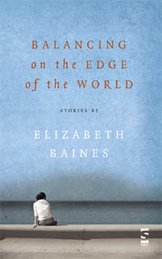
In December I wrote about the state of the short story and the fact that there were signs of a resurgence, with several small publishers beginning to specialise in the form. Well, I am thrilled to be able to say that in October one of those publishers, Salt, is to publish a collection of my stories, Balancing on the Edge of the World.
Salt, based in Cambridge and run by Chris and Jen Hamilton-Emery, are turning out to be marvellous. The whole thing happened very quickly: a fortnight before Christmas I sent them a sample three stories, and by mid January they had offered to publish a collection. No messing about: straight through came an author questionnaire which made it very clear that Salt empower their authors by involving them in publicity and marketing at every stage.
Take a look at their site, and you'll see how classy they are, both in terms of literary standard and marketing flair. It's no wonder that they've gained such prominence and respect in such a short time, and I feel just honoured to be published by them - alongside several other Manchester writers, as it happens, including Steve Waling, David Gaffney and Neil Campbell.
Salt, based in Cambridge and run by Chris and Jen Hamilton-Emery, are turning out to be marvellous. The whole thing happened very quickly: a fortnight before Christmas I sent them a sample three stories, and by mid January they had offered to publish a collection. No messing about: straight through came an author questionnaire which made it very clear that Salt empower their authors by involving them in publicity and marketing at every stage.
Take a look at their site, and you'll see how classy they are, both in terms of literary standard and marketing flair. It's no wonder that they've gained such prominence and respect in such a short time, and I feel just honoured to be published by them - alongside several other Manchester writers, as it happens, including Steve Waling, David Gaffney and Neil Campbell.
Tuesday, February 06, 2007
How to read plays
Not long after I wrote in November about the frustrating business of submitting my fringe-produced play O'Leary's Daughters to mainstream theatres last February, I received a response from one of the theatres I had given up on.
They enjoyed reading it, they said, and admired both my 'confidently fluid writing style' and the 'economy of my stagecraft'. For once they did not take the schematic structure and my 'other devices' as mistakes, but unfortuntely they found them 'alienating'. Oh.
Mm. Why, I wonder? None of the audiences in the three fringe shows found them alienating in the least. Those audiences laughed and cried (some coming out with wet faces), and in the 24:7 production they stood at the end of some performances and whistled.
I read on to the end of the sentence: '...and they didn't allow the drama space to breathe.'
Ah! That breathing kind of drama! Not the tight stuff then, not the stuff where you're pulled on an emotional rack, breathless with all your senses attuned... But the breathing stuff, the stuff where you can lie back, relax.... They couldn't be meaning naturalistic drama, could they?
Of course they could. Here's the next sentence: 'It was also felt that the piece might benefit from a deeper exploration of the causes of abuse and a more balanced approach to the nature-nurture debate.' What?!!!! Lordy-lor, this NOT a play about abuse! Yes, all three characters have been abused, and use their childhood abuse as their defining experiences, but this is a play about IDENTITY, not abuse per se!
Gotcha. You didn't want me to write anything so abstract or surreal, in fact even though I'd said in my letter what the theme of the play was, such an idea was so far from your concept of what a play should be, that you couldn't even see when you read it that that's what it was.
You wanted me to write a different play.
They enjoyed reading it, they said, and admired both my 'confidently fluid writing style' and the 'economy of my stagecraft'. For once they did not take the schematic structure and my 'other devices' as mistakes, but unfortuntely they found them 'alienating'. Oh.
Mm. Why, I wonder? None of the audiences in the three fringe shows found them alienating in the least. Those audiences laughed and cried (some coming out with wet faces), and in the 24:7 production they stood at the end of some performances and whistled.
I read on to the end of the sentence: '...and they didn't allow the drama space to breathe.'
Ah! That breathing kind of drama! Not the tight stuff then, not the stuff where you're pulled on an emotional rack, breathless with all your senses attuned... But the breathing stuff, the stuff where you can lie back, relax.... They couldn't be meaning naturalistic drama, could they?
Of course they could. Here's the next sentence: 'It was also felt that the piece might benefit from a deeper exploration of the causes of abuse and a more balanced approach to the nature-nurture debate.' What?!!!! Lordy-lor, this NOT a play about abuse! Yes, all three characters have been abused, and use their childhood abuse as their defining experiences, but this is a play about IDENTITY, not abuse per se!
Gotcha. You didn't want me to write anything so abstract or surreal, in fact even though I'd said in my letter what the theme of the play was, such an idea was so far from your concept of what a play should be, that you couldn't even see when you read it that that's what it was.
You wanted me to write a different play.
Friday, February 02, 2007
That inspiration thing...
Who was I kidding? This is just a different, new (for me) way of writing a play, I told myself, as I sat at my desk all January, and the play seemed to ease its way out of the ether only slowly, and then to disintegrate on the page, only to begin easing its way out again from a slightly different angle.
But I had to face it, I wasn't making progress. I knew what the themes were, I thought I knew the characters and the story, but something was sticking: in the middle of the play there was a dark patch, a blank, a big chasm over which I had to get the characters, and which I never would until the damn thing disappeared, lit up, turned into some kind of solid ground. Oh, I could think of plenty of ways to do it in theory; I even drew myself a little picture/diagram, my two characters standing together at the tram stop at the opening of the play and curved lines showing the journeys they would make away from each other and back again to the conclusion. But would it actually happen? Would it resonate, buzz in my belly, take on that alchemical fizz which makes a play really happen? Would it heck. And I was getting so tired. And other things were piling up: the washing, the unanswered mail, the blogging!, some publicity work I was meant to be doing, the crucial matter of earning a living...
Really, sometimes writing is the hardest thing in the world....
I was writing this play for a deadline, the 31st of January. Last Saturday, 27th of January, I decided I would never do it now, not just for the deadline, but anyhow, anyway. The play was a dead duck. I was a dead duck. My recent much larger writing project had drained me, of imagination, of inspiration. Maybe I would never write again.... I gave up, gave in. I went downstairs and started sorting the piled-up washing, I went out to the shops and for once didn't rush to get back but wandered...
'I've given up,' I said to John. And guess what? As I said it, in a flash, in a single instant, the real play, the one I was meant to be writing after all, popped into my head fully-formed. I got up on Sunday morning and put my pen to paper and the play just flowed. I was in that ecstatic fired-up state, where you're not really thinking so much as tuning in, where it feels as if you're acting as a conduit, this buzzing thing - this play - simply coursing through you and out of the nib. I wrote all day - I was writing much longer hours now but no longer exhausted - and on Monday I did the same and completed the handwritten draft. Tuesday and Wednesday I rose at six to the laptop, and by 5.30 on Wednesday afternoon, the deadline, I had the typed draft in the post.
Really, sometimes writing is the most exhilarating thing in the world...
Looking at it now, I can see that this was the same play from a different angle, but a very different angle. I could say I wrote it in only four days, but the real truth is that I was gestating it for the whole of January. There's never really a simple answer to that question you're often asked at readings or when you give talks: How long did it take you to write it?
Fay Weldon once wrote: if you're blocked, go away. Write something else, or do something else altogether. She's right.
But I had to face it, I wasn't making progress. I knew what the themes were, I thought I knew the characters and the story, but something was sticking: in the middle of the play there was a dark patch, a blank, a big chasm over which I had to get the characters, and which I never would until the damn thing disappeared, lit up, turned into some kind of solid ground. Oh, I could think of plenty of ways to do it in theory; I even drew myself a little picture/diagram, my two characters standing together at the tram stop at the opening of the play and curved lines showing the journeys they would make away from each other and back again to the conclusion.
 But would it actually happen? Would it resonate, buzz in my belly, take on that alchemical fizz which makes a play really happen? Would it heck. And I was getting so tired. And other things were piling up: the washing, the unanswered mail, the blogging!, some publicity work I was meant to be doing, the crucial matter of earning a living...
Really, sometimes writing is the hardest thing in the world....
I was writing this play for a deadline, the 31st of January. Last Saturday, 27th of January, I decided I would never do it now, not just for the deadline, but anyhow, anyway. The play was a dead duck. I was a dead duck. My recent much larger writing project had drained me, of imagination, of inspiration. Maybe I would never write again.... I gave up, gave in. I went downstairs and started sorting the piled-up washing, I went out to the shops and for once didn't rush to get back but wandered...
'I've given up,' I said to John. And guess what? As I said it, in a flash, in a single instant, the real play, the one I was meant to be writing after all, popped into my head fully-formed. I got up on Sunday morning and put my pen to paper and the play just flowed. I was in that ecstatic fired-up state, where you're not really thinking so much as tuning in, where it feels as if you're acting as a conduit, this buzzing thing - this play - simply coursing through you and out of the nib. I wrote all day - I was writing much longer hours now but no longer exhausted - and on Monday I did the same and completed the handwritten draft. Tuesday and Wednesday I rose at six to the laptop, and by 5.30 on Wednesday afternoon, the deadline, I had the typed draft in the post.
Really, sometimes writing is the most exhilarating thing in the world...
Looking at it now, I can see that this was the same play from a different angle, but a very different angle. I could say I wrote it in only four days, but the real truth is that I was gestating it for the whole of January. There's never really a simple answer to that question you're often asked at readings or when you give talks: How long did it take you to write it?
Fay Weldon once wrote: if you're blocked, go away. Write something else, or do something else altogether. She's right.
Monday, January 22, 2007
Indigo at the Whitworth Gallery

An invitation from Ann French, textile conservator at the Whitworth Gallery (aka Ann of the reading group) to the opening last Friday of the show she has been working round the clock to prepare: Indigo. It's a fantastic array of historical and contemporary indigo-dyed fabrics and garments from around the world, from ancient ceremonial garments to modern workwear and designer denims. The exhibition thus traces the history of indigo dyeing which has become almost obsolete but which in some parts of the world is now being revived.
The place was packed, and there was a huge buzz, and it was impossible to study everything properly, which I'm looking forward to doing another time. Ann suggested that I went upstairs where it was quieter and look at the connected installations by two Japanese artists, and sure enough I was blown away. The installation pictured above is by Hiroyuki Shindo and 'references the ceremonial banners seen in picture scrolls of the Japanese Heian period'. The banners are indigo-dyed by the 'Shiboni' method, the fabric pleated around two tensioned cylinders. The balls scattered on the ground beneath the banners, which the artist doesn't mind being knocked around as people walk through the installation, are covered in indigo-dyed fabric.
The reading group were there in force, getting too drunk as usual to look properly at the show, and Clare took the picture. Needless to say, afterwards there was a reading group dinner in the curry mile just down the road.
Indigo will continue at the Whitworth until 15th April, after which it will tour to Plymouth and Brighton.
Monday, January 15, 2007
The Royal Court
In the wake of the recent debate about the failure of British theatres to value and nurture the individual visions of playwrights (in a culture of non-text-based theatre and the 'development' of writers by other theatre professionals), Michael Billington writes in today's Guardian supporting the argument - generally considered, he says, 'faintly derriere garde' - that 'while collaboration is a vital rehearsal tool, it rarely produces dynamic words on the page' and 'theatre achieves its greatest resonance when it expresses a solo writer's vision.'
As the directorship of the Royal Court passes from Ian Rickson to Dominic Cooke, Billington muses that Rickson's tenure has been characterised by a rare and 'obstinate belief in the solo writer'. Rickson nurtured writers in another way too, he says: encouraging their second and third plays in a 'culture where people are always frantically seeking the next new thing rather than admiring maturing talent.' He hopes that Cooke will continue in the same vein.
He hopes too that Cooke will fulfil his promise to restore the RC's reputation for experiment and move away from social realism - as indeed do I, a lover (and also writer) of theatre which offers different realities from those which to we are accustomed through television and film. And as we might expect from Billington, his final and biggest hope is that Cooke will produce a more socially-political theatre than did Rickson.
As the directorship of the Royal Court passes from Ian Rickson to Dominic Cooke, Billington muses that Rickson's tenure has been characterised by a rare and 'obstinate belief in the solo writer'. Rickson nurtured writers in another way too, he says: encouraging their second and third plays in a 'culture where people are always frantically seeking the next new thing rather than admiring maturing talent.' He hopes that Cooke will continue in the same vein.
He hopes too that Cooke will fulfil his promise to restore the RC's reputation for experiment and move away from social realism - as indeed do I, a lover (and also writer) of theatre which offers different realities from those which to we are accustomed through television and film. And as we might expect from Billington, his final and biggest hope is that Cooke will produce a more socially-political theatre than did Rickson.
Wednesday, January 10, 2007
Out again
Reading group come round again and in all that while there has been nothing writerly to blog about. After the Christmas distractions I have been just getting down to the actual writing (and involved in one or two negotiations which may or may not come to anything). The only things that have been happening have been happening inside my head, and in a very strange way, for me: I'm writing a play, and usually I write plays very quickly, in a rush of excited inspiration, but this play is coming slowly, revealing itself in slow accretions as I sit at my desk each day in an odd waiting mode. For the first time ever for me writing is a question of patience rather than simply of enormous energy. As a result, the play feels less like something pulled from my brain or psyche, and, as I say, more like something already out there being revealed to me in stages.
Reading group last night was a welcome foray back into the outside world. Several members couldn't make it, so it was a small group which gathered at Jenny's to discuss John Banville's Booker-winning novel The Sea. This takes the form of a diary-cum-memoir written by an art historian who has retired, after the death of his wife, to the seaside town where he once holidayed as a child, one year becoming fascinated and entangled with another holidaying family: Connie and Carlo Grace and their twins Chloe and mute Myles, and an older girl Rose. It is in the house once occupied by the Graces, now a boarding house, that he has decided to settle.
Doug had chosen the book because, he said, he thought it might provoke some interesting controversy. For his own part, he had mixed feelings about the book. There was much he admired about it, in particular the prose with its poetic flow and vivid descriptions, although he felt there were moments when the prose went over the top and wasn't so good after all, and the book was in fact flawed.
Jenny then said with great contempt that she thought it a 'typical Booker type novel'. What did she mean by that? Well, she said she had found the prose really pretentious and there were at least fifteen words she had never come across before in her life, the meaning of which she couldn't tell from the context. I said yes, I had had to look in the dictionary several times, often to discover that the unfamilar words referred to obscure trades or professions, eg 'deckle' (papermaking) and 'anabasis' (military). Usually these words were being used metaphorically to describe something else. I said, to strong agreement from John, that the point of a metaphor is to make things more vivid, but on these occasions the opposite effect was created. Not only that, there were several occasions when I came across words I thought I had known the meaning of, only to be thrown into doubt by the context, then to discover in the dictionary that they had been used in the book in an archaic sense. More generally we found the language over-formal or inflated (eg fingernails described as 'sanguineous red' rather than 'blood-red', 'refection' for 'meal', and the somewhat laughable 'At times the image of her would spring up in me unbidden, an interior succubus, and a surge of yearning would engorge the very root of my being'). While we accepted in theory that these linguistic characteristics are those of a narrator who has consciously and defensively created for himself a formal persona, we nevertheless found them alienating, and some people said that as a result they found it very difficult to care about the characters. Ann, who had been nodding away but had been quiet up till now, said that she had given up on the book without finishing it.
Doug now grinned and said he knew that I in particular would have this reaction to the language, and this was why he'd chosen the book. As he'd said, he agreed, but there were also wonderfully vivid passages, and the book was brilliantly crafted and the story was stunning.
The rest of us agreed that the observations were often vivid and acute - Clare had been pulled up in amazement by the accuracy of a description of 'the way women used to smoke', and I by one of a woman leaning on a till, among others. Jenny said that the portrayal of the narrator's childhood yearning to better himself (and be like the Graces) reminded her of her own similar childhood feelings. We all thought the memories of the illness and death of the narrator's wife moving and the aspect of the book which rang most true. However, there was disagreement with Doug about the way the book was shaped.
Ann said that she found really irritating and confusing, and lacking in true connections, the shifts between the various time levels. There were situations and characters - the narrator's relationship with his daughter, a visit with her to a local farm, the shocking hospital photos taken by the dying wife - which were made to seem significant, but their precise nature or significance either never became clear to us or indeed fizzled away. As for the story, John said, there is none for most of the book, but then the story is packed in towards the end in a way which he found contrived. Most of us were dissatisfied by the revelation of the identity of the narrator's present-day landlady. Looking back through this at the earlier representation of their relationship, we found that earlier representation both tricksy and psychologically unconvincing. None of us (apart from Doug) was convinced, in the final analysis, by the denouement, the tragedy at the novel's heart, although it is most emotively described, and, as Jenny and Ann said, although we were clearly meant to accept that this was the narrator's formative experience, there was no real sense of how it had made him what he was or informed his other relationships.
And Jenny said that she found the narrator's sexual attraction as a boy to the mother of the Grace family 'disgusting', which made us all hoot with laughter.
Our archived discussions can be found here, and a list of all the books we have discussed here.
Reading group last night was a welcome foray back into the outside world. Several members couldn't make it, so it was a small group which gathered at Jenny's to discuss John Banville's Booker-winning novel The Sea. This takes the form of a diary-cum-memoir written by an art historian who has retired, after the death of his wife, to the seaside town where he once holidayed as a child, one year becoming fascinated and entangled with another holidaying family: Connie and Carlo Grace and their twins Chloe and mute Myles, and an older girl Rose. It is in the house once occupied by the Graces, now a boarding house, that he has decided to settle.
Doug had chosen the book because, he said, he thought it might provoke some interesting controversy. For his own part, he had mixed feelings about the book. There was much he admired about it, in particular the prose with its poetic flow and vivid descriptions, although he felt there were moments when the prose went over the top and wasn't so good after all, and the book was in fact flawed.
Jenny then said with great contempt that she thought it a 'typical Booker type novel'. What did she mean by that? Well, she said she had found the prose really pretentious and there were at least fifteen words she had never come across before in her life, the meaning of which she couldn't tell from the context. I said yes, I had had to look in the dictionary several times, often to discover that the unfamilar words referred to obscure trades or professions, eg 'deckle' (papermaking) and 'anabasis' (military). Usually these words were being used metaphorically to describe something else. I said, to strong agreement from John, that the point of a metaphor is to make things more vivid, but on these occasions the opposite effect was created. Not only that, there were several occasions when I came across words I thought I had known the meaning of, only to be thrown into doubt by the context, then to discover in the dictionary that they had been used in the book in an archaic sense. More generally we found the language over-formal or inflated (eg fingernails described as 'sanguineous red' rather than 'blood-red', 'refection' for 'meal', and the somewhat laughable 'At times the image of her would spring up in me unbidden, an interior succubus, and a surge of yearning would engorge the very root of my being'). While we accepted in theory that these linguistic characteristics are those of a narrator who has consciously and defensively created for himself a formal persona, we nevertheless found them alienating, and some people said that as a result they found it very difficult to care about the characters. Ann, who had been nodding away but had been quiet up till now, said that she had given up on the book without finishing it.
Doug now grinned and said he knew that I in particular would have this reaction to the language, and this was why he'd chosen the book. As he'd said, he agreed, but there were also wonderfully vivid passages, and the book was brilliantly crafted and the story was stunning.
The rest of us agreed that the observations were often vivid and acute - Clare had been pulled up in amazement by the accuracy of a description of 'the way women used to smoke', and I by one of a woman leaning on a till, among others. Jenny said that the portrayal of the narrator's childhood yearning to better himself (and be like the Graces) reminded her of her own similar childhood feelings. We all thought the memories of the illness and death of the narrator's wife moving and the aspect of the book which rang most true. However, there was disagreement with Doug about the way the book was shaped.
Ann said that she found really irritating and confusing, and lacking in true connections, the shifts between the various time levels. There were situations and characters - the narrator's relationship with his daughter, a visit with her to a local farm, the shocking hospital photos taken by the dying wife - which were made to seem significant, but their precise nature or significance either never became clear to us or indeed fizzled away. As for the story, John said, there is none for most of the book, but then the story is packed in towards the end in a way which he found contrived. Most of us were dissatisfied by the revelation of the identity of the narrator's present-day landlady. Looking back through this at the earlier representation of their relationship, we found that earlier representation both tricksy and psychologically unconvincing. None of us (apart from Doug) was convinced, in the final analysis, by the denouement, the tragedy at the novel's heart, although it is most emotively described, and, as Jenny and Ann said, although we were clearly meant to accept that this was the narrator's formative experience, there was no real sense of how it had made him what he was or informed his other relationships.
And Jenny said that she found the narrator's sexual attraction as a boy to the mother of the Grace family 'disgusting', which made us all hoot with laughter.
Our archived discussions can be found here, and a list of all the books we have discussed here.
Thursday, December 21, 2006
Evelyn Waugh versus mince pies
Reading group on Tuesday night at Doug's. He had a beautiful huge Christmas tree, tastefully decorated with red baubles and tiny white lights, which made everyone exclaim as they entered, and people brought Christmas food, mince pies and chocolates, and Jenny had a bag of samosas left over from her other reading group at Didsbury library which had had a Christmas gathering earlier in the day. And no one was much inclined to get down to business and discuss the book.
In the middle of all the hilarity I asked everyone if they minded my writing about our meetings on my blog (previously my reports have appeared on my website), and everyone said it was fine. But then Doug said suddenly that that reminded him: he had a good mind to start a rival web report because my last one (on Hubert Selby Jr's Last Exit to Brooklyn) was totally biased (towards my own view of the book) and ended on a yah-boo-sucks note. (Trevor added that he's always shocked by how different my memories of the discussion are from his.) Quite right! I retorted, refusing to be chastened.
Anyway, this is my memory of the discussion we had on Tuesday:
Ann had chosen Evelyn Waugh's 1938 novel Scoop in which, in a classic case of mistaken identity, a naive aristocratic nature-features writer, Boot, gets sent as a war reporter to the fictional African Republic of Ishmaelia, and in which journalistic contempt for the truth is famously satirised. Having read other Waugh novels and enjoyed them, she said she had chosen it as a civilised and urbane antidote to the linguistic grimness of Selby Jr. However, having expected to enjoy it without reservation, she now wasn't so sure, finding it on the whole to be in fact more of a farce than a satire. Everyone readily and strongly agreed, although most had enjoyed it - though Sarah said she had given up after the first seventy pages, for the very reason that she hates farce.
John pointed out that, while the overriding trope of mistaken identity and that of the innocent abroad were in the realm of farce, there was true satire in the treatment of the activities of the journalists and their newspapers, and most people agreed that the telegrams passing between them were very funny. Most were agreed too that the book was in any case very clever, but John and Ann weren't so sure since it wavered between satire and farce. Trevor said that, having previously avoided Waugh because of his right-wing reputation, he had been amazed to find how even-handedly Waugh had poked fun, representing the aristocratic Boot family as dodderers mainly confined to their beds. At which point Jenny expressed her oft-stated opinion that aristocrats are anything but duffers, it just suits them to have people think they are, and Waugh (who was not in fact aristocratic) had fallen for that.
John also noted that Boot is something of a psychological blank, and he said that while this is part of the satirical or farcical point, he found that it created a sense of something incomplete. We discussed this - the fact that in a satire you don't really need psychological complexity but that somehow here it seemed like a flaw - without coming to much conclusion as to why this should be. I said it was particularly noticeable in the 'love' interest (Boot falls innocently in love with a young German woman who is quite cheerfully taking him for a ride), and Trevor, who'd had quite a bit to drink by then, explained to me their relationship. I said I understood what their relationship was, I was talking about the treatment of it, and he explained it to me again.
Ann wondered how much more impact the book might have had in its day, as we are now so much more used to the idea of not trusting the press, but Doug said, haven't there always been satirical cartoons?
And that was about it. A very short discussion (as far as I remember it), and by the time Mark arrived, late from putting his kids to bed, we'd long gone onto other topics which we stayed late discussing, even though Doug had to go to London next day...
Our archived discussions can be found here, and a list of all the books we have discussed here.
In the middle of all the hilarity I asked everyone if they minded my writing about our meetings on my blog (previously my reports have appeared on my website), and everyone said it was fine. But then Doug said suddenly that that reminded him: he had a good mind to start a rival web report because my last one (on Hubert Selby Jr's Last Exit to Brooklyn) was totally biased (towards my own view of the book) and ended on a yah-boo-sucks note. (Trevor added that he's always shocked by how different my memories of the discussion are from his.) Quite right! I retorted, refusing to be chastened.
Anyway, this is my memory of the discussion we had on Tuesday:
Ann had chosen Evelyn Waugh's 1938 novel Scoop in which, in a classic case of mistaken identity, a naive aristocratic nature-features writer, Boot, gets sent as a war reporter to the fictional African Republic of Ishmaelia, and in which journalistic contempt for the truth is famously satirised. Having read other Waugh novels and enjoyed them, she said she had chosen it as a civilised and urbane antidote to the linguistic grimness of Selby Jr. However, having expected to enjoy it without reservation, she now wasn't so sure, finding it on the whole to be in fact more of a farce than a satire. Everyone readily and strongly agreed, although most had enjoyed it - though Sarah said she had given up after the first seventy pages, for the very reason that she hates farce.
John pointed out that, while the overriding trope of mistaken identity and that of the innocent abroad were in the realm of farce, there was true satire in the treatment of the activities of the journalists and their newspapers, and most people agreed that the telegrams passing between them were very funny. Most were agreed too that the book was in any case very clever, but John and Ann weren't so sure since it wavered between satire and farce. Trevor said that, having previously avoided Waugh because of his right-wing reputation, he had been amazed to find how even-handedly Waugh had poked fun, representing the aristocratic Boot family as dodderers mainly confined to their beds. At which point Jenny expressed her oft-stated opinion that aristocrats are anything but duffers, it just suits them to have people think they are, and Waugh (who was not in fact aristocratic) had fallen for that.
John also noted that Boot is something of a psychological blank, and he said that while this is part of the satirical or farcical point, he found that it created a sense of something incomplete. We discussed this - the fact that in a satire you don't really need psychological complexity but that somehow here it seemed like a flaw - without coming to much conclusion as to why this should be. I said it was particularly noticeable in the 'love' interest (Boot falls innocently in love with a young German woman who is quite cheerfully taking him for a ride), and Trevor, who'd had quite a bit to drink by then, explained to me their relationship. I said I understood what their relationship was, I was talking about the treatment of it, and he explained it to me again.
Ann wondered how much more impact the book might have had in its day, as we are now so much more used to the idea of not trusting the press, but Doug said, haven't there always been satirical cartoons?
And that was about it. A very short discussion (as far as I remember it), and by the time Mark arrived, late from putting his kids to bed, we'd long gone onto other topics which we stayed late discussing, even though Doug had to go to London next day...
Our archived discussions can be found here, and a list of all the books we have discussed here.
Thursday, December 14, 2006
North West Playwrights at Christmas
Christmas Party at North West Playwrights last night. Nice red wine, a lovely Christmas tree with silver baubles and a room full of playwrights gabbing about playwriting and the eternal obsession: HOW TO GET PLAYS PUT ON.
NWP was originally started by a bunch of playwrights including Dave Simpson and John Chambers (both veterans of Coronation Street and Emmerdale), as a yearly showcase of work by north-west writers, presented as script-in-hand readings at Contact Theatre. My first-ever try at writing for stage - a one-act play, Cakes - appeared in the showcase, and later I was privileged to be invited onto the judging panel. More recently, NWP has evolved into a somewhat different organisation, with a different emphasis. Headed now by a Director, Chris Bridgeman, and Deputy Director and playwright Sheila McNulty, it is geared towards nurturing and developing the careers of playwrights in a more ongoing way via not only script-in-hand performances but also workshops, training sessions and links with several theatres.
There was much talk of course amongst us playwrights of the recent debate, prompted by the Guardian's Lynn Gardner, about the frustrating aspects, for writers, of theatre 'development' schemes (which I wrote about in an earlier post). Everyone was agreed however that North West Playwrights is very different, its aim being not only to help writers develop their skills and scripts but also to find homes for their plays.
One guest was Dave Slack, co-founder of 24:7, the yearly Manchester theatre festival with an increasing profile, and a question on everyone's lips was: 'Are you putting something in for it?'. As I said to someone, 24:7 is one place where you can come from nowhere with a play, put it on unchanged by anyone else or for any theatre's philosophy, style or mission statement about 'development,' and then by virtue of having put it on, can be regarded as a professional playwright (rather than someone 'in need of development' by theatre professionals other than writers). Many theatre professionals might presume that this would make for inferior plays, but for two years running now plays from 24:7 have won prestigious Manchester Evening News Awards.
Closing date for 24:7 is 31st January.
And then it was time to go, and guess what, I'd been vain and worn my high heels, and when I went to meet John it turned out he'd had to park the car at the other side of town...
NWP was originally started by a bunch of playwrights including Dave Simpson and John Chambers (both veterans of Coronation Street and Emmerdale), as a yearly showcase of work by north-west writers, presented as script-in-hand readings at Contact Theatre. My first-ever try at writing for stage - a one-act play, Cakes - appeared in the showcase, and later I was privileged to be invited onto the judging panel. More recently, NWP has evolved into a somewhat different organisation, with a different emphasis. Headed now by a Director, Chris Bridgeman, and Deputy Director and playwright Sheila McNulty, it is geared towards nurturing and developing the careers of playwrights in a more ongoing way via not only script-in-hand performances but also workshops, training sessions and links with several theatres.
There was much talk of course amongst us playwrights of the recent debate, prompted by the Guardian's Lynn Gardner, about the frustrating aspects, for writers, of theatre 'development' schemes (which I wrote about in an earlier post). Everyone was agreed however that North West Playwrights is very different, its aim being not only to help writers develop their skills and scripts but also to find homes for their plays.
One guest was Dave Slack, co-founder of 24:7, the yearly Manchester theatre festival with an increasing profile, and a question on everyone's lips was: 'Are you putting something in for it?'. As I said to someone, 24:7 is one place where you can come from nowhere with a play, put it on unchanged by anyone else or for any theatre's philosophy, style or mission statement about 'development,' and then by virtue of having put it on, can be regarded as a professional playwright (rather than someone 'in need of development' by theatre professionals other than writers). Many theatre professionals might presume that this would make for inferior plays, but for two years running now plays from 24:7 have won prestigious Manchester Evening News Awards.
Closing date for 24:7 is 31st January.
And then it was time to go, and guess what, I'd been vain and worn my high heels, and when I went to meet John it turned out he'd had to park the car at the other side of town...
Tuesday, December 12, 2006
Normblog Writer's Choice
Famous blogger Norman Geras has invited me to contribute to his Writer's Choice series, where writers discuss books which have been important to them. I write about Wuthering Heights as perhaps the most influential on my own writing, and the shock I had when I re-read it for the purpose. The piece appears today.
Friday, December 08, 2006
Lost Literature
You can't help wondering what literature, both written and potential, is lost through lack of outlets. Commenting recently on my other blog, nmj relates how she started out as a short-story writer and got an agent on the strength of her short-story writing. However, she discovered, it wasn't the stories themselves the agent was interested in, and she was immediately persuaded to write a novel, and her short-story writing went by the board.
My own experience was the same, and I'm sure we are not the only two. It seems to me that the AL Kennedys and Ali Smiths are only the exceptions that prove the rule: Ali Smith, indeed, has stated in an interview that she feels she was helped towards publication of her first collection by things extraneous to her (marvellous) prose: the fact that she was Scottish, and the fact that she was lesbian.
Once upon a time short stories were all I ever really wanted to write. I loved the form with its special poetic yet muscular compression. Once I had published several stories in literary magazines, I began hoping to publish a collection. I went on an Arvon course and to my delight and gratitude my tutor Martin Booth sent my stories off to his agent, who immediately rang me. (And there are people in the blogosphere insisting that you don't need assistance and contacts to get taken up!) But this agent said the same to me as nmj's did to her: we have to have a novel, it's impossible to sell short stories. So I wrote a novel (The Birth Machine) - not a very long one that first time, more of a novella really; it took me a while to ease out of the short form - and then another (Body Cuts).
I didn't stop writing stories; I just went on publishing them in magazines. But then the magazines began to die away, and there didn't seem any point in writing them any more... And my novel publishers got bought up, the usual story, and the list I was on was remaindered. And, just as I found myself out in the cold, the commercialisation of publishing accelerated, and, after a beginning when all doors had opened before me, getting fiction published seemed no longer the easiest thing in the world. And since the doors in radio were flung wide open - I had written a play on the off-chance and it had been broadcast and won a prize - I became a radio dramatist instead.
Of course you don't stop altogether, you can't keep the urge down. And this week a collection of short stories won the Guardian first book award. Small presses like Comma, Salt, Elastic and Leaf are springing up to specialise in short stories. There are doors swinging open again.
My own experience was the same, and I'm sure we are not the only two. It seems to me that the AL Kennedys and Ali Smiths are only the exceptions that prove the rule: Ali Smith, indeed, has stated in an interview that she feels she was helped towards publication of her first collection by things extraneous to her (marvellous) prose: the fact that she was Scottish, and the fact that she was lesbian.
Once upon a time short stories were all I ever really wanted to write. I loved the form with its special poetic yet muscular compression. Once I had published several stories in literary magazines, I began hoping to publish a collection. I went on an Arvon course and to my delight and gratitude my tutor Martin Booth sent my stories off to his agent, who immediately rang me. (And there are people in the blogosphere insisting that you don't need assistance and contacts to get taken up!) But this agent said the same to me as nmj's did to her: we have to have a novel, it's impossible to sell short stories. So I wrote a novel (The Birth Machine) - not a very long one that first time, more of a novella really; it took me a while to ease out of the short form - and then another (Body Cuts).
I didn't stop writing stories; I just went on publishing them in magazines. But then the magazines began to die away, and there didn't seem any point in writing them any more... And my novel publishers got bought up, the usual story, and the list I was on was remaindered. And, just as I found myself out in the cold, the commercialisation of publishing accelerated, and, after a beginning when all doors had opened before me, getting fiction published seemed no longer the easiest thing in the world. And since the doors in radio were flung wide open - I had written a play on the off-chance and it had been broadcast and won a prize - I became a radio dramatist instead.
Of course you don't stop altogether, you can't keep the urge down. And this week a collection of short stories won the Guardian first book award. Small presses like Comma, Salt, Elastic and Leaf are springing up to specialise in short stories. There are doors swinging open again.
Sunday, December 03, 2006
Sundar Kanta Walker - exhibition of paintings

Yesterday I went to the opening of an exhibition of paintings by Sundar Kanta Walker, 'This Precious Place', at the new Waterside Arts Centre in Sale in South Manchester. Kanta's paintings are vibrant with pure colour, as can be seen above, brimming with a seething yet patterned life, and also often with humour. That's Kanta above, standing next to one of my favourite paintings in the show: 'Ethnic Chick'. If you can't afford one of the oils, there are limited prints available, and I persuaded John to buy me one for Cristmas!
Kanta is of course also a writer, which was how I met her, when she and I once did a reading together, along with novelist Jane Rogers. So it was no suprise that there was another writer at the show, and to my delight Kanta introduced me to her: poet Judy Kendall, who has two books due out, a collection of poems from Cinnamon Press, and the edited letters of Edward Thomas from Carcanet.
I haven't been to Sale for a long time and was amazed to find how gentrified it's become. The Waterside Arts Centre is in a splendid new complex looking out over a paved and lamplit area next to the canal. There were other things going on in the centre besides the opening, and towards the end a group of people drifted past the gallery entrance, coming downstairs from a North-West Playwrights training day. And who from among them should come rushing in to the gallery but my actress friend Mary-Ann Coburn. You could see the pub across the canal through the glass wall of the gallery, so no prizes for guessing where we ended up then...
Kanta's exhibition runs until the 20th January.
Thursday, November 30, 2006
Whose writing is it anyway?
In yesterday's Guardian Maddy Costa writes about an 'extraordinary' collaboration betweeen five women playwrights at the Royal Court Theatre this week, instigated by outgoing artistic director Ian Rickson and echoing a similar experiment in 1971 with seven young men including Howard Brenton, David Hare and Stephen Poliakoff. Well, the play does sound exciting, so maybe it's extraordinary in that sense, but it's a little amusing that the concept of collaboration should be considered so innovative once it's applied to mainstream theatre, when it was of course a commonplace with alternative theatre in the seventies and eighties, and often still is to this day.
It puts me in mind of the time I took part in a similar exercise. Two other playwrights, Sue Ashby and Janet Mantle, invited me to join them in writing a play for Theatre in Education on the subject of child abuse, It's OK to Say No. I was interested and excited to find out how such a process would work, and what it would be like writing someone else's concept rather than my own, and something so very research-based.
First off, we did the research by talking to professionals. Next, we mapped out a story and a structure for the play. This was easier than I'd imagined, sitting swapping suggestions and coming to a consensus - partly, I suppose, because our aim, teaching children how to deal with abuse, very much dictated a structure. Then, like the Royal Court group, we divided up the scenes between us and went away to write them. It was a good experience - I liked the learning process, I loved the companionship and sharing, but I have to be honest and say that it felt more workmanlike than writing usually does for me, without that thrill of inspiration that comes from somewhere deep.
Halfway through the writing period I dropped out. After we had talked to one of the professionals I began to have doubts about the professional methods and ideology for dealing with child abuse which she was describing and which our play was endorsing, and I left Sue and Janet to it.
At least one of my scenes remained, however, a pretty crucial one, and it was a very strange experience to attend the first performance of a play over which I no longer had any claim and no longer felt any ownership, and to witness that scene being acted out. I'd written it, but it was no longer mine; I didn't even feel the need to claim it. Weird.
It's OK to Say No has toured schools all over since, mainly with Action Transport Theatre Company, who probably know nothing of my early involvement with the play. Maybe my scene has long gone anyway, but whenever I hear of another production I get that strange mixed feeling of disconnection and ever-so-vague connection.
It puts me in mind of the time I took part in a similar exercise. Two other playwrights, Sue Ashby and Janet Mantle, invited me to join them in writing a play for Theatre in Education on the subject of child abuse, It's OK to Say No. I was interested and excited to find out how such a process would work, and what it would be like writing someone else's concept rather than my own, and something so very research-based.
First off, we did the research by talking to professionals. Next, we mapped out a story and a structure for the play. This was easier than I'd imagined, sitting swapping suggestions and coming to a consensus - partly, I suppose, because our aim, teaching children how to deal with abuse, very much dictated a structure. Then, like the Royal Court group, we divided up the scenes between us and went away to write them. It was a good experience - I liked the learning process, I loved the companionship and sharing, but I have to be honest and say that it felt more workmanlike than writing usually does for me, without that thrill of inspiration that comes from somewhere deep.
Halfway through the writing period I dropped out. After we had talked to one of the professionals I began to have doubts about the professional methods and ideology for dealing with child abuse which she was describing and which our play was endorsing, and I left Sue and Janet to it.
At least one of my scenes remained, however, a pretty crucial one, and it was a very strange experience to attend the first performance of a play over which I no longer had any claim and no longer felt any ownership, and to witness that scene being acted out. I'd written it, but it was no longer mine; I didn't even feel the need to claim it. Weird.
It's OK to Say No has toured schools all over since, mainly with Action Transport Theatre Company, who probably know nothing of my early involvement with the play. Maybe my scene has long gone anyway, but whenever I hear of another production I get that strange mixed feeling of disconnection and ever-so-vague connection.
Tuesday, November 28, 2006
The Frontlist
Times in an author's life, there's no point in having any pride. The Frontlist seems like a good idea, says Fessing Author. That's what I thought too.
Like Fessing Author, I wasn't a new writer, but I emailed Tom Lodge, who runs the scheme, and got the go-ahead to put something up.
First the synopsis. This is really important, the site tells you, so important that they provide you with guidelines. I look at the guidelines. A synopsis should be all about plot and story, they tell me. It should be written in the style of the novel and should include a flavour of the dialogue. I scratch my head. This doesn't quite sound like the kind of summing-up paragraph I know most publishers and agents prefer (and anyone else, surely). I email Tom again. Is he looking for something longer or something shorter? Tom says it's all early stages yet, and it's really up to me but he thinks something that an agent would like sounds best. But he also says that on the other hand it might be a good idea to write something my peers would like, and some people have been marked down for not making their synopses long or detailed enough.
I scratch my head again. I compromise. I write as short a synopsis as I can while trying to outline a ridiculously complex and psychological story and include a sense of the (fluctuating) voices of the novel.
I post up my submission, synopsis included.
Straightaway I get five pieces to critique. Each piece has to be given a mark out of 5 on each of several criteria. Firstly Syntax, which to my surprise is explained as spelling, punctuation, grammar etc, and which - although I know that writers who can't do the basics mostly can't come up with the bigger stuff - seems a rather nit-picking and superficial approach to establish in beginning to look at a novel. Next Concept which we are told we should judge via the synopsis. Well now, I can see that a synopsis might indicate that a novel has a good shape, etc, but just because it fails to do that doesn't mean a novel hasn't: as anyone in the business knows, a synopsis is one of the most difficult things to write, and the person it's most difficult for is the author, so necessarily close to the subtleties (why would you write a novel if you could sum it up in a paragraph - or a page or two, as some of these synopses run to?). So I'm not so sure about the idea of at least one fifth of the marks being based on the synopsis, about which there seemed to be some confusion in the first place...
Then the last three: Originality, Intelligence, Readability. Nothing about narrative thrust or characterisation (though later characterisation was introduced), nothing about voice. And the explanations of some of these categories seem confusingly to cut across each other...
Now to look at the work I must critique. Well, I've done a lot of critiqueing of work at all sorts of levels, and I am sorry to say that some of the pieces were not, shall we say, of the best I have ever seen. I am pretty used as a teacher to commenting constructively on people's less-than-good work (I am being euphemistic here), but on this occasion my heart sinks, because what I am doing with my comments - and the marks which I must in all honesty give them - is denying them their goal in entering this scheme, being passed to a publisher. No way can I bring myself to use the word which comes to mind about one of them: 'semi-literate'. But there is one good one, thank goodness, pretty brilliant actually, and with relief I can say so and give the author practically full marks.
It all seems a bit embarrassing, I think. Professionals pitted against would-bes, and let's face it, never-will-bes...
Ha! Here's my come-uppance, my own critiques. Sparse dismissive comments, eg 'Waffelly' (sic); I am told that there is nothing original, complex or insightful about my novel, several times I am told that my 'syntax' is poor, I am pulled up for my 'improper' sentences (by which the reviewer doesn't mean indecent), and my narrator's use of the word 'caff' (for cafe) is marked down as a spelling mistake of my own. I'm even told that at one point my novel is 'a bit illiterate'. And it's the synopsis they really have it in for: some tell me it's too long, others that it's not detailed enough (and all the time its 'syntax' is faulty). Not all of my reviewers are negative, there's one who gives me almost full marks, but even he/she feels obliged to take marks off for my synopsis.
Crumbs. (No doubt they'd tick me off for that verbless sentence.)
And the overall results? Well, some of the ones I didn't rate did a whole lot better than me...
Like Fessing Author, I wasn't a new writer, but I emailed Tom Lodge, who runs the scheme, and got the go-ahead to put something up.
First the synopsis. This is really important, the site tells you, so important that they provide you with guidelines. I look at the guidelines. A synopsis should be all about plot and story, they tell me. It should be written in the style of the novel and should include a flavour of the dialogue. I scratch my head. This doesn't quite sound like the kind of summing-up paragraph I know most publishers and agents prefer (and anyone else, surely). I email Tom again. Is he looking for something longer or something shorter? Tom says it's all early stages yet, and it's really up to me but he thinks something that an agent would like sounds best. But he also says that on the other hand it might be a good idea to write something my peers would like, and some people have been marked down for not making their synopses long or detailed enough.
I scratch my head again. I compromise. I write as short a synopsis as I can while trying to outline a ridiculously complex and psychological story and include a sense of the (fluctuating) voices of the novel.
I post up my submission, synopsis included.
Straightaway I get five pieces to critique. Each piece has to be given a mark out of 5 on each of several criteria. Firstly Syntax, which to my surprise is explained as spelling, punctuation, grammar etc, and which - although I know that writers who can't do the basics mostly can't come up with the bigger stuff - seems a rather nit-picking and superficial approach to establish in beginning to look at a novel. Next Concept which we are told we should judge via the synopsis. Well now, I can see that a synopsis might indicate that a novel has a good shape, etc, but just because it fails to do that doesn't mean a novel hasn't: as anyone in the business knows, a synopsis is one of the most difficult things to write, and the person it's most difficult for is the author, so necessarily close to the subtleties (why would you write a novel if you could sum it up in a paragraph - or a page or two, as some of these synopses run to?). So I'm not so sure about the idea of at least one fifth of the marks being based on the synopsis, about which there seemed to be some confusion in the first place...
Then the last three: Originality, Intelligence, Readability. Nothing about narrative thrust or characterisation (though later characterisation was introduced), nothing about voice. And the explanations of some of these categories seem confusingly to cut across each other...
Now to look at the work I must critique. Well, I've done a lot of critiqueing of work at all sorts of levels, and I am sorry to say that some of the pieces were not, shall we say, of the best I have ever seen. I am pretty used as a teacher to commenting constructively on people's less-than-good work (I am being euphemistic here), but on this occasion my heart sinks, because what I am doing with my comments - and the marks which I must in all honesty give them - is denying them their goal in entering this scheme, being passed to a publisher. No way can I bring myself to use the word which comes to mind about one of them: 'semi-literate'. But there is one good one, thank goodness, pretty brilliant actually, and with relief I can say so and give the author practically full marks.
It all seems a bit embarrassing, I think. Professionals pitted against would-bes, and let's face it, never-will-bes...
Ha! Here's my come-uppance, my own critiques. Sparse dismissive comments, eg 'Waffelly' (sic); I am told that there is nothing original, complex or insightful about my novel, several times I am told that my 'syntax' is poor, I am pulled up for my 'improper' sentences (by which the reviewer doesn't mean indecent), and my narrator's use of the word 'caff' (for cafe) is marked down as a spelling mistake of my own. I'm even told that at one point my novel is 'a bit illiterate'. And it's the synopsis they really have it in for: some tell me it's too long, others that it's not detailed enough (and all the time its 'syntax' is faulty). Not all of my reviewers are negative, there's one who gives me almost full marks, but even he/she feels obliged to take marks off for my synopsis.
Crumbs. (No doubt they'd tick me off for that verbless sentence.)
And the overall results? Well, some of the ones I didn't rate did a whole lot better than me...
Saturday, November 25, 2006
Taken over...
Oh dear, I have not been blogging. Why? Because I have an idea for a play simmering, and I'm one of those writers who, once this happens, can't think about much else. The play takes up all of my attention, I stop halfway through the washing up and find myself leaning on the windowsill thinking about those characters, wondering how the heck I am going to get them from A to B; halfway through cleaning my teeth I find I have wandered downstairs, toothbrush in hand, listening to the conversation they are having which has sprouted unbidden into my head...
And we writers wonder why people sometimes look at us askance...
And we writers wonder why people sometimes look at us askance...
Friday, November 17, 2006
Driven to drink?
Reading group on Wednesday night. Only six of us drinking, and when I got up next morning there were eight bottles to clear away! I don't think I drank much of it, but if I did, this is why.
Wednesday, November 15, 2006
What are playwriting schemes for?
Today on my other blog I ask What is Theatre FOR? but you could ask the same question about playwriting schemes, and when I came back from holiday I was alerted to the fact that Lyn Gardner has.
Wondering where all the good new playwrights are nowadays, Gardner speculates that they are clogged up in burgeoning playwriting development schemes, which she suspects exist for their own sakes, and to keep personnel in jobs, rather than actually to bring plays to the stage.
Some of the comments on her post endorse my own about theatre script readers in an earlier post here about my attempts to place 'O'Leary's Daughters' with New Writing mainstream theatres. (I hesitate to betray the arrogance of placing myself among the 'good playwrights', but the play has been fringe-produced, twice, and has won prizes, and I'm a pretty established, you might even say veteran radio dramatist). Gardner might have added that the playwrights are stuck in never-to-be-touched slush piles: it was February when I sent the play off, and I'm still waiting to hear back from several of those theatres and know now that I never will. But of the responses I did get back, more than one betrayed the tendency I described earlier to apply naturalistic measures to a non-naturalistic play (and thus to find it lacking), and the rest appear to fulfill Gardner's suspicions. I have been repeatedly told that my 'well-written and engaging script' can't however be put on by a theatre, since the theatre only puts on the plays it 'develops'. Once or twice this has extended to putting my name down on a list for 'the next development programme' (ie to write another, different play, which will, as Gardner says, be molded to the theatre's mission statement).
The most encouraging response was from Suzanne Bell, the Liverpool Everyman's Literary Manager, who I have to say quickly is a great person, but her hands are tied by this system. Again she said that the theatre only puts on the plays it develops, but she said she wanted to keep links with me and invited me to a workshop with Paines Plough and Graeae Theatre Company. But what was this workshop? Oh dear, yes, the Paines Plough and Graeae people were lovely, but it was one of those workshops which I used to do all the time with schoolkids, and then later with WEA adults, you know: get into pairs, each think up a character, swap characters, then write a dialogue using the two characters. Oh... Groan. For godssake, I just want to get my play on a mainstream theatre; it's already wowed audiences, I'm a radio writer going long in the tooth... what am I doing BEING TAUGHT HOW TO WRITE FROM SCRATCH????
A few weeks later I get an email from Paines Plough. Would I send them what I wrote at the workshop? A bit later another: if I've developed this piece since, or written anything else, would I send it, as they are looking for writers for their Wild Lunch series of rehearsed readings. What they are looking for is 30-minute plays. Oh! Well, sounds like an opportunity you can't miss. I sit down and develop my piece into a 30-minute play.
A couple of months later I am informed that unfortunately I am not one of the fourteen writers they have selected to develop their 30-minute plays into 45-minute pieces. Fair enough, but what was I doing being diverted through hoops to no avail, WHEN I JUST WANTED TO GET MY ALREADY WRITTEN PLAY STAGED? This week I am sent the Wild Lunch programme of rehearsed readings. Eight plays, eight writers. Which means that SIX of the fourteen CHOSEN TO DEVELOP THEIR 30-MINUTE PLAYS have been dropped!
Oh please! These lovely, committed and hard-working people aren't to blame, it's the system, but this is playing with writers. This is not taking seriously any concept of writers' individuality or professionalism, just as Gardner laments.
Wondering where all the good new playwrights are nowadays, Gardner speculates that they are clogged up in burgeoning playwriting development schemes, which she suspects exist for their own sakes, and to keep personnel in jobs, rather than actually to bring plays to the stage.
Some of the comments on her post endorse my own about theatre script readers in an earlier post here about my attempts to place 'O'Leary's Daughters' with New Writing mainstream theatres. (I hesitate to betray the arrogance of placing myself among the 'good playwrights', but the play has been fringe-produced, twice, and has won prizes, and I'm a pretty established, you might even say veteran radio dramatist). Gardner might have added that the playwrights are stuck in never-to-be-touched slush piles: it was February when I sent the play off, and I'm still waiting to hear back from several of those theatres and know now that I never will. But of the responses I did get back, more than one betrayed the tendency I described earlier to apply naturalistic measures to a non-naturalistic play (and thus to find it lacking), and the rest appear to fulfill Gardner's suspicions. I have been repeatedly told that my 'well-written and engaging script' can't however be put on by a theatre, since the theatre only puts on the plays it 'develops'. Once or twice this has extended to putting my name down on a list for 'the next development programme' (ie to write another, different play, which will, as Gardner says, be molded to the theatre's mission statement).
The most encouraging response was from Suzanne Bell, the Liverpool Everyman's Literary Manager, who I have to say quickly is a great person, but her hands are tied by this system. Again she said that the theatre only puts on the plays it develops, but she said she wanted to keep links with me and invited me to a workshop with Paines Plough and Graeae Theatre Company. But what was this workshop? Oh dear, yes, the Paines Plough and Graeae people were lovely, but it was one of those workshops which I used to do all the time with schoolkids, and then later with WEA adults, you know: get into pairs, each think up a character, swap characters, then write a dialogue using the two characters. Oh... Groan. For godssake, I just want to get my play on a mainstream theatre; it's already wowed audiences, I'm a radio writer going long in the tooth... what am I doing BEING TAUGHT HOW TO WRITE FROM SCRATCH????
A few weeks later I get an email from Paines Plough. Would I send them what I wrote at the workshop? A bit later another: if I've developed this piece since, or written anything else, would I send it, as they are looking for writers for their Wild Lunch series of rehearsed readings. What they are looking for is 30-minute plays. Oh! Well, sounds like an opportunity you can't miss. I sit down and develop my piece into a 30-minute play.
A couple of months later I am informed that unfortunately I am not one of the fourteen writers they have selected to develop their 30-minute plays into 45-minute pieces. Fair enough, but what was I doing being diverted through hoops to no avail, WHEN I JUST WANTED TO GET MY ALREADY WRITTEN PLAY STAGED? This week I am sent the Wild Lunch programme of rehearsed readings. Eight plays, eight writers. Which means that SIX of the fourteen CHOSEN TO DEVELOP THEIR 30-MINUTE PLAYS have been dropped!
Oh please! These lovely, committed and hard-working people aren't to blame, it's the system, but this is playing with writers. This is not taking seriously any concept of writers' individuality or professionalism, just as Gardner laments.
Monday, October 30, 2006
Artists and Power
Power. It's nothing, but it's everything.
You're a writer. You don't have a publisher/producer. You petition everybody. Everybody turns you down. You feel like the lowest of the low.
You go to a 24:7 Theatre Festival meeting (as I did tonight) . People come up to you. You say you're an actor (as I did half the time). They look at you with matey commiseration. You say you're a writer (as I did the rest of the time). They hand you their CV, they tell you (with a wild , longing look in their eyes) that they'd love you to get in touch if you ever have a play produced. You feel like Herod or something.
Sometimes I think it's hell being a writer, but, honestly, there are worse things to be...
But I'm off out of it, from tomorrow I'm neither, I'm just a holidaymaker...
You're a writer. You don't have a publisher/producer. You petition everybody. Everybody turns you down. You feel like the lowest of the low.
You go to a 24:7 Theatre Festival meeting (as I did tonight) . People come up to you. You say you're an actor (as I did half the time). They look at you with matey commiseration. You say you're a writer (as I did the rest of the time). They hand you their CV, they tell you (with a wild , longing look in their eyes) that they'd love you to get in touch if you ever have a play produced. You feel like Herod or something.
Sometimes I think it's hell being a writer, but, honestly, there are worse things to be...
But I'm off out of it, from tomorrow I'm neither, I'm just a holidaymaker...
Subscribe to:
Posts (Atom)