Sunday, July 22, 2007

A big day for a little writer

What an amazing day I had on Friday. First I met my lovely publisher Jen from Salt. Well, of course I think Jen can do magic because she's publishing my book, but she also arrived from Cambridge miraculously fast through the flooding country and arrived for lunch at Croma bang on time. (It was a different story, though, according to her blog, when she went back later in the evening.) We had a great lunch and Jen had brought me a lovely present - a proof copy of Carys Davies's forthcoming collection of short stories, which is due out at the same time as mine. I met Carys over the internet through our both being published by Salt, and it turned out that we had each spent a part of our childhood in the same tiny corner of South Wales which features in both our books. Magic, or what?

Here's Jen and me in Croma:


Then Jen and I parted for the afternoon - she to meet Forward Prize nominated Salt poet Eleanor Rees, and I to do a spot of leafleting before the tech rehearsal for The Processing Room. I had dressed up for the evening in a frock and heels but then I found myself lugging chairs around and sticking down duct tape so I can't say I ended up looking very glamorous. I can't say either that the tech went without a hitch - for one thing, I'd been so busy with publicity and thus absent from the last couple of rehearsals that I had failed to remind everyone that I had arranged for Tom Wright, the 24:7 photographer to cover the show at the tech, and the costumes hadn't been brought! (But it'll all be all right on the night - honest!)

Then it was off out into the liquid day day again, leaving everyone else to pack up, and down rainswept Cross Street to the Royal Exchange where the award ceremony for the Edge Hill Short Story Prize had already begun. Jen was there, with Eleanor Rees whom I met for the first time. The prize, for a collection by a single author and judged in this its inaugural year by AL Kennedy, was instigated by Ailsa Cox with whom I founded and edited metropolitan short story magazine. Short-listed authors were Neil Gaiman, Jackie Kay, Colm Toibin and two authors we published in metropolitan, Nicholas Royle and Tamar Yellin. Winner was Colm Toibin for Mothers and Sons (Picador). In his heartening winning speech he said that short stories were a much more difficult form than novels and that the notion of them as minor and 'practice' for the 'real' form of novels was seriously mistaken.

After this I had a couple of hours to kill before going to be interviewed on BBC Radio Manchester, so I went up to Cornerhouse to let the effects of two glasses of wine wear off and gather my thoughts for the interview - and who should I meet but Mark who the evening before had interviewed me and Stephanie on Let's Go Global TV.

Then it was quarter to ten and time to turn up at the BBC. What a strange place the BBC is at night - so hushed, not a soul around as I made my way down the winding corridors to Radio Manchester. Through the glass you could see the BBC car park gleaming and black with rain, but the little waiting area was cosy with bright light and a soft sofa and the sound of the current broadcast coming softly through the speakers - like a little oasis in the streaming night. And that's exactly how Phil Woods' programme seems too, an oasis in the night, with his urbane voice and his calm relaxed style, and in no time at all I had forgotten I was on the radio, which of course is how it should be. I was 'Mrs Manchester' for the night, choosing my favourite records (while of course plugging my play), and we ended up with Fats Waller's 'Your Feet's Too Big' which John once bought me because I have such big feet for someone of my not too considerable height.

And then out of the BBC on my big feet and straight onto a 42 bus, and I was stepping through the door by midnight.

Not bad, eh, for a writer - ie one whose typical day is spent in jamas and moving only between the desk and the kettle?

Thursday, July 19, 2007

Free-to-Air and Magic Arm


For once I didn't go to rehearsals as I had rushing around to do, and between picking up Tracy's trailer for our show and dropping it off at Let's Go Global for tonight's programme I was able to call in at Cornerhouse and listen to the day's 5 o'clock Free-to-Air live broadcast. This takes place in Gallery 2 (Gallery 1 houses the main radio station), and it's fitted out cosily for a live audience with red-cushioned benches and the walls papered with Free-to-Air's red twenties-style posters. As the audience gathered, the artists Eileen Simpson and Ben White (who run the Open Music Archive website) played tracks of out-of-copyright music including Jean Havez' hilarious and catchy Good Bye Booze.


Then the broadcast began and the day's musician, one-man-band Magic Arm, played his own versions of the same tracks. I was enthralled as he not only managed to play several instruments but operated a loop pedal to build up his own accompaniments.

There's no live music today, but a discussion with the two artists behind Free-to-Air. I understand that Saturday and Sunday there will be two sets of performers each day, and I'm told that Saturday's show, featuring two female musicians, promises to be very good.

Wednesday, July 18, 2007

No end to it

Oh dear, the ending of my play! After Mary-Ann expressed doubts about it, I spent half a morning thinking about how to reword it. Last night I took the new version along to rehearsal. I showed it to Tracy. She perused it silently. She looked up. 'You know what? I liked it better the way it was before.'

But Mary-Ann still had real problems with the way it was before. What did it mean? What message would the audience go away with? Wouldn't they go away confused when they need a resolution? Tracy said, 'But I like the ambiguity, that's the whole point for me, and the way it's written now, so explicit, weakens it, there's no impact,' and Stephanie (pictured above at an earlier rehearsal) agreed. Everyone pondered. Mary-Ann tore at her hair. I felt confused and said nothing, and then got all pedantic about the meaning of the play, which didn't help for a moment, and then I got all confused again.

In the end Tracy said to me, 'Well, you're the playwright, I'm just directing it. You have to make the decision.'

Can I make the decision? Can I heck. Help.

Tuesday, July 17, 2007

Reading: Adele Geras at Manky Poets

An anouncement: Adele Geras will be reading at Manky Poets at Chorlton Library this Friday (20th) at 7.30 pm. Adele is best known as a writer of children's books and, more recently, adult novels, but she also writes vivid poetry which tugs at all the senses. A warm and engaging speaker and a great reader of her own work, she is a treat to hear, and I would most definitely be going if I didn't have the technical rehearsal of my play. I've been intending to go to this event since copland smith, who runs Manky, told me he was planning it, and I'll be sorry to miss it.

Radio refuge

Andrew Edwards of the Manchester radio station ALLFM (96.9) is recording interviews with the theatre companies involved in 24:7, to be put on the 24:7 website, and on Sunday night Rachael (above at rehearsal) and I made our way separately over to Levenshulme to do ours. What a night! So cold! It would be cold for April, leave alone July! And wet, of course. I got a lift over, and after I was dropped, wrapped up in my leather jacket I went up onto Levenshulme station to wait for Rachael who was coming by train. Not a soul in sight, no sign of the train down the line, just wetness and wind and swaying trees, and everything grey - a world forsaken not just by summer. And how I wished I had gloves! But then the signals changed to red and the train came into view, worming its way towards me, and then there was Rachael stepping off the train in her woolly duffel coat and wellies!

ALLFM is situated in a converted three-storey corner terrace house just across the road from the station. Such a contrast inside! Another 24:7-er answered the door to us - I think it was Anthony Trevelyan who wrote Harlequin - since Andrew was in the studio recording someone. Julia Hogan, the author of Each To their Own, was also waiting her turn in the cosily bright back room which still had the air of a living room with a sofa and easy chairs. Not long afterwards, others joined us, including Luke Walker, writer of Mind The Gap. There was an immediate sense of refuge and cameraderie induced by the evening outside, adrenalin for the impending recordings and the fact that our shows opened in precisely one week's time! Julia echoed my feelings by saying that she was exhausted - she was amazed at how much work producing a show was. At the start she had considered directing hers, but was now entirely thankful that she hadn't!

Andrew was lovely, popping out in his bright tee-shirt between recordings to tell us to help ourselves to the water and biscuits and nectarines, and putting everyone at their ease. Then it was mine and Rachael's turn to go into the converted front room which was the studio and talk about The Processing Room. I had prepared a little dialogue, and we took turns at the only mic to read our bits, which Andrew would splice together afterwards. Rachael was brilliant, as I knew she would be: she is the daughter of actors and has been doing radio for all of her life. I haven't been in front of a mic that often, but as I said to Andrew when he said he thought I had, I've been around radio studios for a very long time. Let's just hope it sounds like it!

The publicity is really kicking off: on Thursday I'll appear on Let's Go Global TV's weekly evening programme, and on Friday night I'm on BBC Radio Manchester's Mr and Mrs Manchester (95.1FM/104.6FM)!

Sunday, July 15, 2007

Art Radio at Cornerhouse


I'm listening to Art Radio, the amazing project/exhibition which is on at Cornerhouse. Galleries 1 & 2 have been transformed to a temporary radio station (106.5 FM and online), from which until the 26th August resident artists are broadcasting innovative radio programmes.

The contribution to this project from artists Eileen Simpson and Ben White is the 'Free to Air' series of programmes. Eileen and Ben, whose residency at Cornerhouse lasts from today until the end of July, run the Open Music Archive website from which you can download out of copyright music, and they are very involved in 'copyleft' issues. A 'Free-toAir' programme on at this very moment (running from 2-4) includes discussions about copyleft and Creative Commons and some amazing archive radio commentary on the nature of radio and intellectual property.

Later in the day, and until Wednesday 25th, Ben and Eileen will be playing some of the twenties and thirties music from their website, and broadcasting new interpretations they have commissioned from contemporary musicians. Most afternoons at five they'll conduct a live fifteen-minute broadcast in Gallery 2, when invited musicians will play their own interpretations.

This is a fantastic project bringing back to life forgotten music and misicians, and should be of inhterest to anyone concerned about the draconian developments in modern copyright.

Saturday, July 14, 2007

Too much to do

Uh-oh. On Thursday night at rehearsal for The Processing Room, we are rehearsing the ending when Mary-Ann (pictured at rehearsal) says, 'Er... sorry to throw a spanner in the works, but...' The ending doesn't make sense for her, and now I have to think about re-working it to make my meaning clearer. And that's on top of working on publicity and rushing off to Widnes today to rehearse for a short film (and learning my lines for it) - not to mention clearing a room in the house for builders! And The Processing Room opens a week on Monday... Help!

Thing is, we writers moan when we're not busy, don't we?

Thursday, July 12, 2007

Publicity

Rehearsals for The Processing Room continue apace (that's Rachael on the left, who plays the very strange and wry nurse who drops a bombshell for the three women lost in a hospital). I've been getting on with publicity, and an article about Stephanie (who plays one of the three women) will appear in the Lancashire Evening Post on 20th. Meanwhile, Channel M have put the details about our show up on their website and on Thursday 19th we'll appear on Let's Go Global's weekly TV show (7-9 pm).

We now have a stage manager, Becky Saville, and she came to her first rehearsal on Tuesday evening. It had been warmer in the day and she wore her shorts, and, like me, no socks, and as the temperature plummeted we got pretty frozen sitting watching the others as they kept warm with all their complicated and very funny moves.

Another one tonight - and I'm going to wrap up warm!

Tuesday, July 10, 2007

Bookarazzi

An announcement today, of a brand-new website set up by a group of us blogging writers:


There are about fifty of us involved, who came together in a forum set up by novelist Clare Sudbery. Some of the members have been working away over the last few weeks to set up the site, including artist and writer Lucy Pepper who has designed it and helped us less techy folks along the way. It should be a fantastic resource for fellow writers, with regular articles and features on the subject of writing and publication, a news and events page, lots of useful links and a blog where anyone can comment.
We intend to update regularly and add as we go along, but it's already pretty good I reckon. Check it out! And you could stick our button in your sidebar:


Saturday, July 07, 2007

Leafleting

I am totally exhausted, my feet are aching and they have blisters: I have just walked several miles around Manchester leafleting for The Processing Room. Well, at least I'm making up for all that time I've spent at the computer and the desk...

Friday, July 06, 2007

Rehearsals

Rehearsals are properly under way now for The Processing Room. Last night we all made it through the sheeting rain and ridiculously dark early evening to the third, and Mary-Ann wore her wellies. I am delighted with the way it's going: Tracy is picking up on the surreal elements of the play with lots of stylised movement which enhances the comedy. It's very complicated, and I don't know how the actors are picking it all up so quickly but they are. Here are some pictures:

And here they are collapsing in giggles when it all went pear-shaped:

Thursday, July 05, 2007

Launch: Missing by Cath Staincliffe

Last Thursday evening, before I left for Paris, I went to the launch at Waterstone's Deansgate of a new book in the popular Sal Kilkenny series of crime novels by my old friend Manchester writer Cath Staincliffe. Cath is unbelievably prolific, and it seems hardly any time since she won the Commonword Novel Competition with her first, Looking for Trouble, which was immediately taken up by a mainstream publisher and serialised on Woman's Hour. Amazingly, the new book, Missing, is her seventh in the series, and in the meantime she has published other stand-alone novels and is the originator of the Granada Blue Murder detective series starring Caroline Quentin.

Missing (Allison and Busby) finds Sal searching for two missing people, one a young mother, while on Sal's home front the love interest hots up...

Here's the enticing beginning:
People disappear every day. Most of them choose to. Have you ever been tempted? Slip on a coat, pick up your bag and walk, or drive, or run. Turn your back on home, family, friends, work.

Tim Preston took these photos of Cath with the book and signing copies:


Thursday, June 28, 2007

A rehearsal, a holiday and a Normblog competition

First rehearsal last night for The Processing Room. I didn't attend, but director Tracy rang me afterwards to say it went swimmingly, and that everyone is upbeat although she's given the actors plenty to think about with lots of movement. Can't wait to be at the next rehearsal next Tuesday when I get back from a long weekend in Paris and I hope some headspace for a new writing commission (more of which later), as well as a rest for my RSI.

Before I go (cringing about my carbon footprint, of course) I want to draw your attention to the short-short story competition being run by blogger Norm.

Monday, June 25, 2007

Reading group: A Heartbreaking Work of Staggering Genius by Dave Eggers

'Oh god, no!' said Jenny when John suggested for our reading group A Heartbreaking Work of Staggering Genius, Dave Eggers' first-person account of bringing up his younger brother after the death of his parents. Then: 'Oh, you mean that's the title!?' and everyone laughed.

In an extended cod-Acknowledgements section at the start of the book, the author addresses this very question of the effect of the title on potential readers - The author wishes to acknowledge your problems with the title. He too has reservations - and there follows a tongue-in-cheek history of the title choice and a deconstruction of all of its possible connotations and implications about the book, the author and readers' expectations

Even earlier, right from the verso page of the book we are alerted to the fact that this is a book which calls into question the whole nature and status of authors and books:
First published by Simon and Schuster, New York, a division of a larger and more powerful company called Viacom Inc, which is wealthier and more populous than eighteen of the fifty states of America, and all of the former Soviet Republics combined and tripled.
'So what is it, this book?' John asked the group when we met for the discussion. 'Is it a novel, or is it a memoir?' Once again, in the Acknowledgements and a preceding Preface, the author anticipates the question, and while insisting the book is a memoir stresses the fictive techniques he has used - the dialogue has been almost entirely reconstructed - and throws into the air the notion of distinguishing between memoir and fiction with this suggestion: if you send in your copy of this book ... [the author] will send you, in exchange, a 3.5" floppy disk, on which will be a complete digital manuscript of this work, albeit with names and locations changed, in such a way that the only people who will know who is who are those whose lives have been included, though thinly disguised. Voila! Fiction!

As a writer I was very taken by this and by the way that the book itself addresses this issue throughout as well as the moral implications of writing openly about one's own life. I also found the book brilliantly written: witty, energetic, yet utterly moving, the author masterfully in control of his material.

Not everyone agreed. Most did agree that the prose was brilliant and from her counsellor's viewpoint Clare found the narrator Eggers' emotional dilemmas accurately as well as movingly depicted. However she and most others were irritated by the Preface and Acknowledgements and skipped them altogether (I had to admit that I had felt the same before reading the rest of the book, but had gone back and read them with relish afterwards). Madeleine (who wasn't present but rang up beforehand) said that she had no problem with someone writing about himself, but she was pretty irritated by him writing about writing about himself. Most people got bored in the section I really loved, in which the narrator undergoes a clearly non-naturalistic and self-ironic interview for a Big-Brother-type reality TV programme, which is the starkest comment on the theme of personal exposure v fiction:

[TV producer/casting person:] But what about privacy?

[Narrator Eggers:] Cheap, overabundant, easily gotten, lost, regained, bought, sold...

[TV producer/casting person:]
... what about ...exhibitionism?

[Narrator Eggers:]
...Someone wants to celebrate their existence and you call it exhibitionism. It's niggardly.

However, while I saw this as Eggers successfully deflating potential criticisms, and Ann said she saw the whole book as a piss-take, others still thought the book self-indulgent and Eggers as thus less in control of his material than John, Doug, Ann and I thought. Hans said with irritation that in any case he didn't see all this self-referential stuff as excusing Eggers at all, it simply made matters worse.

Even those of us in most favour of the book, however, had to agree that it suffered structurally from the memoir mode: a longeur recounting the running of Eggers' alternative-lifestyle magazine, Might, created a slackening of narrative tension which spoilt the arc of the true story, that of Eggers' grief at the loss of his parents, and we didn't feel that on this occasion Eggers managed to dispel such criticism with his pre-emptive Acknowledgements warning that this section of the book should be skipped by anyone not interested in the doings of twenty-somethings.

Most people in the group seemed to share the feeling which Eggers challenges or at least explores in the book, that writing a memoir is a more self-indulgent activity than writing a novel. I said that, as Eggers indicates, while memoirs inevitably fictionalise, many novels are hardly any less autobiographical, and it can be thus the case that writing a novel, in which the names and locations are changed, is a safer, and therefore less brave thing to do.

What about the problem of protecting others, though? said Clare. I agreed that that was an important issue: once, I had written a very autobiographical story and had fully intended to sell it as fiction, but then a chance came up to publish it as memoir, which I did instead. As a result, like Eggers I had then had to consult with the people I'd written about in the story, and had had to make changes they'd asked for - which created the paradox that, since the change did not match with my memory, the 'memoir' was to me less autobiographical than the 'fiction' had been!

That's one of the great things about fiction, we decided: however autobiographical a story really is, as long as it is presented as fiction, then the author can always deny it with impunity!

Our archived discussions can be found here, and a list of all the books we have discussed here.

Friday, June 22, 2007

The proof of your eyes

We are finalizing the proofs for Balancing on the Edge of the World! Scary. I never don't find it scary, knowing that you can look and look and still miss the most obvious errors...

Thursday, June 21, 2007

24:7 Theatre Festival Press Launch

Tuesday evening was Press Launch for the 24:7 Theatre Festival, and all afternoon beforehand there was a rehearsal for the trailers which several of us companies would be presenting to the press. Other companies were acting out their trailers, and the place was swarming with stressed actors, and my director Tracy and I congratulated ourselves that, since our trailer for The Processing Room was a film, we'd avoid such hassle: all we'd have to do was press 'Play'. Hm. Not so simple. The technicians had to rig us up sound, which it seemed was not easy, and we spent most of the afternoon geared up and waiting and so getting as adrenalin- stressed as the rest. But then it happened, and for the first time I saw the film which Tracy has made and I loved it! She's launching it on MySpace soon so I'll be able to link to it.

Then it was time for the launch: pink fizzy wine and hors d'oevres in one of the bar/lounges of the vast Tardis-like complex which exists beyond the narrow doors of Pure in the Printworks, followed by the trailer show, and then back into the bar again. There are reports in The British Theatre Guide and The Manchester Evening News and Tom Wright, the festival photographer, took photos including the one above. I'm on the far left talking to fellow playwright Trevor Suthers (whose Comedy Mouthwash features in this year's festival), both of us in our theatrical gear, me in my funky charity-shop heels and he in his bright-orange blazer. To the right of Trevor and just behind is Processing Room actor Rachael Carnegie, and in the centre at the back Amanda Hennessy, co-director of the festival.

Monday, June 18, 2007

Trials on the way to perfection, we hope...

Well, it wasn't easy turning people down after our auditions for The Processing Room. Not only was the standard so high, but as sometimes happens we had to make choices on other criteria as well: for reasons of plot which I won't divulge here, we had to find actors who fitted together in terms of physical appearance, quality of voice and overall energy - not an easy task, and there were people we were really sorry and very reluctant to pass over, but we did it in the end and have four perfect actors (see post below).

After the actual auditions, Mary-Ann and I, worn out once again, went and collapsed at an outdoor table at the The Old Pint Pot just across from Salford University Adelphi Building, where we'd held the auditions. It's a lovely spot, overlooking the river, and the sun came out and all the gnats were fizzing in the air above it and the ducks were making gleaming slipstreams, and I suddenly relaxed and realized how anxious I had been about getting this company together in time. People management, I'm not used to it nowadays, and though I look forward to it as a change, it's always a shock to be dependent on others and on outside contingencies when you've been so much in control of your world at your desk, the world of words. A glass of wine, that's what we wanted, but only the house wine, which we didn't much like, came in glasses, so guess what, we ordered a bottle. Good job that a truly charming guy on a nearby table overheard our conversation and introduced himself as a teacher of movement, and ended up joining us and helping out with the booze...

Not that that was the end of the panics. Tomorrow is 24:7's Press Launch. We decided to get our flyers ready for the event, and Ian Currie, Production Manager at Salford University (where our director Tracy Gentles teaches), very generously agreed to design them for us. Last Wednesday was the final day for getting the file to the printer, and on Tuesday afternoon Tracy emailed it to me to approve and send on to them.

I rang her quickly: 'Tracy, for some reason, Ian got the wrong logo!'
'No problem, I'll get Ian to change it when I get back to the university.'
Half-five she rings me back. 'Ian's gone home I'm afraid, but don't worry, I'll do it myself.'
An hour later, she rings me again. 'I'm locked out of the computer room, and I can't find anyone who's got a key. I can't do it in the morning because I'm on a plane at 5.00 am.'
'OK, if it's just a matter of dropping the logo in, I can do it.'
I try to load the file into Photoshop. It won't open. The only way I can have a file to send to the printer tomorrow morning will be to rebuild it from scratch.

8.00 on Tuesday evening I sit down at my computer and teach myself to use Photoshop properly for the first time ever. Is this only way to learn software, I wonder? I have sat at the computer for hours in the past unable to fathom how layers work in Photoshop, but on Wednesday evening I had no choice but to find out quick-sharp. Well, I got the file to printer the next morning just in time, but I'd been wound so high I hadn't managed to sleep that night...

Next, the meeting with the technician for all the companies whose plays will be performed in our venue, Pure Blue. Hmm. 'I hate these kinds of things,' the normally equable Tracy tells me. Why? I soon find out. As soon as Mary-Ann and I saw the Blue Room at Pure, the night of the Big Gathering, we knew it was the one for our play: it is draped all around with white voile curtains which, for reasons I won't divulge again, makes it perfect. Well, I walked in with Tracy last Friday and realized straight away what I hadn't noticed before, that one of the walls isn't in fact so draped, but is faced with white slatted boards. And the other companies were agreeing eagerly with the technician that the plays should be done end-on to this wall.


Me: Any chance that we could do them the other way on?
Writer/producer of one of the other companies: No! We chose this room specifically for those slats.
Me: Well, actually, we chose the room specifically for the drapes...

We came to a compromise. We will have to suffer the slatted wall, but the technician will cover it with a different sort of drape.
Tracy to me: See what I mean about hating this kind of thing?

Press Launch tomorrow, and thirteen companies, including us, are presenting trailers of their plays. Tracy has made a film for ours, and I can't wait to see to it...

Sunday, June 17, 2007

Our cast is complete

Well, we held our auditions. The overall standard was amazing, and we have ended up with four great actresses for The Processing Room.

Mary-Ann Coburn, who was pre-cast, has worked for major rep and touring companies including The Glasgow Citizens and the Manchester Library Theatre as well as television:
She is joined by Paula Williamson who, since graduating in 2005, has set up her own comedy theatre company Yappo: by Stephanie Ridings who is a founder member of touring theatre company Angel Club and whose TV credits include Coronation Street and Clocking Off:

and by Rachael Carnegie, who graduates this summer from Salford University in Media and Performance: I breathed a great sigh of relief, and once we got them altogether and had a readthrough I knew it was all going to be great!

Saturday, June 16, 2007

A great evening and a great book

I've been so overwhelmed with production for my play The Processing Room that I haven't been getting onto Blogger much (in the next few days I hope for a breathing space and the chance to blog about it all), but I did manage to take Thursday evening out for the launch of Caroline Smailes' fantastic debut novel, In Search of Adam.

This was a really great launch from every perspective: the reading room at Waterstone's Deansgate was full, and Caroline gave a beautiful reading which made clear that the book is riveting, a moving yet restrained depiction of childhood pain, and deserves all of the rave pre-publicity it has received. Caroline's publishers, The Friday Project, were there to support her, and it was clear from the Q & A and from my conversation with publisher Clare Christian and Editor Clare Weber that they had paid rare respect and attention to Caroline's typographically innovative script. Tutors from the MA course on which she had written the novel were there too, and - excitingly for me - fellow bloggers jumping their virtual reality to be there in the flesh: Clare Sudbery, nmj and Jude among them.

It was a shock to emerge from the bar we repaired to afterwards and find that Manchester was more Manc than ever, with cold rain dropping in sheets - the atmosphere inside had been so warm with literary celebration.

Caroline signs copies while the queue gets reading

Friday Project publisher Clare Christian looks justifiably happy

Monday, June 11, 2007

Launch: In Search of Adam

An announcement today: on Thursday evening there's a launch at Waterstone's Deansgate for Caroline Smailes' debut novel In Search of Adam, and the first in the Friday Fiction list from the innovative publisher The Friday Project, which specializes in picking up books via the web.

Caroline's publishing story is an exciting one. While still on the MMU Novel MA course for which she wrote it, she began an engaging and innovative website to promote it, and the Friday Project happened along... (Another forthcoming Friday Project novel from fellow blogger nmj was discovered in a similar way.)

Aside from all this, however, even prior to official publication, In Search of Adam has been a huge hit, raved about by Dove Grey Reader and others, and the extracts I have seen indicate that the book is stunning.

If you're in the North West, be there for this important debut: Waterstone's Deansgate Manchester, 7-9 pm Thursday 14th June £3.00.

Monday, June 04, 2007

A director!

We have a director for our 24:7 production of The Processing Room: the fabulous Tracy Gentles who at the stunningly young age of 24 lectures at Salford University and runs her own dynamic theatre company Hooh Hah.

Actor auditions tomorrow...

Monday, May 28, 2007

Meet the author - for real

I've just been to the Hay Festival, which I've posted about on my other blog, and which has now become so huge, with remote stages and audiences of up to 800 or so, that there's not really much chance to get to talk to authors. On Saturday morning we went to a discussion with novelists Gail Jones and Hisham Matar, led by Meet the Author website David Freeman, but stuck in a darkened 'auditorium' it didn't much feel like meeting them, and only two or so audience questions were allowed.

But a Fringe Festival has started up in compensation in the town (the official festival is now on a site three-quarters of a mile out), and, wandering through the streets, John and I came upon a reading about to begin in the tiny Hay Poetry Bookshop, by the celebrated Irish poet Tony Curtis. We had met Tony once before, at the South Tipperary Festival at Clonmel - not that he remembered, but that didn't stop him with true Irish lying charm referring to the occasion constantly throughout the reading, and suggesting afterwards that we three pose for a photo for old times' sake (Tony's on the right).

He was reading from his fantastic new book, The Well in the Rain (Arc). You know what's embarrassing when you're in such close proximity to the author and the other crammed listeners? It's OK when the poet makes you laugh (as of course he did), but what what about all the times he made me cry?

Thursday, May 24, 2007

How to stay sane while producing a play

This morning I slept until 8.30. I am so exhausted! Why do I always forget how tiring, how time-consuming, how nerve-wracking and damn emotionally involving it is producing a play?

On Sunday Mary-Ann and I met in a pub to discuss things - Mary-Ann sweeping in all dressed in sparkly ear-rings and celebratory pinks and purples - and got too excited and ended up drinking too much.

'I'm not drinking any more,' I told her on Tuesday as I arrived at Cornerhouse to talk to potential directors. 'I'm staying clear-headed for this project.' She was there already, waiting for me in more sober but nevertheless glamorous purples and black. Me: I was all black and trousered, in a shirt and carrying my biggest brief case, but in spite of it all, feeling like a fraud. 'Oh, it's odd doing this,' Mary-Ann said, echoing my feelings. 'I'm so used to being on the other side of the table!'

The day wore on. With each interview we had coffee, between two of them we had lunch, and then we had coffee again. By 4.30 we were done, coffeed-out, our makeup faded, our clothes crumpled, papers out of order, and totally gob-smacked by the talent and commitment we had encountered. And exhausted. 'Oh, god,' said Mary-Ann, rising with her purse in her hand. 'Let's have a glass of wine!'

And that was that all over again.

Saturday, May 19, 2007

All in the image

OK, so I kind of glossed over my hair-raising experience of getting an image for The Processing Room. Well, I'd decided what image I wanted - Dave Slack had warned us that we needed to be thinking about it - but I still had a mad panicked rush to achieve it in the end. Last weekend I went to London, and got back late on Monday to a packet from 24:7 which must have arrived on the Saturday, and the news that we had one week to submit our festival image! This meant that in fact I had 4 days to get the photo taken and - without training - successfully manipulate it on the computer before getting it to them in time! And I was due out all day Tuesday, and Mary-Ann was coming over Wednesday to help me go through actors' and directors' CVs, and meanwhile the correspondence from both was still coming through and had to be dealt with.

Tuesday night. John and I have waited for dark, and then there I am dressed up in some semblance of a nurse's uniform (and freezing bloody cold, since the boiler's bust and the weather's like February), trailing round the house with John behind me holding a camera, trying to find a doorway he can stand far enough back from to get enough black space around it. We choose his study, which is at the end of the landing. We want a silhouette, so we've set up a light behind me.

'Further back, John.'

He almost steps back in the dark, before realising the stairwell is right behind him.

I look at his efforts. He doesn't know what's in my head, of course, and I haven't managed to explain, so we have to start again. By the time we finish, he's very fed up and I'm frozen to the door frame.

Next day, with Mary-Ann, I take a look at them properly. They're hopeless. Too dark - there wasn't enough light behind me after all - and all John's study junk behind me is far too distracting, and most unethereal... We'll have to wait for dark once more and clear the room and adjust the lighting and do it all over again...

Thursday I'm at my computer working on the chosen shot. It's OK, I can do it, but I'm so slow, it's taking all day, and there's so little time left... And then Ben, my website designer and saviour, comes through on Messenger and takes over, whisking different colour versions of the image back to me over and over, and helps me to choose.

And guess, what, I did it: emailed the image off a day early and had a hard copy printed just in time! I'd have had a celebratory glass of wine if I hadn't already ended up with a migraine...

Thursday, May 17, 2007

Production takes it out of you

The last few days have been crammed with activity - no time for blogging - around the 24:7 production of The Processing Room. I've been working on the image, which meant a photoshoot, and then my laboured and untutored efforts on Photoshop, and finally an SOS email to artist Ben White, who designed my website, and who now shamed me by flashing up double-quick various colour versions for me to choose from. In the end we chose ethereal blue - I'm calling the play 'an unearthly comedy' - in spite of my life-long belief that only red or yellow leaflets get picked up. (When we come to design the leaflet, we'll probably add some touches of red.)

And yesterday Mary-Ann Coburn, who is taking one of the parts, came over, and we studied the huge pile of actors' CVs I've been sent, and negotiated by email with interested directors. After which we were ravenous and stuffed ourselves with salad and smoked mackerel and cheese and cake!

Call this a writing career?

Tuesday, May 08, 2007

Proof copy

A lovely parcel through the post - a proof copy of Adele Geras's new novel, A Hidden Life, to be published in August.

Proofs are SO exciting! Limited in number, the cover not yet finalized, the text not yet finally corrected - they come with such an exciting sense of the process of publishing, and of privilege at being included!

The author of numerous acclaimed children's books, Adele has already published three adult novels - luscious sagas in which characters are made to confront the secrets of the past. A Hidden Life, her fourth, looks to be no exception: the story of a family gathered to discover explosive secrets at a funeral.

And there's the proof copy, sitting enticingly beside my bed, waiting for me to begin!

Monday, May 07, 2007

Cover blank

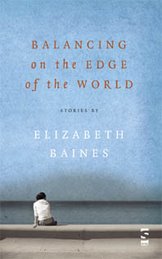
No cover for my short-story collection yet, though Jen at Salt, and I and John, and (as I said in my last post) our reading group, are all banging our heads for one. I used to do a lot of the illustrative photography for our short-story mag Metropolitan (under my other name Helen Johnson) and always had to make quick artistic decisions, so I was fairly confident when Jen asked me at the start if I had any ideas for the cover. The title is a spin on a phrase running through one story: Balancing on the Edge of the World, and the image which came to me was an androgynous figure poised on a curved surface, maybe a hill. However, Jen says that when they tried it out it looked like the cover for a management/spiritual/religious type textbook!!

'Ditch the figure' said Trevor in the reading group, and the general consensus there was that I should go for something abstract. I know that some people, writers in particular, prefer abstract covers because they don't artificially tie books down, but I have a feeling that browsers want, and are more attracted by, some concrete idea of the human situations behind that cover. And it's so crucial to get it right: although Doug in our reading group insists that he is immune to book covers, knowing that they can mislead (and pithily says that he's a title man himself), I think he's pretty unusual...

Oh well, back to the drawing board...

Saturday, May 05, 2007

Reading group: A Wild Sheep Chase by Haruki Murakami

Everyone round to ours on Wednesday for the reading group to discuss A Wild Sheep Chase by Haruki Murakami (translated from the Japanese).

None of us had read Murakami before, and during the week beforehand John and I had bumped into Doug and Ann separately, and each had told us that they were having difficulty getting going with the book. They would read a few pages, fail to get gripped and put it down, and then when they picked it up again find they couldn't remember it and had to start all over again. John and I told them that we were having precisely the same experience.

Ann said, 'I don't know where it's going', and I said, 'I don't know where it's coming from.' We felt we couldn't grasp the tenor of the opening chapters in which an unnamed thirty-year-old narrator attends the funeral of an ex-girlfriend and reminisces about their meeting and relationship before going back to his flat to find his ex-wife briefly returned to collect her things. While the stunning prose made all of this seem significant, there was also a sense of structural inconsequentiality about it, and indeed the story seems only to get going the next morning after the ex-wife has left and the vacationing narrator is called to his office to discover that he has been summoned by a mysterious stranger to engage on a 'wild sheep chase'.

Before this point, however, a surreal and absurdist element had entered the narration, which should have warned us that the conventional expectations with which we were reading this book were inappropriate: the narrator, it turns out, has a new girlfriend with ears so exquisite (and which during one conversation she sits carefully cleaning) that when they are on view and 'unblocked' in terms of channelling their power, they promote super-sensational sex. She is also possessed of a special sixth sense, which means she guesses that the phone call will come summoning the narrator, and knows it will be all about a sheep.

Hans, who had chosen the book, said he had found it very interesting but strange. He had indeed become involved at this point, and wanted to know what was going to happen, but the more that was revealed to him the less he could take it, a tale about a sheep which may or may not exist, with the power to possess a human and thereby dominate the world.

However, Doug and I had experienced an opposite effect. Doug said that once he understood he needed to accept the book as absurdist, he began to really enjoy its off-the-wall turns, its humour and, like me, its memorable evocation of the spirit of situations and things, landscape and the weather. By the end of our journey with this chain-smoking, whiskey-drinking narrator prone to bouts of philosophising which end with banalities ( 'I came to the realisation ... that I am not a whale') or are abandoned for a drink or a fag, whose Sherlock-Holmes-type reliance on clues turns out to be beside the point, we had come to understand the reason for the strangely inconsequential yet seemingly significant beginning.

The book is indeed about inconsequentiality, and the strange paradox that the seemingly inconsequential things, or the episodes which on the rational level are no longer relevant, are nevertheless evocative and important on the level of emotional experience, while the importance of those things which seem significant in the grand, Western-hero quest tradition, is unstable. Thus the girlfriend with the ears, who seemed so central to the endeavour, turns out to be not so important to the plot after all. Evidence too the absurd way, which had made everyone laugh, that the narrator gets the sinister figure who sends him on his quest to look after his ailing, farting cat while he is gone. The narrator has never named this cat, and during his narration never names any of the other characters: as Clare said, names fix things artificially and thus deny the truth that importance is relative, and reality fluid.

Several people, even Doug, thought that the ending, which I won't give away, was disappointing, but to me it endorsed this view of the book and was therefore fitting.

Then people got interested in the different covers of the book in the different editions we had and agreed that the one above (the latest Vintage paperback) was best. A general conversation started up about covers, and I asked everyone to help me think about ideas I might suggest for the cover of my forthcoming book, which isn't decided on yet.

Our archived discussions can be found here, and a list of all the books we have discussed here.

Thursday, May 03, 2007

Swamped

And now my inbox is swamped with the emailed CVs of actresses who didn't get to see me on Monday night!

Tuesday, May 01, 2007

Overwhelmed

Last night was the 24:7 Theatre Festival gathering, when interested writers, directors and actors get the chance to make contact to work together on this years' projects. Well, yeah, the kind of contact sardines get in a tin... I have never seen such a vast crowd! We had to wait in a snaking queue to be processed at the door and given our designation tags (actor, writer, director etc), but long before I got to the door the tags had run out. And once inside, a seething mass! Mostly actors, of course, but also mostly young, and there are only two young parts in my play, and very few old enough for the other part I have to fill. And, just my luck, very few directors who were not already committed to plays... Or at least, that's how it seemed: maybe there were scores squashed away in the crowds and impossible to see... Oh and, then organiser Dave Slack suggested we writers get up one at at time on this huge very high podium and address that packed crowd and say what parts we had to fill... Well, I've addressed plenty of audiences, but there was nothing quite like it before: quite stomach-crunching, I'm telling you. And then scores of pretty, intent and articulate young actresses squirmed their way between the bodies to hand me their CVs, and I have such a pile of them I honestly don't know where to start...

Thursday, April 26, 2007

Chrissie Gittins and Judy Kendall at Manchester Central Library

The lunchtime readings at Central Library have become a significant feature on the Manchester Literature landscape, and today there was a great reading from poet Judy Kendall and another new Salt short-story writer, Chrissie Gittins. Judy read beautifully from her aptly-named first collection The Drier the Brighter (Cinnamon Press), poems made sparely resonant by her own experience of living in Japan, and as delicately evocative as those of Edward Thomas whose letters she has also edited. Chrissie read from her fabulous debut story collection, Family Connections, and one of her wry stories prompted a spontaneous interjection by female audience members of a certain age on the ways to deal with broken stocking suspenders. Apparently at her Whitechapel launch Chrissie's writing was said to be a combination of Alan Bennett and Hyacinth Bucket. More like Victoria Wood meets Alice Munro, I'd say.


Judy Kendall signing copies of The Drier the Brighter


Chrissie Gittins reading from Family Connections

Wednesday, April 25, 2007

Getting lucky

I am so thrilled! Last night, as I was slumped on the sofa and nodding off (the effects of two glasses of wine in the pub earlier), the phone rang and I jumped wide awake: actor Mary-Ann Coburn (left), to whom I sent a copy of The Processing Room a few days ago, has read it and would like to take part! Well, wow: Mary-Ann is a fantastic and versatile actress! Just remains to decide which part she should play, as there are three she could do! Oh, and also to find three more actors, a director and a stage manager... And of course I have to keep my fingers crossed that someone else taking part in 24:7 doesn't come along and make Mary-Ann a better offer, with, say, a juicier part...

Sunday, April 22, 2007

Those gruelling auditions

Well, in my last post I was saying what unalloyed fun it was to have a play in the 24:7 Theatre Festival, but today one particular angst kicks in.

Auditions. I am going to have to audition for a cast once again. Agonising for actors, and agonising for playwrights if they understand what the actors are going through.

To initiate the process, Dave and Amanda have asked us playwrights (or exec producers as we're grandly called) for word-pictures of our characters, so that they can circulate them at a gathering of people, including actors, who would like to be involved. Or the Cattle Market, as we hopeful actors muttered last year (last year I didn't enter a play, so tried my chances as an actor), waiting in queues to sell ourselves to playwrights and flap our CVs in their faces. This idea of circulating character breakdowns is a good one: it will save people my last year's experience, in which more than once I waited for up to half an hour to speak to a playwright only to be told there were no women in the play or that all the parts had been cast. Towards the end of the evening, a weary-looking playwright saw me coming, said he badly needed a pee and disappeared never to be seen again. Not good for one's ego, unless one is determinedly taking it all with a pinch of salt.

Well, lucky for me that I could (and not mind that I didn't get a part), since I'm not a trained actor with a professional CV, and acting is not my main thing, but it must have been harder for any of my fellow self-touts (in the main, new drama graduates) who had not yet developed the necessary thick skin. Of course, you didn't catch the veteran Manchester actors going through the process. 'I can't be bothered with it,' Denise Hope told me with distaste and pity when I staggered back to the drinks, but then of course she didn't need to: actors like Denise, Sue Jaynes and Mary-Ann Coburn have playwrights begging them to be in their plays or writing parts specifically for them (and, in the event, Denise was brilliant in Colin Carr's comedy, Divas and Double Glazing).

The actual auditions are difficult things. There's always an air of tension and formality which is at odds with the informality which usually rules in the sphere of drama. It always amazes me, and I can hardly ever believe it, when I read that famous actors have auditioned for parts in films or high-profile stage plays. Some pretty well-known actors did come to audition for my radio comedy drama series, The Circle (and how brilliantly they read before the director decided against them!), though the even more famous ones who took the parts in the end were simply offered them by the director. As a writer I've sat in on a few auditions, and can never feel good about it, knowing the feeling of exposure in facing that critical lineup of writer, director and/or producer, judging you not simply for your skill but for things out of your control and indeed unknown to you: the fit of your face to their concept of the character, your build, your quality of voice, or the matter of simply how you'd combine with the other actors up for other parts... And the worst thing is having to break it to the actors you haven't chosen, which once, as a 24:7 playwright, it was my duty to do.

One time I attended a whole-day audition for a theatre showcase in which a play of mine was featured. It was a kind of workshop in which all of the actors' skills were being extensively tested; they were put through their paces as a (huge) group, given trust games and exercises, while we writers and our designated directors sat around and watched. At the time I was in awe, and thought it pretty cutting-edge and much better than the formal individual 'interview' style, but a few years on I met one of the actors involved, and he told me how humiliated and used (and exhausted) all of the actors had felt, and from the way he spoke he was still smarting.

Maybe the independent film world is simply different, but I feel I should count my luck that I had such an easy time when I went for my first screen test last summer (for a small community film). I walked in, was greeted by a jolly crew (not one of them over 30), matily handed a cup of tea while I scanned the script and then shown through to the camera to read with another who turned out to be a member of the company, while the others settled down comfortably to watch. They put me at my ease and I didn't feel a twinge of nerves. (And to cap it all, they offered me the part!)

So now I've got to bite the bullet and organize auditions again. And here's my first call: the meeting for people who would like to be involved in 24:7 is to be held at Pure (in the Printworks, Manchester) on Monday 30th April from 7pm on. Anyone who would like to be involved - as an actor, director, stage manager or in any other capacity - is welcome. Personally, I'm looking for all of these. (No payment, I'm afraid, just a share of box-office profit.)

Thursday, April 19, 2007

24:7 Theatre Festival 2007

News this morning that the play I wrote in January, The Processing Room, has been accepted for this year's Manchester 24:7 Theatre Festival.

Now this is no doubt not very professional or grown-up but I am very excited! 24:7 is a really exciting project to be involved with. Begun in 2004 by enterprising actors David Slack and Amanda Hennessy, it's gone from strength to strength and in the last year or so has become a significant event in the Manchester Arts calender, with the best plays going on to a run at the Bolton Octagon and participants winning prestigious Manchester Evening News Awards. Writer-participants in 24:7 act as executive producers of their plays and are responsible for getting together a production company - it's hard work, but how I love it: the cameraderie and collaboration after all that isolation at one's desk, and the chance to do those things like designing flyers and generally flexing one's publicity muscles, and contributing to the production itself. (Not to mention of course the fact that from the age of eight I've been in love with the theatre...)

I've been involved with 24:7 as a playwright twice before, the very first year with O'Leary's Daughters and the second year with a satirical monologue Drinks with Natalie which was adapted from one of my radio plays, and which I performed myself. Like O'Leary, The Processing Room is a play about identity, but like Natalie it's a comedy: three women, separately lost in a hospital, end up in a strange, indeed unearthly room and receive shocking news about themselves...

Sunday, April 15, 2007

Proof positive

My page proofs came through for my collection of short stories, Balancing on the Edge of the World, and for the first time ever I didn't use the British Standards Institution proof correction marks.


It felt like a kind of loss. I'll never forget the first time I ever used them, on the proofs of an early short story, using the Writers' and Artists' Yearbook: that exciting sense of learning a new code attached to an extra expertise, that of the printer, and of communicating directly with him/her.

Not so long ago, though, a young relative of mine was asked to edit a journal, and I offered to buy him a book containing the BSI marks. He looked at me with pity. He said, 'Oh we don't use those. We mark everything up on Word.'

Well, of course, I knew that the BSI marks had been dropping out of use. When I edited the short-story magazine Metropolitan, by which time the job of typesetting had moved away from the printer to the desktop publisher, very few of the authors used the old marks on their proofs, they simply wrote in their corrections in whatever way they saw fit.

And when my proofs for Balancing came through I thought: well, why don't I use the software markup too? And I did, and was thus able to send them by email, as well. Jen at Salt is happy. It just remains to be seen whether the typesetter is too...

Wednesday, April 11, 2007

Reading group: Mother's Milk by Edward St Aubyn

Reading group last night, and to Hans's for the first time, where his huge window gave a view of everyone looking tentative as they came down the road, scanning the houses for the number.

Mother's Milk by Edward St Aubyn was my choice, Booker short-listed and the recipient of rave reviews for its scintillating prose which I had pounced on when I scanned the first page in the bookshop. The novel begins with the perspective of five-year-old Robert, holidaying with his parents and his newly-born brother Thomas in the Provencal family house which his grandmother Eleanor has signed over to a New Age cult. As Robert's father Patrick agonises, or with savage wit tries not to agonise, over this disinheritance which symbolises the poor mothering he has always suffered from Eleanor, the child Robert observes the symbiotic attachment between his own mother Mary and his baby brother, and through this 'remembers' and grieves his own once-symbiotic attachment to her, and the traumatic separation of birth.

I said that I found this beginning absolutely brilliant, perhaps the most stunning psychological fiction I had read. Unfortunately, however, I did find that the rest of the novel failed to fulfil this promise. This strikingly innovative narratorial approach is lost as the novel moves into the adult Patrick's perspective (and later into Mary's). The prose never fails to be both excoriating and limpid, the searing observations and biting wit keep coming, and I never stopped relishing them. On this level I had only one real criticism which was that although I could take five-year-old Robert's verbal and intellectual precociousness, I found it unrealistic in Thomas at two (and everyone nodded). I could see that adult Patrick was potentially annoying in his self-absorption, but his wit prevented me from being annoyed with him, which I felt was a great authorial achievement. Finally, however, the novel somehow felt to me strangely empty. There's no real story, but I didn't think this was the problem (nothing much happens, except that the old lady deteriorates over the four August holidays examined in the book and the Provencal house moves into the hands of the cult, and the books consists mainly of people sitting talking or thinking about the situation). The real problem, I felt, was that the novel had no subtext: there are no connections to be made and no meanings to be had other than those spelled out by the characters themselves, and the novel thus ultimately lacks resonance, leaving the reader outside the loop in a very subtle but fundamental way. (Although later Hans's wife Jan said she much prefers it when things are spelled out.)

Sarah said that she more or less agreed: she liked the descriptions and, like me, the beginning. There had been a strange atmosphere in the room as I had been speaking, and now there was a silence. Then Hans broke it by saying: 'I thought it was terrible.' He said he hated the beginning, he didn't believe a word of it: how on earth could a five-year-old mimic the Nanny with a page-long satirical replication of her speech - for god's sake, you'd admire a twenty-year-old for being able to do that! And what about the Nanny: she falls over carrying the baby and breaks his fall and the others are simply angry with her and walk off 'leaving her still talking on the ground!' These were just horrible people!

At which point Trevor, renowned in our group for liking most books, but who had been looking strangest of all, now jumped in. He said he just HATED this book! He said he couldn't stand the people. He said, what is this upper-class man doing whinging about his inheritance - he's a barrister for god's sake, and he (Trevor) had worked for enough barristers to know they were rolling in it!

He was very worked up. Nothing any of us could say could change his mind - that the loss of the house is a symbol of Eleanor's unconcern with which Patrick has been battling emotionally all his life (as Patrick indeed spells out in the way I find unsatisfying): Trevor thought he should simply get a grip. He said he couldn't stand the precocious children, or the way Patrick and Mary wanted in this way to make them better than anybody else's children, and look what a bad mother Mary was, wrapped up in Thomas to that extent and spoiling him. But, we said, isn't it (once again) spelled out that this is a tragic pattern: by consciously trying to avoid for their children their own bad mothering, Mary and Patrick are, ironically, repeating the patterns, Mary by overcompensation with Thomas, Patrick by hot-housing Robert intellectually and thus denying him his true childhood.

Trevor would have none of it, and Jenny joined in with her own objections: if Patrick was so resentful of his mother why did he keep going along with her wishes, executing the handing over of the house etc, - and what was wrong with her, too, the way she let herself rot away more or less wilfully? Why didn't they just get her sectioned? Clare and I said, but the point is that people get locked into these emotional patterns in which rationality has no play, as exemplified by the almost final words of the novel shouted with tragic triumph by the infant Thomas: 'Do nothing!'

All this time Doug had been quiet, and John who knew that Doug had liked the book unreservedly asked him to say why. He said that he just LOVED it - its observations, its wit, which had made him laugh out loud, and he had no problem whatever with the seemingly unrealistic precociousness of the children, as he hadn't read it as naturalistic. To strong agreement from John, he said that any novel which begins with a description of birth from the baby's point of view has to be taken on a non-realistic level, and once you do this the whole novel novel takes off and you lose all those rational objections.

However, Trevor went on chunnering, and when it emerged that St Aubyn's series of novels about this family was autobiographical, he cried in triumph: 'I knew it! That author is just having a self-centred moan!' As we walked down the road afterwards he continued his theme. We got to the corner where we had to part. 'Well, I do know the house is only a symbol of his mother not loving him,' he said, conciliatory. 'But then when you think of all the problems in the world today: people homeless, refugees wearing rags. I still hate that bloody book!'

Our archived discussions can be found here, and a list of all the books we have discussed here.

Sunday, April 01, 2007

Salt authors Neil Campbell and David Gaffney

Salt Publishing have just launched their new and innovative short story list, in which I'm thrilled to be included, and on Friday lunchtime at Manchester Central Library two of my fellow contributors, David Gaffney and Neil Campbell, gave a great reading from their debut collections. Lunchtime it may have been, but the room was packed, latecomers standing, to hear their two very contrasting styles. Firstly, in suitable deadpan mode Neil read from Broken Doll, ironic and moving stories of urban loss and confinement, and then David bounced on to make us all laugh with the short-short stories in which he specialises, collected in Sawn-Off Tales.

You can see from the pics below how appreciative the audience was, and how keen to snap up those striking Salt editions. (Neil is on the left and David on the right.)