
However, the real substance of the book is not this somewhat sketchy-sounding and potentially cliched plot (woman is abandoned by adulterous husband: 'It's an old story,' Mia comments). Nor is it simply the preoccupation, pointed out by Margaret and several reviewers, with the different stages of womanhood (chiefly puberty, middle and old age). Its real interest is the metafictive one of how we negotiate our experiences and lives (and those stages of womanhood) via the stories we tell ourselves about them.
The whole story is in my head, isn't it? I am not so philosophically naive as to believe that one can establish some empirical reality of THE STORY. We can't even agree on what we remember, for God's sake... The problem was that any number of Borises were IN MY HEAD.
Story and story-making are indeed the real subject of the book. When one of her young poets is bullied by the others (for being too emotionally open and literary), Mia gets them all to write the account of the bullying from each others' points of view, and the result is versions of the events that each girl writer can live with. Mia is invited as an author to a book club discussion in her mother's home about Jane Austen's Persuasion, and some of the members begin suggesting their own possibilities for the characters' fates and have to called back to the text by Mia. This prompts Mia to make this comment to the reader:
As you may have noticed, in general members of book clubs regard the characters inside books exactly the way the regard the characters outside books. The facts that the former are made of the alphabet snd the latter of muscle, tissue and bone are of little relevance. You may think I would disapprove of this, I who had endured the ongoing trials of literary theory, who had witnessed the death of the author and somehow survived fin de l'homme ... but you would be wrong. A book is a collaboration between the one who reads and what is read, and, at its best, that coming together is a love story like any other.
(A sentiment after my own heart, and I have to say that the portrayal of the book group, at points very funny, really tickled us in ours.)
John, and I think Doug, had, like some reviewers, balked a little at the profuse references to other writers and passages of philosophical theory, but for one thing, it's totally in character for a professor-writer, and for another, Mia refers to them in order to relate them, most often comically, to life, as above. Margeret had begun looking up some some of the philosophical references, but only because she was really interested in them, and none of us found it necessary.
Clare did point out a mystery. At the start of the novel Mia receives an abusive communication from a person calling themself Mr Nobody:
I know all about you. You're Insane, Crazy. Bonkers.
There seems no suggestion at this point that this is not a real occurrence, that it it something Mia imagines, and at first she thinks it may have come from someone, a declaiming, philosophising man she encountered in the psychiatric unit. The communications continue, quickly turning into philosophical disquisitions, which although they constitute arguments against Mia's own replies, very much take the mode and tone of her own thoughts. Finally they become comforting. At one point Mia wonders if 'he' could be a woman, but in the end decides she doesn't care who it is. People in the group felt a bit dissatisfied or puzzled that the sender's identity or status in terms of reality was never solved. I feel that while the whole thing is probably meant to be initiated for Mia by one of those anonymous messages writers are sometimes prey to, Mr Nobody becomes a projection of Mia's own psyche as she works through her loss.
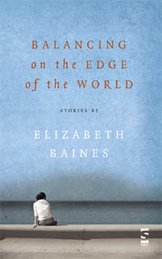
We all thought that the cover (above) and which we all had on our copies, felt misleading. While the book has a wonderfully light touch, its themes are much more serious than we felt that cover implies.
Ann (who could not attend the meeting) told me afterwards that she too had loved the book, and - underlining Mia's (and the author's) point about characters and readers - that Mia felt like someone you'd really like to know.
Our archive discussions can be found here and a list of the books we have discussed, with links to the discussions, here




No comments:
Post a Comment