Monday, September 26, 2011

Disbury Arts Festival Reading

Didsbury Arts Festival kicked off on Saturday. Yesterday morning I was moved to tears by the sight of these little boys playing with the Third Davyhulme Scout and Guide Marching Band outside the library. The little drummer was amazing - he did a solo, and the whole forecourt went wild.


In the afternoon the sun came out and I moseyed down to Parsonage Gardens to hear Nick Royle read two spooky bird stories in an amazingly apt setting: under the yew trees in the pet cemetery where one-time tenant Fletcher Moss buried several of his pets including his horse. The parsonage itself, which has been shut up for some years now and is said to be haunted - Fletcher Moss himself vowed it was haunted - has been saved and is to be opened once more by the Civic Society, so maybe next year there can be spooky stories inside!

My own event is at 7.30 tonight upstairs in the health food shop, Healthy Spirit (37 Barlow Moor Road), 7.30. I'll be talking about The Birth Machine. There will be wine, and discount copies on sale. I've bought the wine already...

Friday, September 23, 2011

Reading group: A Clockwork Orange by Anthony Burgess

Trevor suggested this book on which the Stanley Kubrick film of the same name was based, a film Kubrick famously withdrew after accusations that it had provoked copycat acts of violence.

Published in 1962 and set in a projected time when the cult of youth has turned the world into a place where gangs of teenagers rule the streets with drugs and violence and theft, and adults cower away from them behind closed doors, the novel is narrated in a hermetic teen-speak by ultra-violent fifteen-year-old Alex. Alex considers himself the leader of his gang or 'droogs' but is ultimately betrayed by them and ends up plucked from prison to be the guinea-pig in a government-run aversion therapy scheme to turn criminals against violence.

Trevor was unfortunately unable to make the meeting, and was surprised to hear afterwards that the book had not in fact stimulated a particularly heated discussion. As far as I remember, Doug opened things by commenting that he had found the book far superior to the film. Firstly, there was the interest of the teen vocabulary, based largely on Russian and rhyming slag, which caught so well the exclusivity of the teenage cult. The first-person narrative voice makes you complicit with it, and thus with Alex's psychology, in a way the film doesn't. Clare said she had found the vocabulary quite hard to follow, though, but others disagreed, saying that Burgess cleverly provides context for the words so that their meanings are soon clear. Clare clearly hadn't been that engaged, however, as she now said that she thought Alex was a pretty horrid character and she simply didn't like reading the book as a result.  Jenny didn't agree with her: she said that she thought he was amoral rather than immoral. He wasn't evil, he was just having a laugh in the way teenagers do, with no thought for the consequences for others. I think the rest of us needed to think about this, as the point was left hanging. Jenny went on to say that she wondered why Burgess had made Alex love classical music rather than the popular music espoused by all the other teenagers. Ann and I said that the point Burgess was making was that art doesn't civilize. Alex himself makes the point: 'I had to have a smeck, though, thinking of what I'd viddied once in one of these like articles on Modern Youth about how ... Great Music ... and Great Poetry would ... make Modern Youth more civilized. Civilized my syphilised yarbles.' In fact, classical music induces particularly violent fantasies in him. Jenny said, But what was the significance of the fact that it was played during the aversion therapy so that Alex then began to feel ill not only at the sight and thought of violence but the sound of his previously beloved music? This was another point that people needed to ponder and was left hanging. What's clear, however,  is that the doctors' choice of music is arbitrary, and they are surprised and interested to learn that Alex has  loved classical music and is distressed to have been made physically averse to it. Later, however, and in consequence, the aversion will be employed by another faction deliberately and cruelly to use Alex, so that classical music, already disconnected from morality, becomes even an instrument of torture.

People noted that the main point of the novel, expressed by the prison chaplain, is that there is no point in making people behave morally simply through fear (or aversion): no one is truly moral unless they are so by choice; without moral choice Alex is simply a 'clockwork orange'. Inevitably, as the circumstances change, Alex regains his enjoyment in both classical music and violence. People said that they found very interesting the way that most of the victims in the book became vengeful and some of them formed a faction that was just as manipulative and callous as the government that had imposed the aversion therapy. It's a very cynical book, with a very cynical view of human nature, they all agreed, and this seemed generally to be considered a drawback of the book.

I said but what about the final chapter, which was left out of both the American edition and the film, in which Alex does start to grow up and finally lose his taste for violence - although I did think it was a bit too pat, and was inclined to agree with the choice of Kubrick and the American publisher. Everyone immediately said that it was more more than a bit pat! Where did that come from: suddenly, out of the blue, Alex starts feeling different, and it's just because he's growing up? Such authorial cynicism up till that moment and then suddenly so sentimental! I said that there is that bit where Alex says he knows however that his own son will behave as he did, and his sons after him: that's pretty hopeless and cynical. However, I did think it was rather pasted in, and I couldn't help sensing a kind of authorial struggle here. I felt that the logic of the story had led Burgess to a place he wasn't comfortable with: he had painted himself into a cynical corner and the more upbeat ending was his  attempt to pick his way out.

Finally, Doug said once again that he had found the book profoundly better than the film. The film had inevitably depicted the violence objectively and graphically and made one a voyeur, but the book, mediating everything through the narrative voice and Alex's psyche, was extremely thought-provoking, and he was really glad he had read it.

Our archive discussions can be found here and a list of the books we have discussed, with links to the discussions, here 


Thursday, September 22, 2011

2008 Carve anthology, and getting back to stories

Just out from Carve magazine, the publisher of 'honest fiction': an anthology of 2008 Carve stories, which includes my story 'Used to Be', placed third in the 2008 Raymond Carver Story Competition, a story in which, as a woman is driven too dangerously fast along a motorway, her life passes before her, and memory, character and story are all thrown into question.
Order here and enter OKTOBERFEST in the checkout to get 15% off orders made by the end of 23rd September (tomorrow).
See more about the anthology here.

This news comes like an endorsement the morning I wake up remembering that, before I stopped off to work on a substantial novel, I was writing a collection of stories. Not that I'd actually forgotten that in the simplest sense, but I'd stopped thinking in short-story mode and had lost emotional touch with the underlying creative thrust behind the story project. On occasion I had even started to tinker with one or two of the stories without that goal properly in sight, sometimes wondering what had moved me to write them and so not really knowing in what direction to take them, and then wondering if I should abandon them. What was the inspiration - the real, fundamental inspiration? What, in the wider analysis, were they really about? Weren't they just odd little quirks that didn't fit into anything holistic? (Me being stuck in holistic novel mode).

Yesterday afternoon I finished my clear-out. I had a tidy study, a full vacuum bin and a stuffed paper recycling bin. And I felt depressed, the way you do when you're not writing. Would I ever write again, even? Then yesterday evening it all came back to me: the point of those stories, and the point of the whole project along with new ideas as to how I could develop it. 'Used to Be' was the first story I wrote in the series, and feels like the central story - so far, anyway. And here it is, this morning, in this lovely new anthology alongside fifteen other great stories, with an endorsement, in Carve's mission statement to offer 'honest fiction', of my very own remembered goal.

Monday, September 19, 2011

Productivity is a matter of psychology

Today in the Guardian Sarah Crown initiates a discussion on author productivity, suggesting that we overvalue slow production (such as that of Jonathan Franzen and Jeffrey Eugenides) as proof of literary quality, and tend to despise productive novelists regardless of the actual quality of their novels. It's a fair point, but the ensuing discussion veers towards that old either/or pattern and 'Henrytube' 's comment, 'Personally I don't think it's at all unreasonable to expect a novel per year from a professional author, given today's technology, if that's all they're having to do', is enough to strike despair into the heart of this novelist, at least.

The essential point that's missed in the discussion is that production rate is a private and internal psychological matter rather than a technological one as Henrytube suggests. For me at any rate some novels are quicker to write than others, and as I'm often saying, it very much depends on my prior relationship with the material before I start writing. Too Many Magpies was written in eight weeks flat, and while it is pretty short it's not much shorter than The Birth Machine which took me longer, not much less than a year. But the novel I've just finished has taken a lot longer than that, requiring three major drafts before I found the way to write it, and plenty of mulling time in between. And how soon you can get onto something new after finishing a piece of work depends on how much it has taken out of you. After writing The Birth Machine I wrote a flurry of short stories, as if I were using up all the extra creativity the novel hadn't needed, and the situation was similar after I'd finished Too Many Magpies. But this time, quite frankly, I've felt creatively drained. I finished in early summer,  but I'm only now starting to feel creative stirrings again.

Only now am I clearing up my room after it, a process that is usually symbolic of clearing your head of the work and letting go of it: partly I've been too busy with other things, but also I think I couldn't face it. It's taken me the whole of yesterday morning and most of today to sort through the drifts of paper - not just the drafts of the novel but correspondence and bumph that's built up unattended over the last six months, and even the proofs of the reissue of The Birth Machine that was produced and published during the last eighteen months while I was working on the current novel. It's hoovering next, but I'm leaving that till tomorrow: one thing I still couldn't face today was discovering what damage has been done by moths and carpet beetles while I've been so privately and psychologically away in the clouds.

Thursday, September 15, 2011

Catching up with Goodreads

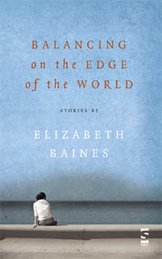
Catch-up time. After six months of solid writing followed by a summer of immensely enjoyable but distracting family reunions and long periods of absence of internet, here I am with a study under drifts of papers, a hugely cluttered email box and much other business neglected: accounts in turmoil, submissions unmade, websites unattended. I hadn't been on Goodreads for a while, and what a lovely surprise, when I logged on again last night to add some new reading, to find some great new reviews of Too Many Magpies and Balancing on the Edge of the World. I really did think this book was brilliant, says one reader, 'Mew', of TMM, and another, 'Sisterimapoet', says: It felt mad and drugged, despite sharp details of external reality, colours and sounds. It felt doomed and dangerous but thrilling too. That really thrills me, actually: it's exactly the effect I wanted to achieve, and, quite frankly, how I felt while writing it. BOTEOTW now has several five-star ratings, and I'm more than chuffed that  Nick Perring who writes his own striking stories, recommends it highly.


And adding books I'd recently read but which were long-since written or published reminded me what a great site Goodreads is, facilitating serious consideration and discussion of books regardless of their publication dates and countering the sell-by-date situation into which the book industry has got itself locked.

Wednesday, September 14, 2011

Doctors and witches

Well, it's festival time again. Once again I'm reading at the The Didsbury Arts Festival - this time from the reissued The Birth Machine (which wasn't out and available by the time of the festival last year) - and holding a discussion about the issues. I did think of talking about the difference between the two versions of the book (as discussed in the Author's Note which can be read here), but decided that, in a festival of general arts, people would be more interested in the issues the book tackles than such more literary matters, but of course I'll talk about it if it comes up and people are interested.

So I've just spent the morning distributing the above poster and leaflets. Once again it's funny to be out and about at the shops and cafes in mid-morning rather than at my desk (or, if I'm in Wales, high up a wild mountain). I saw a friend I hadn't seen for years - a fellow attendee at the old Waterstone's readings - and stood talking for about half an hour to another (the leafleting took me ages!) who told me several stories that I couldn't help finding inspiration. It really made me think about the paradox of the writers' life: of how, shut away on long projects with your writing, you are also shut away from the very things that feed it. Plus: could I have done that, spent the morning trawling from venue to venue with my publicity if I were teaching full-time? Of course not. Could I have done it if I had been immersed in a writing project or on a deadline? No way: I probably wouldn't have had the headspace, leave alone the time. As I say, the paradoxes of the writer's life...

Sunday, September 04, 2011

Reading group: In the Skin of a Lion by Michael Ondaatje

Once again I have left it so long to write up a report that my memory of the discussion is unlikely to be comprehensive, but here goes.

Jenny chose this book because, she said beforehand, her daughter is teaching it in Toronto. At the meeting she said that what attracted her to it also, and the reason she liked it when she came to read it, is that it is indeed set in Toronto, which she knows very well, and she always likes books set in named places she knows, with street names and landscape she can identify. This is interesting to me as a writer, since however closely my settings are based on real-life ones, I often don't name them in an attempt to universalize: I have the sense that if readers aren't familiar with the real-life places, pinning them down with names can create an effect of alienation, a jarring injection of reality which can potentially destroy the spell of story.

Jenny then went on to describe Toronto to us, its great canyon dividing the city and its various immigrant communties - the book very much concerns an immigrant community - and a discussion started up, mainly between Jenny and Trevor, about how quickly immigrant societies become assimilated in various cities, and whether or not the geography of Toronto has slowed the process down.

Feeling vindicated in my view, I said, But what about the book? A concern with facts was leading us right away from it, a book with indeed an atmosphere closer to myth or dream than the factual accounts of history or geography.

Jenny said she thought it was a book about identity, which seemed to me an astute assessment. Set in the 1920s around the building of the Bloor Street Viaduct which will bridge the city, it is essentially the story of Patrick, who, like the moths he watched flinging themselves against the lighted windows in his isolated country childhood, comes to Toronto 'searching', for a home, or an identity, or maybe a narrative of his own, but drawn with the logic and coincidence of dream into the stories of others, and in particular the immigrant Macedonian community. As Trevor said, the blurb on his edition bills the book as a love story, but it's not really, or rather it's more complicated than that. As in dreams, and as in Ondaatje's better-known sequel The English Patient, love stories become displaced from the centre, are left hanging or morph: a nun falls from the bridge and is caught by the worker Nicholas, an incident that hangs over the rest of the story like an iconic miracle, bonding the two souls together, yet later we will learn that Nicholas has married another. Indeed, as in dreams, characters central to the The English Patient appear on the edges here, waiting in the wings with the centrality of their own narratives. The language too is dream-like, and there are constant references to dreams - The bridge goes up in a dream - and, as in The English Patient there is the ache of loss and longing that characterises the most affecting dreams. Right from the start we are clear that the whole thing is couched in the dream of narrative:
This is a story a young girl gathers - note that word 'gathers': like daydreams? - in a car in the early hours of the morning... She listens and asks questions as the vehicle travels through darkness. The man who is driving could say, 'In that field is a castle', and it would be possible for her to believe him. (My bolds.)
Trevor said with a big grin that this was the most romantic book he had ever read, with all its coincidences and miracles, in fact quite frankly it was a load of bollocks, but that wasn't a criticism, he had really loved it. Doug, and especially Ann said they had found it frustrating with its shifts of focus and unbelievable coincidences. Some people didn't even agree with me that what they thought of as two characters were the same woman (I won't plot-spoil here), the coincidence would be too forced.

All of this seemed to me too literal a reading of a book not intended to be so read, but I did have to agree that while for me The English Patient succeeds by drawing me into its dream, I too often had the sense here of being on the outside observing the author's dream, a problem compounded by the fact that the characters are constantly having their own affecting dreams.

John told Jenny that he had been absolutely sure that she would hate this book with its psychological dimension and poetic prose, since what she likes best is a good clear story. Jenny grinned and agreed that that last is true, but she still really liked this book.

Our archive discussions can be found here and a list of the books we have discussed, with links to the discussions, here 

Saturday, September 03, 2011

Reading group: Alone in Berlin by Hans Fallada

John chose this book because of the huge attention it has received since the English translation appeared in 2009. Originally published in Germany immediately after the war, with the encouragement of the new Soviet authorities, and based on a real-life case, it concerns an act of resistance by an ordinary working-class and middle-aged couple under the Nazi regime, the writing and dropping of anonymous postcards attacking Hitler and the war. The book is promoted by the English-language publishers, Penguin, as having been 'lost', although James Buchan informs us that it has in fact enjoyed a certain continuing life in Germany with television and film adaptations. It has however only now been translated into English.

By the time of the meeting I had managed to read only fifty or so pages, and some time has passed since, so my memory of the discussion is sketchy, but I'll do my best.

Written in twenty-six days or so by a man weakened and dying after a tortured and dissolute life (Hans Fallada was the pen-name Rudolf Ditzen's father persuaded him to adopt after his first, youthful involvement in scandal), the book is a miraculously exuberant 600-pager, if somewhat baggy and at times florid. The discussion, however, did not initially touch on the novelistic qualities of the book, as people were so taken with the story itself, and the revelations in the book about society under the Nazi regime. Fallada was uniquely qualified to portray this last, having taken the decision, unusual for a writer, to stay in the country for the duration of the war, and, it seems, at times bowing as a writer to Nazi pressures. What emerges is a vivid and horrifying depiction of economic hardship and squalor bringing out the worst and most bestial in citizens, and a culture of fear permeating from the lowest members of society to the highest-ranking Nazis themselves, with people daily shopping each other to save their own skins, and, contrary to what we are often told, a general paralysing awareness of the concentration camps and the murders that took place there. There is no doubt for the resisting couple, Otto and Anna Quangel, that they will be executed if they are uncovered, and their act is all the more remarkable for the fact that before the event that triggers it, the death of their soldier son, they are entirely unpoliticised - as John said, it seems a deliberate authorial choice that they are the most ordinary of couples. Neither is there any guarantee that their action will have the desired effect - and indeed it leads to trouble for others and more than one death - but it is the shining focus of a good moral choice in a situation where good moral choices have become practically impossible.

John had found the book very important and Trevor had really liked it. Ann found it of great historical interest. I asked them what they thought of it as a novel and they all instantly said, Not much. Mainly they found the prose pretty primitive and thought there were too many characters - although I have to say that when I came to read the whole thing I didn't agree about the latter: in terms of plot, as the book progresses everything including the characters is pulled together. There is constant seemingly uncontrolled slippage of tenses, and some repetition, but apparently much of the book is written in dialect German, and I did relish Michael Hofmann's rough-and-ready idiomatic translation. Doug said that he thought the book was atrociously written and he just hadn't liked it at all, but had thought it worth reading for the political content. They all agreed that the characters weren't at all well developed - though I have to say I subsequently found the insight into the psychology of the Gestapo detective Escherich, for instance, quite sophisticated. However, it's true that often the prose and especially the dialogue, most notably that between the Quangels, is stilted and naive. On the whole I'd say that the book suffers from unevenness - which is perhaps unsurprising, given the speed with which it was written and the fact that Fallada died before publication - and I'd agree that despite its aesthetic faults, for political reasons it's a must-read.

Our archive discussions can be found here and a list of the books we have discussed, with links to the discussions, here 

Art of Wiring Pamphlet party

On Thursday I was at the Art of Wiring Pamphlet party at the Electricity Showrooms in Hoxton Square, now done out on the ground floor as a traditional pub. Downstairs, though, where the party was held, there's a kind of eighties-style disco bar complete with lit-up dance floor and mirrored ceiling, an aptly glowing and exciting ambience (though the price of the drinks was enough to send the heart into erratic circuitry). And I did find the whole event exciting, electric indeed with the sense of alternative possibilities. The pamphlet's publisher, the wonderful poet Christopher Reid, who compered, introduced the event by explaining that when he worked as Faber's poetry editor he always felt frustrated by the way that, in an established publishing house, the book as an object ends up being taken out of the editor's hands and into those of copyeditors and designers etc, and he had established his own imprint, Ondt and Gracehoper, in order to be involved in production right the way through. And The Art of Wiring is a lovely pamphlet, beautifully typeset. The striking cover photo of exposed socket wires was by taken contributing poet Simon Barraclough. And it's well named. The poetry here  from six poets - Simon, Isobel Dixon, Luke Heeley, Liane Strauss, Roisin Tierney and Chrispher Reid himself - is live with wit and incisiveness.

Here are the poets, in the order in which they read: Luke Heeley, Isobel Dixon, Roisin Tierney, Christopher Reid, Simon Barraclough and Liane Straus):


Friday, September 02, 2011

Goggle Festival: reading of second extract

The clip of my reading of the second extract from The Birth Machine is up on the Goggle Festival website:

Goggle Festival Review of The Birth Machine

Review now up at Goggle Festival site: 'This is a book that should be read and reread.'

Goggle Festival features The Birth Machine

Today I'm the featured writer on the Goggle Festival run by writer and teacher Andrew Oldham. Up now is this video clip of me reading the first of two extracts from The Birth Machine. At intervals today another extract and a review of the book will go up on the site.

Thursday, September 01, 2011

Rob Burdock reviews The Birth Machine

I am very grateful to Robert Burdock for devoting a fantastic amount of attention to The Birth Machine on his excellent blog, RobAroundBooks. He does have some reservations about the book, mainly to do with his squeamishness over hospitals, which he describes in his 'Forethoughts', although on the whole he's very nice about it. These 'Forethoughts' are a great idea: for each book he reviews, before reading he writes about his attitude to the book and his expectations of it, and his 'Afterthoughts' consist of his reviews and assessments of how far his expectations were fulfilled or thwarted. Both the Forethought and Afterthought on The Birth Machine are very full, and he is generous enough to quote someone who disagrees with him, ie Jim Murdoch's statement that this is a book not just for women, but one that men really ought to read.

Monday, August 29, 2011

Back in the swing

Greetings from your blogger deprived of decent internet for several weeks and now back to the wonders of broadband! I hope you've all had a great summer (for those in the UK, in spite of the weather!). I've spent several weeks in my beloved homeland of Wales, and this year the internet via the dongle has been worse than ever up the mountain, I don't know why - the weather hasn't been bad ALL the time, but the connection certainly has: maybe the signal strength is the same as it was but more people on those lovely heather-covered  mountains are trying to use it at the same time.

Anyway, I'm back just in time for the Goggle Festival which I was therefore unable to tell you about before, and in which I'm delighted to be featured along with some great writer colleagues. It's run by writer and teacher Andrew Oldham and begins today.  Over seven days seven writers, Carys Bray, Ailsa Cox, Graham Mort, Robert Sheppard, David Morley, Chris Beckett and I, will be featured reading from our work. Our books will also be reviewed on the site and there is the chance to enter a competition and win signed copies.

Carys Bray, winner of  the 2010 Edge Hill student prize, kicks the whole thing off today with a reading from her story 'My Burglar'. My own day is Friday 2nd September, when I shall be reading two extracts from The Birth Machine. That day I shall be travelling back from London after an event I'm very much looking forward to: the Art of Wiring Pamphlet Party at which six poets including Christopher Reid, Isobel Dixon and Simon Barraclough will read.

It's good to be back in the swing of things. I'm looking forward also to the Didsbury Arts Festival which starts at the end of the month. The brochure is now online. I shall be doing an event, Doctors and Witches, in the evening on Monday 26th September when I'll read from The Birth Machine and talk about its themes of natural versus hi-tech medicine. The event will be held, appropriately, in Didsbury's health food shop, Healthy Spirit.

Wednesday, August 03, 2011

Robert Shearman's new book

Apologies for my continued blog neglect: I'm away from home a lot at the moment, and keep finding myself with intermittent and poor internet connection. Back home today to the wonders of wizzy broadband, and hot-foot from London (yes, really hot - it's sweltering!) and a super launch of Robert Shearman's third collection of amazing off-the-wall short stories, Everyone's Just So So Special. The launch was held in the amazing Hunterian Museum in the Royal College of Surgeons - cases and cases of pickled animals,  human body parts, foetuses, etc. No pics, though, as they were expressly forbidden, which meant that I couldn't even take pics of Rob giving us a brilliant reading of the first story in the book, 'Coming in to Land'. Rob's previous books have won awards including the World and British Fantasy awards, and this new book looks every bit as cleverly written and thought-provoking and fun  - as you might indeed expect from a Dr Who writer.

Sunday, July 17, 2011

Dusting etc

Everything's done and dusted for me at the moment, writing-wise, and I'm actually getting back to my life! Yesterday I did a waist-high pile of ironing, and discovered clothes I'd forgotten I had but hadn't actually missed as I've hardly been out since January. This afternoon I'm going to tackle  a huge pile of mending - I know, it's archaic, but when you're on the income (what income?) of a writer... And then I may have to turn my attention to some cleaning: now that I have started to look around me again I have noticed that the spiders have been as busy as me... And joy of joys, I'm back to reading...

Sunday, July 10, 2011

Edge Hill short story prize

Well, I expected that when I got to the end of my big writing stint I'd get back to blogging more frequently, but it hasn't happened... I've had so many practical things to catch up on (including a week spent decorating!), I've been away twice, and other, more journalistic work has been piling in. One of my trips was to London and included the Edge Hill award ceremony on Thursday, at which Graham Mort won the prize for his collection Touch (Seren) and Salt author Tom Vowler won the Reader's Choice prize (chosen by sixth formers) for a story from his debut collection, The Method and Other Stories. The other shortlisted authors were Polly Samson for Perfect Lives (Virago), Helen Simpson with In-Flight Entertainment (Cape), and Michele Roberts with Mud: Stories of Sex and Love (Virago).

As Graham (left) was in Africa, Seren fiction editor Penny Thomas received his prize instead and read from the message he'd sent (below).


I've been to so few events in the past few months and am consequently so out of touch with taking photos at them that I  failed to get a photo of Tom receiving his prize, but this was also partly because he was so surprised to get it, it seemed, that he had no speech prepared and didn't hang around at the front! Here he is, though, in the audience beforehand (centre) and looking as though a prize was the last thing on earth he expected:


On the left of him is Adam Marek, author of the short-story collection Instruction Manual for Swallowing (Comma) and just behind on the right Robert Shearman, who won the Reader's Choice prize last year and was short-listed in 2008 with his collection Tiny Deaths (Comma).

I really can't believe, either, that I didn't get photos of the other shortlisted authors, who were all there. It's all just too exciting, you see, after being incarcerated at my desk for so long...

As for my own project: I've now had feedback from my early readers: mostly typos, but one reader thought I should excise a (small) section which she didn't think added to the whole, and I have decided she's right. Also, an inconsistency occurred to me out of the blue one day (and when I mentioned it to that reader she said that she'd also noticed it), so that's another thing to see to, and I'm hoping to get down to finalising the ms in the next few days. And funnily enough, when I went outside to the garden this morning, I noticed the jackdaws flying back in to their previously emptied nest. Brooding again, perhaps, just as I'm about to start brooding the novel once more...

Wednesday, June 29, 2011

The Good of the Novel

An excellent new book from Faber, The Good of the Novel, edited by Liam McIlvanney and Ray Ryan, is a series of essays on the nature and current state of the novel, circling such questions as What kinds of truth can be told uniquely through novels? and taking in an examination of the role of the critic.  Each essay focuses on an individual novel, and the contents include Robert Macfarlane on Alan Hollinghurst's The Line of Beauty; Tessa Hadley on Coetzee's Disgrace and James Wood on Ian McEwan’s Atonement.  I have already gobbled up the excellent (and inspiring) introduction and James Wood's opening piece, which I'm not sure I agree with entirely - must read it again, more carefully - but which is exciting food for thought.  I'd say the book is a must-read for anyone with an interest in the present-day novel. 


There's a discussion on the topic on the Faber blog, to which I was very kindly asked to contribute. In Part 1 Richard T Kelly, editor of Faber Finds and agent Clare Alexander contribute their views, and in Part 2 I have my say along with two other bloggers, Paperback Reader and Juxtabook. Do go on over and contribute your own views.


Cross-posted with Fictionbitch

Sunday, June 26, 2011

Reading group: Ingenious Pain by Andrew Miller

I suggested this book as one of my favourites, one that I said had made a lasting impression on me and which I have always recommended to anyone and everyone. It concerns the fictional eighteenth-century James Dyer, born unable to feel pain and becoming, via a series of picaresque adventures, a skilled and sought-after surgeon, before the ability to feel is finally unlocked in him.

The number present to discuss it was our smallest: just four. One of those, Mark, hadn't managed to read the book, and this necessitated my recounting Dyer's convoluted adventures, which underlined the eighteenth-century-type picaresque aspect of the narrative. However, as I explained, the book is not ultimately linear: it begins after Dyer's death when the (real-life) Burke and Hare are dissecting his body to look for clues as to his unusual condition, then moves backwards a year to the point in Dyer's life when, now able to feel pain, he has lost his surgeon's nerve. After this it switches further back thirty-eight years to the night of his conception, the half-rape of his mother by an unknown stranger on a frozen lake, conditions (according to traditional lore) determining  his life of frozen feeling. It is after this that the novel takes on a linear mode, charting Dyer's life to his death (and taking in on the way the eighteenth-century epistolary mode). This structure is I think both clever and essential, as it allows us as readers to become involved with Dyer's fate when we might otherwise be unable to do so, ie while he is dispassionate and unempathic.

I said that the things that had attached me to the book were its themes of empathy and of magic versus science, these being among my own themes as a writer. James becomes a freak of nature and a wonder of science and is first shown in fairs and used by Gummer, a snakeoil saleman (who is probably his biological father) to 'prove' the efficacy of his medicine, and then 'saved'/abducted by an aristocrat who keeps a stately home full of such 'freaks' - including Siamese twins, a librarian with six fingers and a creature who seems to be a mermaid - to be exhibited to a royal scientific society. All of this conveys beautifully the Enlightenment tension between superstition and scientific reason, and the lack of empathy often involved in scientific inquiry, issues strongly relevant today. Press-ganged with Gummer (who has 'saved' him from the aristocrat), Dyer becomes mate to a ship's surgeon before taking on the role himself and then, with his utterly clinical and cool-headed approach, a famed surgeon.

The trouble is, I said to the others, although once again I found the book engrossing, I had not in fact remembered any of this plot, and I usually remember novels very well. I had only remembered that Dyer 'had a series of picaresque adventures' before the next stage of the story, which I did strongly remember. Here Dyer takes part in a race - which did in historical reality take place - to be the first doctor to reach the Russian court and inoculate the Empress against smallpox. It is on this trip that Dyer's unfeeling is breached, that he first begins to feel, and the scene in which the agent of this change appears was imprinted on my brain. She is a woman, a kind of witch, and we first see her pursued by men and dogs in the snowy woods, through the eyes of the Reverend whose party has been holed up by the weather in a monastery along with the disappointed Dyer who will not now make it first to the court. The English party rescue the woman, and from that moment on she works her 'magic' on James Dyer and he begins to feel, at first emotion and then the physical pain his body should have suffered through all its previous traumas. At last, as a consequence, he learns the empathy we have seen in him at the start of the book.

I wondered why I should have so vividly remembered that particular scene and been so vague about the rest. When I thought about it, I similarly couldn't remember the precise adventures of the heroes of picaresque eighteenth century novels either, such as Joseph Andrews or Roderick Random, and I decided that it was because of something inherent in the picaresque mode: its deliberate reliance on ups and downs of fortune (suited to an age, the eighteenth century, when life indeed was precarious and one's fortunes could turn in a second), and consequent disconnection between episodes. The encounter in the woods with Mary, however, operates in a much more organic and pivotal way: unlike Dyer's other experiences, it's not just a random illustration of the theme which could have been replaced by another, but is absolutely essential to the plot, the moment that will change the course of Dyer's life in a more fundamental way than any other, where the theme is most dynamically realised through the drama of character in action. After this there can be no more hostage-to-fortune moments: it contains within it the seeds of the end, and as such it's the stuff of modern drama and fiction, and not of the eighteenth-century novel which for much of the time Ingenious Pain pastiches. I found the episode extremely moving on both readings, and the narrative following it (and read in the light of it) very moving, too.

I also said that, actually, I had been surprised to find that I couldn't think of anything more to say about the novel (beyond admiring the concept and theme and the fact that I'd forgotten most of the story) and it now struck me that this novel was a supreme example of so-called 'high concept' (so beloved of present-day marketers). It's based on a very striking, unusual yet graspable idea - that of the man who feels no pain and so can't empathise - but that idea is established right from the beginning of the novel and the rest of the book is largely an illustration rather than a development of it. The book is thus less deep than it seems or than I had remembered.

Ann and John agreed. They too had found the book an engrossing read but had been left with similar thoughts. We three also agreed that the book's eighteenth-century world feels stunningly authentic, and we particularly admired the authentic feel of the language. We also thought it a supreme achievement to have engaged readers with such a potentially unappealing character as the icy Dyer.

John, a child psychologist, pointed out that James's condition was an exaggerated version of some aspects of autism: apparently some of those with autism do have a high pain threshold and many have an obsession with circular mechanisms - James is indeed obsessed with the orrery, the moving model of the planets, which he is given as a child; that, significantly, is his first memory - and the book is thus a comment on the 'autistic' tendencies - the overlooking of emotion - in medicine.

Mark said that he was just really dubious about books written in the present day and set in the past: he didn't see the point (especially when they adopted past modes of fiction as this novel seems to). We said that a character with James Dyer's condition in the present day would have been immediately picked up by the system and prevented from the kind of adventures James has that carry the theme so vividly - apart from the fact that his condition is unusual enough to be mythical and thus better placed at a historical distance. Mark said he could see that that was true, although he remained generally suspicious of historical novels.

Ann and I puzzled about the Epilogue which I won't describe here in order not to plot-spoil, but although its meaning was not altogether clear to us, once again we found it very vivid, evocative and moving. And in spite of our doubts about the whole novel on analysis, there was no denying that it remains an engrossing, striking and moving read, remarkable above all for its humanity.

Our archive discussions can be found here and a list of the books we have discussed, with links to the discussions, here