Thursday, October 01, 2009

Publication day for Too Many Magpies


Today is official publication day. It's an understatement to say I'm chuffed. These things are always a little fuzzed nowadays - advance copies have been available on the Salt website since it came back from the printer nearly a fortnight ago, and our lovely Didsbury bookshop, Morten's, immediately stocked it to sell at our Didsbury Arts Festival reading last Friday. So it's kind of 'out there' already, but there is of course something special about official publication day. Maybe I'll have a little glass of champagne tonight, even if it will be on my own, since John decided to stop drinking four days ago, and I wouldn't like to spoil his resolution!

It's been an amazing process, getting this book published - so quick, and seamless, even taking into account the nail-biting period in late May, I think it was, when it looked as though Salt would have to fold and the novel wouldn't go ahead after all. It was only late last November that I wrote to Jen and asked her if she'd like to look at it, and by Christmas she had said she would like to publish it (the best Christmas present I've ever had), and in the autumn. I never really got upset about the scare in the summer - guess I'm too used to the knocks of the writer's life by now, and have learnt to accept such things as the norm and to see the successes as wonderful miracles. Also somehow I so believed in Jen and Chris's ingenuity and commitment that an opposite part of me didn't think Salt could really fail - and of course there was so much immediate support for the Just One Book campaign, and I made myself too busy with that to allow myself to think negatively.

As soon as Salt had drawn back from the brink Jen set to typesetting TMM. It's beautifully typeset and I'm so grateful to her - most especially as the stress of the scare had left her feeling unwell at the time. The cover just happened, out of the blue - almost literally out of the blue. I had been taking photos of magpies myself, just in case they were needed, to have one ready the moment the subject of the cover was broached, but quite frankly, they weren't much cop. Magpies are really quite hard to photograph: being pied they don't show up against any kind of cluttered background. They kept settling in the leafy tree outside my workroom window, but it was hopeless - though interesting: when I blew up one photo a little goldfinch was revealed sitting companionably beside the magpie, undetectable before then. Then one evening walking home I saw magpies perched very high up in the tree in reading-group Trevor's garden - an ash, still not properly in leaf in June, so the birds were silhouetted against the sky (and luckily I had my camera on me). That sky was a bright cloudless blue, though, and I sent the photo over to Jen and Chris with great doubts: it was far too peaceful and complacent, none of the haunting atmosphere we needed for the novel. But Chris took one look at it, and knew he could do something haunting with it, and the amazing spookily distressed design on the cover of the book is the result.

And now, all in ten months, here is the book - complete, concrete, a thing existing in its own right, separate from us who worked on it, and from me out of whose head it came in the first place, and ready, I hope, to become something else, whatever is made of it in the minds of others...

Wednesday, September 30, 2009

Linda Chase, Jeffrey Wainwright and Robert Graham at the Didsbury Arts Festival

Down Dene Road through the falling leaves last night to the Nazarene Theological College and another Didsbury Festival event, a reading by poets Linda Chase and Jeffrey Wainwright. In through the gates and past the white timbered Edwardian building to a modern hall extension and the peacefully clean atmosphere which contemporary religious buildings always seem to have. As usual, it was a great pleasure to listen to these two poets read their very different kinds of poetry: Linda's sensual with vivid imagery, and Jeffrey's vibrating with exciting ideas. Before they began, two heavily moustachio'd figures dressed as cowboys emerged from the door at the side of the stage with guitars, the Mariachoo! singers, and they serenaded us before and after the readings, and as we sipped our coffee during the break.

Off to Casa Tapas tonight, to hear my fellow Salt author Robert Graham read from his story collection, The Only Living Boy. I haven't yet seen the book, which I know includes one of the brilliant stories of Robert's we published in metropolitan, and I'm really looking forward to getting a copy.

Tuesday, September 29, 2009

Girls Allowed by Trevor Suthers

If you go to Taurus Bar on Canal Street tonight or tomorrow you can catch a very entertaining and also moving 45 minutes of theatre, as I did last night - Trevor Suthers' short play Girls Allowed, presented by Bootleg Theatre Company. There's not a lot of plot, but it really is a beautifully observed and very well-written study of the fears and desires of two teenage girls and their relationship. And it's just brilliantly performed by the two seventeen-year-old actors, Clare McCall (who, I'm not surprised to learn, has a part in the next Harry Potter film) and Emily Arnold.

And Trevor has a play in the next JB Shorts, the fortnight of short plays by TV writers at the Joshua Brooks pub which was such a sell-out success on its first outing in April. (6th to 17th October.)

There's just so much going on in Manc at the moment...

Monday, September 28, 2009

Coffee with Adele Geras and falling beech nuts with Nick Royle.

A great afternoon at the Didsbury Arts Festival yesterday. First, down to Pizza Express and a lovely hour with Adele Geras who read to us from her latest adult novel, A Hidden Life, and her new novel for young adults, Dido. It's always great to hear Adele read - she has a great voice, and everyone there was entranced. Then Adele talked to us about getting published, and gave us the clearest account I've ever come across of the developments in publishing over the last ten years or so. All while sipping coffee... lovely.

Then up to Fletcher Moss Park to hear Nick Royle read from his spooky bird stories outside the cafe and the house where the RSPB was founded. On Saturday people congregated on seats round the lawn in Parsonage Gardens to listen to music, some of them bringing little picnics, and it struck me that that was what it must have been like in parks in Victorian times. It really was very nice indeed. And then yesterday, in Fletcher Moss Park, they pulled the benches into a semi-circle and about thirty of us sat there in the open while Nick read and the beech nuts fell off the trees (one fell on my head, just as I was dreading!). Nick wouldn't have seen this, but as he read his story featuring all the different kinds of crows, three members of the crow family, magpies, flew down onto the roof of the house behind, and began stalking around and leaning over the edge of the roof, for all the world as if they were watching and listening (just like the magpies in my new novel!).

Sunday, September 27, 2009

Didsbury Arts Festival


The room was packed last night for our 'Talking Fiction' event, and thanks so much to all who came. I meant to take a photo of the audience - ages ago I decided to copy Margaret Atwood who one time took a photo of the audience I was sitting in and told us that she always did that, but I've never yet remembered, and last night I forgot again. In any case, John had the camera, and he forgot to take any photos at all until I prodded him, at which he made me, Cath and Carl come back to the table (where wine glasses had amassed since the reading - we weren't drunk, honest!), and he got this priceless shot of someone taking Balancing down from the great display which John from Morten's bookshop had done for us. Very many thanks to Morten's, too.


There's a really great buzz to this festival, which seems to have hit the ground running. On Friday afternoon John and I were sitting in the Art of Tea having a quiet coffee when my old friend Janet Higgins came in with Phil Portas and they invited us to the photography preview next door in Feel Creative, where Phil's own great photos are on display. After which we went on with them down to the preview at Linda Chase's beautiful Village Hall (where, due to Linda's generosity, we held our rehearsals for my 24:7 play Drinks with Natalie).


Here the resident Life Drawing group are exhibiting, and we were quite frankly stunned by the standard of the work, and to find that so many people we knew had been hiding such talent under bushels. One of the artists turned out to be Maeve O'Connor, who was a member of a writing workshop I once ran at Chorlton library, and Lynne Duric, whom I'd met once briefly at a party, materialized as the painter of this stunning nude full of dynamic tension, with her own show of watercolours at The Drawing Room, the preview of which we went to last night before the reading, and which I thoroughly recommend - they're amazing paintings which somehow twist traditional English watercolour romantic into a kind of Gothic grittiness.


This afternoon I'm off to Pizza Express to hear Adele Geras, and then sprint across to Fletcher Moss park for Nick Royle's bird stories.

Wednesday, September 23, 2009

Morten's book display for the Didsbury Arts Festival


I went down this afternoon and photographed both sides of the great display of books by authors taking part in the Didsbury Arts Festival, made by David of Morten's bookshop. Very nice indeed, and much appreciated. Only three days now to the opening of the festival (26th) and to our reading (better decide exactly what I'm reading!).

Tuesday, September 22, 2009

Too Many Magpies arrives


I am at this present moment feeling sick - with excitement and nerves. An hour or so ago the doorbell went, and there was the postman with my copies of Too Many Magpies. I was actually shaking. Up until now the book has just been a manuscript in my head, and - god knows why: it's not as if I haven't had a book published before - it seemed a real thing to have it turned into a physical book. I dunno, maybe it's like childbirth and it's always the same but you forget... I must say though, I don't think I've ever been so nervous of opening a new book in case I see mistakes... Maybe it's just that the older you get the less arrogant you get, and the more experienced as a writer the more critical of your own writing you become...

Ah well, it's here now, and, like a new baby, it'll soon be part of the fabric of my life I'm taking for granted... and all in time for its little christening this weekend at the Didsbury Arts Festival, and all the other outings I have lined up for it...

I can't thank my publishers Jen and Chris enough. To think that in May they were looking at the abyss, and yet look what wonders they've worked. Here we are, with an autumn list being launched, and my book on it. I am so lucky...

Sunday, September 20, 2009

Best of 24:7

First, a PS note: I should have mentioned that if you order Too Many Mapgies from the Salt website, there's 20% off (20% off all Salt titles, in fact!)

I had a day out in Bolton yesterday, at the final day of The Best of 24:7 at the Octagon, in which we saw the three chosen plays, 5.30, Lub You and As We Forgive Them, and took part in a discussion after each, chaired by Bolton University's Martin Thomasson, about the plays themselves, the process of being '24:7' 'd and where the writers and directors see their plays going on from there. It was a very gratifying day for me, as I had read all three plays at the initial adjudication stage, and had immediately felt there was something special about them and put them forward for a full read. I must say, it's an experience that I don't always have in general: I so often find that the things I'm sure are great meet with lukewarm reception elsewhere in our dumbed-down culture, and it was just lovely to see these innovative, intelligent and serious yet witty scripts getting their just reward - and very nice to have had the power to help make it happen (which I must say was one of the great things about editing the short-story magazine metropolitan). And very gratifying to know that the 24:7 audience had voted for these three plays too.

Interesting, too, to see how they had developed over the two runs. 5.30 is the story of a young man alone in a train carriage when a menacing yob gets on and sits next to him. There is amazing tension and suppressed violence in the early part of script, but I didn't feel at the 24:7 preview that the production quite captured it, whereas yesterday the tone was perfect. Eve Steele had actually worked on the script of her amazing play Lub You, about a baby/child's point of view, and there were subtle developments in Joe Sims' fantastic performance of the murderer-convict in Richard Vergette's As We Forgive Them.

David Slack, 24:7's founder, started off the day with a brief account of 24:7's history which began with a meeting above a pub in Jan 2003, a meeting I attended - in one way or another, I've been involved all along: with three plays produced for the festival, one year on front of house, and the last two as a reader.

I was chuffed too to read that Exit Salford, another great 24:7 play which I read at the initial stage and put forward (and which was written by Lub You's director ED Jones) has been chosen for the Library Theatre's REPLAY festival in January. Nice the way things turn out sometimes...

John and I arrived quite early for the day - there was hardly any traffic on the motorway - and had time to find cheap parking a walk away from the theatre. It was really interesting to wander through Bolton and see the changes - John worked for many years in Bolton and I've taught at the university. So many buildings down, and new ones in their place. There was a time when my children were small and sometimes we'd go there with John in the car in the morning and have a wander round and a drink in the Octagon and then come back to Manc on the train. And suddenly yesterday morning - instead of seeming like only the other week as most of my past does, even my childhood - that seemed like a very long time ago, even the olden days... which made me feel so old!

Friday, September 18, 2009

Too Many Magpies back from printer!

I am thrilled to say that I've just had a phone call from Salt this morning to say that they've received delivery of Too Many Magpies from the printer! This means that the little panic about getting copies to the Didsbury Arts Festival is over; the book will be on sale at our reading on 26th! It also means that you can buy it now, from the Salt website...
I can't wait to see one...

Thursday, September 17, 2009

More marketing hiccups

Yesterday morning I had to go down to West Didsbury, and since that's where our Didsbury Arts Festival event is happening on 26th, I took more posters and managed also to get some leaflets placed. (So good for your health, this writing - all that walking!) And then what happens? I get back from trumpeting it about the place that Too Many Magpies will be 'hot off the press' at the reading, and Cath has forwarded me an email from Morten's bookshop, who are providing our bookstall, saying that they have discovered that the book won't be available after all in time for the festival!

Eek. I'm investigating, but I may have to alter my reading plans slightly...

Anyway, I'm having a nice quiet period at the desk this morning, looking at my proofs for a chapter I've contributed to Short Circuit: A Salt Guide to Writing the Short Story, edited by Vanessa Gebbie and due out soon.

Monday, September 14, 2009

Red letter day

Red letter day today.

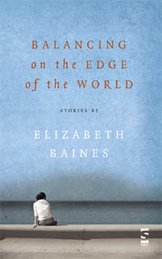
First, I have a lovely review of Balancing on the Edge of the World from Jim Murdoch on his 'Truth About Lies' blog. It's a really long, detailed review, considering seriously his own reactions to the book and the individual stories - why he remembered some better than others, for instance - and looking in depth at the literary and thematic issues, yet written in a lovely unaffected, personal style. Jim takes the trouble, too, to relate all this to my own comments about the stories in my virtual book tour, Around the Edges of the World, and other web interviews. This is the kind of review that really touches me: serious yet very personal. You know your book has been given proper literary attention, and yet also there is that true sense of how readers are responding to your work which you often don't get from a so-called professional review.

Perhaps his most quotable sentence is this: 'This is storytelling for the 21st century' (and of course I will quote it), but he's also picked out a passage from the erotic story 'Into the Night' which for some reason most reviewers have glossed over (and I must say reading the passage he quotes made even me go a little red, if metaphorically!). This is what he says about it:
an absolute tour-de-force: this woman can write. Just take note of how much she packs into this little block of text... This is tight, effective writing that manages to be erotic and poetic and yet it reveals more than two anonymous, writhing, naked forms. This was written by someone who knows how to squeeze meanings out of words till they squeal.
(Actually this story was the one my mum didn't like: it embarrassed her totally, which is rich, as she's always telling me to put more sex in my writing if I want it to sell!)

The second nice thing is that my Salt page for Too Many Magpies has gone up, and you can go there to read an extract from the beginning of the book.

The third nice thing is that I went out this morning to try and distribute posters for our Didsbury Festival reading, and every shop I went into agreed to take one - even a couple who don't normally put posters up. Everyone seems quite excited about the festival, and it does look as though it's going to be great...

Sunday, September 13, 2009

Best in colour


Well, I bought myself a colour printer. Not that I needed to, on this occasion: turned out Carl's partner Madeleine could print the posters and leaflets for our reading on hers, so I walked the half-mile to collect them (and stopped and had a glass of wine and a writers' chinwag with Carl, who had just got back from his week's teaching at Derby), and then walked another three-quarters of a mile to Cath's to deliver her batch. A lovely walk, a lovely evening seeing people (and I ended up in the pub, which I had to pass to get home!) - none of which would have happened if I'd had my own colour printer. But then, the idea had been planted, hadn't it, and I began to really want one... And I was out of paper, and in Staples yesterday afternoon they were offering a colour printer for half price, less than thirty quid, if you bought the box of paper I was intending to buy anyway...

(Notice the colourful and elegant Festival logo, which Madeleine added and which I had quite forgotten!)

Thursday, September 10, 2009

More marketing (with hiccups)

I'm hoping to have my Manchester official launch in the new downstairs bar extension in Cornerhouse, as the lovely Claire who hosted a great launch for Balancing on the Edge of the World at Chorlton Chroma two years ago now runs the restaurant at Cornerhouse. However, this afternoon I discovered that building work on the extension is behind schedule, and I won't know till next week whether it will be possible... I'll keep you posted, though.

And talk about hiccups: now others can't print out the files of the posters I composed for our Sept 26th reading, and I may be going to have to go out and buy my own colour printer... Eek.

On the bright side, I've been invited by Salt's wonderful Ride the Word organizers Jay Merill and Vincent de Souza to read at the Cafe Yumchaa in Soho on November 18th, the day after the Calder Bookshop launch. Exciting.

(Just don't call me a writer, call me a project manager instead.)

Marketing

Well, I'm back from Wales (my exhausting working holiday!) and it's back to the writing life, or should I say, the writing-related life. I've spent the past three days on marketing work. I've designed a poster and leaflets for the reading and talk that Cath Staincliffe, Carl Tighe and I are doing for the Didsbury Festival. Simple, you might think, but I don't have Photoshop on this laptop and I've been struggling with Word and too-large photo files. I could have done it so much more quickly on Photoshop or Pagemaker, which I'm used to! And then of course I kept thinking the files were finished and the others would chip in with suggestions, which is great, but then I would have to start jiggling them all over again. Here's a scan of the only version I can print out until I get to a colour printer:


No, actually, that's not the final version - I stuck the wrong one in the scanner (the final version says that the event is free), but I'm also having problems with my scanner, so there's no way I'm doing that again!

And I'm organizing my launches for Too Many Magpies. I'm doing several readings (see sidebar), but I thought I'd also have a couple of proper launch parties, one in London and one in Manchester, and yesterday I fixed one up for November in the great Calder Bookshop in Waterloo, suggested by my lovely Facebook friends. And updating my websites etc... And that's it, really, and I don't quite know how one can spend three days just doing that, all day on the computer and phone, but one can, it seems, and I guess I have to accept that the actual writing needs to take a back seat for the mo...

Tuesday, September 08, 2009

Free signed copies of Too Many Magpies

OK, so there are only just over three weeks to go to the publication of my novel Too Many Magpies - just time to write a review of my collection Balancing on the Edge of the World and win a free copy of TMM! Originally I said I'd do a prize draw, but hey, I'm feeling excited and generous, so ANYONE who comes up with a review of Balancing between now and 1st October (not necessarily positive!) can get a free signed copy (as well as anyone who has already reviewed Balancing and would like to email me via my profile to claim a free copy before Oct 1st).

Thursday, August 27, 2009

What your stories do without you

It's funny, the way one particular story will just take off and run and run - sometimes without your quite knowing about it, rather like your children getting up to adventures behind your back. A few weeks ago I was doing a vanity Google search and came across the online AQA GCSE anthology in which 'Compass and Torch', one of the stories in Balancing, appears: as I said at the time, I did actually know about this vaguely, ie permissions had been asked etc, but it's a brand-new project and I wasn't too clear about what was entailed. Well, last night - in a rare moment of internet clarity in these here hills - I did another Google search. Vain, moi? Paranoid, moi? Well, no; OK, maybe; but I'm learning that it's one way of finding out what's happening with your work that you just didn't know about. I came across this book, Happy Families?, a Cambridge University Press anthology for school students, in which 'Compass and Torch' also appears. Again, I did know about it - again, permissions had been asked for - but we'd been given no idea of the publication date, which turns out to have been October 2008! So there I was, more or less forgetting about it, and when I did remember wondering when it would happen, and it's been out there all along for nearly a year!

It sounds like a good book - the kind I'd have loved to use when I was teaching school kids. 'Compass and Torch' belongs to the question mark bit of the title, and is in the section titled 'Change and Uncertainty' along with pieces by Jackie Kay, Nadine Gordimer, Lee Hall, Katherine Mansfield and others. And I am not in the least surprised that the section 'Celebration and Security' includes a story by my cheerful friend Adele Geras!

Sunday, August 23, 2009

Way up a Mountain

Sorry for the blackout on my blogs at the moment: I'm up the mountain again, this time to help out with decorating work: too busy to blog, and my head's gone dead anyway or rather has been taken over by thoughts about woodfiller and whitewash and paint and drying times and suitable surfaces and - oh you don't want to know. Suffice to say that I'm now on most friendly terms with the staff at Bangor B&Q (literary conversation: what's that?). And if I should ever get a literary inspiration, well, that'll usually be when the signal for the mobile internet goes blank instead: it's much worse when it's windy for some reason - which here, opposite the ridge by the sea, it nearly always is. It's as much as I can do to keep up with my emails (and then I have to use the very primitive server mail platform: can't send block emails, each email takes an age to load through, and the platform doesn't keep a copy of what I've sent). Twitter hardly works at all. (So much for getting all my mates to vote for my book on the new Salt Just One Book poll and keeping up my books's exposure - what this does expose, I guess, is something of a flaw in the blanket contemporary acceptance of a culture of internet-based author marketing). And some days I don't get out in time to get a newspaper, though yesterday evening on my way to a fabulous meal in Molly's restaurant in Caernarfon, I did manage to buy a Guardian, and read an article by Nick Laird bemoaning the need for authors to market their own work and describing all the feelings we all have to squash in order to do it (or I do anyway): 'For one thing, it seems the height of bad manners, like going on about your own children' - which is exactly what I said the other day on this blog. Oh, and a profile of Fay Weldon, who always makes me laugh... No way I can give you all the links, sorry: it would take half an hour at least, and there's a door waiting to be painted.

As for reading, I got quite hooked on a book in ms by a friend, in the half-hour each day I read in bed in the morning - more hooked than by most published books by well-known writers, to be honest. And having left our next reading group book at home (Angela Carter's Nights at the Circus, which I bought years ago but for some reason never read) I sent off for a second-hand copy from Amazon (and that took half an hour!) but it never arrived, presumably due to the remoteness of this location...

Should be back in full swing again by the second week of September (and of course publicising my new book, Too Many Magpies). Meanwhile, I'll blog if I can...

Cross-posted with Fictionbitch.

Saturday, August 15, 2009

Vote for the Salt book you have found most important.

Latest in the Salt Just One Book Campaign: you can nominate and vote for the book published by Salt which has been most important to you, and Balancing on the Edge of the World has been nominated. To nominate or vote go here.

Thursday, August 13, 2009

Reading group: Changes of Address by Lee Langley

Ann suggested this 1987 novel which she'd enjoyed years ago, narrated by the adult Maggie who is looking back on a late-thirties and early-forties childhood in which she was dragged around India by a scandalous mother exiled and self-exiled from the British colonial community into which Maggie had been born.

Having read it again for the group, Ann said that she was interested in the different things one can take from a novel at different times in our lives. If I'm remembering correctly, she said that the first time she read it, when she was very young, she liked it for the vivid way that the community was depicted, and the echoes it provided of her own expatriate childhood. This time she appreciated that and the portrayal of the mother as she declines into poverty and squalor, but what really struck her was the fact that the novel was about memory, and how far we can trust our memory, as narrator Maggie wonders whether certain memories are her own or have been imposed by her mother. Ann was particularly struck by the narratorial technique of alternating between the first-person past-tense retrospective narration in which these doubts are raised and a historic-present mode of narration grounded in the sensual experience of Maggie the child yet paradoxically cast in the alienating third person illustrating, Ann thought, the mother's alienation from what she calls 'The Child'. Ann also very much appreciated the exploration of the notion of home for expatriates - the idea that there is never just one 'home' and yet nowhere is really 'home' - as did Clare who also spent her childhood abroad, and I who spent my childhood moving around Britain.

I too very much appreciated the theme of the dubiousness of memory - not least because it's the theme of an (as yet unpublished novel) I've written. I was also struck by the double-narration technique, but wasn't quite sure that it worked, or that its purpose was clear. I couldn't help thinking that the third-person narration indicated a certain alienation of the narrator from herself, or at least from her childhood self, either conscious or unconscious on the part of the author, and I wasn't sure what to make of this. Sometimes the narrative slips from one mode to another in mid-section or even -paragraph, and I felt that this indicated a certain lack of authorial clarity of purpose. Indeed, I found that sometimes at such moments and others there was an uncertainty of rhythm and tone. This links perhaps to my main doubt about the book, which was that it read as a memoir rather than as a novel, lacking the kind of shaping that a novel requires. The whole narrative is incredibly linear in the most fundamental way: events occur and characters appear in sequence, each in turn presented vividly, sometimes portentously so that you take them as symbolic or prefiguring future developments, yet then they drop away to be forgotten and overtaken by new, similarly vivid yet transient characters and events, and (while everyone agreed that the book was a very easy read) the narrative has a particularly static feel.

John strongly thought the same, and others agreed. The one dissenter was Trevor, who said that that static quality was what characterized the life the girl was being forced to lead (a life on the move but repetitive, motored only by the selfish mother's repetitive series of sexual liaisons: there's a consequent sense of arrest, exacerbated by the mother's public and sometimes even private underestimation of Maggie's age in order to minimize her own - a factor which makes the adult Maggie uncertain of her own age at various moments when she looks back). In any case, Trevor said, children don't shape their experience: it is to them a linear series of events, none more significant than others.

I'm not sure I agree with that last, but didn't say so because even granting it I didn't agree that that meant that the novel needed to lack shape. John thought that too: he said that a great novelist would find some way of replicating that childhood experience, yet also manage to select and point up for significance. For instance, he said, there was the moment that the child Maggie walks into a mirror. That seemed so symbolic at the time of reading it, yet it is never really used symbolically and indeed the novel appears to replicate the child Maggie's lack of awareness of its symbolic potential. Trevor stuck to his guns that that was acceptable as a replication of her experience, but I said actually it wasn't, precisely because the author provides herself with a narratorial shaping device, ie the retrospective consciousness of Maggie as an adult narrator.

In the light of such apparent authorial uncertainties, the narrator's uncertainties about what she remembers come to be seen as potentially rather those of the author, and the more we discussed the book the more sure we felt that the material was intensely autobiographical and incompletely processed. There is one thing that Maggie is certain about, and that is that her mother treated her inexcusably badly (and as a teenager at the end of the remembered story she cuts herself off from her mother, never to meet her again). This is indeed the one-dimensional way that the novel presents the mother, and I said I found it somewhat odd that, having been a mother herself (something which she makes much of, having vowed to be a different kind of mother), the middle-aged Maggie hasn't come to any understanding of her own mother's position at the time. Only at the very end, prompted by the memory of a remark by the man her mother finally settles down with, does it occur to the narrator Maggie to wonder if maybe her mother wasn't quite the baddie she's always thought her, but a more complex character. I said that the way this felt to me was that this was a thought which had occurred newly to the author, that it was the process of writing the story that had brought her to this conclusion, and that what she really needed to have done then was to go back and redraft the novel taking the notion into account: this may have resolved many of the uncertainties and provided a far more complex character in the mother and a consequently richer story.

Ann said, Well maybe she couldn't, and everyone felt that that must be the truth: that that very cutting off from the mother (if, as it seems, the novel is autobiographical) would make emotional resolution very difficult. John noted that there was a certain avoidance of exploration of emotion in the novel, and while this could be regarded as representing the mores of the time, we felt it ran deeper: for instance, in the scene where for the first time Maggie fights back when her mother tries to beat her, there's a retreat in perspective and tone: To anyone watching, it might look funny: this slow, silent combat, a tableau-vivant - 'The Gladiators' - as the child hangs like a mongoose on the throat of a threshing snake, slowly dragging the woman's head backwards (that coyly jovial tableau-vivant - 'The Gladiators') which indicates an authorial holding-back.

Trevor insisted (repeatedly) that no one could ever come to terms with having had such a mother and I think he was saying that this justified the novel. Also, in spite of his previous comments, he insisted now that it was simply not possible ever to replicate the psychology of a child in writing, because one always comes to it with an adult consciousness (which I don't agree with either), so I'm not quite sure I've got the gist of what he was saying overall.

It was also noted that the India around the characters and the tense political situation of the time were only vaguely indicated in the novel, and while again this could be said to be a function of the self-obsession and isolation of the British characters, there is an unutilized opportunity to deal with them via the adult narrator. There is in fact some perfunctory retrospective comment by the narrator, a kind of wondering realization that momentous things were happening around them of which as a child she had been unaware, but this disjunction is not woven into the fabric of the remembered story in any satisfactory novelistic way.

There was some general talk about the difficulty of writing about experiences close to you, and an acknowledgement of the fact that if you change details like setting etc you can distance your own experience and make it easier to process in writing. That, I said, is what's so cathartic about writing, and we all then agreed that there was something painful about this novel and it didn't feel like catharsis at all.

Then Doug said it was 'a bit girly' - only partly ironically, which made us all hoot with laughter, and then some people went home but some of us stayed and Clare got some more drink, pink fizz, out of the fridge and I am afraid to say I got quite drunk.

Our archived discussions can be found here, and a list of all the books we have discussed here.