I've been so overwhelmed with production for my play The Processing Room that I haven't been getting onto Blogger much (in the next few days I hope for a breathing space and the chance to blog about it all), but I did manage to take Thursday evening out for the launch of Caroline Smailes' fantastic debut novel, In Search of Adam.
This was a really great launch from every perspective: the reading room at Waterstone's Deansgate was full, and Caroline gave a beautiful reading which made clear that the book is riveting, a moving yet restrained depiction of childhood pain, and deserves all of the rave pre-publicity it has received. Caroline's publishers, The Friday Project, were there to support her, and it was clear from the Q & A and from my conversation with publisher Clare Christian and Editor Clare Weber that they had paid rare respect and attention to Caroline's typographically innovative script. Tutors from the MA course on which she had written the novel were there too, and - excitingly for me - fellow bloggers jumping their virtual reality to be there in the flesh: Clare Sudbery, nmj and Jude among them.
It was a shock to emerge from the bar we repaired to afterwards and find that Manchester was more Manc than ever, with cold rain dropping in sheets - the atmosphere inside had been so warm with literary celebration.
Saturday, June 16, 2007
Monday, June 11, 2007
Launch: In Search of Adam
An announcement today: on Thursday evening there's a launch at Waterstone's Deansgate for Caroline Smailes' debut novel In Search of Adam, and the first in the Friday Fiction list from the innovative publisher The Friday Project, which specializes in picking up books via the web.Caroline's publishing story is an exciting one. While still on the MMU Novel MA course for which she wrote it, she began an engaging and innovative website to promote it, and the Friday Project happened along... (Another forthcoming Friday Project novel from fellow blogger nmj was discovered in a similar way.)
Aside from all this, however, even prior to official publication, In Search of Adam has been a huge hit, raved about by Dove Grey Reader and others, and the extracts I have seen indicate that the book is stunning.
If you're in the North West, be there for this important debut: Waterstone's Deansgate Manchester, 7-9 pm Thursday 14th June £3.00.
Monday, June 04, 2007
A director!
We have a director for our 24:7 production of The Processing Room: the fabulous Tracy Gentles who at the stunningly young age of 24 lectures at Salford University and runs her own dynamic theatre company Hooh Hah.
Actor auditions tomorrow...
Thursday, May 31, 2007
Monday, May 28, 2007
Meet the author - for real
I've just been to the Hay Festival, which I've posted about on my other blog, and which has now become so huge, with remote stages and audiences of up to 800 or so, that there's not really much chance to get to talk to authors. On Saturday morning we went to a discussion with novelists Gail Jones and Hisham Matar, led by Meet the Author website David Freeman, but stuck in a darkened 'auditorium' it didn't much feel like meeting them, and only two or so audience questions were allowed.
But a Fringe Festival has started up in compensation in the town (the official festival is now on a site three-quarters of a mile out), and, wandering through the streets, John and I came upon a reading about to begin in the tiny Hay Poetry Bookshop, by the celebrated Irish poet Tony Curtis. We had met Tony once before, at the South Tipperary Festival at Clonmel - not that he remembered, but that didn't stop him with true Irish lying charm referring to the occasion constantly throughout the reading, and suggesting afterwards that we three pose for a photo for old times' sake (Tony's on the right).
He was reading from his fantastic new book, The Well in the Rain (Arc). You know what's embarrassing when you're in such close proximity to the author and the other crammed listeners? It's OK when the poet makes you laugh (as of course he did), but what what about all the times he made me cry?
But a Fringe Festival has started up in compensation in the town (the official festival is now on a site three-quarters of a mile out), and, wandering through the streets, John and I came upon a reading about to begin in the tiny Hay Poetry Bookshop, by the celebrated Irish poet Tony Curtis. We had met Tony once before, at the South Tipperary Festival at Clonmel - not that he remembered, but that didn't stop him with true Irish lying charm referring to the occasion constantly throughout the reading, and suggesting afterwards that we three pose for a photo for old times' sake (Tony's on the right).
He was reading from his fantastic new book, The Well in the Rain (Arc). You know what's embarrassing when you're in such close proximity to the author and the other crammed listeners? It's OK when the poet makes you laugh (as of course he did), but what what about all the times he made me cry?
Thursday, May 24, 2007
How to stay sane while producing a play
This morning I slept until 8.30. I am so exhausted! Why do I always forget how tiring, how time-consuming, how nerve-wracking and damn emotionally involving it is producing a play?
On Sunday Mary-Ann and I met in a pub to discuss things - Mary-Ann sweeping in all dressed in sparkly ear-rings and celebratory pinks and purples - and got too excited and ended up drinking too much.
'I'm not drinking any more,' I told her on Tuesday as I arrived at Cornerhouse to talk to potential directors. 'I'm staying clear-headed for this project.' She was there already, waiting for me in more sober but nevertheless glamorous purples and black. Me: I was all black and trousered, in a shirt and carrying my biggest brief case, but in spite of it all, feeling like a fraud. 'Oh, it's odd doing this,' Mary-Ann said, echoing my feelings. 'I'm so used to being on the other side of the table!'
The day wore on. With each interview we had coffee, between two of them we had lunch, and then we had coffee again. By 4.30 we were done, coffeed-out, our makeup faded, our clothes crumpled, papers out of order, and totally gob-smacked by the talent and commitment we had encountered. And exhausted. 'Oh, god,' said Mary-Ann, rising with her purse in her hand. 'Let's have a glass of wine!'
And that was that all over again.
On Sunday Mary-Ann and I met in a pub to discuss things - Mary-Ann sweeping in all dressed in sparkly ear-rings and celebratory pinks and purples - and got too excited and ended up drinking too much.
'I'm not drinking any more,' I told her on Tuesday as I arrived at Cornerhouse to talk to potential directors. 'I'm staying clear-headed for this project.' She was there already, waiting for me in more sober but nevertheless glamorous purples and black. Me: I was all black and trousered, in a shirt and carrying my biggest brief case, but in spite of it all, feeling like a fraud. 'Oh, it's odd doing this,' Mary-Ann said, echoing my feelings. 'I'm so used to being on the other side of the table!'
The day wore on. With each interview we had coffee, between two of them we had lunch, and then we had coffee again. By 4.30 we were done, coffeed-out, our makeup faded, our clothes crumpled, papers out of order, and totally gob-smacked by the talent and commitment we had encountered. And exhausted. 'Oh, god,' said Mary-Ann, rising with her purse in her hand. 'Let's have a glass of wine!'
And that was that all over again.
Saturday, May 19, 2007
All in the image
OK, so I kind of glossed over my hair-raising experience of getting an image for The Processing Room. Well, I'd decided what image I wanted - Dave Slack had warned us that we needed to be thinking about it - but I still had a mad panicked rush to achieve it in the end. Last weekend I went to London, and got back late on Monday to a packet from 24:7 which must have arrived on the Saturday, and the news that we had one week to submit our festival image! This meant that in fact I had 4 days to get the photo taken and - without training - successfully manipulate it on the computer before getting it to them in time! And I was due out all day Tuesday, and Mary-Ann was coming over Wednesday to help me go through actors' and directors' CVs, and meanwhile the correspondence from both was still coming through and had to be dealt with.
Tuesday night. John and I have waited for dark, and then there I am dressed up in some semblance of a nurse's uniform (and freezing bloody cold, since the boiler's bust and the weather's like February), trailing round the house with John behind me holding a camera, trying to find a doorway he can stand far enough back from to get enough black space around it. We choose his study, which is at the end of the landing. We want a silhouette, so we've set up a light behind me.
'Further back, John.'
He almost steps back in the dark, before realising the stairwell is right behind him.
I look at his efforts. He doesn't know what's in my head, of course, and I haven't managed to explain, so we have to start again. By the time we finish, he's very fed up and I'm frozen to the door frame.
Next day, with Mary-Ann, I take a look at them properly. They're hopeless. Too dark - there wasn't enough light behind me after all - and all John's study junk behind me is far too distracting, and most unethereal... We'll have to wait for dark once more and clear the room and adjust the lighting and do it all over again...
Thursday I'm at my computer working on the chosen shot. It's OK, I can do it, but I'm so slow, it's taking all day, and there's so little time left... And then Ben, my website designer and saviour, comes through on Messenger and takes over, whisking different colour versions of the image back to me over and over, and helps me to choose.
And guess, what, I did it: emailed the image off a day early and had a hard copy printed just in time! I'd have had a celebratory glass of wine if I hadn't already ended up with a migraine...
Tuesday night. John and I have waited for dark, and then there I am dressed up in some semblance of a nurse's uniform (and freezing bloody cold, since the boiler's bust and the weather's like February), trailing round the house with John behind me holding a camera, trying to find a doorway he can stand far enough back from to get enough black space around it. We choose his study, which is at the end of the landing. We want a silhouette, so we've set up a light behind me.
'Further back, John.'
He almost steps back in the dark, before realising the stairwell is right behind him.
I look at his efforts. He doesn't know what's in my head, of course, and I haven't managed to explain, so we have to start again. By the time we finish, he's very fed up and I'm frozen to the door frame.
Next day, with Mary-Ann, I take a look at them properly. They're hopeless. Too dark - there wasn't enough light behind me after all - and all John's study junk behind me is far too distracting, and most unethereal... We'll have to wait for dark once more and clear the room and adjust the lighting and do it all over again...
Thursday I'm at my computer working on the chosen shot. It's OK, I can do it, but I'm so slow, it's taking all day, and there's so little time left... And then Ben, my website designer and saviour, comes through on Messenger and takes over, whisking different colour versions of the image back to me over and over, and helps me to choose.
And guess, what, I did it: emailed the image off a day early and had a hard copy printed just in time! I'd have had a celebratory glass of wine if I hadn't already ended up with a migraine...
Thursday, May 17, 2007
Production takes it out of you
And yesterday Mary-Ann Coburn, who is taking one of the parts, came over, and we studied the huge pile of actors' CVs I've been sent, and negotiated by email with interested directors. After which we were ravenous and stuffed ourselves with salad and smoked mackerel and cheese and cake!
Call this a writing career?
Tuesday, May 08, 2007
Proof copy
A lovely parcel through the post - a proof copy of Adele Geras's new novel, A Hidden Life, to be published in August.Proofs are SO exciting! Limited in number, the cover not yet finalized, the text not yet finally corrected - they come with such an exciting sense of the process of publishing, and of privilege at being included!
The author of numerous acclaimed children's books, Adele has already published three adult novels - luscious sagas in which characters are made to confront the secrets of the past. A Hidden Life, her fourth, looks to be no exception: the story of a family gathered to discover explosive secrets at a funeral.
And there's the proof copy, sitting enticingly beside my bed, waiting for me to begin!
Monday, May 07, 2007
Cover blank
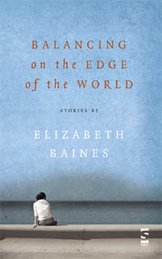
No cover for my short-story collection yet, though Jen at Salt, and I and John, and (as I said in my last post) our reading group, are all banging our heads for one. I used to do a lot of the illustrative photography for our short-story mag Metropolitan (under my other name Helen Johnson) and always had to make quick artistic decisions, so I was fairly confident when Jen asked me at the start if I had any ideas for the cover. The title is a spin on a phrase running through one story: Balancing on the Edge of the World, and the image which came to me was an androgynous figure poised on a curved surface, maybe a hill. However, Jen says that when they tried it out it looked like the cover for a management/spiritual/religious type textbook!!
'Ditch the figure' said Trevor in the reading group, and the general consensus there was that I should go for something abstract. I know that some people, writers in particular, prefer abstract covers because they don't artificially tie books down, but I have a feeling that browsers want, and are more attracted by, some concrete idea of the human situations behind that cover. And it's so crucial to get it right: although Doug in our reading group insists that he is immune to book covers, knowing that they can mislead (and pithily says that he's a title man himself), I think he's pretty unusual...
Oh well, back to the drawing board...
'Ditch the figure' said Trevor in the reading group, and the general consensus there was that I should go for something abstract. I know that some people, writers in particular, prefer abstract covers because they don't artificially tie books down, but I have a feeling that browsers want, and are more attracted by, some concrete idea of the human situations behind that cover. And it's so crucial to get it right: although Doug in our reading group insists that he is immune to book covers, knowing that they can mislead (and pithily says that he's a title man himself), I think he's pretty unusual...
Oh well, back to the drawing board...
Saturday, May 05, 2007
Reading group: A Wild Sheep Chase by Haruki Murakami
Everyone round to ours on Wednesday for the reading group to discuss A Wild Sheep Chase by Haruki Murakami (translated from the Japanese).None of us had read Murakami before, and during the week beforehand John and I had bumped into Doug and Ann separately, and each had told us that they were having difficulty getting going with the book. They would read a few pages, fail to get gripped and put it down, and then when they picked it up again find they couldn't remember it and had to start all over again. John and I told them that we were having precisely the same experience.
Ann said, 'I don't know where it's going', and I said, 'I don't know where it's coming from.' We felt we couldn't grasp the tenor of the opening chapters in which an unnamed thirty-year-old narrator attends the funeral of an ex-girlfriend and reminisces about their meeting and relationship before going back to his flat to find his ex-wife briefly returned to collect her things. While the stunning prose made all of this seem significant, there was also a sense of structural inconsequentiality about it, and indeed the story seems only to get going the next morning after the ex-wife has left and the vacationing narrator is called to his office to discover that he has been summoned by a mysterious stranger to engage on a 'wild sheep chase'.
Before this point, however, a surreal and absurdist element had entered the narration, which should have warned us that the conventional expectations with which we were reading this book were inappropriate: the narrator, it turns out, has a new girlfriend with ears so exquisite (and which during one conversation she sits carefully cleaning) that when they are on view and 'unblocked' in terms of channelling their power, they promote super-sensational sex. She is also possessed of a special sixth sense, which means she guesses that the phone call will come summoning the narrator, and knows it will be all about a sheep.
Hans, who had chosen the book, said he had found it very interesting but strange. He had indeed become involved at this point, and wanted to know what was going to happen, but the more that was revealed to him the less he could take it, a tale about a sheep which may or may not exist, with the power to possess a human and thereby dominate the world.
However, Doug and I had experienced an opposite effect. Doug said that once he understood he needed to accept the book as absurdist, he began to really enjoy its off-the-wall turns, its humour and, like me, its memorable evocation of the spirit of situations and things, landscape and the weather. By the end of our journey with this chain-smoking, whiskey-drinking narrator prone to bouts of philosophising which end with banalities ( 'I came to the realisation ... that I am not a whale') or are abandoned for a drink or a fag, whose Sherlock-Holmes-type reliance on clues turns out to be beside the point, we had come to understand the reason for the strangely inconsequential yet seemingly significant beginning.
The book is indeed about inconsequentiality, and the strange paradox that the seemingly inconsequential things, or the episodes which on the rational level are no longer relevant, are nevertheless evocative and important on the level of emotional experience, while the importance of those things which seem significant in the grand, Western-hero quest tradition, is unstable. Thus the girlfriend with the ears, who seemed so central to the endeavour, turns out to be not so important to the plot after all. Evidence too the absurd way, which had made everyone laugh, that the narrator gets the sinister figure who sends him on his quest to look after his ailing, farting cat while he is gone. The narrator has never named this cat, and during his narration never names any of the other characters: as Clare said, names fix things artificially and thus deny the truth that importance is relative, and reality fluid.
Several people, even Doug, thought that the ending, which I won't give away, was disappointing, but to me it endorsed this view of the book and was therefore fitting.
Then people got interested in the different covers of the book in the different editions we had and agreed that the one above (the latest Vintage paperback) was best. A general conversation started up about covers, and I asked everyone to help me think about ideas I might suggest for the cover of my forthcoming book, which isn't decided on yet.
Our archived discussions can be found here, and a list of all the books we have discussed here.
Thursday, May 03, 2007
Swamped
And now my inbox is swamped with the emailed CVs of actresses who didn't get to see me on Monday night!
Tuesday, May 01, 2007
Overwhelmed
Last night was the 24:7 Theatre Festival gathering, when interested writers, directors and actors get the chance to make contact to work together on this years' projects. Well, yeah, the kind of contact sardines get in a tin... I have never seen such a vast crowd! We had to wait in a snaking queue to be processed at the door and given our designation tags (actor, writer, director etc), but long before I got to the door the tags had run out. And once inside, a seething mass! Mostly actors, of course, but also mostly young, and there are only two young parts in my play, and very few old enough for the other part I have to fill. And, just my luck, very few directors who were not already committed to plays... Or at least, that's how it seemed: maybe there were scores squashed away in the crowds and impossible to see... Oh and, then organiser Dave Slack suggested we writers get up one at at time on this huge very high podium and address that packed crowd and say what parts we had to fill... Well, I've addressed plenty of audiences, but there was nothing quite like it before: quite stomach-crunching, I'm telling you. And then scores of pretty, intent and articulate young actresses squirmed their way between the bodies to hand me their CVs, and I have such a pile of them I honestly don't know where to start...
Thursday, April 26, 2007
Chrissie Gittins and Judy Kendall at Manchester Central Library

The lunchtime readings at Central Library have become a significant feature on the Manchester Literature landscape, and today there was a great reading from poet Judy Kendall and another new Salt short-story writer, Chrissie Gittins. Judy read beautifully from her aptly-named first collection The Drier the Brighter (Cinnamon Press), poems made sparely resonant by her own experience of living in Japan, and as delicately evocative as those of Edward Thomas whose letters she has also edited. Chrissie read from her fabulous debut story collection, Family Connections, and one of her wry stories prompted a spontaneous interjection by female audience members of a certain age on the ways to deal with broken stocking suspenders. Apparently at her Whitechapel launch Chrissie's writing was said to be a combination of Alan Bennett and Hyacinth Bucket. More like Victoria Wood meets Alice Munro, I'd say.Wednesday, April 25, 2007
Getting lucky
I am so thrilled! Last night, as I was slumped on the sofa and nodding off (the effects of two glasses of wine in the pub earlier), the phone rang and I jumped wide awake: actor Mary-Ann Coburn (left), to whom I sent a copy of The Processing Room a few days ago, has read it and would like to take part! Well, wow: Mary-Ann is a fantastic and versatile actress! Just remains to decide which part she should play, as there are three she could do! Oh, and also to find three more actors, a director and a stage manager... And of course I have to keep my fingers crossed that someone else taking part in 24:7 doesn't come along and make Mary-Ann a better offer, with, say, a juicier part...
Sunday, April 22, 2007
Those gruelling auditions
Well, in my last post I was saying what unalloyed fun it was to have a play in the 24:7 Theatre Festival, but today one particular angst kicks in.
Auditions. I am going to have to audition for a cast once again. Agonising for actors, and agonising for playwrights if they understand what the actors are going through.
To initiate the process, Dave and Amanda have asked us playwrights (or exec producers as we're grandly called) for word-pictures of our characters, so that they can circulate them at a gathering of people, including actors, who would like to be involved. Or the Cattle Market, as we hopeful actors muttered last year (last year I didn't enter a play, so tried my chances as an actor), waiting in queues to sell ourselves to playwrights and flap our CVs in their faces. This idea of circulating character breakdowns is a good one: it will save people my last year's experience, in which more than once I waited for up to half an hour to speak to a playwright only to be told there were no women in the play or that all the parts had been cast. Towards the end of the evening, a weary-looking playwright saw me coming, said he badly needed a pee and disappeared never to be seen again. Not good for one's ego, unless one is determinedly taking it all with a pinch of salt.
Well, lucky for me that I could (and not mind that I didn't get a part), since I'm not a trained actor with a professional CV, and acting is not my main thing, but it must have been harder for any of my fellow self-touts (in the main, new drama graduates) who had not yet developed the necessary thick skin. Of course, you didn't catch the veteran Manchester actors going through the process. 'I can't be bothered with it,' Denise Hope told me with distaste and pity when I staggered back to the drinks, but then of course she didn't need to: actors like Denise, Sue Jaynes and Mary-Ann Coburn have playwrights begging them to be in their plays or writing parts specifically for them (and, in the event, Denise was brilliant in Colin Carr's comedy, Divas and Double Glazing).
The actual auditions are difficult things. There's always an air of tension and formality which is at odds with the informality which usually rules in the sphere of drama. It always amazes me, and I can hardly ever believe it, when I read that famous actors have auditioned for parts in films or high-profile stage plays. Some pretty well-known actors did come to audition for my radio comedy drama series, The Circle (and how brilliantly they read before the director decided against them!), though the even more famous ones who took the parts in the end were simply offered them by the director. As a writer I've sat in on a few auditions, and can never feel good about it, knowing the feeling of exposure in facing that critical lineup of writer, director and/or producer, judging you not simply for your skill but for things out of your control and indeed unknown to you: the fit of your face to their concept of the character, your build, your quality of voice, or the matter of simply how you'd combine with the other actors up for other parts... And the worst thing is having to break it to the actors you haven't chosen, which once, as a 24:7 playwright, it was my duty to do.
One time I attended a whole-day audition for a theatre showcase in which a play of mine was featured. It was a kind of workshop in which all of the actors' skills were being extensively tested; they were put through their paces as a (huge) group, given trust games and exercises, while we writers and our designated directors sat around and watched. At the time I was in awe, and thought it pretty cutting-edge and much better than the formal individual 'interview' style, but a few years on I met one of the actors involved, and he told me how humiliated and used (and exhausted) all of the actors had felt, and from the way he spoke he was still smarting.
Maybe the independent film world is simply different, but I feel I should count my luck that I had such an easy time when I went for my first screen test last summer (for a small community film). I walked in, was greeted by a jolly crew (not one of them over 30), matily handed a cup of tea while I scanned the script and then shown through to the camera to read with another who turned out to be a member of the company, while the others settled down comfortably to watch. They put me at my ease and I didn't feel a twinge of nerves. (And to cap it all, they offered me the part!)
So now I've got to bite the bullet and organize auditions again. And here's my first call: the meeting for people who would like to be involved in 24:7 is to be held at Pure (in the Printworks, Manchester) on Monday 30th April from 7pm on. Anyone who would like to be involved - as an actor, director, stage manager or in any other capacity - is welcome. Personally, I'm looking for all of these. (No payment, I'm afraid, just a share of box-office profit.)
Auditions. I am going to have to audition for a cast once again. Agonising for actors, and agonising for playwrights if they understand what the actors are going through.
To initiate the process, Dave and Amanda have asked us playwrights (or exec producers as we're grandly called) for word-pictures of our characters, so that they can circulate them at a gathering of people, including actors, who would like to be involved. Or the Cattle Market, as we hopeful actors muttered last year (last year I didn't enter a play, so tried my chances as an actor), waiting in queues to sell ourselves to playwrights and flap our CVs in their faces. This idea of circulating character breakdowns is a good one: it will save people my last year's experience, in which more than once I waited for up to half an hour to speak to a playwright only to be told there were no women in the play or that all the parts had been cast. Towards the end of the evening, a weary-looking playwright saw me coming, said he badly needed a pee and disappeared never to be seen again. Not good for one's ego, unless one is determinedly taking it all with a pinch of salt.
Well, lucky for me that I could (and not mind that I didn't get a part), since I'm not a trained actor with a professional CV, and acting is not my main thing, but it must have been harder for any of my fellow self-touts (in the main, new drama graduates) who had not yet developed the necessary thick skin. Of course, you didn't catch the veteran Manchester actors going through the process. 'I can't be bothered with it,' Denise Hope told me with distaste and pity when I staggered back to the drinks, but then of course she didn't need to: actors like Denise, Sue Jaynes and Mary-Ann Coburn have playwrights begging them to be in their plays or writing parts specifically for them (and, in the event, Denise was brilliant in Colin Carr's comedy, Divas and Double Glazing).
The actual auditions are difficult things. There's always an air of tension and formality which is at odds with the informality which usually rules in the sphere of drama. It always amazes me, and I can hardly ever believe it, when I read that famous actors have auditioned for parts in films or high-profile stage plays. Some pretty well-known actors did come to audition for my radio comedy drama series, The Circle (and how brilliantly they read before the director decided against them!), though the even more famous ones who took the parts in the end were simply offered them by the director. As a writer I've sat in on a few auditions, and can never feel good about it, knowing the feeling of exposure in facing that critical lineup of writer, director and/or producer, judging you not simply for your skill but for things out of your control and indeed unknown to you: the fit of your face to their concept of the character, your build, your quality of voice, or the matter of simply how you'd combine with the other actors up for other parts... And the worst thing is having to break it to the actors you haven't chosen, which once, as a 24:7 playwright, it was my duty to do.
One time I attended a whole-day audition for a theatre showcase in which a play of mine was featured. It was a kind of workshop in which all of the actors' skills were being extensively tested; they were put through their paces as a (huge) group, given trust games and exercises, while we writers and our designated directors sat around and watched. At the time I was in awe, and thought it pretty cutting-edge and much better than the formal individual 'interview' style, but a few years on I met one of the actors involved, and he told me how humiliated and used (and exhausted) all of the actors had felt, and from the way he spoke he was still smarting.
Maybe the independent film world is simply different, but I feel I should count my luck that I had such an easy time when I went for my first screen test last summer (for a small community film). I walked in, was greeted by a jolly crew (not one of them over 30), matily handed a cup of tea while I scanned the script and then shown through to the camera to read with another who turned out to be a member of the company, while the others settled down comfortably to watch. They put me at my ease and I didn't feel a twinge of nerves. (And to cap it all, they offered me the part!)
So now I've got to bite the bullet and organize auditions again. And here's my first call: the meeting for people who would like to be involved in 24:7 is to be held at Pure (in the Printworks, Manchester) on Monday 30th April from 7pm on. Anyone who would like to be involved - as an actor, director, stage manager or in any other capacity - is welcome. Personally, I'm looking for all of these. (No payment, I'm afraid, just a share of box-office profit.)
Thursday, April 19, 2007
24:7 Theatre Festival 2007
News this morning that the play I wrote in January, The Processing Room, has been accepted for this year's Manchester 24:7 Theatre Festival.Now this is no doubt not very professional or grown-up but I am very excited! 24:7 is a really exciting project to be involved with. Begun in 2004 by enterprising actors David Slack and Amanda Hennessy, it's gone from strength to strength and in the last year or so has become a significant event in the Manchester Arts calender, with the best plays going on to a run at the Bolton Octagon and participants winning prestigious Manchester Evening News Awards. Writer-participants in 24:7 act as executive producers of their plays and are responsible for getting together a production company - it's hard work, but how I love it: the cameraderie and collaboration after all that isolation at one's desk, and the chance to do those things like designing flyers and generally flexing one's publicity muscles, and contributing to the production itself. (Not to mention of course the fact that from the age of eight I've been in love with the theatre...)
I've been involved with 24:7 as a playwright twice before, the very first year with O'Leary's Daughters and the second year with a satirical monologue Drinks with Natalie which was adapted from one of my radio plays, and which I performed myself. Like O'Leary, The Processing Room is a play about identity, but like Natalie it's a comedy: three women, separately lost in a hospital, end up in a strange, indeed unearthly room and receive shocking news about themselves...
Sunday, April 15, 2007
Proof positive
My page proofs came through for my collection of short stories, Balancing on the Edge of the World, and for the first time ever I didn't use the British Standards Institution proof correction marks.

It felt like a kind of loss. I'll never forget the first time I ever used them, on the proofs of an early short story, using the Writers' and Artists' Yearbook: that exciting sense of learning a new code attached to an extra expertise, that of the printer, and of communicating directly with him/her.
Not so long ago, though, a young relative of mine was asked to edit a journal, and I offered to buy him a book containing the BSI marks. He looked at me with pity. He said, 'Oh we don't use those. We mark everything up on Word.'
Well, of course, I knew that the BSI marks had been dropping out of use. When I edited the short-story magazine Metropolitan, by which time the job of typesetting had moved away from the printer to the desktop publisher, very few of the authors used the old marks on their proofs, they simply wrote in their corrections in whatever way they saw fit.
And when my proofs for Balancing came through I thought: well, why don't I use the software markup too? And I did, and was thus able to send them by email, as well. Jen at Salt is happy. It just remains to be seen whether the typesetter is too...

It felt like a kind of loss. I'll never forget the first time I ever used them, on the proofs of an early short story, using the Writers' and Artists' Yearbook: that exciting sense of learning a new code attached to an extra expertise, that of the printer, and of communicating directly with him/her.
Not so long ago, though, a young relative of mine was asked to edit a journal, and I offered to buy him a book containing the BSI marks. He looked at me with pity. He said, 'Oh we don't use those. We mark everything up on Word.'
Well, of course, I knew that the BSI marks had been dropping out of use. When I edited the short-story magazine Metropolitan, by which time the job of typesetting had moved away from the printer to the desktop publisher, very few of the authors used the old marks on their proofs, they simply wrote in their corrections in whatever way they saw fit.
And when my proofs for Balancing came through I thought: well, why don't I use the software markup too? And I did, and was thus able to send them by email, as well. Jen at Salt is happy. It just remains to be seen whether the typesetter is too...
Wednesday, April 11, 2007
Reading group: Mother's Milk by Edward St Aubyn
Reading group last night, and to Hans's for the first time, where his huge window gave a view of everyone looking tentative as they came down the road, scanning the houses for the number.
Mother's Milk by Edward St Aubyn was my choice, Booker short-listed and the recipient of rave reviews for its scintillating prose which I had pounced on when I scanned the first page in the bookshop. The novel begins with the perspective of five-year-old Robert, holidaying with his parents and his newly-born brother Thomas in the Provencal family house which his grandmother Eleanor has signed over to a New Age cult. As Robert's father Patrick agonises, or with savage wit tries not to agonise, over this disinheritance which symbolises the poor mothering he has always suffered from Eleanor, the child Robert observes the symbiotic attachment between his own mother Mary and his baby brother, and through this 'remembers' and grieves his own once-symbiotic attachment to her, and the traumatic separation of birth.
I said that I found this beginning absolutely brilliant, perhaps the most stunning psychological fiction I had read. Unfortunately, however, I did find that the rest of the novel failed to fulfil this promise. This strikingly innovative narratorial approach is lost as the novel moves into the adult Patrick's perspective (and later into Mary's). The prose never fails to be both excoriating and limpid, the searing observations and biting wit keep coming, and I never stopped relishing them. On this level I had only one real criticism which was that although I could take five-year-old Robert's verbal and intellectual precociousness, I found it unrealistic in Thomas at two (and everyone nodded). I could see that adult Patrick was potentially annoying in his self-absorption, but his wit prevented me from being annoyed with him, which I felt was a great authorial achievement. Finally, however, the novel somehow felt to me strangely empty. There's no real story, but I didn't think this was the problem (nothing much happens, except that the old lady deteriorates over the four August holidays examined in the book and the Provencal house moves into the hands of the cult, and the books consists mainly of people sitting talking or thinking about the situation). The real problem, I felt, was that the novel had no subtext: there are no connections to be made and no meanings to be had other than those spelled out by the characters themselves, and the novel thus ultimately lacks resonance, leaving the reader outside the loop in a very subtle but fundamental way. (Although later Hans's wife Jan said she much prefers it when things are spelled out.)
Sarah said that she more or less agreed: she liked the descriptions and, like me, the beginning. There had been a strange atmosphere in the room as I had been speaking, and now there was a silence. Then Hans broke it by saying: 'I thought it was terrible.' He said he hated the beginning, he didn't believe a word of it: how on earth could a five-year-old mimic the Nanny with a page-long satirical replication of her speech - for god's sake, you'd admire a twenty-year-old for being able to do that! And what about the Nanny: she falls over carrying the baby and breaks his fall and the others are simply angry with her and walk off 'leaving her still talking on the ground!' These were just horrible people!
At which point Trevor, renowned in our group for liking most books, but who had been looking strangest of all, now jumped in. He said he just HATED this book! He said he couldn't stand the people. He said, what is this upper-class man doing whinging about his inheritance - he's a barrister for god's sake, and he (Trevor) had worked for enough barristers to know they were rolling in it!
He was very worked up. Nothing any of us could say could change his mind - that the loss of the house is a symbol of Eleanor's unconcern with which Patrick has been battling emotionally all his life (as Patrick indeed spells out in the way I find unsatisfying): Trevor thought he should simply get a grip. He said he couldn't stand the precocious children, or the way Patrick and Mary wanted in this way to make them better than anybody else's children, and look what a bad mother Mary was, wrapped up in Thomas to that extent and spoiling him. But, we said, isn't it (once again) spelled out that this is a tragic pattern: by consciously trying to avoid for their children their own bad mothering, Mary and Patrick are, ironically, repeating the patterns, Mary by overcompensation with Thomas, Patrick by hot-housing Robert intellectually and thus denying him his true childhood.
Trevor would have none of it, and Jenny joined in with her own objections: if Patrick was so resentful of his mother why did he keep going along with her wishes, executing the handing over of the house etc, - and what was wrong with her, too, the way she let herself rot away more or less wilfully? Why didn't they just get her sectioned? Clare and I said, but the point is that people get locked into these emotional patterns in which rationality has no play, as exemplified by the almost final words of the novel shouted with tragic triumph by the infant Thomas: 'Do nothing!'
All this time Doug had been quiet, and John who knew that Doug had liked the book unreservedly asked him to say why. He said that he just LOVED it - its observations, its wit, which had made him laugh out loud, and he had no problem whatever with the seemingly unrealistic precociousness of the children, as he hadn't read it as naturalistic. To strong agreement from John, he said that any novel which begins with a description of birth from the baby's point of view has to be taken on a non-realistic level, and once you do this the whole novel novel takes off and you lose all those rational objections.
However, Trevor went on chunnering, and when it emerged that St Aubyn's series of novels about this family was autobiographical, he cried in triumph: 'I knew it! That author is just having a self-centred moan!' As we walked down the road afterwards he continued his theme. We got to the corner where we had to part. 'Well, I do know the house is only a symbol of his mother not loving him,' he said, conciliatory. 'But then when you think of all the problems in the world today: people homeless, refugees wearing rags. I still hate that bloody book!'
Our archived discussions can be found here, and a list of all the books we have discussed here.
Mother's Milk by Edward St Aubyn was my choice, Booker short-listed and the recipient of rave reviews for its scintillating prose which I had pounced on when I scanned the first page in the bookshop. The novel begins with the perspective of five-year-old Robert, holidaying with his parents and his newly-born brother Thomas in the Provencal family house which his grandmother Eleanor has signed over to a New Age cult. As Robert's father Patrick agonises, or with savage wit tries not to agonise, over this disinheritance which symbolises the poor mothering he has always suffered from Eleanor, the child Robert observes the symbiotic attachment between his own mother Mary and his baby brother, and through this 'remembers' and grieves his own once-symbiotic attachment to her, and the traumatic separation of birth.I said that I found this beginning absolutely brilliant, perhaps the most stunning psychological fiction I had read. Unfortunately, however, I did find that the rest of the novel failed to fulfil this promise. This strikingly innovative narratorial approach is lost as the novel moves into the adult Patrick's perspective (and later into Mary's). The prose never fails to be both excoriating and limpid, the searing observations and biting wit keep coming, and I never stopped relishing them. On this level I had only one real criticism which was that although I could take five-year-old Robert's verbal and intellectual precociousness, I found it unrealistic in Thomas at two (and everyone nodded). I could see that adult Patrick was potentially annoying in his self-absorption, but his wit prevented me from being annoyed with him, which I felt was a great authorial achievement. Finally, however, the novel somehow felt to me strangely empty. There's no real story, but I didn't think this was the problem (nothing much happens, except that the old lady deteriorates over the four August holidays examined in the book and the Provencal house moves into the hands of the cult, and the books consists mainly of people sitting talking or thinking about the situation). The real problem, I felt, was that the novel had no subtext: there are no connections to be made and no meanings to be had other than those spelled out by the characters themselves, and the novel thus ultimately lacks resonance, leaving the reader outside the loop in a very subtle but fundamental way. (Although later Hans's wife Jan said she much prefers it when things are spelled out.)
Sarah said that she more or less agreed: she liked the descriptions and, like me, the beginning. There had been a strange atmosphere in the room as I had been speaking, and now there was a silence. Then Hans broke it by saying: 'I thought it was terrible.' He said he hated the beginning, he didn't believe a word of it: how on earth could a five-year-old mimic the Nanny with a page-long satirical replication of her speech - for god's sake, you'd admire a twenty-year-old for being able to do that! And what about the Nanny: she falls over carrying the baby and breaks his fall and the others are simply angry with her and walk off 'leaving her still talking on the ground!' These were just horrible people!
At which point Trevor, renowned in our group for liking most books, but who had been looking strangest of all, now jumped in. He said he just HATED this book! He said he couldn't stand the people. He said, what is this upper-class man doing whinging about his inheritance - he's a barrister for god's sake, and he (Trevor) had worked for enough barristers to know they were rolling in it!
He was very worked up. Nothing any of us could say could change his mind - that the loss of the house is a symbol of Eleanor's unconcern with which Patrick has been battling emotionally all his life (as Patrick indeed spells out in the way I find unsatisfying): Trevor thought he should simply get a grip. He said he couldn't stand the precocious children, or the way Patrick and Mary wanted in this way to make them better than anybody else's children, and look what a bad mother Mary was, wrapped up in Thomas to that extent and spoiling him. But, we said, isn't it (once again) spelled out that this is a tragic pattern: by consciously trying to avoid for their children their own bad mothering, Mary and Patrick are, ironically, repeating the patterns, Mary by overcompensation with Thomas, Patrick by hot-housing Robert intellectually and thus denying him his true childhood.
Trevor would have none of it, and Jenny joined in with her own objections: if Patrick was so resentful of his mother why did he keep going along with her wishes, executing the handing over of the house etc, - and what was wrong with her, too, the way she let herself rot away more or less wilfully? Why didn't they just get her sectioned? Clare and I said, but the point is that people get locked into these emotional patterns in which rationality has no play, as exemplified by the almost final words of the novel shouted with tragic triumph by the infant Thomas: 'Do nothing!'
All this time Doug had been quiet, and John who knew that Doug had liked the book unreservedly asked him to say why. He said that he just LOVED it - its observations, its wit, which had made him laugh out loud, and he had no problem whatever with the seemingly unrealistic precociousness of the children, as he hadn't read it as naturalistic. To strong agreement from John, he said that any novel which begins with a description of birth from the baby's point of view has to be taken on a non-realistic level, and once you do this the whole novel novel takes off and you lose all those rational objections.
However, Trevor went on chunnering, and when it emerged that St Aubyn's series of novels about this family was autobiographical, he cried in triumph: 'I knew it! That author is just having a self-centred moan!' As we walked down the road afterwards he continued his theme. We got to the corner where we had to part. 'Well, I do know the house is only a symbol of his mother not loving him,' he said, conciliatory. 'But then when you think of all the problems in the world today: people homeless, refugees wearing rags. I still hate that bloody book!'
Our archived discussions can be found here, and a list of all the books we have discussed here.
Sunday, April 01, 2007
Salt authors Neil Campbell and David Gaffney
Salt Publishing have just launched their new and innovative short story list, in which I'm thrilled to be included, and on Friday lunchtime at Manchester Central Library two of my fellow contributors, David Gaffney and Neil Campbell, gave a great reading from their debut collections. Lunchtime it may have been, but the room was packed, latecomers standing, to hear their two very contrasting styles. Firstly, in suitable deadpan mode Neil read from Broken Doll, ironic and moving stories of urban loss and confinement, and then David bounced on to make us all laugh with the short-short stories in which he specialises, collected in Sawn-Off Tales.


You can see from the pics below how appreciative the audience was, and how keen to snap up those striking Salt editions. (Neil is on the left and David on the right.)


You can see from the pics below how appreciative the audience was, and how keen to snap up those striking Salt editions. (Neil is on the left and David on the right.)
Subscribe to:
Posts (Atom)