Sunday, May 07, 2023

Reading group: One Moonlit Night by Caradog Prichard

Warning: some plot spoil.

Two people had recently recommended this book to me, and the group took up my suggestion that we read it. Set in the north-Welsh quarry town of Bethesda in the mid 1910s and portraying, apparently through the eyes of a young boy, the terrible hardships experienced by the population, it was first published, in Welsh, in 1961. Earlier work by Prichard's contemporary Caradog Evans had been disliked in Wales for similarly revealing the hardships and corruptions of rural Welsh life, but One Moonlit Night was apparently warmly received and very popular in Wales. However, an English translation did not appear until 1995, receiving a boost in 2014 when the English-language Welsh Arts Review, in a move to celebrate Welsh literature and help to create a Welsh canon, offered 25 books for public vote, and One Moonlit Night was the winner.

We were all certainly attracted to read the book the moment we saw the arresting beginning:

I'll go and ask Huw's Mam if he can come out to play. Can Huw come out to play, O Queen of the Black Lake? No, he can't, he's in bed and that's where you should be, you little monkey, instead of going around causing a riot at this time of night. Where were you two yesterday making mischief and driving village folk out of their minds?

However, although everyone was very interested to have read it, we did have problems with it.

Commentators, including Jan Morris in an Afterword to the Canongate edition, have expressed the view that this is a work beyond rational analysis, suggesting that this is indeed its appeal. However, I find it hard to read novels without looking for a meaningful pattern, and (as we have discussed before), I think most of the group feel the same. We were all captivated by the voice of the narrator, and riveted by the agonising, grotesque and yet sometimes touching world portrayed, but, since we do indeed read in this way, there was a lot that at the time of our discussion we found confusing and indeed unexplained or unexplainable. However, having looked at the book again more closely in order to write this, it seems to me that there is a rationally intended structure which can be ascertained via rational analysis, and that in fact the book makes much more sense than we felt at the time or than others have allowed. 

Both Jan Morris and Niall Griffiths in a Foreword to the same edition, as well as other reviewers, have taken the book as being told, in Jan Morris's words, 'by a single, unnamed voice'. However Jan Morris does go on to say that it's not quite so simple, since 'although the voice is that of a young boy, sometimes it evidently speaks with the experience of a grown man' (my italics) and she notes that 'three times in the course of the book it is superseded by vatic pronouncements' which she sees as 'of no explicable origin, as though some deus ex machina has intervened.'

This too was how everyone at the meeting, including me, had read the book, and as a result we found the book confusing, and, for me, lacking. (The others were generally more positive than me, since they found fascinating the extent of the hardship with which I - Welsh-born and spending a good deal of time in a north-Welsh ex-quarry village, the history of which I have researched for my own writing - was already familiar.)

I said that I had indeed appreciated the book as an antidote to previous unrealistic romantic representations of rural Wales, but I did have some serious problems with it. Firstly, while I loved the voice with its energetic colloquialism, I had found no discernable story arc or narrative progression, which ultimately made me impatient and a little bored. For a very long time the village and its inhabitants seemed simply to be set out as a tableau, as the boy - who lives with a mother widowed by a quarry accident and thus poverty-stricken and dependent on the parish - first roams the village with his friend encountering its damaged, corrupt and unhappy population, and then walks alone remembering incidents from the past. Secondly - as a result, I thought, of this apparent lack of narrative progression - I became very confused about what happened when, and having lost grasp of the sequence of events, to some extent I also lost interest. Thirdly, I felt there was a obvious error of structure concerning the 'vatic pronouncements'. The first, a four-page lament of archaic poetic language, comes as a shock after the colloquialism of the previous chapters:

I am the Queen of Snowdon, the Bride of the Beautiful One. I lie upon my ascension, eternally expectant, forever great with child and awaiting the hour of his delivery. / My thighs embrace the swirling mists and my breasts caress the low-lying clouds... Though hast enslaved me...

We all felt quite confounded by this. Who or what is the Queen of Snowdon? Who or what is the Beautiful One? What is being referred to by that word 'ascension'? None of us knew, and most said they had skipped these sections, Mark even suggesting that Prichard, who was frequently successful in national eisteddfods, had simply taken the opportunity to insert some of his poetry. It is only later in the book that we will learn the answer to these questions: The narrator relates a walking trip over the mountain with his mother to visit farming relatives; from their fields there is a view of Snowdon in which the slope (presumably the 'ascension') takes the shape of a reclining pregnant woman (forever trapped in place by the mountain itself - the 'Beautiful One'). Without knowing this beforehand, however, we could make nothing of the section in question, which, for readers not steeped in such local lore, makes for a structural error. In any case, there was still a fundamental unanswered question: where does the voice come from? Is it, as Jan Morris suggests, and as it seemed to us, that of some deus ex machina, and why is it there?

Fourthly, a point with which everyone in the group strongly agreed: at the end of the book it appears that the narrator has committed an act which seemed simply entirely unaccountable and unbelievable in the light of what we have experienced of his character, which, as Jan Morris says, is 'engaging ... innocently ready for fun and harmless mischief but precociously tender in his sympathies'. The only explanation is that of madness, on which there is a great stress in this book. Many of the characters, including eventually - and crucially - the boy's mother, with whom he has an especially close relationship, are driven 'mad' by their circumstances, and there are constant references, as in the very first paragraph, quoted above, to people going 'out of their minds'. In the space of the first short chapter and a short afternoon, the boy narrator and his friend Huw encounter a catalogue of damage: the sexual abuse of a class mate, Little Jini Pen Cae, by their beer-stoked schoolteacher, a flasher, epilepsy, domestic violence, the body of a man brought home from the asylum, a woman who, evicted from her house, has shut herself in the coalhouse and is crying like a cat, the dropping down dead of an overworked horse, two men having a fist fight outside the pub, adultery and incest. The chapter ends with this heart-breaking casualness:

And that's all that happened. We weren't anywhere except walking about and I didn't know till this morning ... that Moi's Uncle Owen [the perpetrator of domestic violence and incest] had hanged himself in the toilet and that they'd taken Little Jini Pen Cae and Catrin Jane from Lower Lane to the Asylum.

Later there will be the tragic shunning by the parson of an unmarried mother (the female adulterer); grief as young men of the village disappear off to war and are killed; a marriage foundering on the husband's absence at sea and the wife consequently left dependent on the parish; a dramatic suicide, witnessed by the narrator himself, and in the school toilets of all places; and finally the mental disintegration of the narrator's own mother. 

What sends people 'out of their minds' - an apparent everyday fact of their lives - is, as in that first paragraph, very much at issue. The young boy answers Huw's mother: 

What village folk out of their minds? It's not us that's driving them out of their minds, it's them that are going out of their minds themselves.

 At one point in the latter part of the novel the two young boys seriously discuss the issue. Huw asks:

...I wonder why Will Ellis Porter [the epilepsy sufferer] killed himself?

He'd gone out of his mind, for sure, I said.

Why do people go out of their minds, d'you think?

They lose control of themselves, you know.

 What makes them lose control?

Oh, all kinds of things. Just like you and me get mad sometimes, except they go madder.

They go on to propose various causes, such as Will Ellis Porter's epilepsy, and the drunkenness of others. The real cause, of course, implied though never stated outright in this novel, is the oppression of religion and the conditions imposed by the chiefly English quarry owners - the latter perhaps one reason for the slow uptake of this book in England.

The moon, featured of course in the title, is traditionally associated with madness. At the end of the first chapter the young boy is in bed but can't sleep for the light of the full moon and gets up and watches as the clouds race across it, and it runs as an image throughout the book.

However, to explain the narrator's action as one of madness seemed to all of us a stretch, and I suggested, to the agreement of others, that the problem was that the chirpiness and seeming objectivity (if naivety) of the boy's voice seems to set him apart from everything he observes, at least up to the point that, at the age of ten, he loses his mother to the asylum, and there is no subsequent narrative portrayal of any mental disintegration before his seemingly uncharacteristic act. At the start there seems to be a clear implication that the so-called madness of the people of this village is caused by the social circumstances: the 'madness' of the woman who has shut herself screaming in the coalhouse can be seen as grief and protest at being evicted because she can't pay her rent; little Jini Pen Cae is carted off to the asylum after being sexually abused by the schoolmaster. But when the narrator himself flips so uncharacteristically into what can only be seen as an act of madness, the book seems simply to tip towards the madness it had seemed previously to critique. 

The young boy's voice and character lead Jan Morris to find this a 'sweet-natured' book, which she feels explains its greater popularity than the work of Caradog Evans. Niall Griffiths in his Foreword compares the characters to the 'oddballs' of Dylan Thomas's Under Milkwood and sees some of their antics as 'hugely funny in a League of Gentlemen kind of way'. My own feeling, I told the group, was much more uncomfortable: I felt that the depiction of the characters on the one hand and the high-flown poetic interjections on the other made the book in danger of reinforcing two opposing Welsh stereotypes: the quaintly primitive and the poetically fanciful.

Reading towards the end of the novel before our discussion, I began to realise that as the narrator walks and relates, he is indeed now older - though it wasn't clear to me how much older - and, as a result of the persistent sameness of the voice, this came as a surprise. My main experience of the novel was indeed the 'mistiness' of which Jan Morris writes: 'Sometimes he is one age, sometimes another, and it is both as a boy and as a man that he recalls the tragic circumstances of his childhood... How much is real in the narrative, and how much is hallucinatory we never discover.' We wondered similarly: is he really mad? Did he really commit the act he says he did? Or did he imagine it - and does that in itself indicate madness? At the end of the book, Jan Morris says:

...how old he is, whether he is free or incarcerated, whether he is mad or sane, just about to enter an abyss or recently escaped from one - all these questions are left so mistily unresolved that we wonder whether the author himself ... ever knew the answers.

In other words, she is ready to believe that the author was not in control of his material, but forgives this for 'the sweet pity of it all.'

Having read that Afterword, and settling to write about the novel and our discussion here, I looked more closely and analytically for the points in the novel where these apparent confusions arise. The first chapter consists chiefly of an address to Huw's mother describing what the two boys had got up to the day before. This appears to place us, and the narrator as he speaks, in the time-level of the following day. However, there is already something disorientating, as indicated perhaps by Jan Morris stating, wrongly, that 'where the two were yesterday is to be the ostensible plot of the book', and that 'as the boy wanders the town that day he remembers the events of his life' (my italics). In fact, it is in the 'now' of the following day that the reminiscences begin. Apparently in response to Huw's mother's refusal to let Huw go out to play with him, the narrator begins the next chapter with:

Alright, I'll go for a stroll up Post Lane as far as Stables Bridge to see if I can see Moi [a third boy, their friend].

As he walks up Post Lane, he sees a poster that reminds him of another in the past, prompting the first reminiscence. Yet if we assume that this second day is our framing narrative time level we immediately come up against inconsistencies, which I have to say that on my first reading I didn't notice specifically beyond a slight sense of disorientation. In Chapter One, the boy speaker is living with his mother but here, on the second page of Chapter Two, he refers to her in the past tense: 'Dew, Mam had a good voice.' In Chapter One his mother has 'gone to do the washing at the Vicarage', but in Chapter Two, apparently still walking to look for Moi, he sees the light on in the Vicarage and thinks: 'I used to like going to the Vicarage after school to help Mam with the washing all those years ago.' (my italics.) It is Azariah Jenkins who occupies the Vicarage now, he says, who was preceded by the parson Hughes, who was preceded in turn by the Canon. Later in the book, and on the walk, we will learn that once the Canon died his mother stopped doing the washing at the Vicarage. This places the incidents of the first chapter in the time of the Canon, and thus way in the past, and the only conclusion is that the framing narrative time-level is many years later and the framing consciousness that of the narrator when he is grown. Yet it is hard as one reads to register this, since  at the end of Chapter Two he says:

No point bothering to go over Stables Bridge, even though it is moonlight. There's no sign of Moi and there's no light on in the house

bringing the present-tense voice back to the day after the encounter with Huw's mother. Later we will learn that as a child the narrator, afraid of spirits, always whistled when he went past Stables Bridge, and here he does indeed do that:

I'd better whistle as I pass Stables Bridge, and I'd better keep to Post Lane.

And keep to Post Lane he does, as the entire narrative of reminiscences then takes place over that one walk and, according to the title, on the one moonlit night, along Post Lane.

However, taking this night as that night in childhood is just not possible. Most of what the narrator remembers took place later - the death of Moi from TB, the narrator's mother's descent into madness, his leaving school at the age of fourteen, and his attempt, after his final act, to leave and avoid having to go to work in the quarry. Towards the end of the novel there are hints that a long time has passed. 'This is Robin David's Field,' begins Chapter 10, 'the one on the right here that runs all the way down to the Riverbank.' He recalls incidents that happened there, a near-drowning, a circus and a football match played against an away team. These are described in the lively voice with which the novel began, yet the chapter ends with a sudden change of pace, and a dying fall: 'There's no one playing football on Robin David's field now. Only cattle grazing.' At the end of the book, and the end of Post Lane, the narrator reaches Black Lake. He says. 'Streuth, Black Lake at last. Someone must have pulled this wall down, cos I used to have to climb on top of it to see Black Lake, and now it only comes up to my knees.' It is easy, however, to fail to grasp these shifts, as the overall voice hasn't changed: the narrator appears to continue to speak with the voice of the young boy.

In the course of the novel we learn a lot about the character of Emyr, Little Owen the Coal's Big Brother - more, it struck me when I came to look at the novel again, than I had realised first time round. Emyr is the man whose body has been brought home from the asylum in Chapter One. His mother invites the boys in to view the body, and, although they seem to take much of the grotesquery around them for granted, they are somewhat unnerved by the sight of him. Emyr, the narrator's reminiscences will reveal, is strangely socially maladjusted, rushing indoors if he sees the boys passing the house; he has been seen wearing women's clothes. He sometimes goes missing, and on one of these occasions was found trying to hang himself. One night the boys follow a search party looking for him. To begin with, this is just a bit of an adventure for them, but when they witness him shuffling along Post Lane like a woman, there is something about it that makes them want to hide behind a wall and then go home without telling the search party. Emyr will later be found on his knees in the mud beside Black Lake at the end of Post Lane, his shoes off, and crying for his mother. The boys talk next day about the fact that Emyr was known to interfere, like the schoolmaster, with little girls, and that while he was missing in the night, Little Jini Pen Cae was missing too and next morning was found lying asleep in the wood. It is after this that Emyr is taken to the asylum.

It was on my second look at the book that the significance of Emyr's walk to the Black Lake struck me. As he talks to us, the narrator is in fact following in his footsteps. When he gets to the corner where the boys hid to watch Emyr pass, he says to himself:

Good God, watch yourself in case there are any little devils behind that bank round the corner, watching you and thinking you're going out of your mind (my italics).

He speculates then about what Emyr was seeing as he walked, and, as he too walks, he sees the same view. He wonders if Emyr could hear the Voice - that is, the voice of The Holy Ghost which the narrator's mother told him people heard during the Welsh Christian Revival when she was young. And then - I realised on my second reading - that, although it's not at all immediately clear, since several reminiscences and three chapters intervene, he hears the Voice for himself.

Is this the Voice, I wonder? Or is it just the wind blowing through Adwy'r Nant?

And what he hears is not simply the conventional voice of the Holy Ghost, but a Celtic lament, the lament of Snowdon, of the land and its people 'squirm[ing] beneath the boot of the oppressor.' This is no deus ex machina after all: it comes from the mind of the narrator. And it is a mind oppressed and deranged: the narrator is paralleling Emyr, not simply in his walk along Post Lane, but in his mental disintegration. At Black Lake, like Emyr, he gets down onto his knees and takes off his shoes. His mental breakdown becomes apparent: looking down at the lake he says,

They might be all down there, for all I know. Huw and Moi and Em and Gran and Ceri and everybody. Ah, a wonderful thing it would be if I saw Mam coming up out of the lake now and shouting: Come here you little monkey. Been up to mischief with that old Huw again.

And like, Emyr, he calls on his mother.

Just prior to this, in a kind of rushed ending to his reminiscences, we have learnt that the final act he made as a fourteen-year-old before trying and failing to leave the town involved Little Jini Pen Cae, just as did Emyr's before he was incarcerated in the asylum. Once the parallels are mapped, it is hard to ignore the implication: we are listening to someone who has been incarcerated, who indeed, due to the nature of that act, is likely still to be incarcerated, and making those parallels for himself, so that the 'present' walk up Post Lane is taking place in his own fevered brain.

This would explain those 'misty' slips between time levels: they are the confusions of a disordered mind. I am sure, having looked closely at the novel, that they are consciously calculated by the author to link the young boy of the beginning to his grim fate of disintegration. (I think our group did have some intuition of this, as both Ann and Doug and I said that we hadn't found the set-piece episodes, such as a boxing match, as funny as other commentators have.) After all, the imagery of madness and confusion is in fact planted at the end of the first chapter. As the boy looks out from his bedroom window:

...the moon was zooming through the sky over Pen Foel Garnedd. / No, you silly fool, I said to myself, it's the clouds that are moving, not the moon... 

And that address that begins the novel, 'O Queen of the Black Lake', made apparently to Huw's Mam and apparently with quaint boyish cheekiness,  is in fact the internal cry of an agonised protagonist who will kneel shoeless by the lake and once more hear the Voice. It is now the voice of the Queen of the Black Lake, and her pronouncements are  interspersed by snippets of his mother's voice - Pass me that pot from under the bed . The lament has turned darker: 'My kingdom is the grievous waters that lie beyond the ultimate sorrow'. 

The structure, therefore, is not formless after all as I thought, and the overall voice, rather than simply that of a naive young boy as it has been taken, is a highly sophisticated one, a complex of voices taking place within the memory and imagination of the grown and mentally disturbed protagonist. A clue to this is perhaps the fact that no speech marks are used for the dialogue: the speeches are not meant as replications of what was actually once said, but they are voices remembered and alchemised within the narrator's head. 

'It was a moonlit night just like tonight,' he says of the night the boys saw Emyr shuffling up Post Lane. But although there seem to be several moonlit nights slipping at times one into another - that night of the search for Emyr, the night after the day the two young boys roam the town together, the following night when the narrator goes looking for Moi after being turned away by Huw's mother, and another night long afterwards - they are all encompassed, as the title indicates, by the one moonlit night on which he remembers and imagines it all.

The problem is that all of this is not immediately obvious: there are not enough clues for readers to know how to read this novel and separate the narrator's confusions and loss of control from the intention and control of the author. And even if we see it, there is still I think a problem of credibility. The dominance and persistence throughout of the light, lively and sympathetic voice of a young boy may be meant as an illustration of infantilisation through oppression, but, along with the lack of any portrayal of mental breakdown between the incarceration of the narrator's mother and his terrible act at the age of fourteen, it makes it is hard to believe in the act. Nevertheless, in spite of our lack of grasp of it all, Ann said firmly that she was very glad to have read it, and everyone in the room agreed.

Our archive discussions can be found here and a list of the books we have discussed, with links to the discussions, here 


Monday, April 24, 2023

Reading group: What Belongs to You by Garth Greenwell

Here's the last of my three belated reading group reports:

Doug suggested this short novel which comes garlanded with huge praise and has won several prizes One day the unnamed American male narrator, cruising in the bathrooms of the National Palace of Culture in Sofia, comes across the compelling hustler Mitka, and there follows a tale of unrequited sexual obsession, of overwhelming desire met by hard-headed manipulation, all told in the incantatory prose which has earned the book such admiration.

Unfortunately, our group was not so captivated. Doug began with a slightly  apologetic air (presumably for having suggested the book), immediately referring to the narrator as 'self-pitying', and almost everyone else nodded in agreement. I wouldn't call the narrator self-pitying, but I did agree that the emotion that came over was not so much the narrator's obsession with Mitka as the narrator's obsession with himself. It was in fact hard to see what is attractive about Mitka: he's thoroughly amoral and self-centred, and is clearly using the narrator's obsession with him to get what he can; we are treated to physical descriptions of him and of their sexual encounters, but these seem plainly, even sometimes mechanistically told: there is little imagistic or metaphorical element in these descriptions to create any emotional dimension the reader can share. Yet the prose otherwise rings with a deep emptiness of yearning, and the overall focus is the narrator's own more general emotional state. 

While there was an initial tendency in the group to dismiss the novel for this, people became more positive as we turned our attention to the second of the three parts, which begins when the narrator's English class at the American College is interrupted by news from home. This prompts an agonised avalanche of memories of a rejecting, homophobic background: the scenes are horrifying and deeply moving, and I for one was in tears as I read. It's clear from now on that what is propelling the narrator's yearnings and his emotional entrapment in a destructive relationship, and perhaps accounting for any self-obsession, is huge, unquenchable grief.

There is no doubt for me that the prose of this book is brilliant, so I was a bit shocked when Mark complained about its long sentences and lack of paragraphing - there can be pages and pages unbroken by paragraphs. Clare and I hotly objected that this formally encodes the unrelenting obsessiveness of the narrator's mentality, allowing the reader to read in such a way that draws them in to share that mentality. Mark stuck to his guns, pointing out that in Lolita, for instance, another book about sexual obsession, there are paragraphs and sentences of decent length. We said that that was because the sensibility of the narrator in that book is cool and calculated (for most of the book): the prose of any first-person narrator - the language, rhythm and cadence created by those technical structures of paragraphing and punctuation - necessarily reflects their mentality. Mark however insisted that this book was unnecessarily too difficult a read.

There does seem to be a current prejudice against long sentences, possibly affected by the culture of soundbites, but this book I'd say is a great illustration of the power of long sentences. Take this sentence at the very beginning of this book:

Even as I descended the stairs I heard his voice, which like the rest of him was too large for those subterranean rooms, spilling out of them as if to climb back into the bright afternoon that, though it was mid-October, had nothing autumnal about it; the grapes that hung from vines throughout the city burst warm in one's mouth.

There might be a temptation here, for the sake of immediate clarity and ease of reading, to separate this into two sentences, ending the first after the word 'afternoon' and making the description of the afternoon a separate sentence. But the fact that the author does not do this creates a special alchemy: because he doesn't, the October afternoon becomes more closely linked with Mitka, and its apparent promise (its warmth) yet its deceptiveness with him. And there is a clear sexual note to that final image of the grapes bursting in the mouth, linked to the earlier sentence and Mitka by a semicolon, rather than separated with a full stop.

Having begun the meeting on a somewhat negative note, most of the room ended up vigorously defending this book for its wonderful prose.

Our archive discussions can be found here and a list of the books we have discussed, with links to the discussions, here 

Sunday, April 23, 2023

Reading Group: A Thousand Moons by Sebastian Barry

In February we met at Clare's to discuss this book of her suggestion. It is one of several novels by Barry about the McNultys and the Dunnes inspired by tales of his own Irish family history, and this book is a sequel to the prize-winning Days Without End. The earlier book features Thomas McNulty and John Cole, who meet in America as exiled young men and form a loving relationship while working as cross-dressing entertainers, but then join the US Army and are caught up in the violence of the Indian Wars and the American Civil War. A Thousand Moons takes place when they are much older, after the end of the civil war, but when the defeated confederates are agitating again. It is related by Winona, the young Native American woman the two men adopted as a child after the desecration of her tribe, the Lakota, in which they took part, and who has been brought up and educated by them tenderly and thoughtfully in a loving home. Caught between that old world of nature and the seasons and the world of structures and words (she works as a clerk for the local lawyer), Winona is both lost and saved - 'They both gave me the wound and healed it, which is a hard fact in its way' and has thus the power to tell her own story in a prose that is both imbued with lyrical depictions of nature and straightforwardly colloquial.

Such paradoxes are at the heart of Barry's fiction, and what he is interested in are the complex subtleties and  fluidity of human nature and identity. His ability to ventriloquise a young Native American woman is a supreme case in point, though right at the start of the novel the colonisation of such an approach is acknowledged. 'I am Winona,' she begins the novel by saying, and then goes on to explain that this is not her original name, which was Ojinjintka (meaning 'rose'): the two men couldn't pronounce it, so they called her by her the name of her sister who was killed, Winona. In this way the men have culturally colonised her, but the naming is a remnant and thus acknowledgement of the genocide in which they took part and for which the way they have cared for her is an atonement.

Their household, composed of an ageing homosexual male couple, a young Native American woman and two freed black slaves, Rosalee and her brother Tennyson, is a microcosm of the blended, accepting society against which the factional world around them is set. That factional world soon encroaches: Winona is raped, possibly by Jas, the young white man who wants to marry her (in spite of social disapproval - 'I was just the cinders of an Indian fire in the eyes of the town'), and as the consequences of this unfold, Tennyson is attacked and left brain-damaged. Dressed as a boy for self-protection, Winona sets out on an aborted mission to avenge him, but in the process meets and falls in love with another young Native American woman. Eventually, Jas is found murdered and the innocent Winona is charged and sentenced to death, and the question of how this will end for her makes the final pages thrillingly tense. 

Like others in the group, I couldn't put this book down, and for me it was less for the plot than for Barry's wonderfully lyrical and astute prose, his empathy and insight into all of the characters. Even the most violent characters have their humane moments, providing a moving and unsettling portrayal of the complexity of human cruelty. As for the plot, we found the final revelation, like that in Barry's The Secret Scripture, manipulated and unconvincing, but again this did not spoil our overall admiration. There was only one dissenter: Ann, who surprised the rest of us by saying she hadn't engaged with the book at all, that she wouldn't have finished it if she hadn't had to for the meeting, and that she found it 'wordy'.

I did have one other caveat. The basic message of the book is that love conquers all. Much as I loved the book, and that message, in the light of Tommy Orange's There There which we read previously and which portrays the ongoing legacy of devastation in the lives of Native Americans to this day, I couldn't escape an uncomfortable feeling that to create this one (probably unusual) instance of atonement and redemption made the book potentially unrealistic, even possibly sentimental, and self-justifying. 

We ended with a discussion about the issue of cultural appropriation in fiction raised by this novel. We strongly felt that if it's done well, with respect and empathy, it is acceptable to step into the shoes of others whose experience is outside one's own. After all, the moral potential of fiction lies in its power as an act of empathy (which this book most supremely is). Speaking as someone who has written plays, I would also point out that it would be impossible for a playwright to write simply from their own experience and identity - a playwright just has to put themself in other people's shoes (and minds and emotions). And, as someone commented, if we stuck to our own experience in writing, historical novels couldn't be allowed: Hilary Mantel, after all, wasn't personally at the Tudor court, and her novels set there would have to be cancelled.

Our archive discussions can be found here and a list of the books we have discussed, with links to the discussions, here 

Tuesday, April 18, 2023

Reading group: Oh William! by Elizabeth Strout

Continuing family matters and catching up with my novel-in-progress after almost two months of illness have gone on keeping me from other things, including the reports of our reading group discussions. I am pleased to say that I have now got to the end of the first, handwritten draft of my novel (I always do the first draft by hand), and now I have a bit of a breather in which to let the whole thing settle in my mind before typing the next (I hope final) draft. This means that at last I can turn to those reports, though I'm afraid that after all this time my memory of the discussions will not be the most detailed, and the reports will therefore probably be brief.

At the end of January we met at Mark's to discuss this new novel by Elizabeth Strout, suggested by Ann. We had all very much liked My Name is Lucy Barton, another concerning the same first-person protagonist (Lucy Barton), and were therefore keen to read this. (In fact Oh William! is the third in the series, which most of us hadn't realised when we chose the book, although it didn't in fact matter that we hadn't read the second.) We were by no means disappointed; in fact we liked and admired this novel even more: we were full of unanimous praise.

In this book, Laura Barton recounts how, while grieving the death of her second husband, she becomes involved in a crisis being experienced by William, her first husband. William's current wife leaves him at the same time that, through family history research, he uncovers an alarming and unsuspected, indeed unlikely-seeming truth about his own mother. This prompts him to feel the need to travel back to Maine, from where his mother came, and Lucy agrees to accompany him. Over the course of these events we are treated to Lucy's reminiscences and meditations, and while little happens in the present time level - although it all leads to a revelation that turns much on its head - the history of Lucy's relationships with both husbands, with her daughters and with William's mother unfolds. And while Lucy's own difficult origins are presented more glancingly than in the previous books, they still movingly underpin the whole novel.

Once again, the thing that most struck us was the way that the plain, easy prose manages to convey huge complexities of emotion and of relationships, to deeply moving effect. The whole experience of reading the book is of being spoken to intimately by someone revealing their deepest reminiscences and thoughts in a conversational, sometimes casually stream-of consciousness manner: 

I think I have mentioned the business about my father because as I was packing for Maine, I thought of William's father...

And another quote: 

I think I have to mention this, although I have said I would not talk about David [her second husband], but I think you should know...

And another: 

I have written about [my own mother] and I really do not want to write anything else about her. But I understand one might need to know a few things for this story.

 However, in spite of this almost rambling, naive-seeming style, the novel is in fact very tightly structured, and the final revelation pulls everything together, bringing all the previously planted clues and indictors into a focussed pattern.

The whole thing seemed so emotionally truthful that some of us felt sure that it must be autobiographical, and this seems to be corroborated by the fact that towards the end there is a discussion between Lucy and another character about the two preceding real-life novels - which in the novel are written by Lucy Barton - and whether she will include the character in her next. However, Clare was sure that it was not autobiographical, and a glance at Elizabeth Strout's biography shows that she did not share the deprived and poverty-stricken background of Lucy's that provides the basic pulse of these novels. Ann made a very interesting and astute suggestion, which was that it is autobiographical in that Lucy Barton is an alter ego for the author. I must say that as a writer that really struck a chord for me: autobiography need not necessarily be characterised by verifiable facts, but can operate on an emotional and psychological level.

In any case, the whole thing seemed extremely real to all of us, and although Mark did then start cavilling about the ending, which he found somehow artificial, no one else agreed with him, and we were very glad to have read the book.

Our archive discussions can be found here and a list of the books we have discussed, with links to the discussions, here 

Sunday, February 19, 2023

Memory and the mythology of place


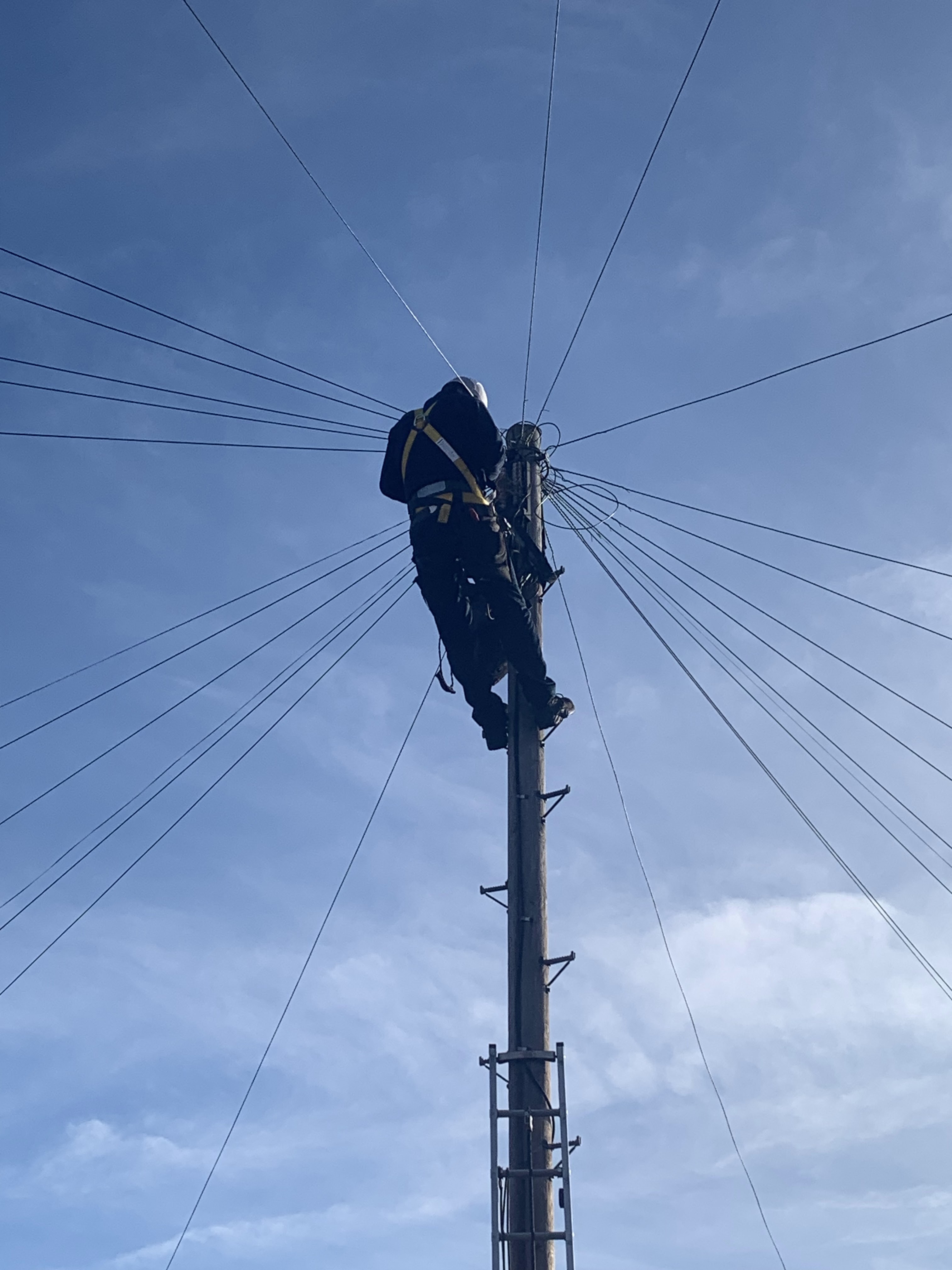
Hello blog! I've been so weighed down by viruses - I had a hacking chest cough for five weeks - and preoccupied by difficult family matters, that the only times I've had alone with my thoughts or with enough energy for creativity have been spent immersed in my current WIP. Anyway, things are looking up, I'm feeling more energised and the brain seems to be firing up in different directions and making connections again, and after I looked at this highly appropriate photo I got to thinking about the matter of photographs versus memory.

I saw this sight, and snapped it, when I was walking to Didsbury village at Christmas. I thought of sharing it on social media then, but hosting a big family Christmas put the whole thing out of my mind, after which I immediately became ill, and for weeks then I was so low that all I wanted to do was curl up away from everything and protect, as far as I could, the developing world of the novel inside my head, and think about nothing I didn't have to. I did go out now and then, and I even took a trip to London to the event for the Edge Hill Prize which was deservedly won by Sabba Sams for her collection Send Nudes. I probably shouldn't have spent the next day wandering around London in the cold and drizzling rain, because after that my cough worsened again. But the point here is that on that walk I was arrested by a curious sight: a high stepladder open on the pavement in front of an ornate door, and, perched on the top, a man working on something, maybe an electric light, most of him hidden by a light-coloured umbrella protecting him from the rain. It looked so strange and quaint, like something from the nineteenth century, and it was so picturesque, the steps and the umbrella creating a pale mushroom shape in front of that dark ornate nineteenth-century door. It reminded me of the photo above, and the two images instantly created a pair in my mind. I took off my gloves and got out my phone to photograph it, but then saw that John, who was with me and hadn't realised I'd stopped, had walked on and disappeared out of sight, and, feeling miserably cold and agitated by the cough, I gave up and put my phone back in my pocket and rushed to catch up with him.

So I didn't take the photo, but the image has stayed so vividly  in my mind. I wonder now, though, have I remembered it correctly? Was the umbrella really light-coloured - actually mushroom-coloured? Or did my mind manufacture that as a consequence of my registering that the whole construction was mushroom-shaped? Could it be the case that if I had taken a photo it would show something less poetically resonant and fitting (a darker, less dramatic-looking umbrella)?

Last week I went to a family birthday celebration at Croma restaurant in Prestwich. I had only ever been there once before, years ago, when it first opened, and although I had perfectly remembered the interior, I was staggered to find its location so different from that in my memory. It's on a side road off the main street, but I had remembered it very particularly as being on the main street surrounded by its busyness and lights - probably, I suppose, because I knew the manager, and it was an occasion of excitement at the opening.

This is the way that memory and imagination mythologise things, including place. It's something I explore to some extent in my story 'Looking for the Castle', which is included in my collection Used to Be, in which the protagonist-narrator returns to a long-ago childhood home.  I know there's a lot of current interest in literature of place, and I know many readers like it, finding in it the comfort of familiarity, but it is precisely because of this last that I sometimes - even often - don't name places in my writing. If, before last week, I'd wanted to name and describe Prestwich Croma in a fiction, I'd have had to travel up there to make sure I did so with accuracy - but in doing so, I'd have destroyed a very thing that would have most likely moved me to include it in the first place - that distorted image I've been carrying in my head, which would have been the locus of the atmosphere, emotions and even theme I would have been wanting to convey. It is the mythic version that would be relevant and resonant for the fiction, and in order for that not to be destroyed by contemporary readers' different potential associations with the place, it would need to be unnamed or renamed.

Wednesday, January 04, 2023

Reading Group: Lean Fall Stand by Jon McGregor

Having read together both Jon McGregor's first novel, If Nobody Speaks of Remarkable Things and in particular his magnificent Reservoir 13, our group have been fans of his work, and were eager to read this novel when Mark suggested it. There, sure enough, was the wonderful prose - lean yet vivid - which we all very much appreciated and enjoyed; overall, however, we were a little disappointed.

The book is divided into three parts. The first, and most distinct from the others, Lean, was inspired by a 2004 trip McGregor made to the Antarctic, as part of a Writers and Artists Programme run by the British Antarctic Survey. Set in the Antarctic, it deals with a tragedy that occurs when two novice Antarctic researchers and their experienced leader 'Doc' all become separated from each other in a sudden snowstorm and Doc suffers a stroke that renders him incapable of saving the situation. The second and longest part, Fall, deals with Doc's painful recovery back home in the UK, and chiefly takes the viewpoint of the wife who has lived to some extent independently from a husband spending several months of every year away in the Antarctic, but must now make sacrifices in her academic career to care for him. The third, Stand, consists mainly of scenes from the Aphasia Group they attend as Doc reaches back for the language he has lost.

There was no doubt amongst us that the most compelling section was the first. Many have pointed out that this section has the tension of an adventure story. There is a sense of dire urgency as the two young researchers try to make contact through a failing radio system, short separate sections formally embodying their separation. There is impending doom in the flashback moments, as in this section describing the comings and goings of researchers over the years:

... The bodies came, and they went... The ice slipped and broke into the water... The daylight was silence... The bodies breathed in their narrow wooden shelter. The weather closed in again... There was movement in the water, and the sky darkened above the glacier.

The descriptions of the Antarctic landscape are stunning:

The night-time was no such thing. The continent kept its face towards the sun and the ice slowly softened. The mountains climbed sharply away from the valley and the glaciers tongued down towards the sea. In the crevasses that ran across the lower mountain slopes the light fell bluely down, dimming towards the depths.

While everyone in our group agreed that the book was a very quick read, the change to a different kind of tension - that of Doc's slow recovery and his wife's adjustment to her new situation - was a good deal less compelling, certainly by comparison, and the scenes with the Aphasia Group were repetitive, if necessarily so due to the nature of the members' language problems. John said that partly what had made the book a quick read for him was that he had found himself skipping these latter sections. The prose itself in the latter two sections embodies a loss of tension: it becomes much more conventional, indeed in the last section somewhat workaday, and thus less emotive. One problem for me, I said, was that it was hard to become invested in Doc's recovery since he had come over in the first section as a not particularly attractive character - fogeyish and self-centred - and indeed, it was his irresponsibility and maybe hubris that paved the way for the tragedy. Others agreed. His stroke occurring during the ensuing crisis detracts from his culpability, and his resulting loss of language is a protection for him against the truth coming out. It was hard as a result not to feel that he was unfairly getting away with it all - especially as the first section had established our sympathies firmly with the young men in dire trouble. Towards the end of the book, the members of the Aphasia Group stage a show for relatives, with Doc's situation, which had begun so dramatically in such dramatic surroundings, as the finale; Doug said he expected Doc, having regained some language facility, to make a dramatic public confession - and others said the same - but no such thing happens. 

The thing we so admire in Remarkable Things and Reservoir 13 is McGregor's ability to create a framing panoramic view of a community while homing in on the personal viewpoints of its members, creating an effect we find very moving. In this book, however, we found no such unifying principle, and felt that, as Mark said, it fell apart into its three sections, and it was hard to tell what it was really about. Was  it about Antarctica? No, we soon leave Antarctica behind. (I said that I thought there was a hugely missed opportunity in Antarctica as a symbol for the freezing of language - or at least, I didn't find any consciousness of that in the novel.) Is it about Doc's recovery? But then the viewpoint in the second section is chiefly that of his wife Anna: is it about Anna's personal drama? But then she too comes across as unsympathetic - as detached as her children once or twice accuse her of being. Is it about aphasia in general, as the last section seems to be? This last section is the only point at which the novel deals like McGregor's previous novels with anything like a community, but the viewpoints we share here, apart from that of the observing Anna, are those of the course leader and the language therapist, and those very briefly. While in the first section we enter the newly traumatised head of Doc and share his language confusion (which is cleverly and empathically done), in the last section we are simply objective observers of aphasia sufferers, and the scope for empathy is much less. McGregor's ability to switch viewpoints is used to brilliant effect in his previous novels, but I felt that here for much of the time it seemed random and contributed to our sense of lack of focus. In fact, I said, even in the first section, in which the narrative enters alternately the minds of the men in danger, I found it hard to quite fully engage with them, due to not knowing anything much about them before we are in the thick of their crisis.

Ann said that she found unbelievable that the leaders of teams in the Antarctic should act with such irresponsibility (there is another incident of even greater irresponsibility in the past, in which one of Doc's colleagues died): she felt sure that in such extreme conditions things would be much stricter.  Finally, Doug commented that McGregor's technique of seeming to begin with one kind of story - in Reservoir 13 a conventional murder story and here an adventure story - and then confounding the reader's expectations by turning it into another, more serious kind of story, had worked brilliantly in the former novel, but hadn't worked here. Of all of us, Clare was the most positive towards the book, saying that she had read it in one sitting and had in fact quite enjoyed it, though adding that she had been in the mood for a quick and perhaps not too serious read. 

Our archive discussions can be found here and a list of the books we have discussed, with links to the discussions, here


Sunday, November 13, 2022

Reading group: As I Lay Dying by William Faulkner

John, who had suggested this book, and had read it more than once before, said that he thought it was a truly great book (in the sense of its literary stature), but that he both loved and hated it.

It is the story of the Bundrens, a family of poor farmers of the deep American south, exeriencing the death of their wife and mother Addie, and then taking an arduous journey to bury her, according to her wishes, in Jefferson from where she came. They are delayed by various difficulties including floods and a fire, and the body in the coffin on the wagon begins to rot as vultures wheel overhead. The whole expedition - and the family rivalries and the characters' various additional ulterior motives for taking the journey - is conveyed in a series of multiple vernacular interior monologues: the thoughts, observations and memories of the family members and others they encounter.

Clearly a landmark book in the advent of Modernism in the early twentieth-century, it thus eschews entirely the prop of an objective narrator, and relies on the characters revealing themselves and each other through their inner stream-of-consciousness thoughts, often unreliable and incomplete in understanding, and leaving readers having to piece together the story and its implications for themselves.

John said he loved this experimentalism and in particular the stress on psychology, which is rendered with such searing insight, but it was certainly a novel that worked the reader hard, both for the reason stated above and because the southern vernacular was very hard to penetrate, particularly before you got used to it. As Doug and I interjected, some of the sentences seem at first impenetrable, even unfinished, until you attune to their logic, particularly as part of Faulker's project here is to render with veracity the way our thoughts can be sometimes muddled, incomplete and inconsistent. It took me a second reading to understand these sentences from the only section in the voice of the (more literate, ex-schoolteacher) Addie:

'I knew that [the word] fear was invented by someone that had never had the fear; pride who never had the pride. I knew that it had been, not that they [ie the schoolchildren she had taught] had dirty noses, but that we had used one another by words like spiders dangling by their mouths from a beam, swinging and twisting and never touching.' 

Addie's preoccupation in this whole section is, significantly, about the uselessness of words, and their inability truly to represent experience, or, as the second sentence conveys, to create connections between people. (At one point there is a gap in the text illustrating the impossibility for her of expressing one particular feeling). For this reason, having initially thought that the beginning of the second sentence was referring back to the previous sentence ('it' being fear or pride or both), I then thought I was reading an unfinished sentence, as apparently indicated by that comma, interrupted by a new thought about the schoolchildren. Only after a double-take did I realise that 'it' in the second sentence referred to the reason (for her hating the children and beating them), which wasn't, as she had once thought, their dirty noses, but because she couldn't connect with them through the impossibility of words.

Everyone agreed that the book was hard work, so that no one could say they had actually enjoyed it, but all found it extremely interesting. We all felt we really needed to read it again, sure that we would get a lot more out of it a second time. (There were plot points about which some of us were still unclear, and ironies that, having resolved them in our discussion, we felt we could relish better a second time around; John said he'd enjoyed the book best on this his third or so reading.) Another thing that made the going harder for the reader at the start was the sheer number of characters (fifteen I think in all), most of them speaking early on. We all agreed that the early part of the book, as these characters are allowed to establish themselves, was slow, and that it was later that the book really got going with some pace. (Doug said that he had started the book years ago but had not got past the early part, and I, who thought I had read the book before, must have done the same, as I had absolutely no recognition of the more dramatic events of the rest of the novel.)

Someone suggested that another problem was that the voices weren't all that distinct from each other, and our initial reaction was to agree, but when we talked about it, it seemed that perhaps we were seeing them too much through their vernacular, and that within it there were indeed distinctions: Addie, as I have commented, is more literate and speaks/thinks in more abstract terms, as do the doctor, Peabody, and the Whitfield the priest. The language of Darl, the second of Addie's five children, more insightful, observant and imaginative than the rest and given the greatest number of sections, often takes a poetic turn; Cash, her first-born, a carpenter who has made her coffin, is distinguished (before the end of the novel) by being a man of few words, his only two early sections consisting of a short list and a single paragraph respectively; the youngest, Vardaman, the only non adult of the children, is strikingly distinct in his muddled thought and language. Those of the only girl, Dewey Dell, begin as fairly straightforward, but turn convoluted and disconnected as she becomes emotionally desperate. Anse, the feckless father, is distinguished by his repetitive self-justifications and whining manipulations, contrasting with the down-to-earth voices of the farmers who help the family out on their travels. (Jewel, the most different of Addie's children, taller than the rest and filled with a distinctive vicious streak, is given no monologue of his own and thus remains to the reader the outsider that the plot will reveal he is within the family.)

We had a fairly intense discussion about the fact that, although the characters speak chiefly in the vernacular, and although a main point seems to be the difficulty for them of articulating their private reality, they quite frequently come out with sophisticated concepts and insights expressed in abstract Latinate vocabulary that was unusual even to us. Darl describes the motion of the wagon as they travel as 'so dreamlike as to be uninferent of progress' and Dewey Dell as 'watchful and repudient' (my italics). Even Dewey Dell, whose outlook is simpler, calls the cow's breathing 'stertorous'. Most people felt that this detracted from the authenticity of the voices, Doug in particular finding that it jarred, and that although it can perhaps be accepted as poetic/novelistic licence in a novel so groundbreaking at the time of its publication, it wouldn't be accepted in a novel written today - the voices would be expected to be much more accurately realistic. Mark objected that he didn't see how Faulker could have done it any other way: if such characters don't have the language to express their own feelings, then the author has to provide it. Doug and I said, But that doesn't work in interior monologue mode, since an interior monologue is meant to replicate a character's thought (and language) - it just makes it feel inauthentic, and brings in for the reader a sense of the author telling the story, after all. Mark said again that he didn't see how it could be done otherwise. Personally, I think it can be done, although it is one of the hardest things to do in writing, and I thought there was an instance in the book that illustrated how: Addie talks of how, trapped in her unhappy premarital life, she lay in bed and heard 'the wild geese going north and their honking coming faint and high and wild out of the wild darkness'. This is a concrete visceral image/symbol that left me with a far more vivid and lasting sense of her longing and feelings of being trapped, left behind and cut off, than any of the abstract musings of her section could or did.

Quite often, the text will break suddenly for a short space into italics, and Doug said he hadn't been able to work out the point of this. I said I'd noticed that in the cases of Vardaman and Dewey Dell, the italics tended to represent troubling thoughts that kept recurring to them, often in a non sequitur way. Doug agreed, but pointed out rightly that there wasn't consistency throughout the novel over this, and that it wasn't clear what the point was in Darl's sections, for instance.  

Much of the commentary we have come across finds the book fundamentally tragi-comic, but none of us found much in it to laugh at. We did all find funny the moment where the neighbouring farmer Tull tells how the Bundrens laid Addie the wrong way round in the coffin so that they could splay out her dress in the wider space meant for her shoulders, and I and others found funny the self-justifying section of the priest, Whitfield, who has felt that he should confess a sin to the Bundrens but argues himself out of the need for it now that Addie is dead. And the very ending of the book - the last sentence - is very funny as well as grim, and, we all agreed, quite brilliant. Mostly, however, we found the situation of the family gruellingly tragic. 

All in all, although most of us said that we probably wouldn't have taken up this novel out of choice, we were all really glad to have read it and found it very interesting indeed.

Our archive discussions can be found here and a list of the books we have discussed, with links to the discussions, here 
Wednesday, November 09, 2022

Reading group: Turbulence by David Szalay

This book of linked episodes won the Edge Hill Prize for short stories, and as one of the three judges that year (along with Sam Jordison and Tessa Hadley) I of course admire it greatly and was eager to share it with the group.

It takes a large cast of characters connected by flights, each section dealing with a character only briefly or loosely connected with the character in the previous section. It's a short book, and the sections are fairly brief, but manages to convey huge psychological complexity, and to make the situation of each character moving. One thing that really moved me was the way the book portrayed the paradox of the interconnectedness of this global world - and of us all to each other - and our simultaneous aloneness with our personal dilemmas. Another thing I found very moving was the changes in viewpoint and perspective, the difference between how characters are seen by others on the one hand, and their inner lives and personal reality on the other. An early instance of this concerns a pilot: in the section dedicated to him we learn, as he flies a cargo plane from Dakar to Sao Paulo, of the death of his sister when they were children, and the way that, clearly, it has affected him for good, and see his vulnerability and his sensitivity. The next episode opens with the viewpoint of a young female journalist about to take an important flight to Toronto and desperate to get rid of the man with whom she had a one-night stand the night before - a desperation we are made to share along with her anxieties about her commission. It is a moment before we realise - and a little shock when we do - that this is the pilot we came to know in the previous section, seen through her eyes as a piece of inconvenient meat she needs to get out of her bed. 

Doug, Mark and John very much agreed with me, Mark in particular saying he found the book quite brilliant (and not, he said, just because of his past career as a flight attendant). John said he didn't understand how Szalay managed to make the characters, so briefly dealt with in terms of physical space in the book, so  convincing and moving. I said I'd noticed that often when we share a character's point of view here, that character is not named, which makes for psychological veracity - people don't name themselves when they are lost in their inner thoughts, and so it's distancing to name them (which a lot of authors don't seem to have noticed!) The main thing that makes the book so moving, I think, is the way Szalay adopts the techniques of both short stories and novels (the book has in fact been marketed as each, at different times). It uses the short story techniques of economy: implication rather than explication, and omissions and jumps that create moving juxtapositions (connections and contrasts), while also embracing a novelistic overall story arc and forward motion, culminating in a satisfying novelistic link to the beginning.

Doug did say however that the one thing he found unconvincing about the book was that ending, which he found artificial and forced. I have to say that on this, my third or fourth reading of the book, it did strike me that there was a psychological element missing from the last section, which did have the potential for making it seem a little manipulated (I won't say what it is, in order not to plot-spoil), but I must also say that the first two or three times I read the book it never occurred to me, and, apart from that psychological aspect, I still found moving the way the general direction was steered back to the beginning, underlining the theme of our disconnectedness yet surprising connectedness. Mark and John I think felt the same.

Our only real dissenter was Ann, who I'm afraid had found the whole thing too schematic. She had guessed right from the start that the book was going to take us in flights around the world back to the same point (and had quickly flicked through to see that this was the case) and couldn't read it without a sense of the sketched plan Szalay must have drawn up to follow, with all the obvious representative characters ticked off, right down to the Syrian refugee. None of the rest of us had had this reaction. Personally, I couldn't see anything wrong with an author having such a scheme: I saw it merely as the openly disclosed framework for something much more subtle in terms of themes and narrative surprises.

Doug said he didn't think it was a novel, though, as you could read the stories entirely in isolation. Someone else disagreed that that was the case: the stories were much richer if read in sequence through the prisms of the previous stories, which of course is how you read a novel.  Doug said however it didn't have the feel of a novel, it felt like something else. I commented that the novel has always been subject to change and innovation, its very name meaning new. In any case, as with Tove Jansson's Summer Book, which we read earlier this year, I thought that, apart from the pressures of marketing, from a literary point of view there was no need to categorise the book: it was what it was, very successfully in the view of most of us.

Our archive discussions can be found here and a list of the books we have discussed, with links to the discussions, here  

Wednesday, September 28, 2022

Autumn writing


This photo sums up how I'm feeling right now. After a summer of crazy activity, I'm back to the quiet of home, the curtains drawn on the outside world in the evenings, and the novel in my head still enticingly misty, but forming a web of connections...

It's a great time of year for writing, I always find, a time when the shortening days and the need to shore up against the cold pull you closer to your inner world... It was the time of year I wrote Too Many Magpies in six weeks flat. Not sure this new novel will be done that quickly, though!


Friday, September 09, 2022

Accoun Buzz review of Astral Travel

Just after I posted the last entry, I discovered another review of Astral Travel that my summer in Snowdonia had caused me to miss. Those periods away from everything are essential, really, I find - I must say that although I didn't get much actual work down on paper this summer, the ideas and images have been churning - but you do need to keep in touch with things (the constant writers' dilemma) and I completely missed this great appreciation on Accoun Buzz, in which Joshua R Conley calls the story of the book 'engaging and compelling', and the novel 'A beautiful book written with a lot of skill and empathy.' Thank you, Joshua!

Tuesday, September 06, 2022

Back to civilisation and a new review for Astral Travel


I've been out of radio contact most of the summer (up a mountain with dodgy internet), trying to write but being hampered (delightfully) by visitors and wonderful company and distracted (more nail-bitingly) by some big family events.


One thing I now discover on my return is a belated review for Astral Travel on Goodreads, reproduced from the Halfman, Halfbook blog. I'm grateful to Paul for reviewing it - bit non-plussed that he finds my antihero quite so upsettingly nasty (but then you can never legislate for readers feeling the same about your characters as you do), and really glad that he finds it 'a good read'. Pleased too that what he likes best about the book is the way the protagonist has to unpick the truth from all of the stories she hears about her father, since that of course is what the book's essentially about: the contingency of story (the stories we can live by); stories as truth versus stories as lies.

The thing for me about writing a novel is that I really do need a solid, uninterrupted block of time to keep it going and get it completed according to my original conception, and I simply haven't had that this summer. Each time I've turned back to my current project, I have found myself in a different alignment to it, wanting to scrap it and go back to the beginning on a different tack. And then in the middle of all that, events of the summer gave me an idea for a completely different novel that's now singing in my head and replacing the other in my dreams and preoccupations, and I may have to leave off and write that first...


Wednesday, July 27, 2022

Reading group: This Census Taker by China Mieville

Warning: plot spoil.

This was a short novel - Doug's suggestion - which most of us found utterly compelling, but which ultimately left us puzzled. Set in an imaginary place and time, it opens stunningly as the narrator presents the picture of a boy running from an isolated house on a hill to the town below, his hands covered in something he believes is blood, but which is not blood, a boy whom the narrator says was himself. Arriving where the watching townspeople are waiting, he cries that his mother has killed his father. Right away it is clear that this novel - in which the boy is referred to sometimes as he, sometimes as I, and once or twice in the second person - is about identity and uncertainty. His father, we soon discover, has not been killed. So what did the boy witness?  He himself isn't sure. His mother has disappeared. Was it that his father killed his mother? His father is violent and kills animals, battering them to death with his hands, and drops the bodies into a deep pit in a cave; the boy suspects that he has overheard his father killing visitors, customers who come up from a town clearly wrecked by a past war and industrial decline to buy the keys he makes, keys that have seemingly magical properties. The boy is deeply afraid of his father and makes attempts to run away to the town and its strange population of homeless children, only to be brought back by the town officials. Yet his father is consistently gentle towards him. And his mother, who appears to have left a note saying that she is going away, was undemonstrative and insular. And there are hints that both she and the father have been sleepers, the father having come from another country. Meanwhile, there are strange double gunshots on the mountain and mysterious figures half-appearing and then disappearing in the mist. Finally, in the father's absence a census taker with a double-barrelled gun arrives at the house. He hails from the boy's father's country and is briefed to record all those from that country living here (although the father will say that the census takers, the 'tallymen', are supposed to have gone). Taken by the boy to the pit in which he suspects his mother's body has been thrown, the census taker lowers himself down into it, but it is never revealed what he finds. He then takes the boy away with him to be his apprentice, at which point it becomes clear to the reader that 'this census taker' refers to the narrator himself. The novel ends inconclusively, with the census taker and the boy descending the mountain away from the boy's home.

We were very taken by the evocative mystery of all this and the vividness of the imagined world, and I was thrilled by the language, which is lyrical and muscular with archaisms and resonant neologisms - a wood is a 'boscage' for instance. Unfortunately however we felt the need to work the mysteries out, but were unable to do so. The novel it seems is also about writing and recording. The narrator explains early on in the novel that he is tasked to write three books, each with a different purpose. The first is a 'book of numbers', a record presumably (a census), intended for everyone 'though almost no one wants it or would know how to read it', the third will be a book of secrets, written only for himself. The second is the book he is writing now (and that we are reading). It's for others to read and is 'performance', the mentor has told him, but it can still hold secrets and send hidden messages. What all this signified precisely, however, we were unclear. We were full of questions: what precisely is this novel saying about writing? What value are we meant to assign to these different aspects of writing/recording? Is creating records the instrument of repressive governments, as implied in the catechism of the narrator's predecessor (who, significantly, has gone missing)?:

The Hope is So:

Count Entire Nation. Subsume Under Sets.

Take Accounts. Keep Estimates. Realise

Interests. So

Reach Our Government's Ultimate Ends.

If so, what are we to make of the census taker being the boy's saviour, and the boy's becoming a census taker in turn? Are the father and mother examples of those who slip such repressions? But then isn't the father violent and cruel? There is much about language and communication: the father isn't fluent in the language of the town; the boy, taught to read inadequately by his mother, and whose viewpoint we share for most of the time, is cut off from much understanding of the world. We were quite clear that the novel was about uncertainty, but what was it saying about uncertainty? And what was it saying about identity? The first pages promise an exciting exploration of the fluidity of identity and the uncertainties of storytelling, but none of us felt that we had come away with any clear message about that.

I had turned to look at reviews to see what others had made of the book. Most reviewers, impressed as we were by the language and the author's imagination, seemed to avoid the matter of interpretation (as if, possibly, they felt there must be an interpretation, but that they hadn't actually got it), but at least one reviewer castigated those who would expect a meaning or a message, seeming to imply that it was a bourgeois requirement. This was a notion that we had in fact heard expressed elsewhere, mainly by writers in writing groups. However, the fact is that everyone in our group did want to be able to take a meaning from the book, and we discussed this matter. We acknowledged that, as John pointed out, there are authors, such as Beckett, who refuse to say what their work means, and whose work defies single interpretation, but their works are in fact open to interpretation. So why do we want a meaning when we see a play or read a book? It is because, we decided, we want to come away with a sense of having been moved on in our insights. Reading and writing were otherwise mere diversions, we felt, and we preferred a more serious purpose.

We did not however make the assumption that China Mieville did not intend a meaning - everything about the book seems heavily weighted with significance - and Mark expressed the view that the novel was simply flawed, and that Mieville had dropped the balls he had thrown in the air. 

Our archive discussions can be found here and a list of the books we have discussed, with links to the discussions, here 

Tuesday, July 26, 2022

Reading Group: The Mountains Sing by Nguyễn Phan Quế Mai

Clare suggested this internationally bestselling debut novel written in English by a celebrated Vietnamese poet. A family saga narrated alternately by a grandmother and her present-day granddaughter, it deals with four generations of the Tran family, and depicts the extreme trauma they experience through the French occupation in the twenties, the barbaric practices of the Communist land reforms, the American involvement in the second Indochinese War, and the continuing legacy of the use by the Americans of Agent Orange. During this time, grandmother Dieu Lan sees her father beheaded, is forced to flee from her farm with her children and loses her grown children to the damaging conflict in the south.

This was subject matter that, on the intellectual level, alerted the interest of all of us, and Clare, introducing the book, declared her appreciation of the fact that the book addresses a viewpoint and experience that has so far had little attention in accounts of this history, a point with which we all agreed. However, although she appreciated the lyrical descriptions, she found the narration plodding, and therefore not in fact all that engaging. We all felt the same. In fact, I didn't find the descriptive passages as lyrical as Clare did, but rather cliched and clumsy and thus alienating rather than engaging. All felt that the characters were hard to engage with as they never came to life. As Ann pointed out, they were ciphers, each created to illustrate a particular aspect of Vietnamese history. Someone also commented that the book was sentimental.

It was clear to us that it had been a dynamic political choice to write the book in English, as those who need most to hear its message are Americans and the West. We felt it a shame therefore that because of this lack of emotional involvement with the characters, we engaged only intellectually with the message, since the real potential political power of fiction is in its ability to make readers identify with a message on an emotional level. Mark - who wasn't at the meeting - also pointed out later that it was sometimes hard in any case to grasp the history, since there was no differentiation between the two alternating voices, and sometimes he got muddled about what had happened when. It was also his cynical view that the book's huge success is down to American guilt about Vietnam, a guilt which indeed preceded its publication, and thus paved the way for its reception.

Our archive discussions can be found here and a list of the books we have discussed, with links to the discussions, here 

Monday, July 25, 2022

Reading group: The Summer Book by Tove Jansson

As I predicted, having Covid put me right off my stride with my new novel, and as a result I have since re-conceived the whole thing - for the better, I think! This has taken up much time and preoccupation (as conceiving a novel always does, I find - trying out different starting points, different voices, persons, tenses etc, and waiting for the direction of the whole thing, and the deeper meanings, to become clear to me before I can properly launch into it) and  I've also been very involved with family matters, while also reading reams for a literary prize, so my reports for the reading group have lapsed. This catch-up report and the next will be necessarily brief, partly as my memory of the discussions will inevitably be less detailed, but also because we didn't in fact find much to say about either book.

All of us present enjoyed reading Tove Jansson's The Summer Book. A short book, it's the semi-autobiographical portrayal of life for a young girl, Sophia (who in real life was Jansson's niece), and her grandmother (in reality Jansson's mother) on the tiny isolated Finnish island they occupy with Sophia's father during the summer. Ann, who had suggested the book, said that she was very engaged by the relationship - two rather crotchety yet utterly bonded characters delineated movingly yet without a hint of sentimentality, often with humour. Everyone strongly agreed. The book is episodic, with chapters devoted to isolated incidents - the grandmother losing her false teeth, the visit of one of Sophia's friends, a night that Sophia tries camping, a storm - but overall is the sense of summer swelling and then fading. Overall too, is the sense of death - Sophia's mother is dead, and there is much of the grandmother's failing physicality - but this runs alongside a sense of the richness of life and nature. The thing that impressed me - and Doug - most was the prose, which seems very simple but somehow manages to create a striking vividness and an evocative atmosphere, so that the island with its teeming life and seasonally changing nature lingers in the mind. We were never sure whether the book is meant to portray a single summer or several consecutive summers - Sophia appears to become older, more sophisticated in her speech, but then later to regress - but this didn't really seem to matter, as the whole thing has a dreamlike quality with the magical logic of dreams. 

Mark was perhaps the least enthusiastic, feeling that the episodic nature of the book hardly qualified it as a novel. The rest of us had no problem with this, and my feeling was that there was no need to label the book. Whatever it was, we enjoyed it.

Our archive discussions can be found here and a list of the books we have discussed, with links to the discussions, here