Showing posts with label Compass and Torch. Show all posts

Monday, May 26, 2014

The mother in 'Compass and Torch'

Now and then one is pulled up short by the sexism inherent in the odd literary-critical comment. I've been shocked on a couple of occasions by interpretations of the female character in my story 'Compass and Torch' which is on the AQA GCSE syllabus, most recently by the BBC Bitesize website page designed to help students revise the story.

The story concerns an eight-year-old boy and his father, who don't see each other very often, as the father and the boy's mother are separated, setting out awkwardly and self-consciously together on a camping trip on which a lot consequently rides in terms of cementing, indeed repairing, their precarious relationship. As they unpack the car there are two flashbacks, located in the child's consciousness, featuring the mother, the first when he overhears her talking to her live-in boyfriend about the coming trip and about the father's general conduct as an absentee father, and a second one in which the father picks the boy up for the trip from the mother's home.

BBC Bitesize tells us that the mother

is presented as an angry and embittered person. Her anger is spoken to her current partner, Jim, and is directed against her former husband whom she regards mockingly as having made a poor effort to act as a father to his son. "There was a choke in her voice now, and suddenly a kind of snarl: 'You wouldn't expect him to start now, would you - accommodating his child into his life?'" (ll. 24 - 26)

Well, OK, the mother is angry. But angry why and in what way? I'd say she's chiefly angry about what she sees as the father's inability to be a better father, both as an absentee parent and previously, before the parents separated - there is italicisation that isn't replicated on the Bitesize site on both the word now implying a previous, similar situation, and on life, implying an inability by the father to adapt to fatherhood. This last, the father's inadequacy, is something that the incidents on the camping trip go on to support, but the critic implies it is just the mother's view: he says she 'regards' the father as putting on a poor show as a father. One can extrapolate that this, the mother's sense of the father's inadequacy, was one of the reasons for the breakdown of the parents' relationship in the first place, and thus that the mother's comment on the irony (ie if he didn't do it when they were together, how is he going to do it now?) indicates that her anger is also about the irony of the general situation. Nevertheless her anger  - I don't think it's just anger, but I'll come to that - is directed towards a particular (and very important) issue, the fact that her son and his father aren't close.

However, the wording of the Bitesize commentary implies something different. She is an angry 'person' we are told, implying a general anger typical of her personality, with a possible resulting implication that she doesn't have justification for anger on this particular occasion. There is something pejorative about this in itself, and once 'angry' is paired with 'embittered', a word generally used pejoratively (it generally implies an unjustified, self-centred resentment), we can be in no doubt about the critic's negative view of the mother. Thus he (I'm kind of assuming the critic is a he, but I may be being entirely unjust) sees the mother's ironic comment as 'mocking', with its hints of cruelty and a position of cool superiority. This last runs completely counter to my own view of the situation and my literary intentions. I see all of the characters, including the mother, as caught up in a painful situation and suffering. The mother, as I say, is not simply angry. There is a 'choke' in her voice, which surely - well, I intended it anyway - implies that she is beginning to cry. One of the things I am trying to say in this story is that it's just about impossible to shield children from their parents' unhappiness. So when the boy comes downstairs and hears his mother saying this thing about his father he is not only upset on behalf of his father, but also catches his mother's unhappiness. He hears the choke in her voice, and 'the light seeping through her fuzzy hair made the bones of his shoulders ache'. The BBC Bitesize tutor/critic does note that the mother tries to shield the boy from what she has been saying about the father, but does not seem to see that this is one of the ironies on which the story pivots: the mother stops (and is alarmed and ashamed that the boy may have heard) because she wants the child to have good relationship with the father. In fact, the critic states that the most obvious judgement of the mother's sudden silence and change of manner is that the mother is being 'hypocritical', and agrees with that judgement, before going on to state that, actually, I present it as 'more complex'. The mother's 'behaviour', he/she tells students, 'is what adults do when they try to protect their children from the ugly truths of the adult world.' This is a vague phrase, including no sense that the mother is trying to hide not only the discord between herself and his father but also her own unhappiness from a child she understands will in turn be made unhappy by both of these things ('wrenching a look of bright enthusiasm onto her face'). It is the boy's happiness she is concerned with here.

But no. According to the critic, the mother is thinking of herself and lacks concern for the boy. (It is interesting that he uses the word 'behaviour', implying that she is not well-behaved.) It is true that the boy knows what the mother will be saying, which means that he has heard her saying it in the past. Rather than seeing this (as I intend) as proof of the enormity of the problem to the mother and the household, which will inevitably filter through to a child constantly alert to his parents' broken relationship, the critic sees it as proof of the mother's lack of concern for the boy. 'The mother is also presented as selfish' we are told in no-uncertain bolds. She cries, for goodness' sake, when the boy and his father are leaving! (Crying's no amelioration after all - it's a sin!) (Well, actually, she doesn't just cry - she is once again trying to stop herself doing so but the child sees that 'her eyes are bulging and wobbly with tears'). To the critic this indicates not the extent of her distress, but a selfish dereliction of maternal duty, and it is this, specifically, that to the critic 'spoils [the boy's] enjoyment of the weekend', rather than (as I see it) the child's more general apprehension of the adults' pain and the father's inability to relate to him. He ends his revision note on the mother by stressing the use in the story of the word 'unforgivable' to describe the mother's warning to the father not to camp too near an edge, and the implication, which the boy picks up - and which distresses him - that the mother doesn't trust the father with the boy. He seems to overlook the fact that, since the flashback is contained within the boy's point of view, this is just the boy's - momentary - judgement of his mother. As far as I am concerned it's an instance of the complicated emotions all parties experience in such situations - after all, in the next instant the boy feels he doesn't want to leave his mother and doesn't want after all to go with his father. But as far as the critic is concerned, it's my overall judgement of the mother (which he seems to justify by calling 'unforgivable' an 'adult' word), and it's clearly his. Clearly, in this critic's view, mothers are not allowed the human emotions of unhappiness and anger. Any failure to shield their children from their emotions is simply unforgivable, and any attempts they may have made to do so before failing need not be acknowledged. A less-than-perfect mother is a Bad Mother. (In the light of all this, a pretty pejorative halo surrounds the critic's reference to the mother's 'current' relationship, and a feckless woman moving from partner to partner is potentially conjured.)

This is sexism, and this is what students studying this story for this exam are being taught by the BBC.

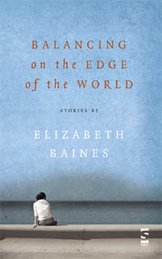
You can read 'Compass and Torch' on East of the Web (where it was first published), and it's included in my collection Balancing on the Edge of the World (Salt).

(Crossposted to my critical blog, Fictionbitchhttp://fictionbitch.blogspot.com.)

Tuesday, December 10, 2013

East of the Web

I'm delighted that another of my stories is to be published in the online magazine, East of the Web. If you don't already know East of the Web I recommend that you pay a visit: it's a fount of stories. Everything they've ever published is there online, easily accessible, and there's an amazing variety, something to suit every taste, while the standard is consistently high. It's definitely a place one is proud to place a story. I've got two stories proudly on there already: 'Compass and Torch' and 'A Glossary of Bread' (both now collected in Balancing on the Edge of the World). They were both stories I'd previously found hard to place: I think the problem with 'Glossary' was that it's a bit off the wall in its form (it's structured around definitions of bread), but I'm not quite sure what the problem was with 'Compass and Torch' which I see as a pretty traditional piece. In any case, East of the Web believed in them both, different as they are, and were vindicated: 'Glossary' was afterwards published again in the prestigious lit mag Stand, and 'Compass and Torch' was picked off the site for an English school textbook, and by the AQA examining board, whose GCSE syllabus it ended up on. That's how significant East of the Web is. Among the most recent publications there is a story by Ailsa Cox, my one-time co-editor on Metropolitan short-story magazine.

My new story, 'Falling,' was shortlisted and Highly Commended in the Sean O'Faolain competition.

Monday, October 07, 2013

Being wined and dined


I'm writing this in the pause between two sections of my work-in-progress - I've been pretty much immersed in it recently, and simply haven't had the time or headspace for anything much else, which includes everything from blogging and social networking to shopping and cleaning, or even, some days, getting dressed.

I did recently have two wonderful moments of being an out-in-the-world Writer, however. It's a fair while since I've been wined and dined as a writer - the best times for that were when I was writing TV novelisations, and I have been taken out to dinner a couple of times by Radio 4 producers - but in the last three weeks it's happened twice! Firstly, I was interviewed for the local lifestyle magazine over lunch in Didsbury's Cibo Italian tapas restaurant (delicious!) and secondly, I was invited to the reading group based on Gert Vos's Oren restaurant in Caernarfon - an event that was postponed from the summer because of the fall I had in London. While I'd say that the reading group I belong to is more of a drinking reading group (!), this is an eating one, and Gert served up the most delicious chicken soup made with the unusual vegetable pictured above, tomatillo, a member of the nightshade family (to which tomatoes and spuds belong), a lovely warming casserole with pumpkin, and a fantastic chocolatey cake made with local bilberries - all while we chatted about my books and other things.

It really is a privilege, I think, to have a chance to find out people's reaction to your work, whatever they say. In fact, they paid me the loveliest compliment as far I'm concerned: one of the members asked me if I also wrote plays (which of course I do), because she felt there was something vivid about my writing which made her feel as if she was really there in the story, seeing it all through the characters' eyes and feeling all the emotions and everything, and the others agreed. She wondered if that was because I was accustomed to describing the scene, etc. I explained that actually you're not really supposed to write in a lot of the scenery in playwriting, as that's really the director's job, and you're definitely not supposed to spell out what the characters are feeling, as the dialogue should indicate that clearly to the actors. But I was thrilled that she felt like that - it's one of the things I set out to achieve when I write: to bring readers under the spell of the experience I'm trying to recreate. The group said they also thought it was unusual: most novels and stories they read keep you at a slight distance from everything. That did in fact make me wonder if what I'm trying to achieve is in fact a good thing: if in fact many readers want not to be drawn in, not to have to undergo any emotional disruption. Indeed, one of the members said that the story 'Compass and Torch' (in Balancing on the Edge of the World and on the AQA GCSE syllabus) had affected her so deeply she had had a sleepless night: it had brought back memories of her own divorce, and had made her wonder if her own daughter had experienced it in the way the little boy in the story does - and I felt the need to apologise! It's not the first time someone has said this sort of thing to me: one friend, a widow, said that after reading Too Many Magpies she wondered if her marriage had been as happy as she had thought, and I really did feel bad about that.

John, who was there with me, laughingly mentioned the fact that some city schoolchildren have thought that at the end of  'Compass and Torch' the father and son are trampled by the wild ponies. I've written about this before as an instance of our sensation-seeking culture affecting what we expect of literature, and our loss of interest in and awareness of the subtly psychological, but now two members of the group said that they too had wondered if something terrible and physical like that had happened - rather than the psychological and emotional death I'm intending. I guess I now do really have to wonder if I have in fact got quite the right balance, quite the right wording at the end of that story, and I think it really is invaluable, this kind of feedback, in making you scrutinise your own work and the way you work in future.

One interesting moment was when I mentioned that the story was actually set (in my mind) on a hillside very near Caernarfon (that was where I witnessed the incident that sparked the story). One member expressed surprise: because I'd used the word 'moor' or 'moorland' (can't remember which, and I don't have the book on me), she had assumed it was set in Yorkshire - an interesting lesson in the power of diction and the connotations of words. (Hillside being more appropriately Anglo-Welsh, I think.)

One of the members said she was particularly struck by the flash fiction 'Conundrum' (also in Balancing), which I found interesting, as I don't think anyone has picked it out before, and she said she's used it with a group in her work as an occupational psychologist.

One question they asked me was how I write, in the physical sense. In the past I have always replied to this question that I write the first draft by hand, that it has always been linked in my head with drawing, the sweep of the wrist recreating patterns in the brain. As time has gone on I've got quite fetishist about it: if I haven't had my Silver Cross fountain pen and my bottle of Lamy ink and my pile of Pukka Pads with their beautifully silky paper, I've panicked and felt I couldn't write. Yet, for the first time in my life, I am now writing something directly onto the keyboard. I'm not sure how it happened. I do remember that I started out writing it by hand, and then got annoyed - with my own handwriting (which has got worse and worse, especially when my thoughts are running away more quickly than I can write neatly) and the consequent lack of clarity when I glanced back over what I'd written - and the next thing I knew I was rattling away on the laptop! Whether this will be a permanent state of affairs, I don't know: possibly I can do it this time as the thing I'm writing is very linear and the plot is unfolding in a logical way - and maybe other, less linear things would be less easy this way. But as it is, I'm finding it much, much easier to edit as I go along - there's yesterday's work all neat and clear in Times New Roman - and I'm thrilled that for once I'll be spared my traditional several-week typing-up stage.

We discussed many things, bookish and non-bookish - including the very interesting topic of writing as therapy, which all of the members felt they had done at one time or another, and whether any writing, from a writer's point of view, is ever not therapeutic in some way (I don't believe it is).

When we'd finished eating, I read some snippets to the group, including what I thought an apt section from Too Many Magpies, about food and cooking.

It was a lovely evening. Thanks so much to the members for inviting me into their lovely warm and intelligent company, and thank you to Gert for my delicious dinner!

Wednesday, July 04, 2012

Literary blackouts and lights


I've been in internet blackout, almost, for over a week: on the mountain in Wales and inside a cloud for most of the time. It's strange, a kind of literary purdah, but not quite. Every so often, briefly, there's a signal, and a message comes through. First there's one from the BBC who want permission to use my publicity photo for their website and their Revision Bite for my  story 'Compass and Torch', and they would like a contact for Tom Wright the photographer. Then there's a message from Deborah Grace, one of the innovative organisers of an Oxfam Community Book Festival to be held at Alderley Edge Oxfam Bookshop on the 15th and 16th September, sending me the programme which I ought to acknowledge, and asking what we readers will be reading. (I'll be reading on Sunday 16th, other readers will include Melvyn Burgess, Nick Royle, Conrad Williams and Livi Michael.) And a delightful request from Elaine Glover, editor of Stand magazine, asking if, as a long-term contributor, I'll read at an event in Leeds on 14th and 15th September to celebrate the magazine's sixtieth year. And with each email I kind of panic about getting a reply back before the connection goes again.

On the other hand, once we drive to Caernarfon, there's not only great internet connection but a literary community. There's the lovely bookshop, Palas Print, and once a month a book club meets in Gert Vos's Oren restaurant. Every so often Gert holds musical and cultural events in the restaurant, and I'm thrilled that he's asked me read at one of these - provisionally on Thursday 19th July. It's a great restaurant: every week there's a different set menu, always adventurous - the dishes often sprinkled with flowers - beautifully cooked and generous. Last week John and I had the Danish summer menu, and this, believe it or not, was our starter!

Monday, May 07, 2012

Bookshops I love: Bath Waterstone's


 And here is The Birth Machine on its Fiction shelves. (See why I love it?):


I nipped over to Bath from Bristol on Friday. I'd never been there before, but ever since reading Persuasion and Mansfield Park in my teens, I've had a strong image of it in my head. And, inevitably, I suppose, it turned out to be different from my  image, the architecture much grander and more imposing. Was I influenced by the neatness and economy of Austen's prose, and her intimate human perspective, I wonder? See what happens when you view life through books?


Tomorrow I'm off to a school in north Manchester to talk to three classes about my story 'Compass and Torch' which is on the syllabus of the GCSE English exam they're about to sit. (You can find the story online or in my collection, Balancing on the Edge of the World). I'm finding it a bit strange, quite frankly, thinking about my own work in the necessary analytic terms, the whole process of writing being far more intuitive than people often guess. And, as Mark from the reading group said when I met him in the supermarket last night, I'd have a devil of a job to come anywhere near the brilliant teaching podcast about the story made by teachers Andrew Bruff and Ollie Hayne.

Friday, March 02, 2012

A brilliant teaching podcast of 'Compass and Torch'

There is a teacher in Plymouth, Mr Andrew Bruff, who is responsible for my losing a morning's writing today! I opened my emails and there was a link to this innovative and fun teaching podcast he has made about my story 'Compass and Torch' (see below). It's a hoot, and also very clever - I was laughing most of the time, but the analysis of the story is so spot-on I was really touched, and it ends with a song which made me cry! Plus: he and his co-presenter Mr Ollie Hayne, English teachers at Lipson Community College, taught me something about the story I hadn't realised myself: I had always thought of it as omniscient, but they point out that it's actually a complicated mix of omniscient and what they call 'flipping' intimate third. They comment that this strongly supports the story's theme of the difficulties of communication, but I had never even noticed that that's what I'd done, leave alone thought about its thematic significance. But then that's the magical, alchemical process of writing for you.

And all I can say is that Bruff and Haynes are pretty brilliant teachers....

Anyway, by the time I'd stopped being utterly tickled and amazed and touched, the story I was meant to be writing had quite gone from my head....! But I don't mind in the least, it's made my day!

Monday, September 06, 2010

Bookersatz review of TMM, and getting studied.

Horrible weather today - huge winds sweeping the trees outside the house - but it's still a lovely day: in fact my day has been made by Helen Hunt on Bookersatz, who has reviewed Too Many Magpies and really likes it, concluding:
Too Many Magpies is an incredibly thoughtful novel and as such will appeal as much to the mind of the reader as to the heart. I definitely recommend it as a book to lose yourself in.
If you haven't already read it and this whets your appetite to do so (which of course I'm hoping it will!), I am very pleased to say that the book is at this very moment being reprinted again, and copies will be available direct from Salt sometime this week. Meanwhile Amazon and The Book Depository have copies.

Helen says that she'll also be publishing a review of Balancing on the Edge of the World by another of her reviewers. Speaking of which (ie stories), we were driving along in the car the other day, all packed up like sardines, and someone said, 'Oh by the way, my mum is teaching one of your stories this year.' The story is 'Compass and Torch', which is included in Balancing, and is on the new AQA GCSE syllabus beginning this year. It's such a funny feeling: once upon a time there I was teaching schoolchildren with the stories of famous writers, and now here I am with one of my stories being taught by others. And so strange that something quite so personal as a product of one's own imagination can become part of something quite so public and institutional as an exam syllabus, with people sitting poring over it and devising questions about it for others to answer, as if it's no longer anything to do with you... And especially when it's set on what the family call 'the Compass and Torch walk', the mountain walk here in Wales that triggered the whole idea of the story for me...

Tuesday, December 08, 2009

Me, my leather jacket and the camera

See, I've said before I feel most myself in my leather jacket. Well, leather jackets - I've got a red one and a pale blue one now (all from charity shops, you understand). I had to replace the old black one in the end, in spite of my attachment to it: in the end I did get fed up of losing all my change and slips of paper in the lining round the back, and then the zip just lost too many teeth and the sleeve seams started to split. I kept it for a bit, though, thinking I'd cut it up for the leather, but when I eventually got round to doing that there was such a horrid fluffy mess between the leather and the lining... well, you don't want to know.

Well, yesterday I went to do a video interview for the website for the forthcoming GCSE AQA online anthology, in which 'Compass and Torch' appears, and I wore my red leather jacket because a) it was quite jolly (thinking of the kids) and b) I knew I'd feel relaxed in it. So I get to the studio out on Timber Wharf, and I'm settled down in the corner of this big black sofa, and yes, I do feel nice and relaxed, and Charlie Evans who's interviewing me for AQA begins. What's my inspiration for stories, and why do I write them, he asks me, and I'm off, no stumbling, entirely in my stride, and I've been going a good while and the sound man says, 'Stop.'

My leather jacket is squeaking against the sofa, which is also leather, and against itself every time I move my arms, which I do a lot when I talk. I have to take my leather jacket off and we have to start again. And guess what? I've lost my stride. I hesitate, I say what I don't mean and have to ask twice to start again. Can you believe I took my articulacy off with my jacket? Can you believe the power of clothes?

Thursday, August 27, 2009

What your stories do without you

It's funny, the way one particular story will just take off and run and run - sometimes without your quite knowing about it, rather like your children getting up to adventures behind your back. A few weeks ago I was doing a vanity Google search and came across the online AQA GCSE anthology in which 'Compass and Torch', one of the stories in Balancing, appears: as I said at the time, I did actually know about this vaguely, ie permissions had been asked etc, but it's a brand-new project and I wasn't too clear about what was entailed. Well, last night - in a rare moment of internet clarity in these here hills - I did another Google search. Vain, moi? Paranoid, moi? Well, no; OK, maybe; but I'm learning that it's one way of finding out what's happening with your work that you just didn't know about. I came across this book, Happy Families?, a Cambridge University Press anthology for school students, in which 'Compass and Torch' also appears. Again, I did know about it - again, permissions had been asked for - but we'd been given no idea of the publication date, which turns out to have been October 2008! So there I was, more or less forgetting about it, and when I did remember wondering when it would happen, and it's been out there all along for nearly a year!

It sounds like a good book - the kind I'd have loved to use when I was teaching school kids. 'Compass and Torch' belongs to the question mark bit of the title, and is in the section titled 'Change and Uncertainty' along with pieces by Jackie Kay, Nadine Gordimer, Lee Hall, Katherine Mansfield and others. And I am not in the least surprised that the section 'Celebration and Security' includes a story by my cheerful friend Adele Geras!

Saturday, August 01, 2009

AQA anthology

Here's the new online GCSE anthology of stories and poetry which includes my story from Balancing, 'Compass and Torch'. The web pages, which are still in development, will include teaching resources and I think are due to be fully functional by September and the new school term.* As a former English schoolteacher I think it looks pretty exciting, and of course I'm thrilled that my story is included.

My story appears in the section 'Modern Prose' alongside 4 others by Penelope Lively, Haruki Murakami, Claire Wigfall and Helen Dunmore.

* Woops, no, just read it properly: it's for use in 2010. (Edited in)

Sunday, June 21, 2009

The art of typesetting, school study, and a great review

It was my birthday this week, and I have had some wonderful birthday week treats, writing-wise. To start with of course there were the first proofs of my novel Too Many Magpies. This is such a magical moment, and for me has been even more magical since I was a typesetter myself, for the short-story mag metropolitan: I know exactly the care that has to go into getting the right look on the page for the text, the choice of font, of margins and point size and leading, the clever fiddlings needed sometimes with kerning (manually altering the spaces between the letters) (which I know I didn't always get right), the understanding of language and respect for the reader's perception in judicious hyphenation, the overall patience yet artistry needed. Text as paint, is how I used to think of it, and still do, and so now when I get my first proofs, it's not just that thrill of authorization I feel, but also the almost physical sense of the way my words have been shaped into something concrete by an artist. And something beautiful - the typesetting for TMM, which has been done personally by my lovely publisher Jen Hamilton-Emery, is beautiful! So that was a really lovely start to the week.

Then Jen told me that the story 'Compass and Torch' (which appears in my collection Balancing) is to be included in an anthology and accompanying DVD for GCSE students - the second school book in which it is to appear. Mind you, from some of the comments by schoolkids clearly forced by teachers to read it on the East of the Web site where this story first appeared, I'm wondering if it's a double-edged thing. And if I'm remembering rightly, when Vulpes Libris had a week devoted to short stories, some of the negative comments about short stories as a form were from people who had clearly been put off them by studying them at school! But then it's not just short stories, is it, that people get put off by school study, and not everyone gets put off, do they: when I mentioned my worry to my visitor Ben, who was staying on Friday, he said, 'Oh no, I really loved the stuff I studied for English at school - and all my Art School friends, did too!' - which reassured me a little.

Finally, I got an absolutely wonderful review for Balancing on the Shelf Life blog. Here are a couple of extracts:.
Balancing on the Edge of the World is a slim volume, but what it lacks in heft it makes up for in emotional power...

Every story is meticulously crafted, and I loved how the stories are told with such a compact grace. Baines takes life's mundane moments and invests them with meaning, power, and a sort of magic. I also loved how the stories all made me feel something. I am not someone who cries while reading, but I definitely wiped away a few tears while reading some of these stories. There is an emotional honesty to them that is really raw and intense, and I found them very affecting.

I was really impressed with Baines, and how she gets to the heart of the matter. I'm looking forward to reading more by this author.

Oh, and on the non-writing front: I bust my sewing machine and thought that would have to be an end to my hobby of buying charity-shop clothes and altering them, but then was told it could be repaired and be good as new! A great birthday present from the man in the nice old-fashioned sewing machine shop in Eccles!

Tuesday, January 01, 2008

The independent lives of stories

It never fails to thrill, I think, stumbling upon strangers reading your work. Here's the Writers' Community of Ball State University, a jolly bunch who seem not only to write but get together to read other people's writing to each other, and here's an item recorded for one of their recent meetings:
JoyAnn Hirschy read a story by Elizabeth Baines, called "Compass and Torch."

I don't know about others, but on occasions like this, finding something I wrote operating like this in a situation I hadn't guessed about, and in lives that are unknown to me, I'm struck by how far it now has a life of its own.

Wonder if she read it from the collection, or if it was downloaded from the internet?

Monday, February 26, 2007

Those little rewards

Sometimes little things happen out of the blue that make you happy, a little reward for no extra work at all. Today: a sweet email from an Italian translator, asking if she can translate into Italian the story Compass and Torch (which will almost certainly be going into the collection, Balancing on the Edge of the World). The deal is by no means done, of course, but I'm still beaming: I don't know about other writers, but I don't think I'll ever stop being chuffed whenever someone writes and enthuses about my work.

Another typical event in the writing life: just when you get involved in a project, some other urgent thing pops up. Another email, this one from Jen at Salt: we need to choose the stories for the collection now. Which puts paid for a day or so to the new novel which popped into my head this weekend!

Friday, September 29, 2006

Those literary dos...

To London on Wednesday to attend the Writers' Inc Competition winners evening and collect an award for my short story Compass and Torch. Well, it's only a commendatory award, I'm only in effect a runner-up: is it really worth the fuss of travelling all that way and forcing my hosts out of their bed and onto the living-room sofa bed? Well, the thing is, of course, you just never know... And what shall I wear? I've no idea what kind of do it's likely to be. Better not wear my black trousers and waiter's waistcoat from Afflecks Palace - last time I wore them to London I was waiting for friends at the door of a private view and several people came up to me with a formal 'Good evening' and waited to be shown where to go and handed champagne.

My hosts come with me - they might get a drink out of it for their pains - and we stroll up from Shoreditch to the Barbican library, and sure enough, there's wine waiting. 'Network!' they remind me, but I don't know a soul in the room... and there's no time, anyway: the proceedings are about to begin, and what's this? Turns out it's to be a whole evening of readings, and my hosts are artists, not writers: will they cope?

Turns out they do. Turns out they're downright fascinated. 'We're not used to this,' they tell me: 'the nakedness of the writer-artist out there presenting his/her work on such a personal level.' Crikey. And then in the break they have a big discussion about the fact that competition judge and Writers Inc resident poet Mario Petrucci is introducing us with flattering summaries of our pieces. 'Wouldn't happen in the art world,' they tell me: 'someone else deconstructing an artist's work in front of the artist without reference to him/her.' Blimey.

Then it's the second half, time for the short-story section of the evening, culminating with the winner reading his brilliant story. Turns out he's not only the man in the specs and stripey shirt and trainers whose wine glass I nearly knocked out of his hand, but Michael Carson, whose name I know well from literary magazines. As I'm talking to him afterwards, a woman in a red jacket comes up to me: 'You're Elizabeth Baines! I had no idea until you went up to get your prize...' And who is she? The poet Katherine Gallagher whose poetry I've been reading for years...

'Finished your speed networking?' ask my hosts as I join them at last in the foyer. 'Right, we're hungry, let's go and spend your cheque!'

Definitely worth it after all.