Monday, February 27, 2012
The stories and the stars
My latest piece on The View From Here magazine, taking a (mostly) lighthearted look at celeb culture and the film as star vehicle.
Wednesday, February 15, 2012
Eight Cuts Interview
The energetic Dan Holloway, who was such a brilliant compere at the recent New Libertines night in Manchester which he organised, has kindly interviewed me over on the Eight Cuts blog. Among other things, he asks about the forms in which I write, my view of The Great American Novel and my reflections on the complicated publication history of The Birth Machine
Saturday, February 11, 2012
Some recent reading
I'm finding it harder and harder to squeeze in time to write about books. And it's not just the time: as fellow Salt author and Art of Fiction blogger Adrian Slatcher once said to me (as we sat over a bottle of wine in the aptly named Art of Tea), it takes a good deal of creative and intellectual expenditure to write a proper, thoughtful book review. I'm not sure that that's generally appreciated: people seem to assume that bloggers find it as easy as breathing to do it all the time, for free. In fact, when I'm writing intensively I find it hard enough to read other books in the first place, and - as I've said probably all too often - hard enough even to keep up with the work I have to do for my own published work. So, in an attempt share something of my recent reading, here's a pic and a roundup of the books in my life lately - all of them from independent presses, and some from very small presses indeed.
The plain-looking red one in the centre of the back row is an advance reading copy of Anthony McCarten's novel Brilliance, which is to be published in March, sent to me by his publisher Alma Books. It's the story of the Faustian bargain struck by Thomas Edison, the inventor of the electric light bulb, with the first 'world banker' J P Morgan - a fascinating exploration which has huge resonances for our present day. I love those advance reading copies: the lack of distraction in terms of images and blurbs, and the intimacy of the draft not yet proofed and spruced up for the outside world. Because I didn't have time to review this book properly, Anthony agreed to write an article for my Fictionbitch blog, discussing the endlessly interesting issue of fact and imagination in fiction, and which you can read here.
To its left is the novel The Space Between Things (Indigo Dreams), sent to me by its author Charlie Hill, an energetic and linguistically adventurous take on a little explored world, that of the road protest movement and civil disobedience, as well as a love story. This novel has had endorsements from Jonathan Coe and Jim Crace, and great reviews in The Observer and The Times, and it's instructive to read Charlie's account of the problems of marketing a book even when you get such rave critical reception. And even, I would add, when you have Charlie's particular flair for promotion: of all the press releases and emails I've ever had from publishers and authors, I'd say that Charlie's was the most arresting and yet disarming, which made me interested in his book right away.
Because I know what it takes to write a really thoughtful review, I am truly aware of my debt to Jim Murdoch, who has reviewed my books in perhaps greater depth than anyone. It pains me that I simply haven't the time at present to repay him with the same kind of attention, but I would draw your attention to his latest novel Milligan and Murphy (Fandango Virtual) which he recently sent me (back row, right). If you like Beckett, you'll love it, but you don't need to like Beckett to do so. Consciously Beckettian in style and premise - involving two brothers who encounter a variety of eccentric characters on the road and circling the question: is it better to search for someone that will never be found than wait for someone who will never turn up? - it yet has a voice and a quirkily comic take on the characters which are all Jim's own, and is much more accessible.
Right and left of the front row are two winners of the Guardian Not The Booker prize. Lee Rourke's The Canal (Melville House) is a book I was meaning to read for ages, as Rourke sees himself, along with Tom McCarthy I believe, as 'a leading light of the Off-Beat Generation' (The Guardian). It's a book in which nothing much happens for a good long while, and its subject is boredom: the narrator gives up work to sit on a bench each day on the side of the canal (The Regent's Canal, I think), a bench on which a young woman also starts coming to sit. I didn't quite agree with the premise of the novel, which seems to be that boredom is a good thing because it's actually creative - personally, I think what's good about boredom is that it forces you to be creative simply to escape it, and the moment it does that you are no longer bored. Indeed, once he begins idling by the canal, the protagonist seems anything but bored, and neither was this reader: the amazing thing about this novel, in spite of its lack of plot, is the way that its prose and its preoccupations hold you. I found it far more human and involving than Tom McCarthy's C which, although vivid and full of somewhat exotic curiosities, I've tried reading twice now and been unable to persevere with. Oh, and something dramatic does happen in The Canal after all...
Michael Stewart's King Crow (BlueMoose) is on the surface a much more conventional rite-of-passage novel: a young boy from a troubled background who protects himself by retreating into his ornithological obsession starts yet another new school and becomes involved with a charismastic older pupil. Immediately he finds himself caught up in a car chase involving drugs and a possible murder. But all is not as it seems, and the revelation of this novel is truly stunning and makes it far more movingly psychological than at first it may seem.
Finally, I was delighted that Andrea Ashworth sent me a copy of her Scott-winning collection of short stories, Somewhere Else, or Even Here (Salt), which I had been delighted to nominate for the Guardian First Book Award, and had previously read only as a PDF. Excellent stories that hinge on those subtle turning points in relationships and lives that can change people for ever.
Thursday, February 02, 2012
A writer's bad day - or is it?
Urgh. I have just spent one of those days (yesterday) that you have to suffer every so often as a writer - well, I do, anyway. Having been otherwise engaged for a few weeks, I was intending to go back to the series of stories I'm working on and begin a new one. But I went to my desk and nothing came. There was nothing there in my head, in spite of the fact that I thought I'd had ideas backed up waiting to be written. I looked at my notes: none of the ideas I had written down in my little hardback Book of Ideas seemed to matter, to mean anything, and - contrary to my previous conviction - none of the stories in the series, written or unwritten, seemed to link up in any satisfyingly thematic way.
I could tell myself why it was happening: it's because I've just spent three weeks thinking up ideas for radio and discussing them with a producer, and finally writing a treatment. While there is of course creativity in such a process, it also has a far greater cerebral component: you have to think largely outside the story, about the market requirements of the medium and the demographic you're writing for, and it's a huge intellectual task working out how a story should proceed and indeed how it should end, without the immersive dreamlike and instinctual experience of actually writing, in which things can evolve organically. I was simply in quite the wrong headspace for actual writing. But when that happens, the experience of being so is so horrible, so barren, that you sometimes think you'll never write again, and yesterday I did think that.
Well, I'm glad to say that today, after a good night's sleep, it's all come back to me - what the stories mean, in that deep gut way that fuels the writing of them - and I've remembered which story I was going to write next: ie it's now opening up before me, resonating and demanding to be written, which in my experience, is the only way good things get written.
And of course the fallow period was necessary for this to happen: the whole thing was working itself out as I got up in despair from my desk and went off into the lovely frosty day I felt I'd been wasting and bought a birthday present for my mum, and came back and sat down and chopped off the worn ends of two old duvet covers and sewed them into one (I'm a poverty-stricken writer, remember!), all the time thinking, God, am I really spending writing time sewing??! And why is my head still so empty?
I've so often told students that much of writing is done away from the desk, when you're doing other things: it comes in subconsciously and sideways. In fact, I actually say it in my chapter in The Creative Writing Handbook (Macmillan). But once again I forgot the truth of it while it was happening to me.
And the present I bought for my mum? A really lovely book: Weeds and Wild Flowers by Alice Oswald (Faber), weird and wonderful poems that - aptly for me in the circumstances - 'summon up the flora of the psyche', with etchings by Jessica Greenman.
Friday, January 27, 2012
The commissioning process: New piece on The View From Here
It's a good while now since I've written for radio: I've even talked of having given it up, but to my delight I find myself working on radio once again - not yet on producing a play, I hasten to add, or even yet writing one, since in the time I've been away the commissioning process has changed. What I'm doing is throwing up ideas with a producer and developing them according to BBC guidelines to pitch to a commissioning editor, and there's no guarantee that our offerings will be accepted in the end. My latest post on The View From Here considers some of the implications in such a process for creative production and for writers.
Thursday, January 26, 2012
Alan Beard reviews The Birth Machine
A lovely review of The Birth Machine from Alan Beard, whose good opinion is really worth having, as he's a brilliant short-story writer with collections from Picador and Tindal Street Press.'It all comes together in a coherent and powerful way,' he says, and: 'For me what impressed most was the language ... well observed and precise.'
He ends by saying: '...although a feminist book it is not just for feminists', and it seems in fact that on Goodreads, where this review appears, the men are liking this book (first published by a feminist press) better than the women - Jim Murdoch gave it a rave review, and five stars. It kind of makes you wonder if, while many women have gone and distanced themselves from what they suspect men see as the taint of feminism, men have been busy assimilating the issues and have become pretty feminist themselves!
Tuesday, January 24, 2012
New Libertines at Afflecks
Last night's one-off New Libertines event was quite fabulous. Organised by Literary Death Match winner and Eight Cuts Gallery impresario Dan Holloway, in association with the dynamic women behind the great book site For Books' Sake, it was held in the Three Minute Theatre in Manchester's Afflecks Arcade. I hadn't been in the venue before - it's been there about seven or eight months, I think: it's cosy and informal and even a bit mad, with not only some raked seating but also stools and tables and cushions for sitting along the sides and some easy chairs, and weird and wonderful decorations on the walls and ceiling, a little bar in the corner as you come in and a toilet at the side of the stage! I wish I'd taken more photos of it than the single one above of the stage. [Edited in: Here are some pics.] The audience who packed the place was a lovely one, and the atmosphere was warm and friendly. Loads to laugh at in the readings, and loads to think about, and a wealth of performance talent - in the open mic as well as in the scheduled spots. Paul Askew got everyone in a hilarious mood, as much with his mordant delivery as with his vivid, off-beat and surreal poems, one of which featured a talking crow; Rachel Genn read a funny but touching section from her novel The Cure in which the male protagonist negotiates a swimming-bath date with ill-fitting swimming shorts; Sarah-Clare Conlon had people in stitches with her extremely smutty flash fictions, and Sian Rathore's poems had us all hooting and delighted by their in-your-face exuberance. Laura Jarratt's extract from her forthcoming YA novel Skin Deep, which starts with a car crash, was vividly harrowing. Claire Robertson, who works across various media including calligraphy gave us some true performance art which featured a beautiful hand-made scroll and referenced her own current advanced pregnancy. Michael Stewart decided not to read from his clever and moving novel, Not-the-Booker-winning King Crow, and instead read some thought-provoking poems from a project on Couples on which he's working. I read from my short story 'Condensed Metaphysics', the first story in Balancing on the Edge of the World. Dan Holloway was a brilliant compere, and his own poems were tough and moving. A great open mic session, too, in which poet, prose writer and Manchester blogger Fat Roland took part.
I really couldn't believe, when the evening finally wound down, that it was already ten-forty-five!
Wednesday, January 18, 2012
When is a story not a story (and really a play)?
I've said in several interviews and articles that when an idea comes to me I know instantly whether it's a story, a novel or a play. Recently, though, I blushed to think that it may not be quite true, for I'm working with a producer on developing ideas for radio drama, and one is an idea that started out as an unpublished short story. And, now that I've thought about it, I remember that it's happened before:
I once wrote a story based on a wedding. I guess it was quite an innovative story in terms of form: it was done as a menu, a wedding meal menu, beginning with the sherry offered to guests arriving at the reception, but each item triggered a 'flashback' to an incident portraying family disharmony and in total signalling a poor prognosis for the happiness of the married couple. I never published the story. It was rejected at least a couple of times - it's always harder to sell innovative stories, and I guess, looking back, that those publications interested in innovative work would be uninterested in what they might consider 'bourgeois' subject matter. Perhaps it didn't help that I signalled its weirdness by giving it the title 'Marriage Menu' which sounds odd until you read the story. Anyway, since it was a time when I was having quick success with a lot of stories, I saw it as one that just hadn't worked, and gave up trying with it.
However, the basic situation stayed with me: I'd abandoned the short story but I still wanted to write about the scenario; and when, a few years later, a radio producer asked me to submit some ideas I thought of turning the situation into a radio play. The menu structure disappeared and the omniscient narrative voice was replaced by the reminiscing monologue of one of the characters, an ironically unreliable narrator, intercut by dramatised flashbacks. The wedding was still central to the story - it was the occasion the protagonist was purportedly reporting (while rambling off into the family story) - and I kept something of the original in the title: the result was my BBC Radio 4 broadcast play, Dry Sherry. The whole tenor of the thing had shifted, though: now it had become a satirical portrait of a scheming, bitter and disappointed ex-wife.
Later I even wrote a stage play based on the same situation, this time an entire monologue, in which the voice was not disembodied as in the radio play, but the character - even more monstrous, since things can be so much bigger on the stage - was in her own living room, inviting the audience, her guests, to hear her tale. This was Drinks with Natalie, which I performed myself for the 24:7 Theatre Festival, as you can see above.
But is it actually the case that the idea was really a play (or two plays) all along? I don't think so: I've said how turning to a different form shifted the thing, turned it into a different beast and basically - in just the same way that happens in an adaptation, as I have explained previously - changed the emphasis and thus the meaning. To my mind, the form dictates or alters the message. On the other hand, I have no wish to return to the original short story - as far as I'm concerned, it's now been done.
Friday, January 13, 2012
Reading group: The Brooklyn Follies by Paul Auster
Warning: plot spoiler. In order to report our discussion, I've had to reveal the ending of this book.
Doug suggested this book, a departure from Paul Auster's usual more high-wire postmodern storytelling mode. It concerns narrator Nathan Glass who, after a divorce and in remission from lung cancer, returns to his birthplace Brooklyn, he says 'to die', and his nephew Tom whom he unexpectedly finds there working in a second-hand bookshop, dropped out from a brilliantly promising academic career and also in retreat from life. However, the two soon find themselves embroiled together in the lives of colourful others - among them the eccentric bookshop owner Harry Brightman with his dubious past, and the nine-year-old daughter of Tom's lost sister, who turns up on his doorstep out of the blue, strangely mute. Before they know it, Nathan and Tom are engaged on quests to save others from various fates, and en route to their own personal redemption.
Doug said he really liked the wry, urbane narrative voice of Nathan who, while purporting to be curmudgeonly, is in fact touchingly humane and generous. He did, however, feel that the second half of the book was less satisfying with its plot twists, or rather its sudden changes of plot - one story thread being dropped for another - and that here it rather fell apart. Trevor and Ann agreed with him on this latter point, and Trevor said he thought the ending fizzled out.
I said, But don't all the threads come together in the end? and they agreed they did, but still seemed unsatisfied by the way they diverged along the way. I said that Auster was making the point that all stories are contingent to other stories and each story (and each life) is as important as another - this structure, postmodern after all in spite of the seeming greater conventionality, was the author's conscious way of making this point, rather than a failure in storytelling. As for the ending: Nathan relates that, with people saved and all the threads apparently tied up, and newly happy himself in a relationship, he puts his new partner on the subway on her way to work 'only forty-six minutes before the first plane crashed into the North Tower of the World Trade Centre.' Surely that clinches the point, and also makes a point about the precariousness of happiness, and the fact that you therefore have to grab it while you can.
They seemed to feel they couldn't argue with this, but they were still unsatisfied by the book. John suggested that maybe Auster had been commissioned to write a 9/11 book, as most prominent American writers probably had, and that that explained what he suggested was a tacked-on 9/11 ending. Others however now said that the ending had in fact been signalled, mainly with references to dates and the political background of the time, 'the right-wing takeover of America' and the election of Bush. I said I thought the book was a conscious and deliberate reminder of the innocence and optimism of the pre-9/11 world and its contrast with our fearful and suspicious post-9/11 world, and above all a reminder of what we had lost in terms of our humanity and generosity towards others. Ann said that what made the book a 9/11 book was indeed the fact that it was about tolerance, the tolerance that characterises Nathan and Tom with their acceptance of everyone and their foibles, and the melting-pot setting of Brooklyn.
Clare and I agreed at this juncture that this sense of generosity and acceptance was the thing we really liked about the book, and new member Chris felt the same. But Trevor now said he didn't buy it. There was an inconsistency, he said: right at the start Nathan admits to being a curmudgeonly old sod, and it simply doesn't fit with the way he turns out to be so generous and humane. I said that that was one of the book's jokes - right at the start Nathan is being an unreliable narrator, indeed he is making fun of himself, and the humour of the book was another thing I really liked about it. Chris had already commented appreciatively on the verbal humour - he particularly liked Harry's instruction 'Keep your nose job out' - and Doug nodded in agreement. However, Trevor was unconvinced, and Jenny now said that though she had liked the book she hadn't found it funny.
Mark, who had been quiet so far, now spoke up. He said that he hadn't appreciated the humour, either. He found a joke of Tom's - Tom calls greasy cheeseburgers 'cheesy greaseburgers', if I recall correctly - simply puerile, rather than, as I do, amusing and heart-lifting evidence of Tom's ability to move from gloomy academically-couched existential angst to simple life-affirming humour. In fact, Mark, said, he hadn't liked the book at all. He said he had to admit that this was largely because as an admirer of Auster's previous style, he was disappointed by the change, but also he thought it sentimental. He didn't, as most of us did, find the book touching. He didn't think the nine-year-old niece's mutism credible - though he also announced that he hadn't found the book worth finishing, so he would have missed the explanation provided at the end. He said he strongly agreed with John's suggestion that this book had been written cynically to commission as a 9/11 book and had failed.
At this things got heated, with everyone talking over everyone else, and Doug and I found it quite hilarious that Mark, a fatherly primary school teacher with young children of his own, was sitting there being such a curmudgeon, and in effect doing a pretty good impression of Nathan.
This whole discussion was altogether far more unruly than my account has rendered it, and when at the end someone asked new member Chris what he had thought of the group, he said, in a phrase Tom and Nathan would have appreciated: 'It's like a honky-tonk lagoon!'
Our archive discussions can be found here and a list of the books we have discussed, with links to the discussions, here
Tuesday, January 03, 2012
Happy New Year and New Libertines
Happy New Year!
Hurray for a good break now and then, I say: I'm back at the desk today and bursting with plans for new projects. I'm also very much looking forward to taking part in a couple of events. Firstly, I'm thrilled to be reading with the buzzy and innovative New Libertines, alongside King Crow author and Not the Booker winner Michael Stewart. Last year's New Libertine tour sold out, and it's exciting to be having them here in Manchester - their first gig north of Birmingham. Monday 23rd Jan, 8.00 - 9.30 pm at Three Minute Theatre, Afflecks, Manchester
Later on, in March (21st), I'll be reading and talking at a conference on Small Press Publishing at Salford University - details to come later.
And here's wishing you all a successful and creative 2012!
Thursday, December 22, 2011
National Short Story Day and Words for Christmas
The shortest day today and what better way to fill it with light than to celebrate National Short Story Day, and what better way to wish my readers Happy Christmas than to direct you to the website, where there's a feast of stories, and many short story recommendations. My own favourites (here) are Grace Paley's 'A Conversation With My Father' and 'The Universal Story' by Ali Smith: click the recommendations link on the home page to see choices of a host of others.
Speaking of recommendations, I was going to recommend to you Mark Forsyth's Etymologicon, the book from his erudite and witty blog on etymology - I'm a sucker for such things and I'm putting it in stockings - but it's clear I don't need to: it's book of the Week on Radio 4 and currently Amazon's best-selling book - pretty amazing for a book from a small publisher. Meerkats one year, the origins of words the next - there's no accounting for the British!
Merry Christmas, everyone!
Crossposted with Fictionbitch
Monday, December 12, 2011
Stand magazine
Recently I've been keeping my head down, busy writing short stories again, and I must say I'm finding it a peaceful life. I used to say that writing a series of stories was harder than writing a novel, because once you set a novel in motion it carries you along, whereas each story requires a new effort or burst of ideas and inspiration. That's true, of course, but at present I'm loving the containment of the creative process on each story: there's the same excitement and total immersion, of course, but then the gelling and completion - and consequent sense of satisfaction - come so quickly (by comparison), and, if I want I can then rest and have a period of rejuvenation. I'm not having to put my whole life on hold the way you often have to just to get a novel done - either that, or feel torn to bits between your writing and all the other demands on you, which (for me, at any rate) usually means that the work suffers.
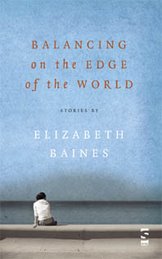
Anyway, I'm very pleased to say that one of the recent stories has been taken by Stand, one of the longest-running and respected literary magazines. I owe a great debt to Stand: two of the stories in Balancing on the Edge of the World, 'Star Things' and 'A Glossary of Bread', were previously published in Stand, and it's a magazine I'm most thrilled to be in. It was founded in 1952 by the poet Jon Silkin with the mission to create a platform for writing that is 'simple in expression and human in its context'. The new story won't be in the magazine until 2014, but it will be worth the wait.
Wednesday, November 30, 2011
Writing seasons
What a strange autumn it's been, with all the plants still flowering on the last day of November - including, in our garden, sweet peas:
Unbelievably, the jackdaws in the roof next door had a second brood in November, and for the last fortnight the pigeons have been courting on the little roof beneath my writing window. We had our first touch of frost this morning, but it hasn't stopped them!
The abnormality of the season has made me realise how far I've always fitted my writing schedules around the seasons: often as winter approaches I draw a big psychological line under the last project or set of projects and plunge in earnest into the next. But with the delay of winter this year I've been unable to escape the feeling that the season is still ahead of me, and I've had to work hard to drum up the sense of urgency that makes me work at full-tilt. Do other writers find this, I wonder?
Thursday, November 24, 2011
A Proposal
What's in a name? Or a book cover? My latest piece, a proposal for the publishing industry, for the online literary journal, The View From Here.
Monday, November 21, 2011
Reading group: Homer and Langley by E L Doctorow
This book, Clare's suggestion, is the story of two brothers, Homer and Langley Collyer, sons of a bourgeois doctor - one of whom, Homer, is blind; the other, Langley, suffering shell shock - and who, after their parents' death in 1918, hole themselves up in their upper Fifth Avenue brownstone, stuffing it with junk that Langley compulsively amasses, while the greater part of the twentienth century washes up against their doors.
It is based on the real-life case of a pair of brothers of the same names, who were found dead amongst their piles of collected detritus in 1947, Langley having barricaded them in and fallen into one of the many traps he set for intruders. Doctorow takes some fictive liberties with their story, including that of reversing their ages and extending the brothers' lives into the late 1970s or early 1980s.
Unfortunately Clare was unwell and didn't attend, so Mark introduced the book in her place. He said he was an admirer of Doctorow: he really liked his way of taking individuals and placing them within the great events of the twentieth century. However, compared to Ragtime, where Doctorow does this brilliantly, this book, Mark felt, was not so successful. Several people agreed that the characters somehow weren't truly related to the events of the twentieth century, although most of those events touched their life in one way or another. The trouble was, they were only touched by them, since the point was that they were largely shut away from them. Yet at the same time most people felt that the characters themselves didn't really come alive - though Jo was astonished: she thought they were wonderfully rich characters, touchingly portrayed.
I said I agreed that they were touchingly portrayed: blind Homer, who narrates the story with nicely wry economy, has a touching affection for the increasingly mad brother who - in turn touchingly - cares for him, with his all-too sane insights into American society. Mark particularly liked Homer's account of Langley's assessment of the moon landings:
We tried to work out why that was. Ann wondered if the lack of a sense of real connection between the brothers on the one hand and the events of the twentieth century on the other was something to do with the fact that this was a real-life story, that this last fact had somehow hobbled the author. Mark said he thought that the fact that the characters were such eccentrics rather than Everymen contributed to the sense of things not gelling - they just weren't representative so couldn't take the weight of it all (though once again Jo cried out in disagreement). But now some people began to point out that the brothers were more touched by the events in the outside world than we had been saying: what about the fact that they hold tea dances during Prohibition and get raided; what about the fact that their house is used as a refuge by gangsters on the run from the police? What about the fact that hippies come to live with them for a while? John pointed out that surely the brothers were representative, exaggerated examples of certain twentieth-century and American political traits, compulsive acquisition and isolationism - with which Doug readily agreed. It's all rooted in Langley's shell-shock after the First World War, John said: he's representative of the damage inflicted by wars; and the barricading and hoarding starts after the tea dances, when the police invade their home, ie the state invades the private domain (there's an argument in court as to whether they were holding public meetings or private parties), and they react by creating an exaggerated separation of their private world and the public one.
Still, we felt dissatisfied, but failed to come to any real conclusion as to why. Trevor reminded us about Langley's scheme to create a single-edition generic newspaper that would be useful for all time, based on his Theory of Replacement (everything, including news items, becomes replicated in the end simply in a new form) and for which he collects the stacks of newspapers which will jam the house and eventually topple over and kill him. Trevor thought this was great, and in theory it seems like a central metaphor in the book, but it was interesting that we had failed to mention it, and now that we considered it, we couldn't at that moment see the artistic point of it. Finally, Jenny more or less ended the discussion by saying that she had found the book extremely upsetting, as it had made her think about what can happen to you in old age.
In retrospect it seems to me that the problem is that, while the brothers do come into collision with the outside world, they are essentially unchanged by those collisions: their fate is determined right from the moment when Langley begins the hoarding, and nothing that happens to them changes that trajectory (or lack of it) - which to some extent is determined, as Ann hinted, by the real-life story. They fulfil the static conditions of Langley's Theory of Replacement. Although I have been known in the past to rail against the tyranny of the conventional 'narrative arc', I find the lack of one detrimental here: while the twentieth-century follows its narrative arc (although Langley would deny that it does), the brothers themselves are simply static points at its centre, or rather edge, with no narrative arc of their own beyond a slow disintegration, and in spite of the wit and the lightness of the prose, there is a hermetic, stifled feel to the novel and ultimately a lack of tension (though I'm sure that Jo would disagree).
Our archive discussions can be found here and a list of the books we have discussed, with links to the discussions, here
It is based on the real-life case of a pair of brothers of the same names, who were found dead amongst their piles of collected detritus in 1947, Langley having barricaded them in and fallen into one of the many traps he set for intruders. Doctorow takes some fictive liberties with their story, including that of reversing their ages and extending the brothers' lives into the late 1970s or early 1980s.
Unfortunately Clare was unwell and didn't attend, so Mark introduced the book in her place. He said he was an admirer of Doctorow: he really liked his way of taking individuals and placing them within the great events of the twentieth century. However, compared to Ragtime, where Doctorow does this brilliantly, this book, Mark felt, was not so successful. Several people agreed that the characters somehow weren't truly related to the events of the twentieth century, although most of those events touched their life in one way or another. The trouble was, they were only touched by them, since the point was that they were largely shut away from them. Yet at the same time most people felt that the characters themselves didn't really come alive - though Jo was astonished: she thought they were wonderfully rich characters, touchingly portrayed.
I said I agreed that they were touchingly portrayed: blind Homer, who narrates the story with nicely wry economy, has a touching affection for the increasingly mad brother who - in turn touchingly - cares for him, with his all-too sane insights into American society. Mark particularly liked Homer's account of Langley's assessment of the moon landings:
Can you imagine the crassness of it, hitting golf balls on the moon? he said. And that other one, reading the Bible to the universe as he circled around out there? The entire class of blasphemies is in those two acts, he said. The one stupidly irreverent, the other stupidly presumptuous.However, like the others, I still found that there was something about the brothers that didn't really engage me on the deepest level.
We tried to work out why that was. Ann wondered if the lack of a sense of real connection between the brothers on the one hand and the events of the twentieth century on the other was something to do with the fact that this was a real-life story, that this last fact had somehow hobbled the author. Mark said he thought that the fact that the characters were such eccentrics rather than Everymen contributed to the sense of things not gelling - they just weren't representative so couldn't take the weight of it all (though once again Jo cried out in disagreement). But now some people began to point out that the brothers were more touched by the events in the outside world than we had been saying: what about the fact that they hold tea dances during Prohibition and get raided; what about the fact that their house is used as a refuge by gangsters on the run from the police? What about the fact that hippies come to live with them for a while? John pointed out that surely the brothers were representative, exaggerated examples of certain twentieth-century and American political traits, compulsive acquisition and isolationism - with which Doug readily agreed. It's all rooted in Langley's shell-shock after the First World War, John said: he's representative of the damage inflicted by wars; and the barricading and hoarding starts after the tea dances, when the police invade their home, ie the state invades the private domain (there's an argument in court as to whether they were holding public meetings or private parties), and they react by creating an exaggerated separation of their private world and the public one.
Still, we felt dissatisfied, but failed to come to any real conclusion as to why. Trevor reminded us about Langley's scheme to create a single-edition generic newspaper that would be useful for all time, based on his Theory of Replacement (everything, including news items, becomes replicated in the end simply in a new form) and for which he collects the stacks of newspapers which will jam the house and eventually topple over and kill him. Trevor thought this was great, and in theory it seems like a central metaphor in the book, but it was interesting that we had failed to mention it, and now that we considered it, we couldn't at that moment see the artistic point of it. Finally, Jenny more or less ended the discussion by saying that she had found the book extremely upsetting, as it had made her think about what can happen to you in old age.
In retrospect it seems to me that the problem is that, while the brothers do come into collision with the outside world, they are essentially unchanged by those collisions: their fate is determined right from the moment when Langley begins the hoarding, and nothing that happens to them changes that trajectory (or lack of it) - which to some extent is determined, as Ann hinted, by the real-life story. They fulfil the static conditions of Langley's Theory of Replacement. Although I have been known in the past to rail against the tyranny of the conventional 'narrative arc', I find the lack of one detrimental here: while the twentieth-century follows its narrative arc (although Langley would deny that it does), the brothers themselves are simply static points at its centre, or rather edge, with no narrative arc of their own beyond a slow disintegration, and in spite of the wit and the lightness of the prose, there is a hermetic, stifled feel to the novel and ultimately a lack of tension (though I'm sure that Jo would disagree).
Our archive discussions can be found here and a list of the books we have discussed, with links to the discussions, here
Monday, November 14, 2011
Catch Up
Apologies for not blogging much here lately about my comings and
goings. It's been a busy and at the same time a not-so-busy couple of months:
I've been taking one of those breaks from writing that you need
sometimes - those fallow periods where you let life in (rather than shut
it off in order to write) - and blogging seems to have suffered along
with the creative stuff.
So what have I been doing? At the end of September there was the Didsbury Arts Festival, at which I gave a reading from The Birth Machine.
I was quite nervous at the start (which I think the above pic shows!) as there was a doctor present, the husband of playwright Debbie Freeman: I was afraid he would think I was attacking the medical profession per se. But he was wonderful, and understood exactly what the book was saying about communication and power, and agreed wholeheartedly. I was also afraid I wouldn't get an audience, as we were in competition with the launch of Nick Royle's Murmurations anthology (I was also sorry not be able to go to that), but the room above the health food shop Healthy Spirit was nicely full. We had an excellent discussion.
If I'd known beforehand that two of the people there were midwives, I might have been nervous about that too, but they were wonderfully supportive and engaged. And every person but one bought a copy of the book - far better sales than I've had at some bigger gatherings! Someone said that the book should be required reading on Obstetric and Midwifery courses - I think I couldn't have had a better compliment. Among other DAF events I managed to get to were the great outdoor theatre and music events outside the library, a spooky reading by Nick Royle under the atmospheric yew trees in the pet cemetery of Parsonage Gardens (both reported on here), a reading by poet Jeffrey Wainwright (always thought-provoking), another by poet Sue Stern accompanied by jazz, and a gig by jazz group Jazzworks.
After that I went back to Wales for a few days, as novelist Jean Mead had kindly invited me to take part on the Saturday in a book fair she had organised at the Quay Hotel in Deganwy. The fair took place in a suite with a wonderful view of the water, and I had a whole table to myself for my display, and once again I sold more books than I feel I could have expected!
Next it was the Manchester Literature Festival. I attended the gala event for the Manchester Fiction Prize, a very interesting debate about prize culture, which I reported on here, a tribute to innovative novelist B S Johnson which sadly dented my admiring view of him with some early films I couldn't help finding adolescent, two excellent Comma Press events - an evening with European short story writers and an afternoon reading by Jane Rogers from their Litmus anthology (stories from science) with a discussion with scientist Martyn Amos - and a very moving tribute to poet Linda Chase who sadly died in April.
I attended Jeanette Winterson's event at The Royal Exchange and reported my impressions here. What else? I went to the cinema and saw We Need to Talk About Kevin, the book of which I have always found hard to get into. I decided it was a hotchpotch of conflicting and half-baked psychological theories - cold mothers create monster children, or maybe they don't, monster children are born like that; macho fathers create monster children, or maybe etc... maybe autism was involved, or maybe not (the doc's test for autism was laughably mistaken, child psych John tells me) - and far too heavy on the blood symbolism which I found as horrifying as the violence they made a point of not showing. I guess I should really read the book now in case the film didn't do it justice.
I went to see C P Taylor's Good at the Royal Exchange, an adaptation of his novel and a tale of how a good man with good motives gets inadvertently involved with Hitler and his henchmen. To begin with I and my companions were entranced: the production seemed wonderful, with music and song and a brilliant use of the stage to create time-slippages that you don't often see in our generally over-literalist theatre. But by the second half we were feeling that the frantic pace was preventing us from concentrating on the moral problem at the heart of the play and the way the transition took place. From what I could tell, that transition was very disappointing: I was expecting a real revelation about the way that apparently moral precepts can be twisted to immoral ends (which I believe they can) but all that seemed to happen was that from the start the protagonist couldn't help acting out of selfish motives that belied his sense of himself as good, and the outcome was thus hardly a surprise. This didn't however seem to worry the rest of the audience, who consisted a great deal of schoolchildren and who went wild with applause.
Meanwhile I have been sinking myself in books, reading in the immersive way I used to as a child, and can't often do when there's too much pressing, especially in terms of my own writing. Among the books I've read are two for the reading group: Helen Garner's The Spare Room (report here) and E L Doctorow's Homer and Langley which I'll report on after we've met to discuss it. I'm a good deal of the way through a re-read of David Copperfield, and I've written here about the particular immersion of that experience, but since then I've been rather pulled out of it by getting to the part where Copperfield meets 'little Dora': such a cypher! I'm also reading Tom McCarthy's C.
Finally, last week I attended a lovely launch for The Coward's Tale (Bloomsbury) the debut novel by my good friend and colleague, Vanessa Gebbie. A smashing way to end a period of relaxation, before I turn my nose in earnest to the writing desk again...
Monday, November 07, 2011
Giveaway results
I'm delighted to announce the winners of the giveaway of copies of my three Salt books, drawn from the hats by independent adjudicator John. Congratulations to those winners and thanks to all those who entered (and you know where you can get copies instead!)
The five winners of the new edition of The Birth Machine are:
Diane Becker
Jo Derrick
Alan Beard
The two winners of Too Many Magpies are:
Susie Maguire
And the two winners of Balancing on the Edge of the World:
Alison Wells
Monty Reid (via Facebook)
If the winners can drop me a note of their addresses via my email (see my profile) I'll send them winging your way forthwith!
Tuesday, November 01, 2011
One year to the day and a giveaway
Today is exactly one year since the reissue, in a new edition, of my novel The Birth Machine, and I'm celebrating with a giveaway of 5 signed copies of the book, plus two each of my other two Salt titles, the novel Too Many Magpies and the story collection, Balancing on the Edge of the World. If you'd like one, just leave your name in the comments below, saying which book or books
you'd like to be put in the draw for. Deadline Saturday.
The Birth Machine. 'A
damn good read. It’s a cliché to say this is a must-read,
but still, I’m going to urge you all to read it. And I’m
talking to you, too, boys.' - Valerie O'Riordan, Bookmunch -
Too Many Magpies. 'An appealing,
bewitching read, one that feels slightly dangerous and a little
bit thrilling.' - Kimbofo, Reading Matters blog
Balancing on the Edge of the Word. 'Quite swept me off my feet.' - Dovegreyreader
Saturday, October 22, 2011
The Real Thing
My latest piece on the The View From Here magazine, discussing conventional versus experimental fiction.
Friday, October 14, 2011
Reading group: The Spare Room by Helen Garner
Ann chose this book as she had watched a TV Review Show in which it received unusually unanimous praise. It is related in the first-person narrative voice of a character who shares the author's name - 'Hel' - and charts the period during which she has a friend to stay, she expects for just three weeks - Nicola, who is suffering from cancer and visiting a nearby alternative cancer clinic. As soon as Nicola arrives it is clear that she is a dying woman, and Hel ends up caring intensively for her and having to deal psychologically with Nicola's denial of the truth and of the quackery of the clinic and with the prospect of having Nicola to stay indefinitely and possibly to die.
So, Ann said, what did she think of it? The main thing she found in this book, she said, was a huge and searing anger, and there was a general nodding of agreement. She said she had found it very easy to read, and there was agreement here too: people put in that the prose had great energy which gave it, John noted, an amazingly light touch for such dark subject matter. Ann said, however, that she felt that the book was somehow too easy to read for the subject matter. I commented that I suspected that that was why it had been generally so well received: people tend not to want to confront painful issues, and a book that is easy to read keeps a certain distance from the pain, while leaving readers able to congratulate themselves that they have in fact confronted it. Ann said to agreement that the book was very vivid and that it had a very strong ring of autobiography. However, she had to say that she hadn't liked either of the two characters, Hel with her anger or Nicola with her imperiousness and denials and demands.
Now there was disagreement. Doug strongly disagreed about Nicola. She was a wonderful character, he thought: so characterful and strong in the face of her predicament, and wouldn't you, if you were suffering from a terminal illness, be tempted to deny it? Jo pointed out that when people are dying they are necessarily demanding. Trevor talked about his own denial when his mother was dying. I talked about my own experience of the stress of keeping up the fantasy for a dying person when they are in denial about it, and the focus of the discussion turned to Hel. People noted that the particular thing about Hel is that, eventually at any rate, she refuses to keep up the fantasy and works to force Nicola to face the reality. I think this was felt by some to be what was unlikeable about her: her anger, and her consequent insistence on the truth, seemed to be as much on behalf of herself - tricked into looking after Nicola, already worn out and with the prospect of the situation going on indefinitely - as on behalf of Nicola. I said, but doesn't this make the book a telling comment on a society where this kind of caring is left up to individuals (usually women) and it was agreed that that was so.
Up to this moment Jenny had said nothing and Clare asked her what she thought. She said she hadn't liked the book at all: she didn't like Hel's attitude as it came over in the narrative voice.
I said I felt that the problem was that there is a whiff of martyrdom, which I had particularly noticed in a passage near the beginning. Hel's daughter Eva lives next door and at the point that Nicola comes to stay Eva's whole family come down with bad colds so that they must stay away from Nicola with her depressed immune system, and therefore of course from Hel. After cancelling her work for the day, taking Nicola to the clinic and returning and laundering Nicola's drenched bed linen, Hel sees the suffering Eva in the garden with her ill child lying listlessly over her shoulder:
Jenny noted that on the whole, though, we kept talking about the characters rather than the book. I said I thought it was because there was no distinction between a narrative and an authorial voice, which in turn was an aspect of the probably autobiographical nature of the book. The narrative voice (to which Jenny objected) was both the voice of the character and the voice of the author. (There was now a brief objection to assumptions of autobiography until Clare, who had the hardback edition, read out a section of blurb which implied that the book was indeed based on the author's experience.) Someone said that it wasn't possible to make that distance in a first-person narrative, but someone else pointed out that you could do it with satire (a discussion I am sure we've had before!) and someone else said that if it were done with satire, though, that would take away the anger. I didn't say this at the time, but I'm not sure I agree with that last: satire is a very elegant way of communicating distilled anger. In fact in this book there are some fine moments of ironic commentary, but on the whole I feel the anger is raw, undistilled, and there was comment that perhaps the book was written too closely in time to the author's experience.
Jenny then did make a point of talking about the book as opposed to the characters. She said that it runs along the surface of the experience and doesn't really confront it. She compared it with Simone de Beauvoir's account of her mother's dying which really takes you into the heart of the pain of the experience. Clare said that when she has worked all day with people undergoing similar experiences (as she does), she doesn't want to go through it all again via a book, and she is very grateful to have a reading experience which gives her some distance from it all. Ironically, the conversation slid immediately back towards the characters: someone said, Hel did love Nicola, though, didn't she? but others said, But did she? Someone answered, Well, why else would she end up doing that for Nicola? Someone else said it was odd that she did: after all, others of Nicola's friends have known her for a lot longer than Hel. Someone else pointed out that Nicola only comes to stay because Hel lives near the clinic: she's simply using her. Jenny said, This is the point: we just can't tell. Hel tells us she loves Nicola, but that's all. This was what Jenny meant by the book skipping over the surface: we are told things but they are never really proved in a way that convinces. Every so often there's a hint of something in the past that brought these two women to be in this situation together but they are never developed: we never find out. For this reason, Jenny felt there was a dishonesty at the heart of the book.
I said I thought the book was a commentary on the way that ex-hippy types like Hel and Nicola rejected in youth the notion of traditional family, and turned instead to friendship groups, but that the latter don't sustain you into the frailties of old age.
John said he found the symbolism at the start of the book (but soon abandoned) heavy-handed - the mirror that crashes and breaks in the spare room the night before Nicola arrives, the gourd which when cut into turns out to be empty, the overripe banana left lying around and which Nicola eventually eats - but others said they hadn't even noticed that these things were symbolic.
I said I liked the way that the end of the book leaps forward via hindsight to Nicola's care by others and death (I think that, formally, it highlights beautifully the intensity of the three weeks she is at Hel's house and the relief when she is gone), but everyone else hated that, and the way that structurally (and consequently emotionally) it dismissed Nicola, contributing to their suspicions of self-centredness in the narrative.
All in all, I'd say, at the end of the discussion people were more negative about the book than when we began.
Our archive discussions can be found here and a list of the books we have discussed, with links to the discussions, here
So, Ann said, what did she think of it? The main thing she found in this book, she said, was a huge and searing anger, and there was a general nodding of agreement. She said she had found it very easy to read, and there was agreement here too: people put in that the prose had great energy which gave it, John noted, an amazingly light touch for such dark subject matter. Ann said, however, that she felt that the book was somehow too easy to read for the subject matter. I commented that I suspected that that was why it had been generally so well received: people tend not to want to confront painful issues, and a book that is easy to read keeps a certain distance from the pain, while leaving readers able to congratulate themselves that they have in fact confronted it. Ann said to agreement that the book was very vivid and that it had a very strong ring of autobiography. However, she had to say that she hadn't liked either of the two characters, Hel with her anger or Nicola with her imperiousness and denials and demands.
Now there was disagreement. Doug strongly disagreed about Nicola. She was a wonderful character, he thought: so characterful and strong in the face of her predicament, and wouldn't you, if you were suffering from a terminal illness, be tempted to deny it? Jo pointed out that when people are dying they are necessarily demanding. Trevor talked about his own denial when his mother was dying. I talked about my own experience of the stress of keeping up the fantasy for a dying person when they are in denial about it, and the focus of the discussion turned to Hel. People noted that the particular thing about Hel is that, eventually at any rate, she refuses to keep up the fantasy and works to force Nicola to face the reality. I think this was felt by some to be what was unlikeable about her: her anger, and her consequent insistence on the truth, seemed to be as much on behalf of herself - tricked into looking after Nicola, already worn out and with the prospect of the situation going on indefinitely - as on behalf of Nicola. I said, but doesn't this make the book a telling comment on a society where this kind of caring is left up to individuals (usually women) and it was agreed that that was so.
Up to this moment Jenny had said nothing and Clare asked her what she thought. She said she hadn't liked the book at all: she didn't like Hel's attitude as it came over in the narrative voice.
I said I felt that the problem was that there is a whiff of martyrdom, which I had particularly noticed in a passage near the beginning. Hel's daughter Eva lives next door and at the point that Nicola comes to stay Eva's whole family come down with bad colds so that they must stay away from Nicola with her depressed immune system, and therefore of course from Hel. After cancelling her work for the day, taking Nicola to the clinic and returning and laundering Nicola's drenched bed linen, Hel sees the suffering Eva in the garden with her ill child lying listlessly over her shoulder:
I drove, I bought, I paid [It's that not being able to resist telling us that she paid]. I delivered to Eva's doorstep cardboard cartons overflowing [overflowing!] with organic foodstuffs [organic!]. She wouldn't even open the screen door till I had closed their front gate behind me.It is true that Garner ends the section with self-irony: How competent I was! I would get a reputation for competence. In retrospect one can thus read the whole section as self-ironic, but in the first instance the paragraph doesn't strike like that, and I don't find the irony sustained. Everyone now agreed, especially Doug who thought strongly that there was indeed a whiff of martyrdom about the whole book. People had commented that it was odd that Eva doesn't once appear to help out although she lives next door. John said he felt that giving Eva and her family a cold so that she had to stay away and thus intensify Hel's aloneness with the situation seemed like a narrative device, which contributed to the air of narratorial /authorial martyrdom - especially as Eva still doesn't appear even when she and her family are free of the cold, which people in the group thought very strange indeed.
Jenny noted that on the whole, though, we kept talking about the characters rather than the book. I said I thought it was because there was no distinction between a narrative and an authorial voice, which in turn was an aspect of the probably autobiographical nature of the book. The narrative voice (to which Jenny objected) was both the voice of the character and the voice of the author. (There was now a brief objection to assumptions of autobiography until Clare, who had the hardback edition, read out a section of blurb which implied that the book was indeed based on the author's experience.) Someone said that it wasn't possible to make that distance in a first-person narrative, but someone else pointed out that you could do it with satire (a discussion I am sure we've had before!) and someone else said that if it were done with satire, though, that would take away the anger. I didn't say this at the time, but I'm not sure I agree with that last: satire is a very elegant way of communicating distilled anger. In fact in this book there are some fine moments of ironic commentary, but on the whole I feel the anger is raw, undistilled, and there was comment that perhaps the book was written too closely in time to the author's experience.
Jenny then did make a point of talking about the book as opposed to the characters. She said that it runs along the surface of the experience and doesn't really confront it. She compared it with Simone de Beauvoir's account of her mother's dying which really takes you into the heart of the pain of the experience. Clare said that when she has worked all day with people undergoing similar experiences (as she does), she doesn't want to go through it all again via a book, and she is very grateful to have a reading experience which gives her some distance from it all. Ironically, the conversation slid immediately back towards the characters: someone said, Hel did love Nicola, though, didn't she? but others said, But did she? Someone answered, Well, why else would she end up doing that for Nicola? Someone else said it was odd that she did: after all, others of Nicola's friends have known her for a lot longer than Hel. Someone else pointed out that Nicola only comes to stay because Hel lives near the clinic: she's simply using her. Jenny said, This is the point: we just can't tell. Hel tells us she loves Nicola, but that's all. This was what Jenny meant by the book skipping over the surface: we are told things but they are never really proved in a way that convinces. Every so often there's a hint of something in the past that brought these two women to be in this situation together but they are never developed: we never find out. For this reason, Jenny felt there was a dishonesty at the heart of the book.
I said I thought the book was a commentary on the way that ex-hippy types like Hel and Nicola rejected in youth the notion of traditional family, and turned instead to friendship groups, but that the latter don't sustain you into the frailties of old age.
John said he found the symbolism at the start of the book (but soon abandoned) heavy-handed - the mirror that crashes and breaks in the spare room the night before Nicola arrives, the gourd which when cut into turns out to be empty, the overripe banana left lying around and which Nicola eventually eats - but others said they hadn't even noticed that these things were symbolic.
I said I liked the way that the end of the book leaps forward via hindsight to Nicola's care by others and death (I think that, formally, it highlights beautifully the intensity of the three weeks she is at Hel's house and the relief when she is gone), but everyone else hated that, and the way that structurally (and consequently emotionally) it dismissed Nicola, contributing to their suspicions of self-centredness in the narrative.
All in all, I'd say, at the end of the discussion people were more negative about the book than when we began.
Our archive discussions can be found here and a list of the books we have discussed, with links to the discussions, here
Subscribe to:
Posts (Atom)